Immersion

We’re falling more and more in love with this city. We’ve signed up to the ‘CityBike’ equivalents and the bikes are ridiculously convenient, cheap, surprisingly comfortable and reliable. We’ve discovered the vegans doing a roaring trade of $2 burgers and even cheaper desserts on a section of the main street, so we eat meat-free for a lunch or a dinner a day. We’ve joined the city’s boulderers at an amazing outdoor climbing space, and we joined the city’s swing dancers for an intensive class. It’s all happening, in fairly sweltering summer heat.

My only small qualm is the Law of Inconvenient One Way Streets. This city, like BA and possibly most of Latin America, is full of one way streets (which is super useful as a pedestrian). On a bike, you can get away with almost everything, but somehow – against the laws of probability – wherever you’re trying to go somewhere you’re inevitably on a street where you’re against the traffic. It happens far too often, and I have no idea who to blame for it. Anyway – we persist.

Friday featured:

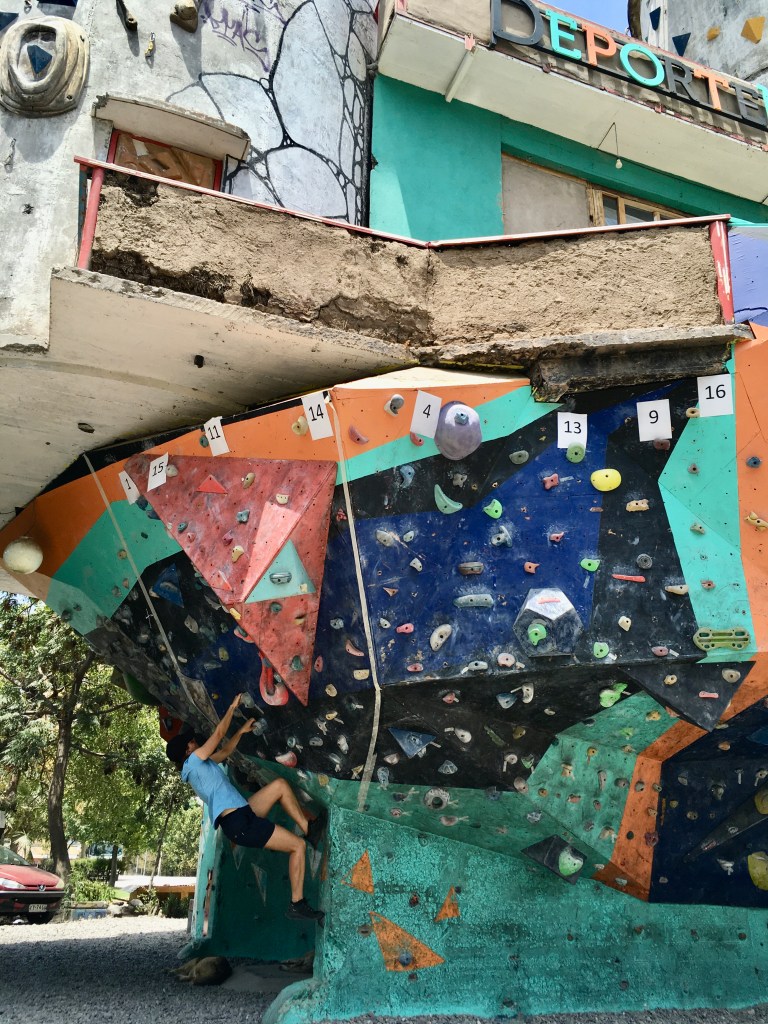
  • A visit to Parque de Silos, a set of giant concrete silos converted to a rock climbing and bouldering space for the public
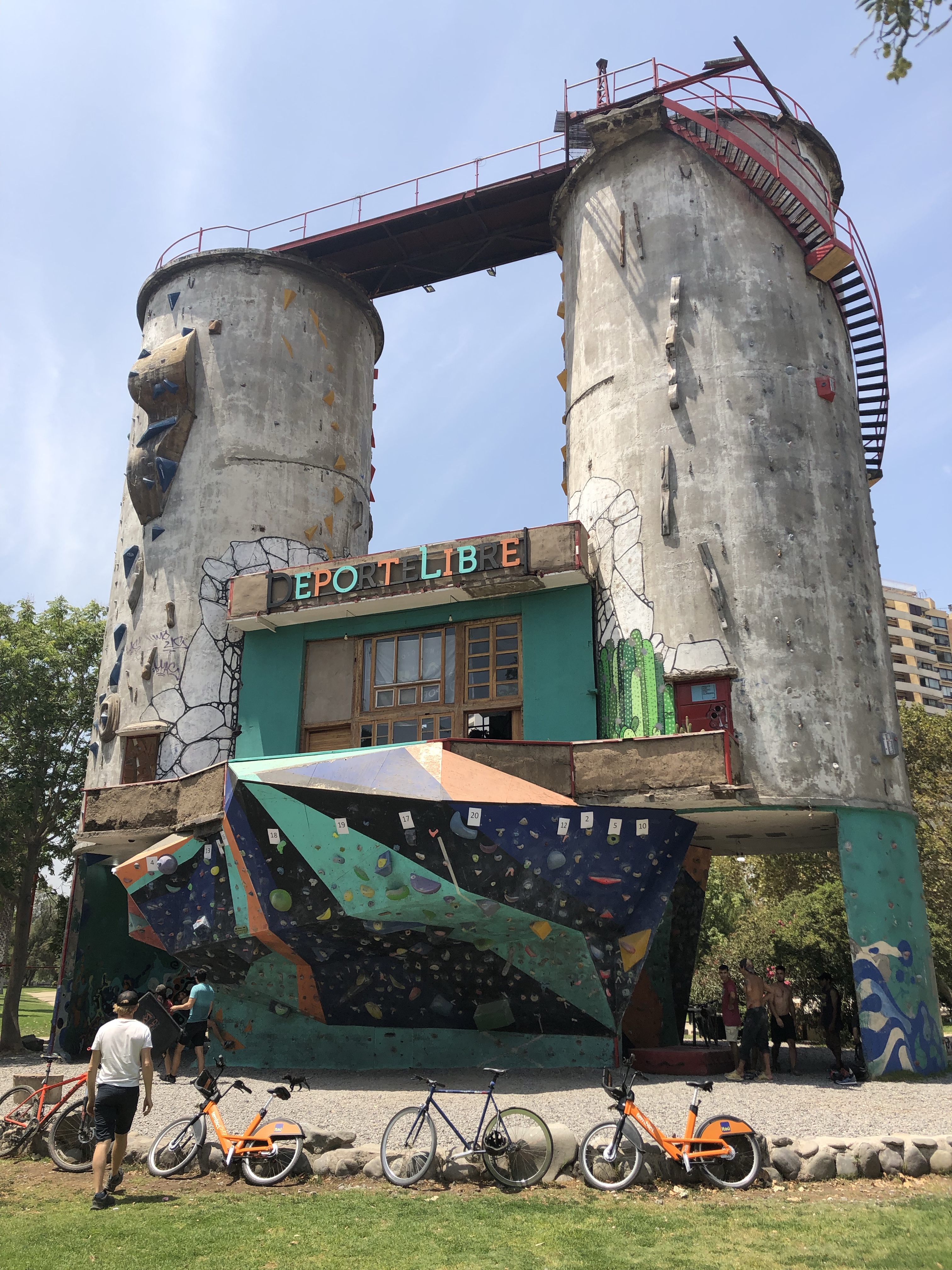
It’s tough in hiking boots
  • Dan joining the local chess club members in the Plaza de Armas for two valiantly-fought games of chess
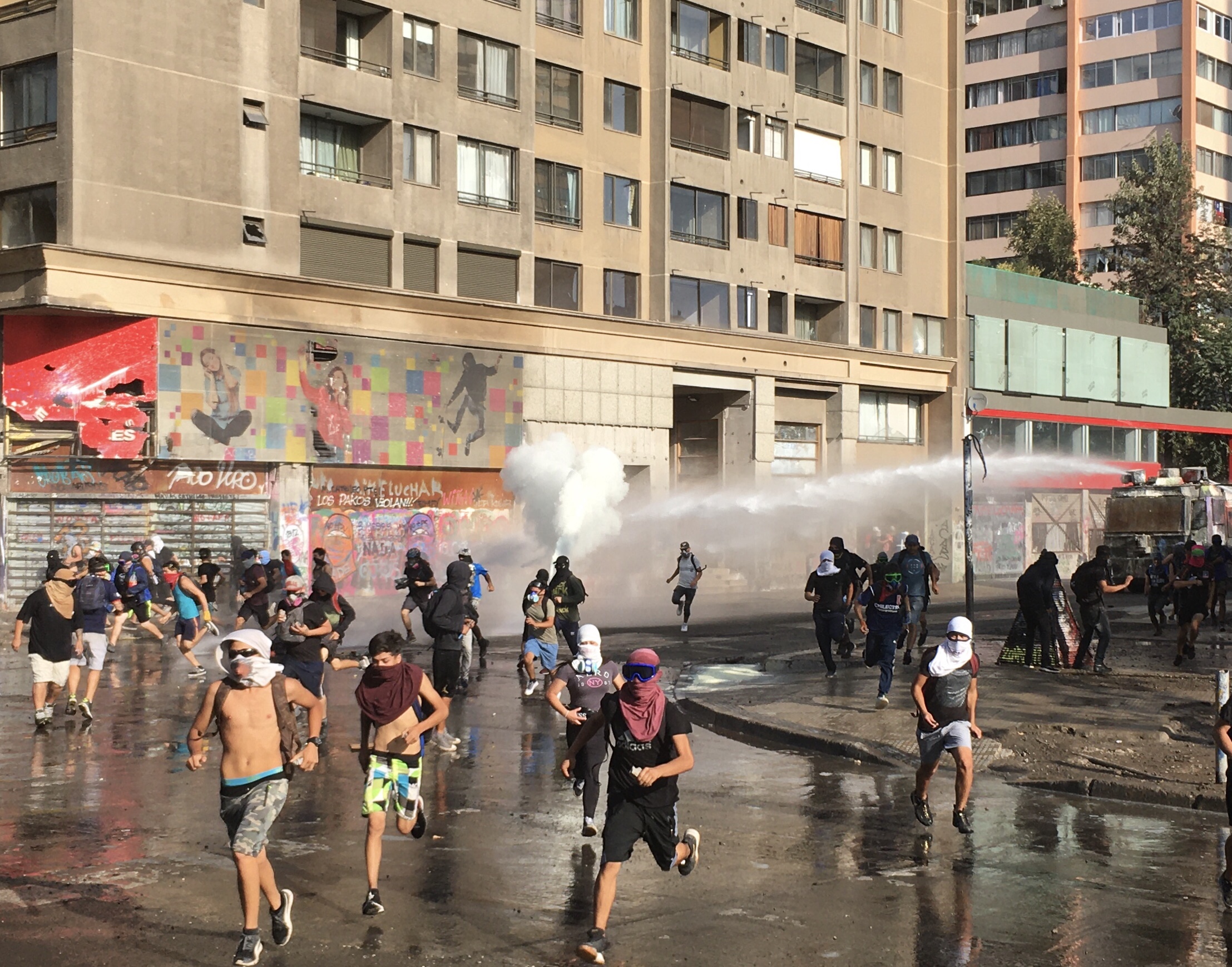
  • Joining the swarms of people in the Friday protests – which are immensely bigger than other days. We discovered the protesters’ homemade medical centre set up in the lanes next to the back street. While most protesters were just being present, bearing witness, chanting and keeping rhythm, we saw the few more destructive ones be dispersed by canisters of tear gas. We saw some protesters making petrol bombs. When the tear gas in the air got a bit too much for us, we cycled a suburb over where we found the riot police vehicles and the police taking a break.
  • We went to the theatre to enjoy a Brazilian production about insects falling in love (fortunately with English subtitles, but I understood about as much of the Portuguese as I would have of the Spanish).

Saturday featured:

  • Organising a #DrumForAustralia sign and chasing the various drummers around the city for the use of their drum. (Check our the Facebook group and related fundraiser for the Australian Red Cross.)
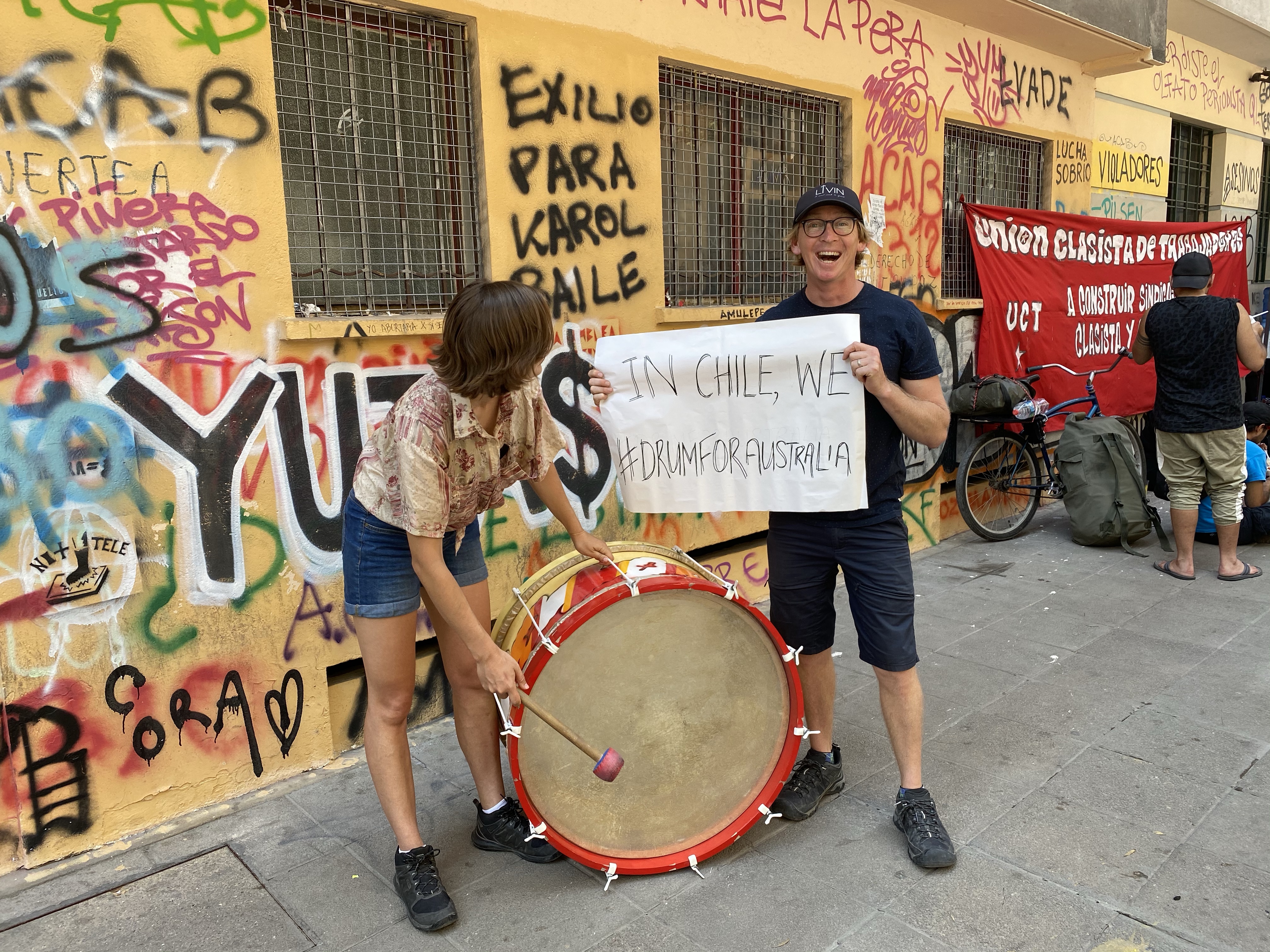
  • Discovering what may be Santiago’s best Indian for lunch (New Horizons).
  • Relaxing in the Parque de Forestales because we were so full from lunch.
  • Attending a three-hour intensive class by an Argentinian lindy hopper on ‘dips and tricks’. Like climbing – not the most efficient activity in hiking boots. But we learned a lot. It was a weird experience dancing with so many people without needing to speak – it’s like I could hide my lack of proficiency in Spanish (for some time, at least). Fortunately I know all the words of praise I wanted to use.
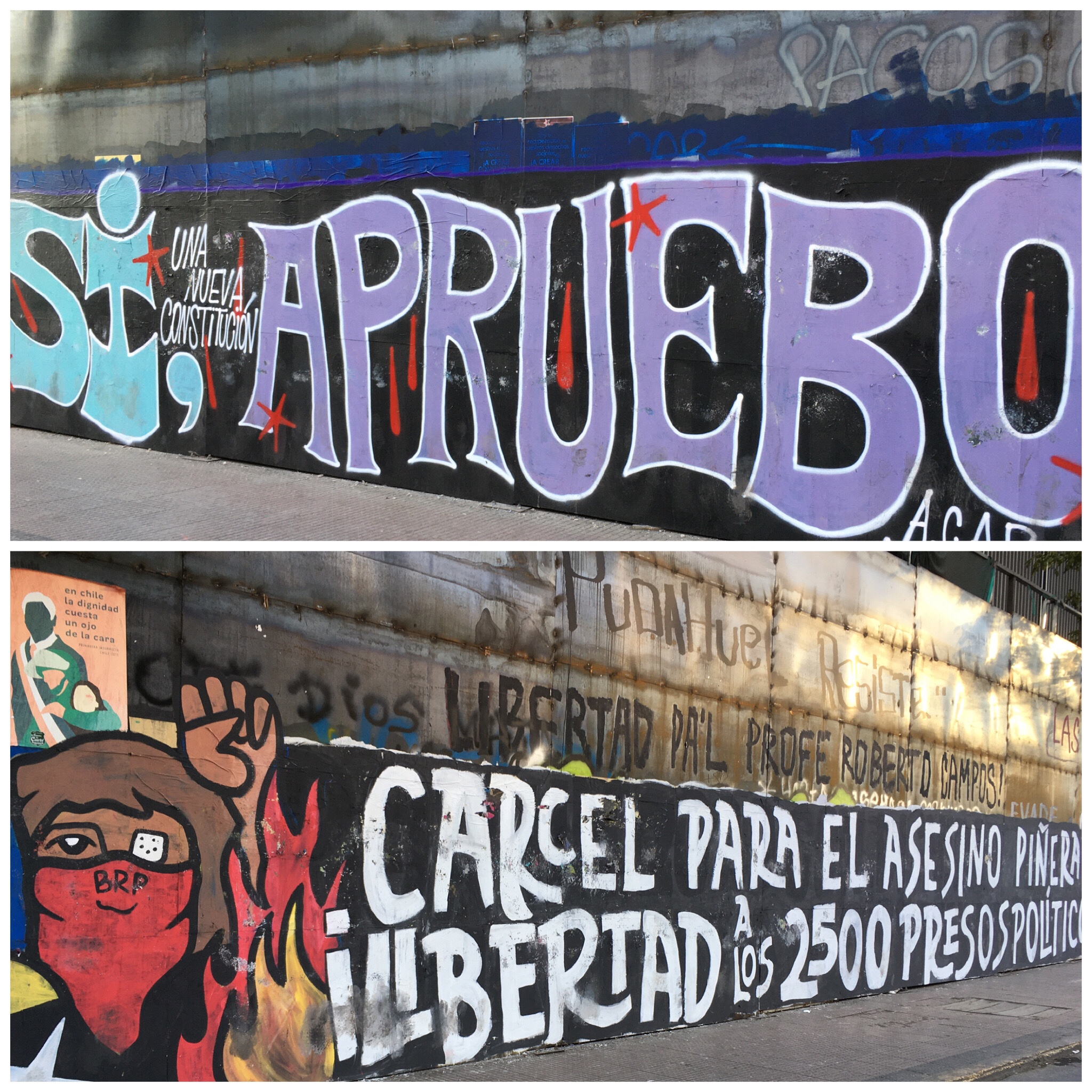
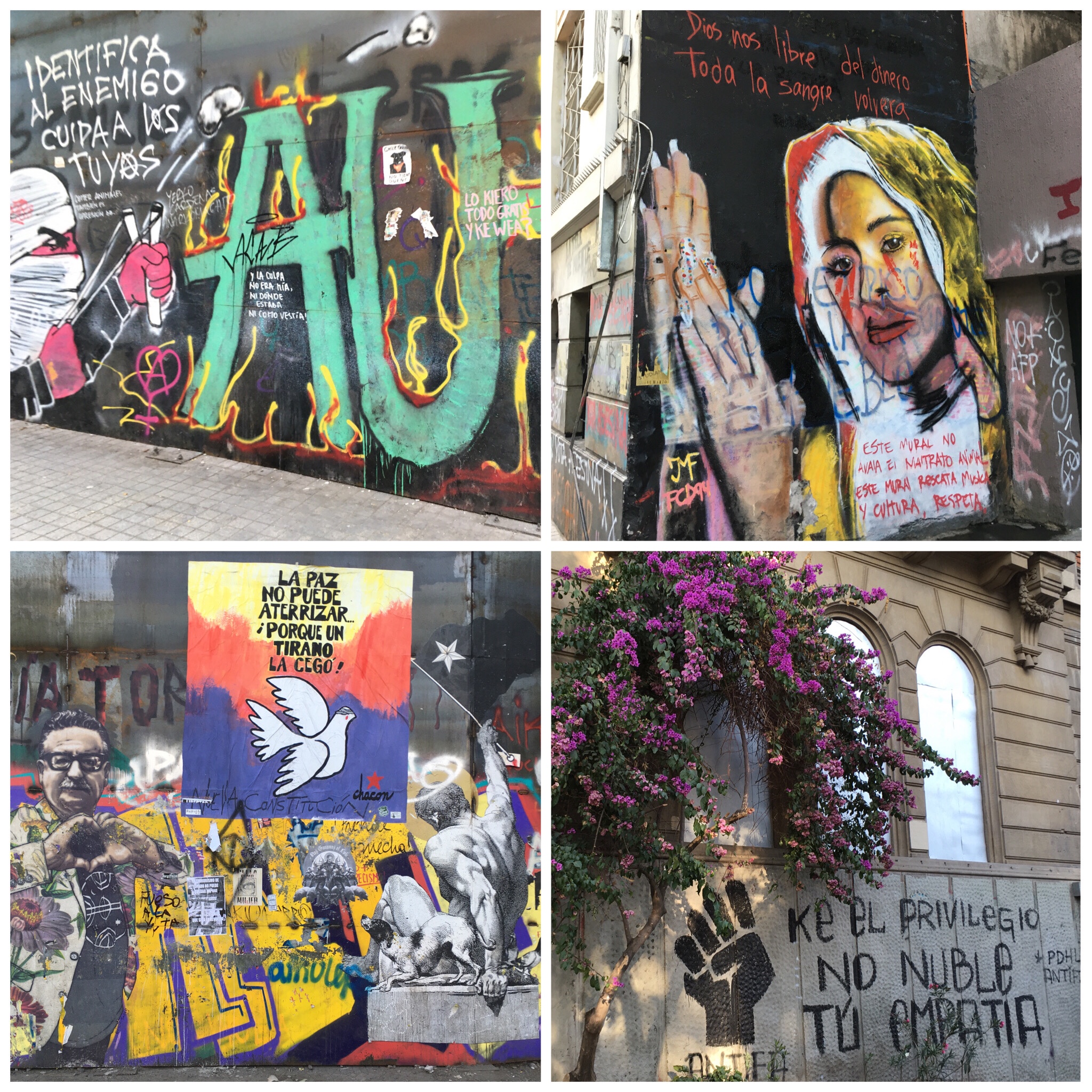
  • Cycling around to tour more of the pervasive street art.
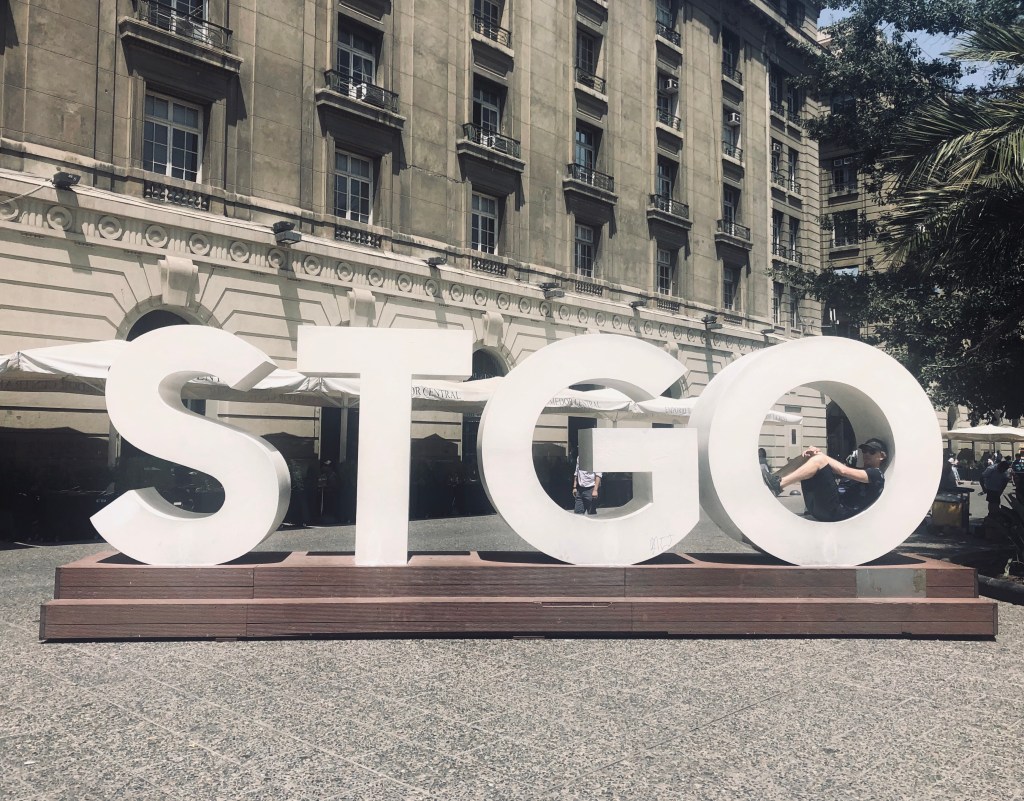
  • Drumming for Australia again on the ‘STGO’ sign with two keen local kids.

Today we take inspiration from the Kooks and head to the seaside – Valparaíso. Salt water, come at us.

VRPS

[Santiago]
Watching the power of the people

Yesterday (I’m writing this the morning after), we were but sponges, slowly soaking up all the different flavours and textures and experiences of Santiago. This is a beautiful and wild city, and we’re seeing it at a particularly significant time. We’re finding out more about the protests – what happened in October last year when they started, why people are protesting, what’s continuing – and while I don’t intend to write an essay on it, it’s starting to form a picture of a people angry at wealth disparity and the failure of government to provide effective public services, and a leader who by now should rightly be giving up their power and isn’t (and isn’t doing enough). Things are ‘simmering’ at the moment, while the uni students are distracted by holidays. Word is that come March, the protests will escalate.

I had the immense pleasure of hearing Dan’s verbal summary of the day when we were walking around in the evening. We recorded it, so I’ll now transcribe it here so you can have the immense pleasure of reading it. I’ll just make some minor edits to remove some of the nuances of verbal speech (the ‘ums’ and so forth – have you ever read an actual transcription of verbal speech? It’s so messy. I did a class on politeness linguistics and when we focussed on interruptions in conversation, I got to appreciate just how hard it is to read a real transcript). Here’s Dan:

“Today, we were orientating ourselves through Santiago, meandering through the streets in search of Santiago’s best coffee. We weren’t disappointed when we stumbled across 3841 Coffee Roasters, because the barista had spent two years working in a coffee shop in Brisbane.

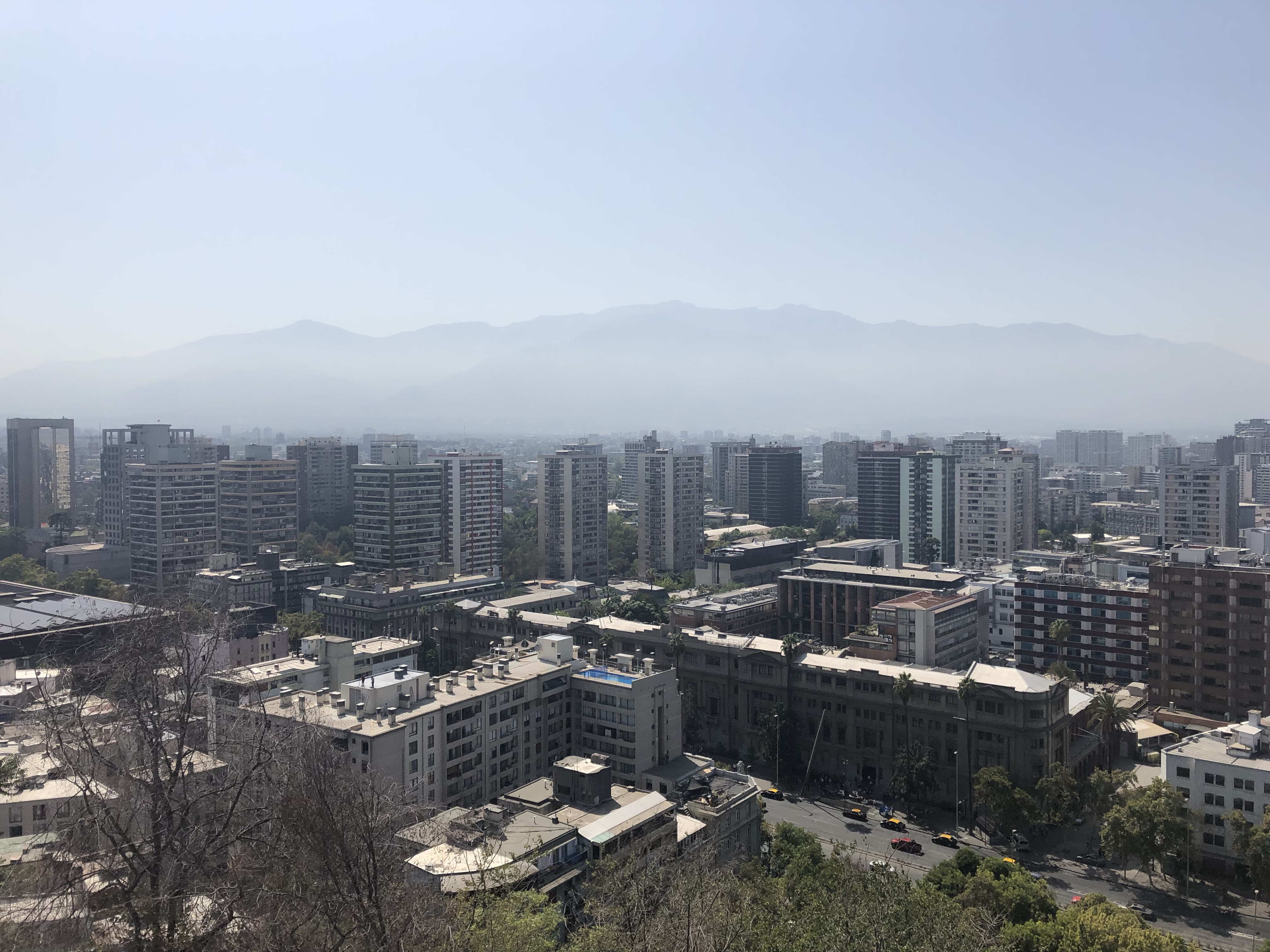
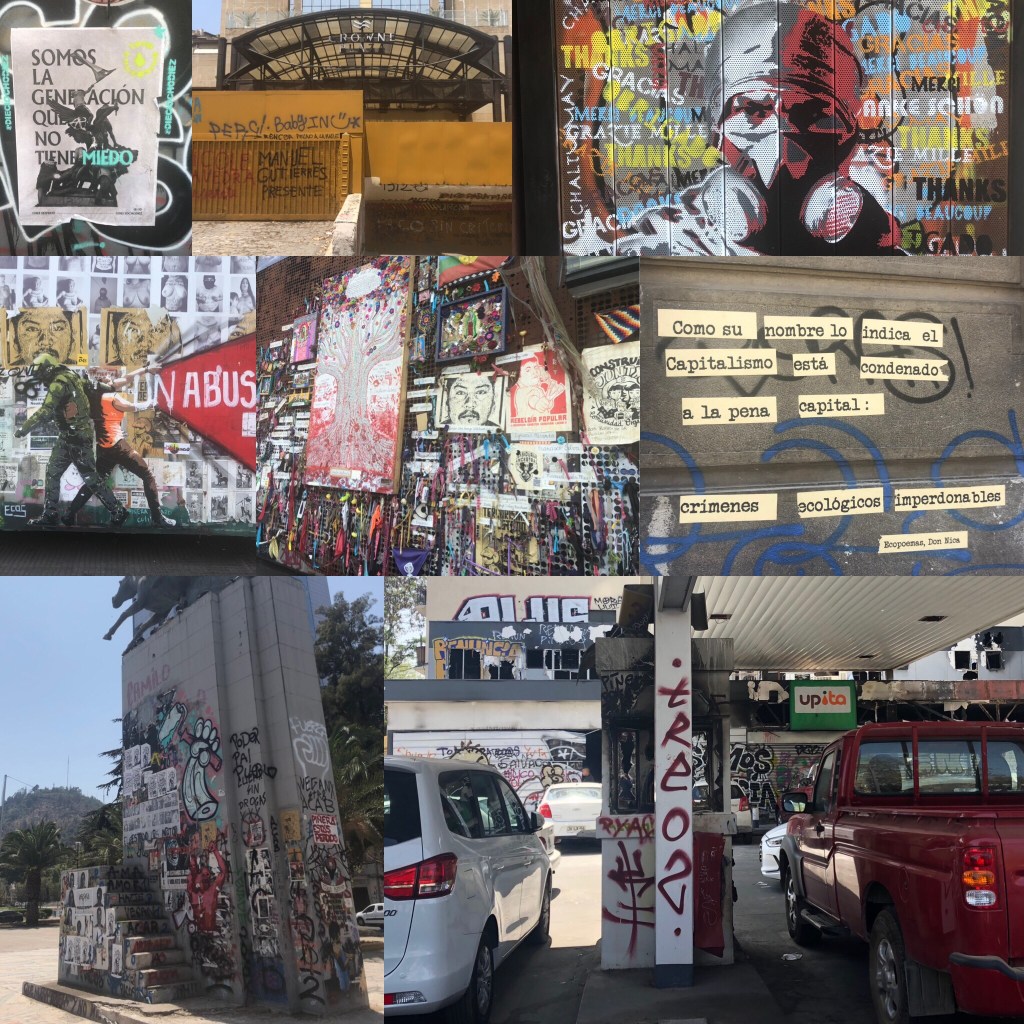
Walking around, we were continuously stimulated by the art and colour pasted on all of the walls – some sanctioned, some probably not. We walked up Cerro Santa Lucía, where we climbed up to see a view of the Andes (and the city) from the top of the fort. The views were quite obscured by what we were told was the smoke coming across from the Australian bush fires (that hasn’t been confirmed, but it’s what we were told).

Another thing that struck us was that there were volunteers at the intersections where traffic lights used to be. These volunteers have taken up the job of directing traffic as the lights had been cut down (or otherwise destroyed) during the protests. The volunteers ask for tips, and the community seems to oblige by giving them small donations as they’re driving past.

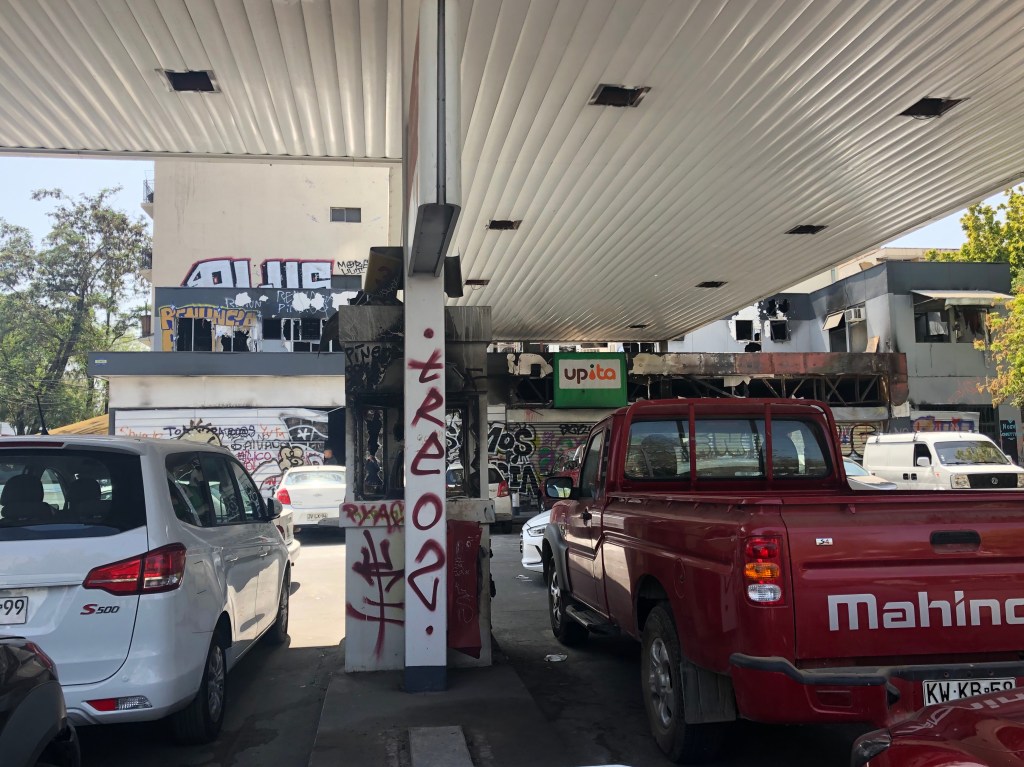
The first time we saw this was on the corner where a Shell service station used to be. It had been burnt down and was now occupied by maybe homeless people (we’re not quite sure) and had been turned into a paid car park out the front.

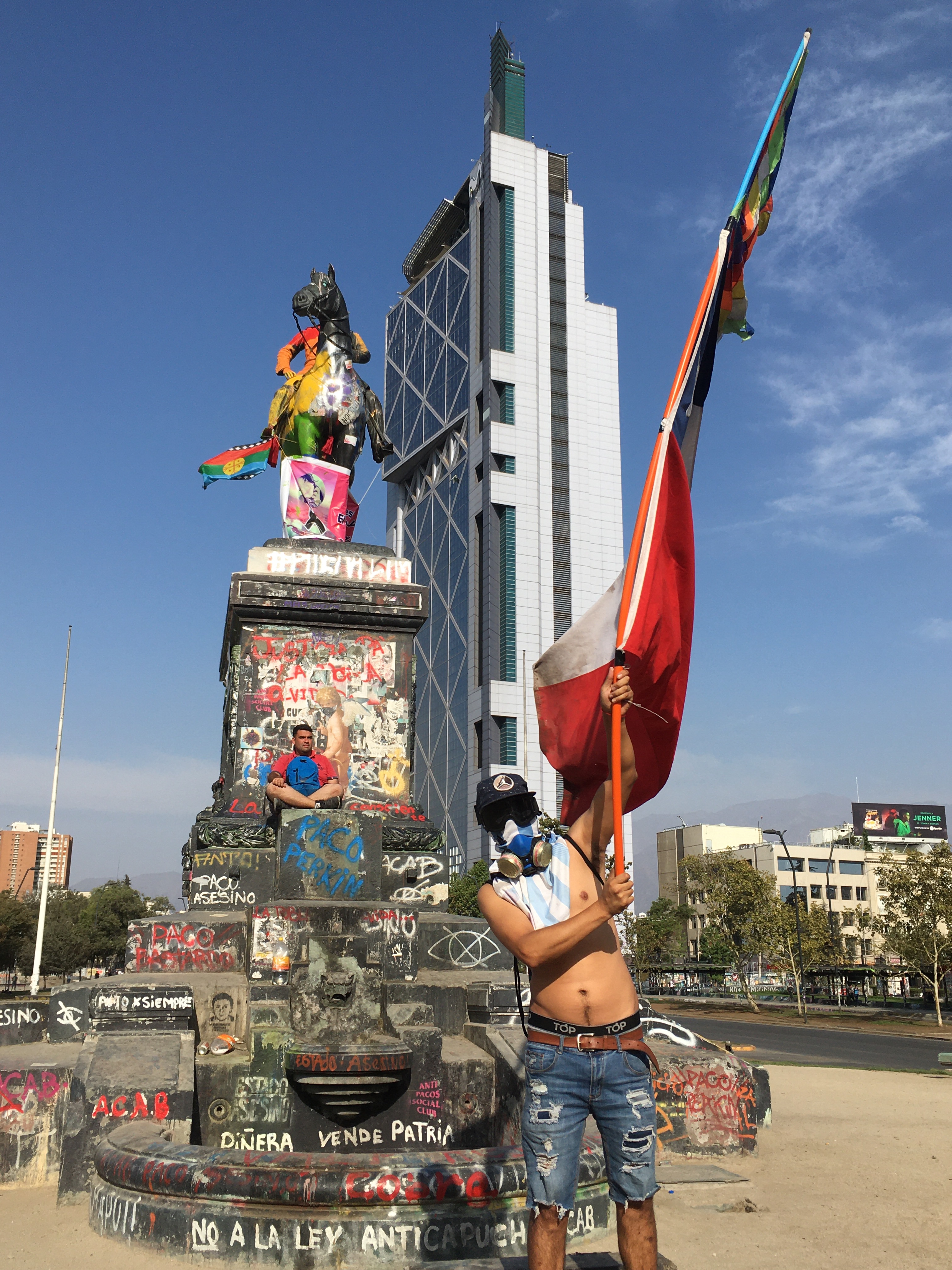
Just like photos never capture how big mountains look in real life, they also struggle to capture the finer detail of, and emotional impact of being around, the damage and destruction.

We then had a delicious lunch, and decided to join the free walking tour – which we’ve done in BA and Montevideo on this trip. The tour was given by an enthusiastic semi-local guide, Gastón, who spoke to us about the history of Chile up to the modern day, which encompassed the transition from Salvador Allende to Pinochet, the dictatorship and everything that came along with that. He spoke on modern issues – the protests, and how they have arisen in part by the dictatorship in the 80s and the transition out in the 90s.

I then left to go and run some errands, and left Viva to continue on with the tour. (It was the longest break we’ve had apart for about three weeks.) I just strolled through the streets, continuing to admire a lot of the street art, and found myself in Barrio Bellavista.

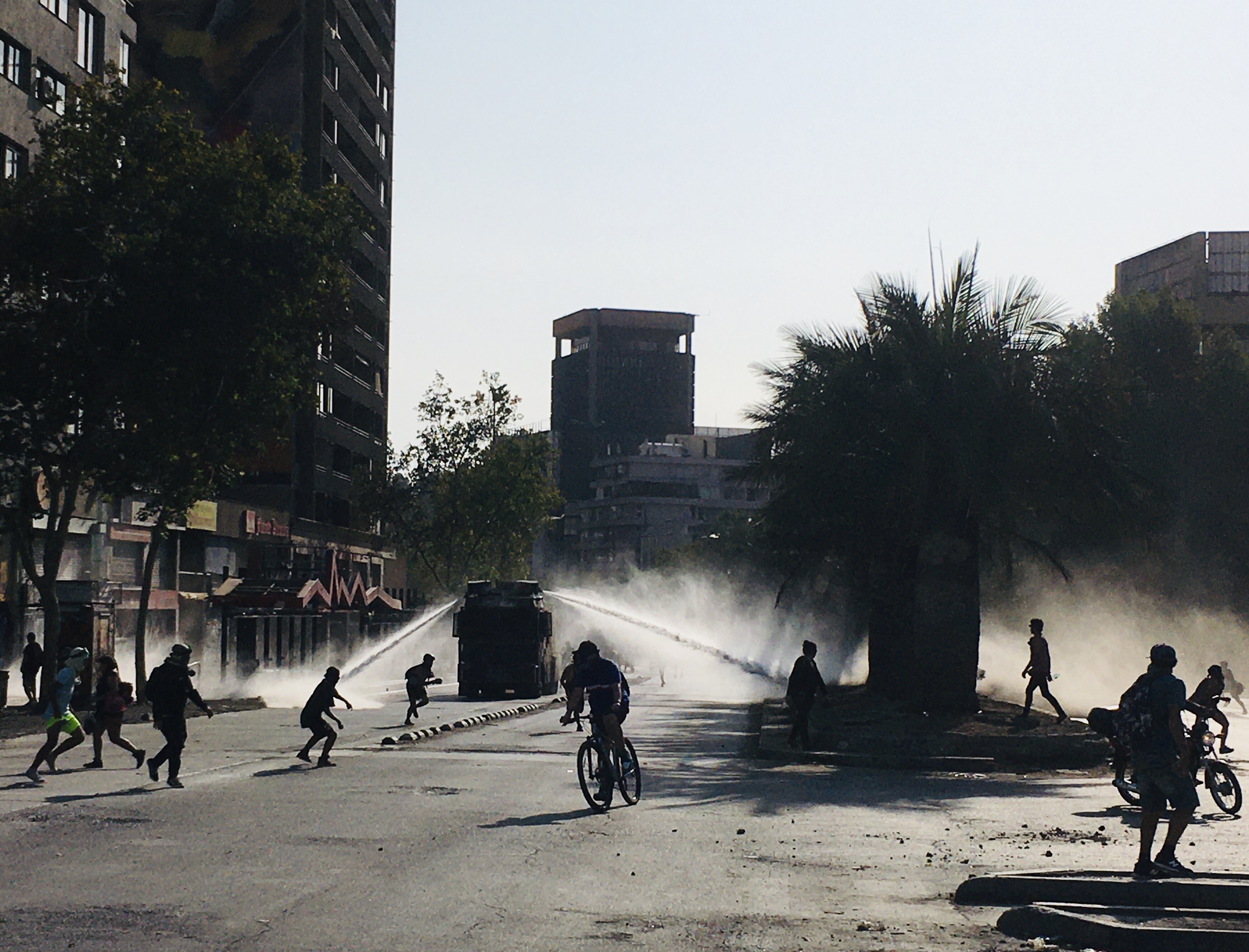
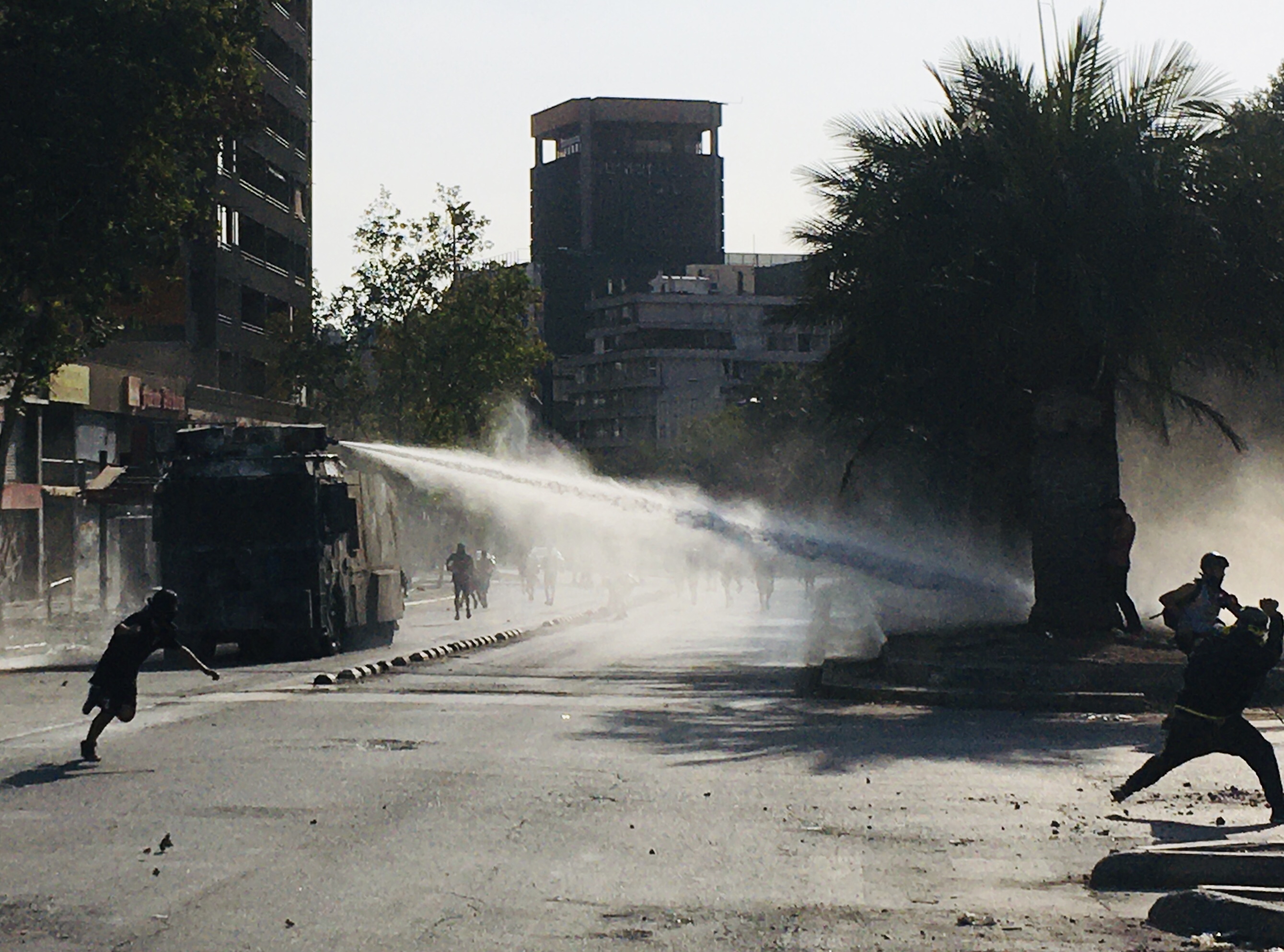
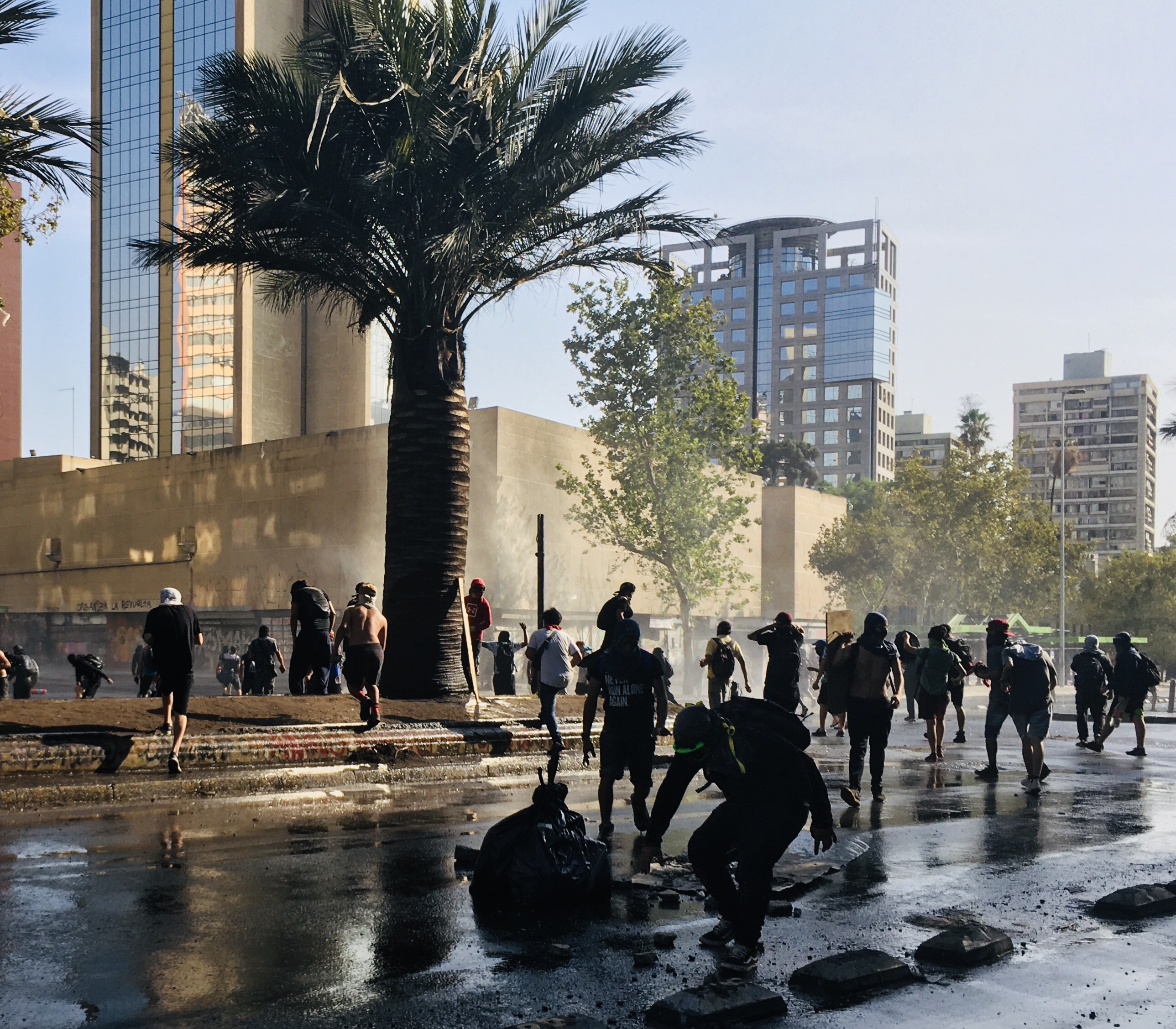
On my way home, I went (without knowing) into the epicentre of the protests here in Santiago, which was a surreal experience. What I first witnessed – which was quite shocking – was people with hammers bashing the pavement to create stones to (what I later found out) throw at the police who were there. (We had earlier in the day seen the pavements ripped up, but we didn’t at the time know how it had happened. Seeing the destruction put the pieces of the puzzle together.)

There was chanting, banging of pots, people with gas masks on, banners and shirts covering faces. All of a sudden, a massive tank came screaming up the street directly towards me with water cannons blasting out either side hitting many of the protesters on the way. It seemed that the force of the water – it would hit the dirt and throw pavement and the (formerly pavement) rocks and the amount of power from the water cannon actually sprayed them up and created a double weapon. (It’s not clear whether that was the purpose.) I knew I didn’t want to be too close.

I continued to follow these protesters down the street (at a distance). There was a crazy energy in the street. There was a hostile energy towards the police, but there was also this sense of community. An example was where there were civilians in cars or taxis or ambulances, and everyone would spread out and direct them to safe places and allowed them (and even wanted them) to pass. It was like the protesters were the guardians, the carers, of fellow citizens in absence of an effective state to fill that role.

I was full of adrenaline and could feel it pumping through my body. When I did take a moment to step back and consider what was taking place (I was on the pavement behind a big palm tree, sheltered from whatever would happen next, and it gave me a vantage point to consider what was taking place in front of my eyes), I felt uncomfortable. I don’t agree with what the protesters were doing. I think protests are good and it is good to be able to express an opinion. But the violence in this small group of protesters and the hostility towards everything was something I didn’t connect with.

The strange thing about this experience was that while it felt like a war zone, if you walked just a kilometre down the street, you were in the centre of what seemed to be a functioning city.”

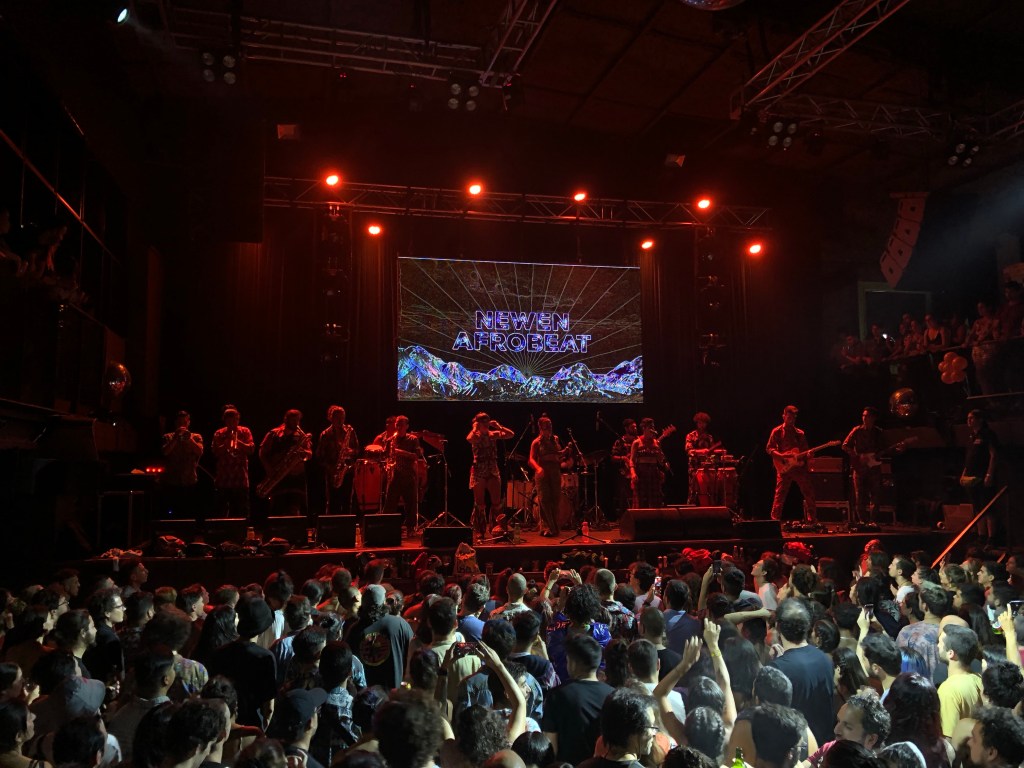
Viva again. By now, we were in the heart of Bellavista and the sounds of reggae stole our attention away from wrapping up Dan’s summary. We walked lazy figure of eights around the suburb, joined in at a karaoke bar, and sweet-talked our way in to an incredible gig (the sweet-talking was in Spanish so you can guess who led that) of La Brígida Orquesta and Newen Afrobeat – both bands featuring large horn sections.

We’re both loving our time in this city, as wild as it is. We’re staying safe.

DPS (as storyteller), VRPS (as transcriber)

[Santiago]

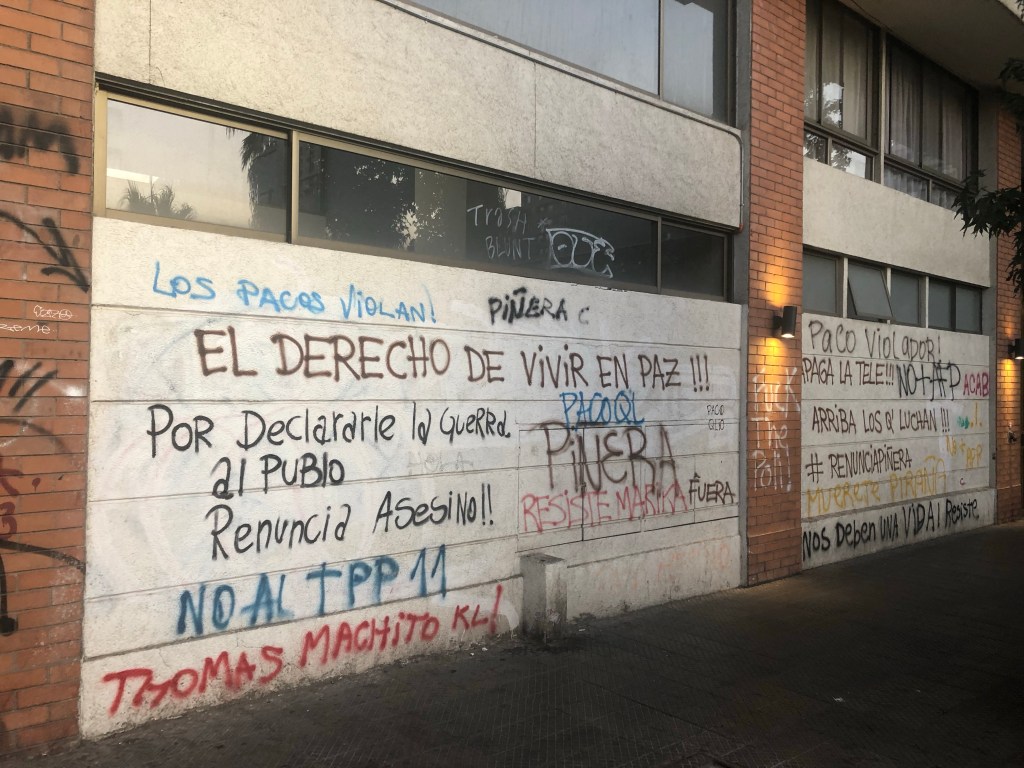
Where they draw on all the walls

Greetings from Santiago de Chile! Here are four first-impression haikus:

Hot and dry weather

Colourful graffiti walls

With dark messages.

Football restaurant

Everyone has hot dog stands

Avocado-topped.

I prefer here to

The cities serving tourists

Here serves Chileans.

Leafy trees line streets

People in the park dancing

Football-watchers cheer.

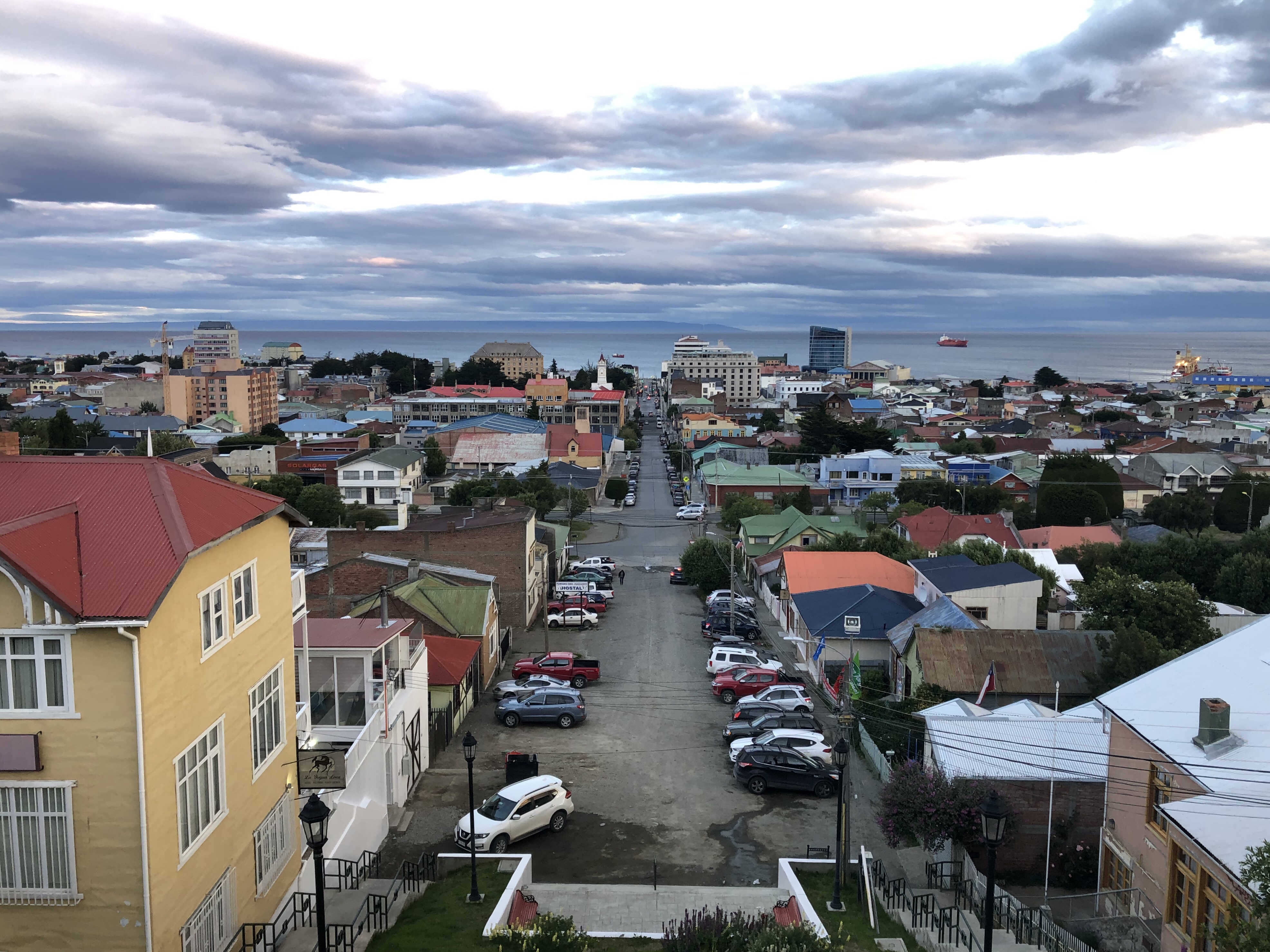
Photo taken on our morning bike ride in Punta Arenas before our flight north
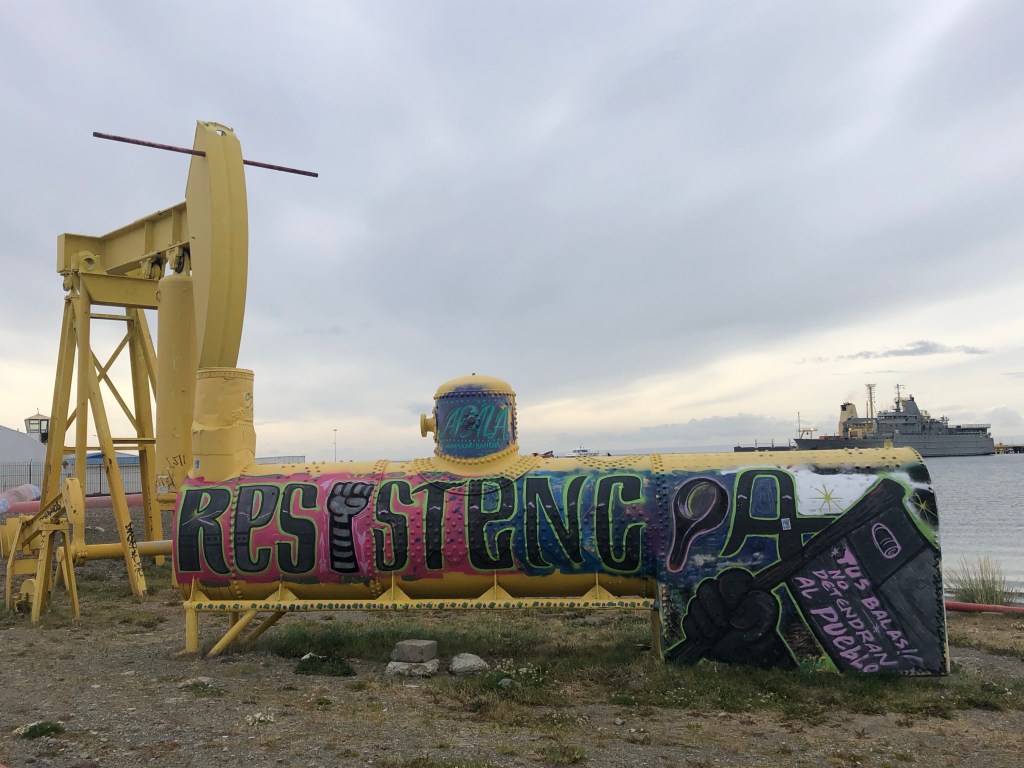
In Santiago, it seems that all the walls within reach bear scrawled messages.

VRPS

[Santiago]
The vicious beauty of the Torres Del Paine

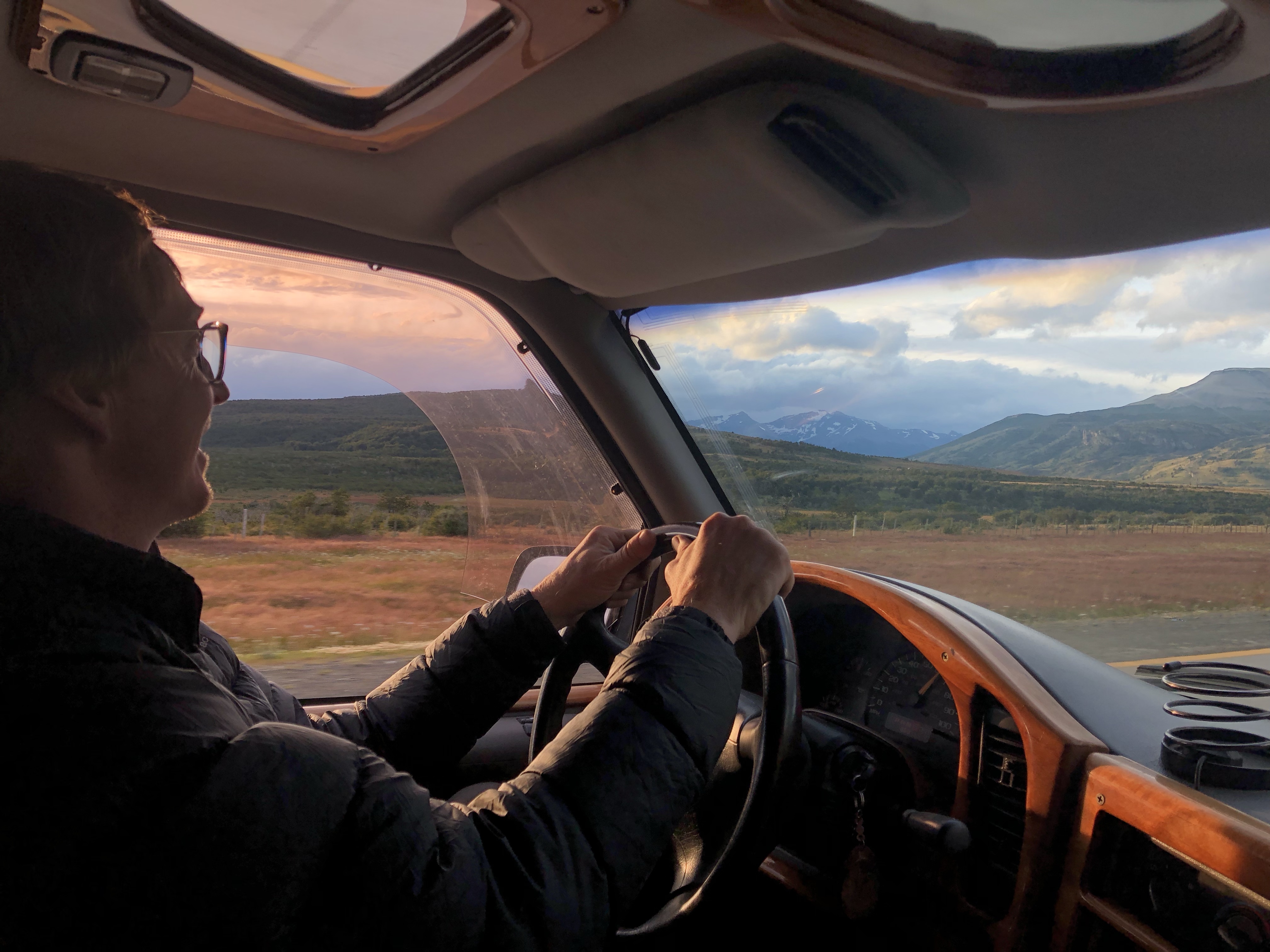
If some higher being communicates to us through the weather, then the wind over the last few days has been its white-hot anger. Not some kind of simmering anger featuring some passive aggressive comments. Not some laser-focussed red anger. This white anger is plates being thrown in every direction of the room with fury. While I can’t explain why this higher being is angry, this is the wind we drove through on Friday and trekked in on Saturday and Sunday.

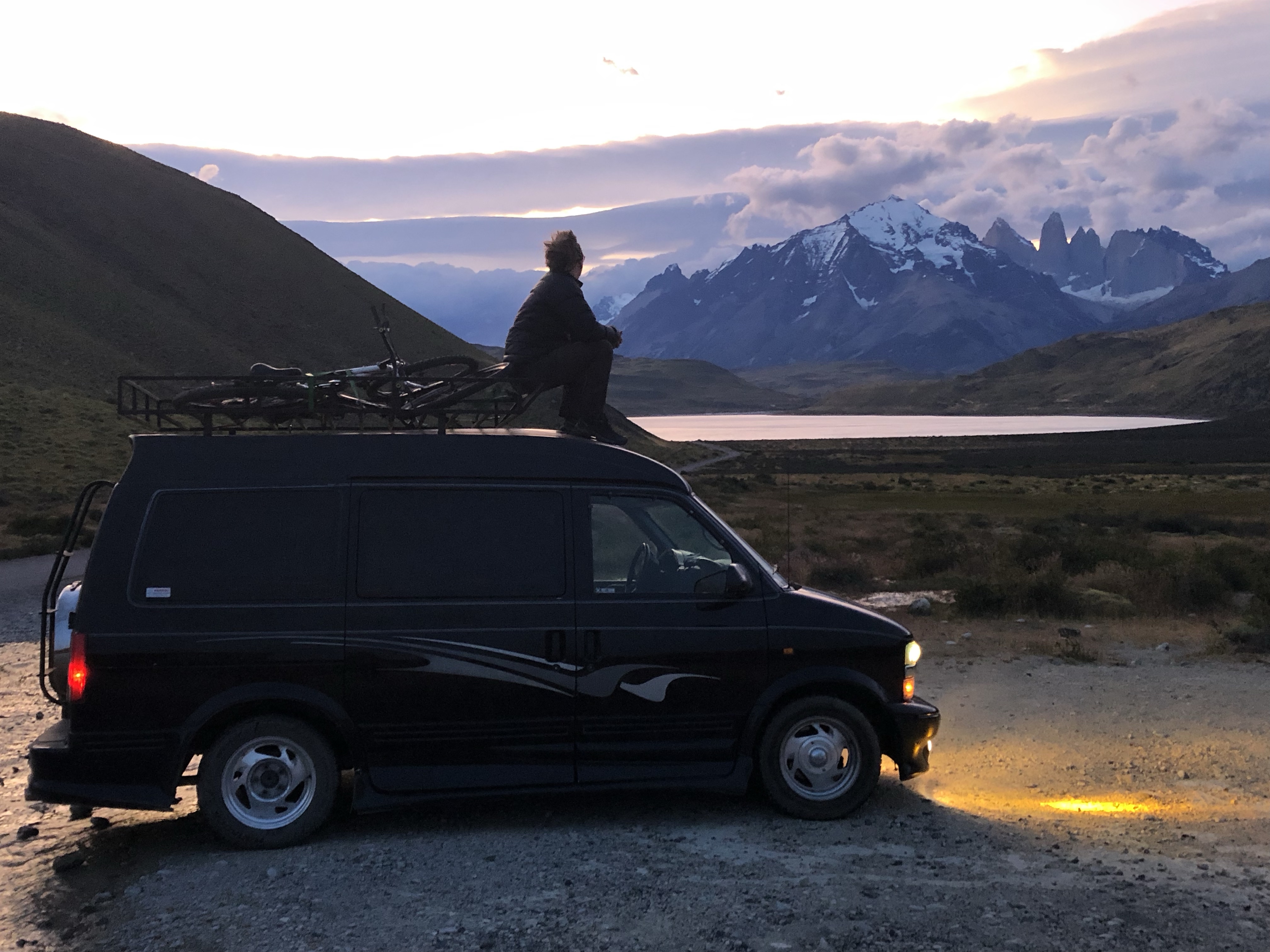
However despite the dust in our eyes, trying to stop our sunglasses flying off our face, and sometimes looking like we’re failing the walk-in-a-straight-line drinking test, it’s actually been an extraordinary few days. We picked up our campervan in Punta Arenas and, after buying a ridiculous hoard of groceries, headed to Puerto Natales. The wind was still so strong that we didn’t stay long, so we spent the early twilight heading into the Torres Del Paine National Park.

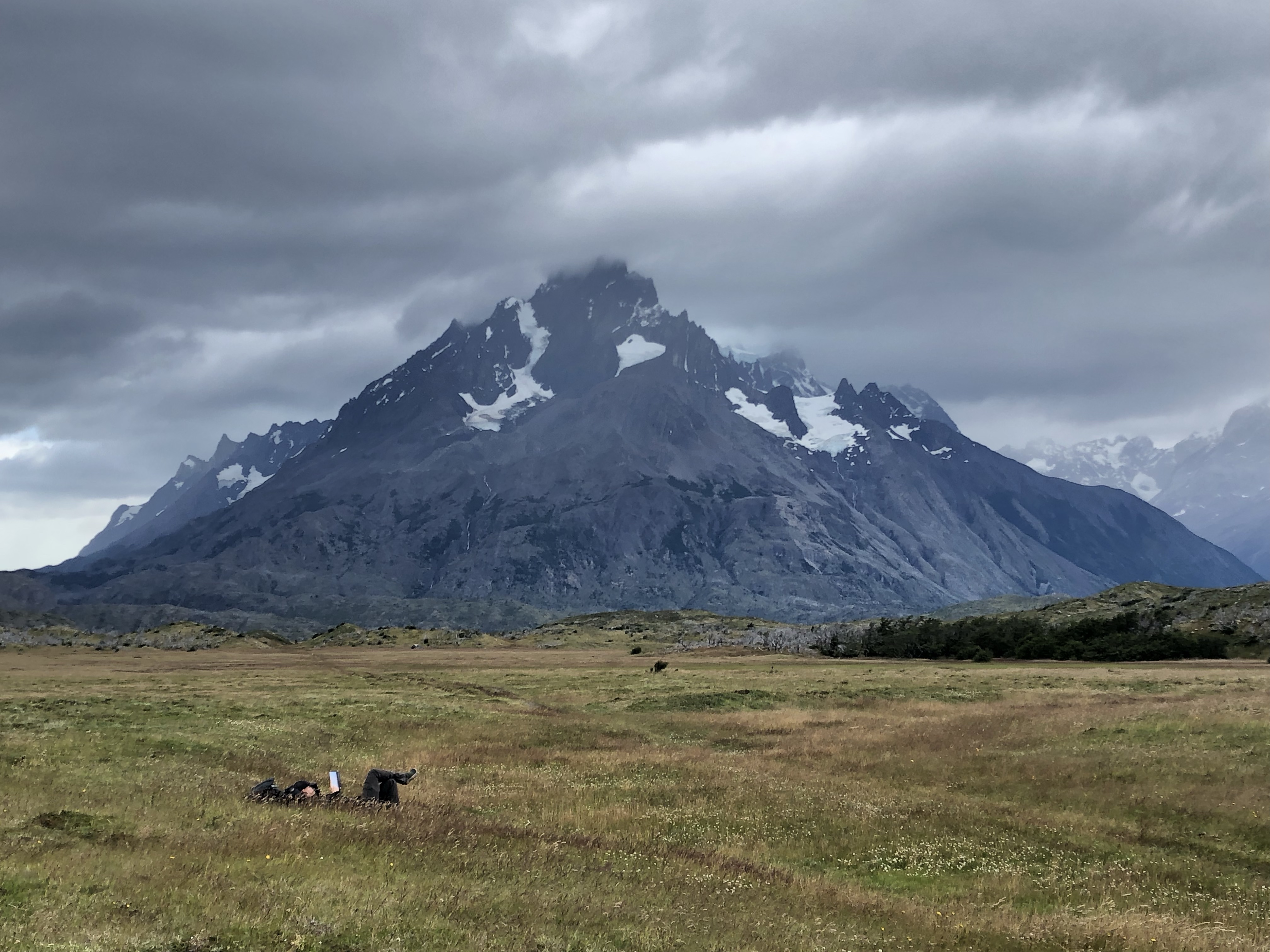
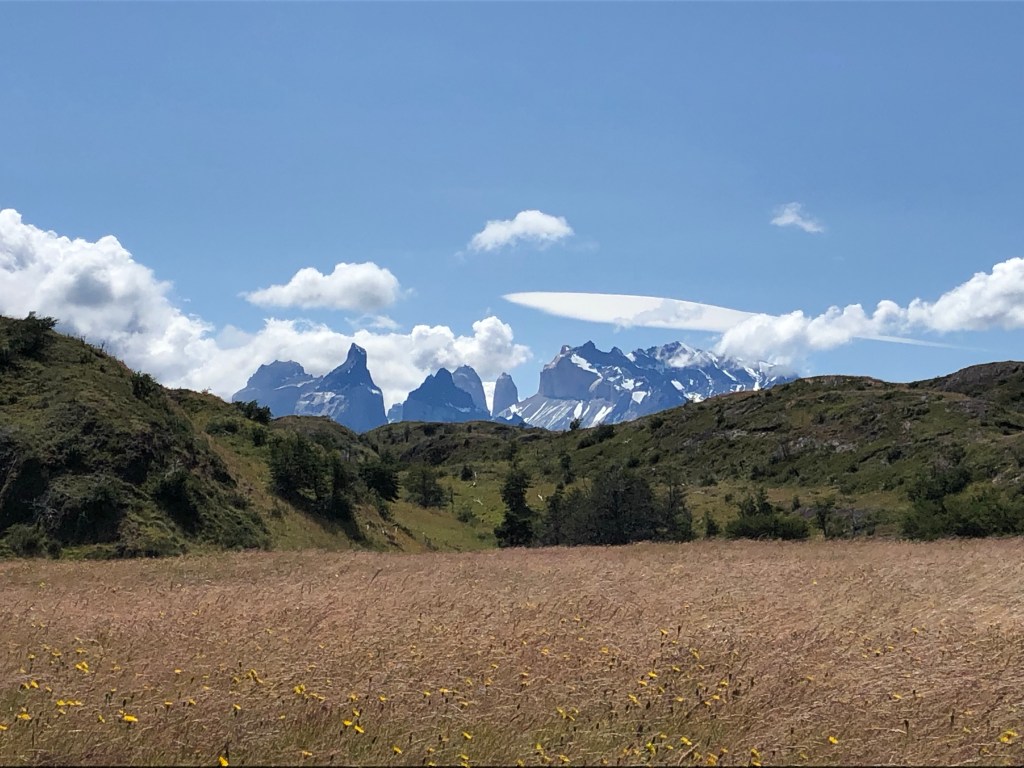
What an incredible drive. The mountainous scenery shifted as we drove through. The national park is surrounded by these rolling hills covered in fuzzy, velvety grass – the texture (I can only imagine) of someone whose hair is only just starting to grow back and you want to run your hands through it. Slowly, the outline of the Torres (towers) emerges, surrounded by sunset clouds.

On that topic, clouds are quite an amazing part of the landscape here. I can’t put into words just how many shapes we’ve admired – fluffy UFOs, menacing dark ones, all sorts of gradients, and ones that seem to hang so low in the sky.

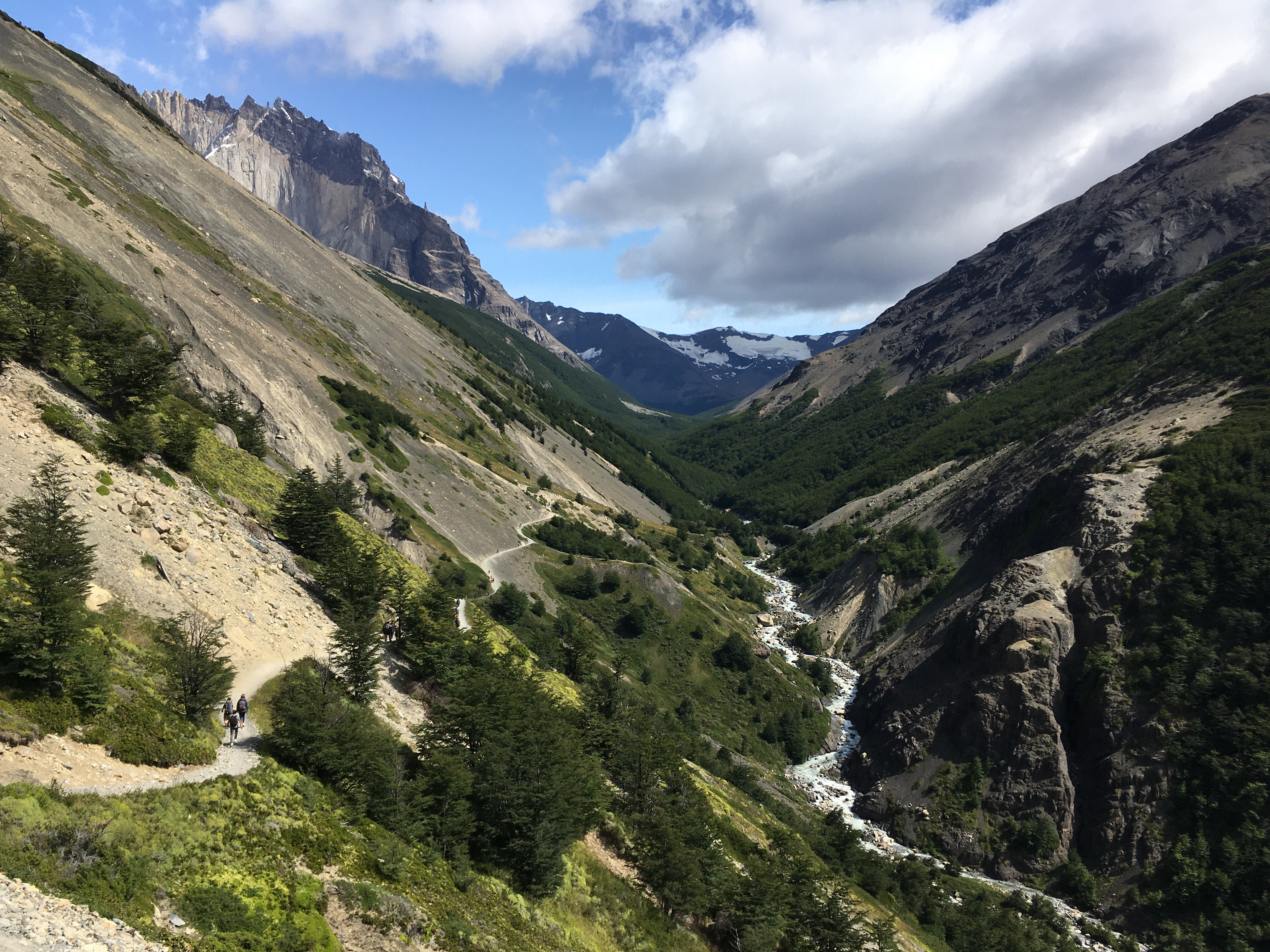
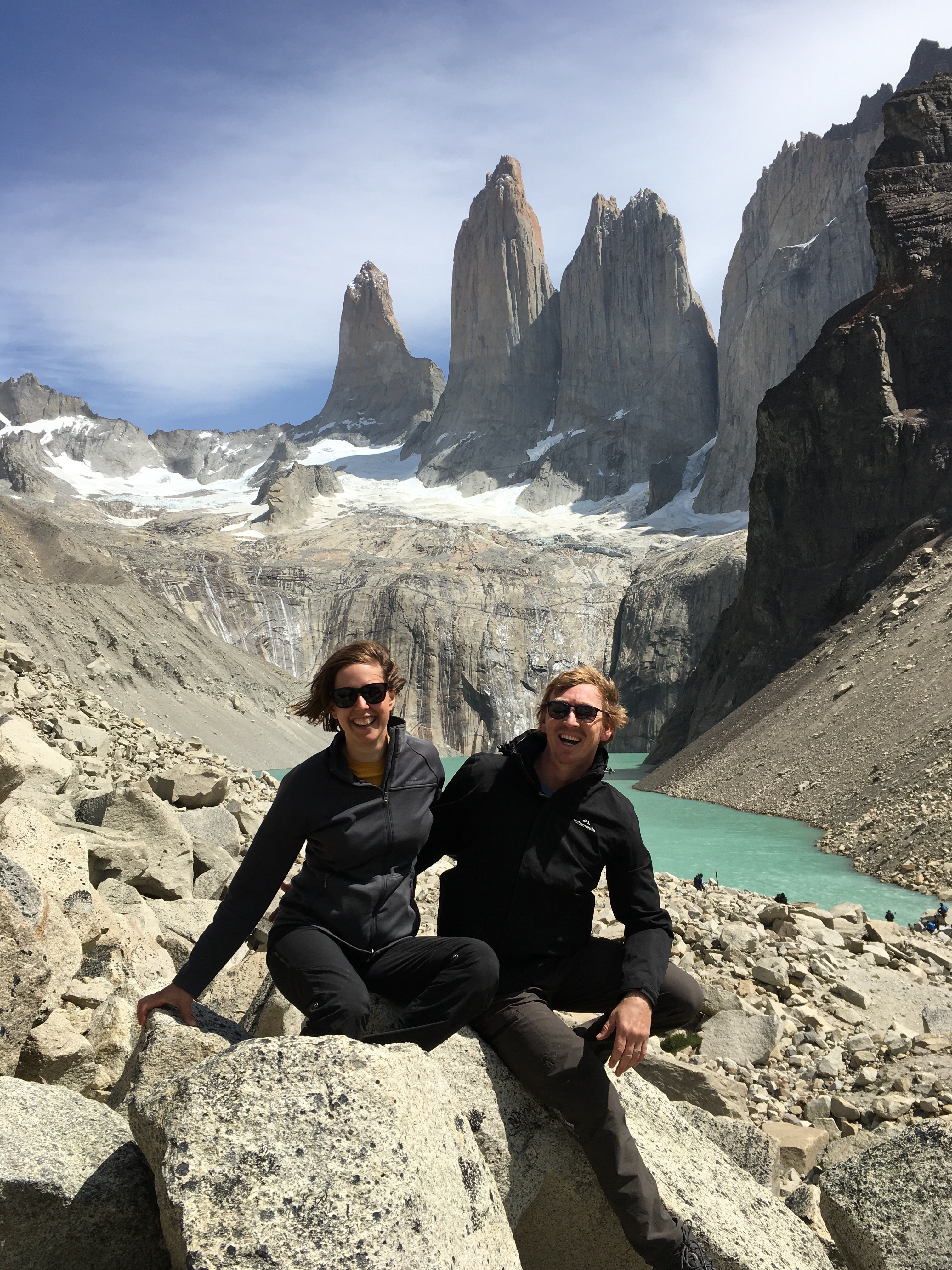
On Saturday, we set off for the Torres Base lookout, around 11 kilometres one way and 800 vertical metres from the car park. We joined the throngs of other trekkers in all their rainbow colours, winding up the gravel paths and trying not to be blown over in the less sheltered sections.

It was a tough walk, with a number of steep sections, but a beautiful one. The middle section sees you threading through beautiful green forests and sometimes crossing a gushing, wild river. The lookout gives you this incredible view of the Torres, with the ice melting off the glacier into a lake in which the crazy wind forms white caps.

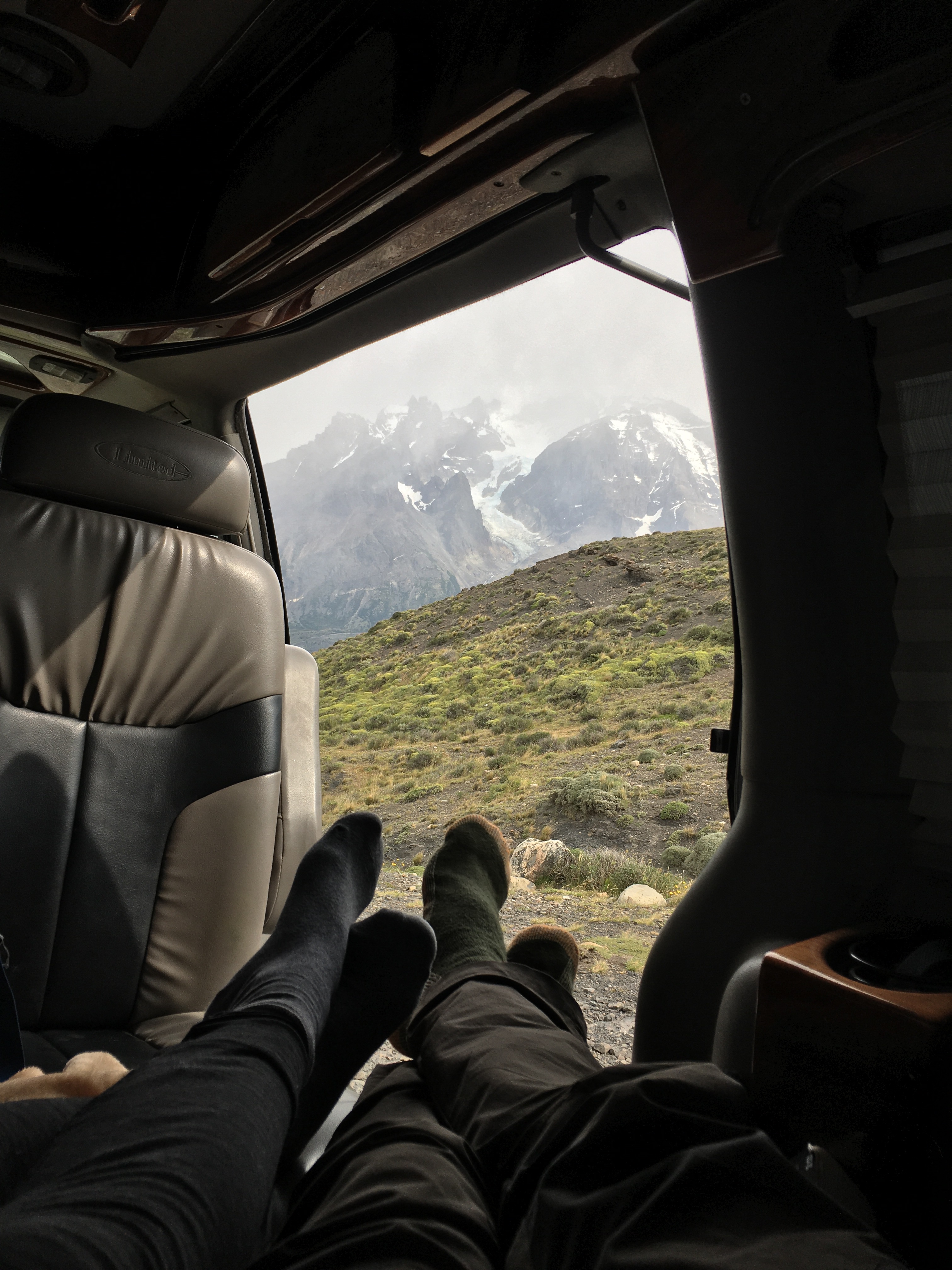
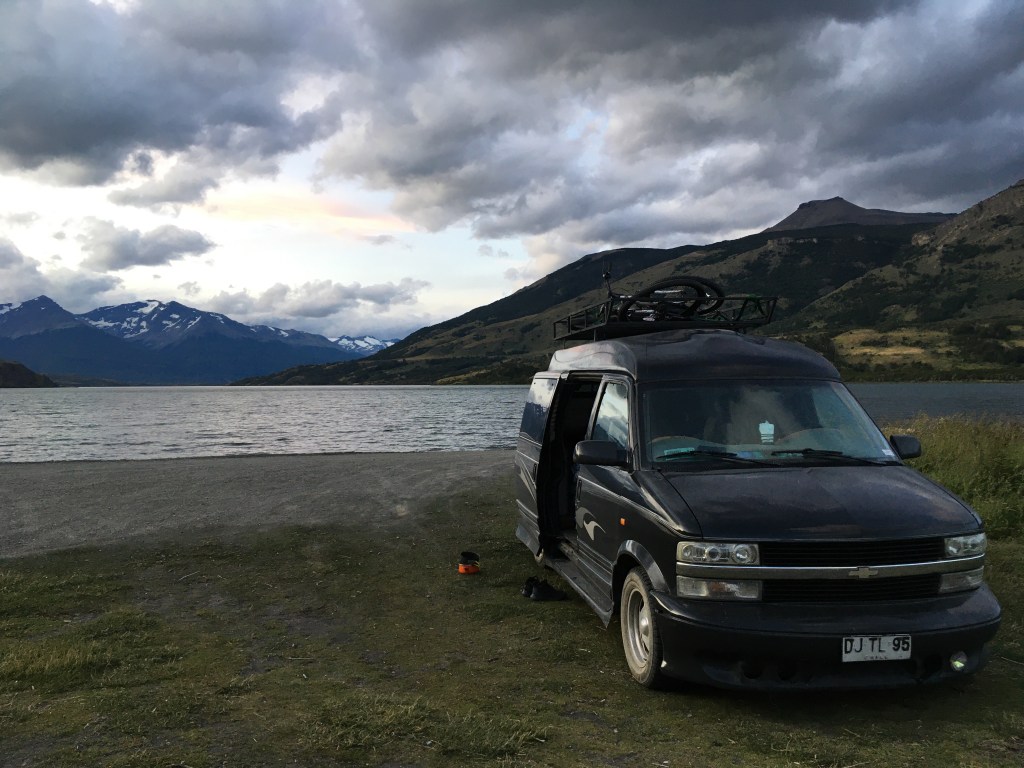
I’m enjoying the campervan experience. It’s cozy and warm, we can cook our own food, and we can make a giant thermos of strong, milky chai with honey for our hiking. For every amazing thing about this particular van’s set-up, there’s an odd issue – like, on Saturday the driver’s door stopped opening.

Sunday featured the same vicious, erratic winds. It was a joy to spend most of the day sheltered in the van in various spectacular locations, reading, watching a movie, napping or going on spectacular drives. When we did venture outside, we made porridge with a beautiful morning view of the mountains, we went on a walk to the Salto Grande and Mirador Los Cuernos, and cooked a delicious stir fry (with broccoli! Caloo, calay!) huddled in the only windproof corner of a shelter overlooking Laguna Pehoé.

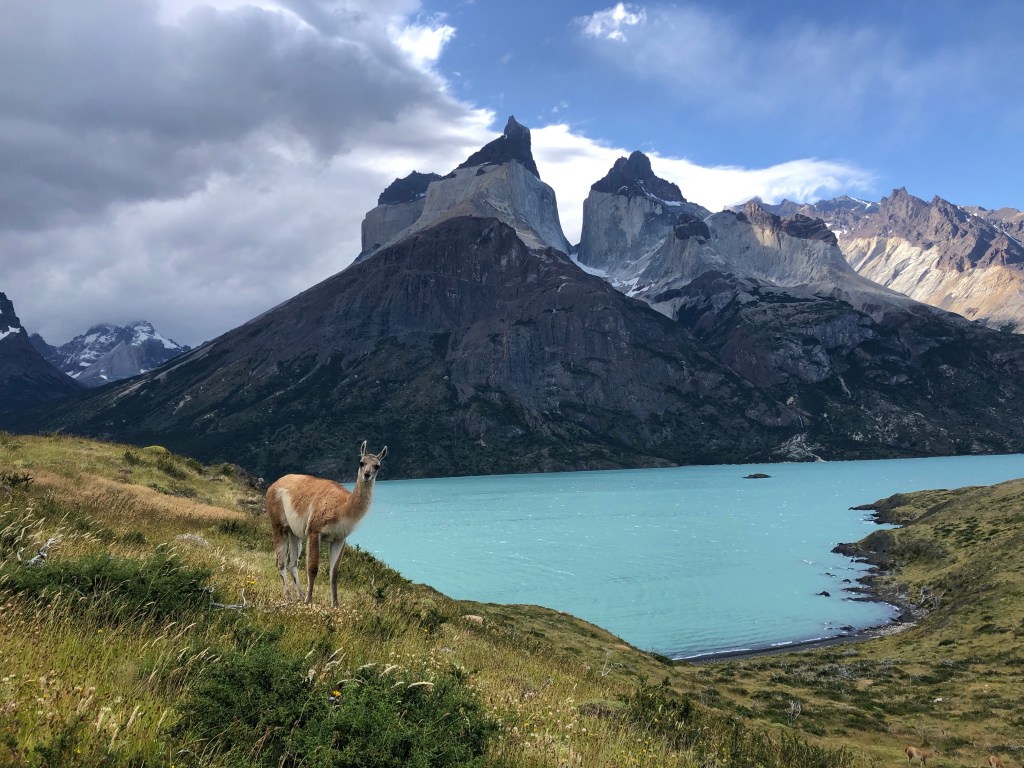
The walk, while blisteringly blowy, was special. Salto Grande is the sight of the most ferocious waterfall I think I’ve ever seen – not in size, but in the eye-watering amount of water toppling over it every second. It was fierce (but beautiful). The Mirador walk featured a handful of llamas (or maybe they’re alpacas? They seem docile) and an amazing view of the mountains over a lake. The western mountains were permanently shrouded in dark grey clouds while blue sky and sun remained over the eastern ‘horns’.

The peaks in the background are called the ‘Cuernos’ (horns). I’ll ask my aunt to confirm if the animal in the foreground is a llama or an alpaca.

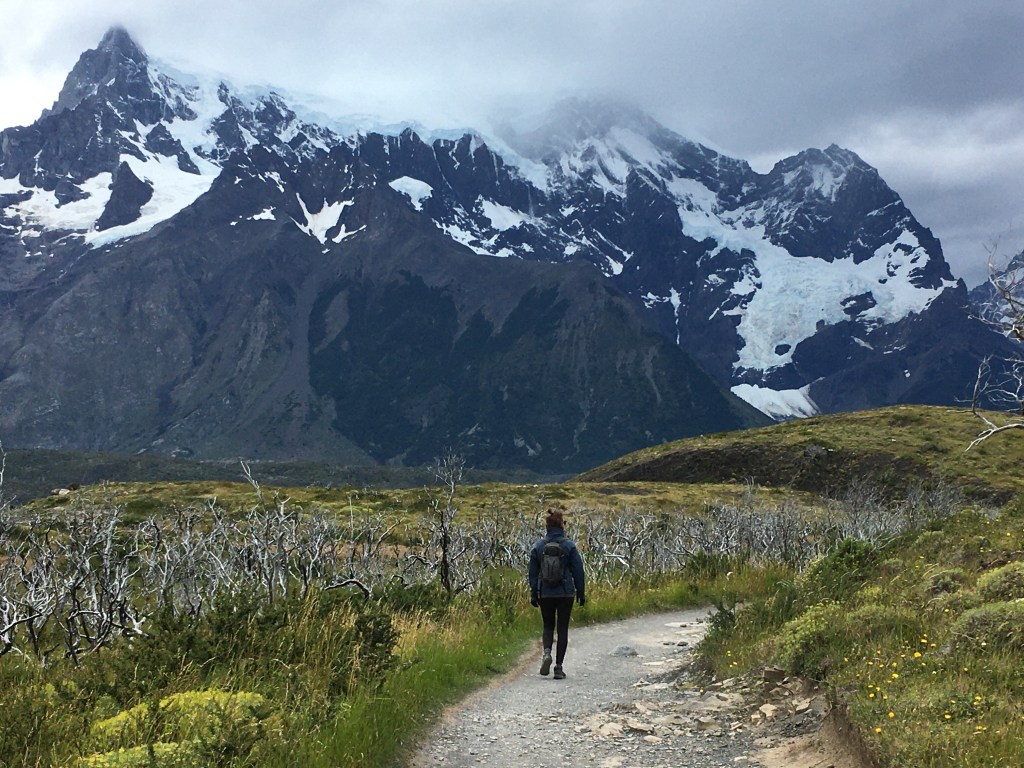
Monday – our last day in the national park – featured a (pricey) boat trip across Lago Pahoé to Paine Grande, and then a 17.5 kilometre walk back to Administración. The wind was so much more gentle in comparison, and for most of the walk we had light wind, light rain and sun – not separately, all at the same time. We took our time. Dan finished the book ‘All The Light We Cannot See’ amongst the rippling long reddish grasses that moved like the sea. We munched on Calafate berries that turned our spit purple. We contemplated immigration issues.

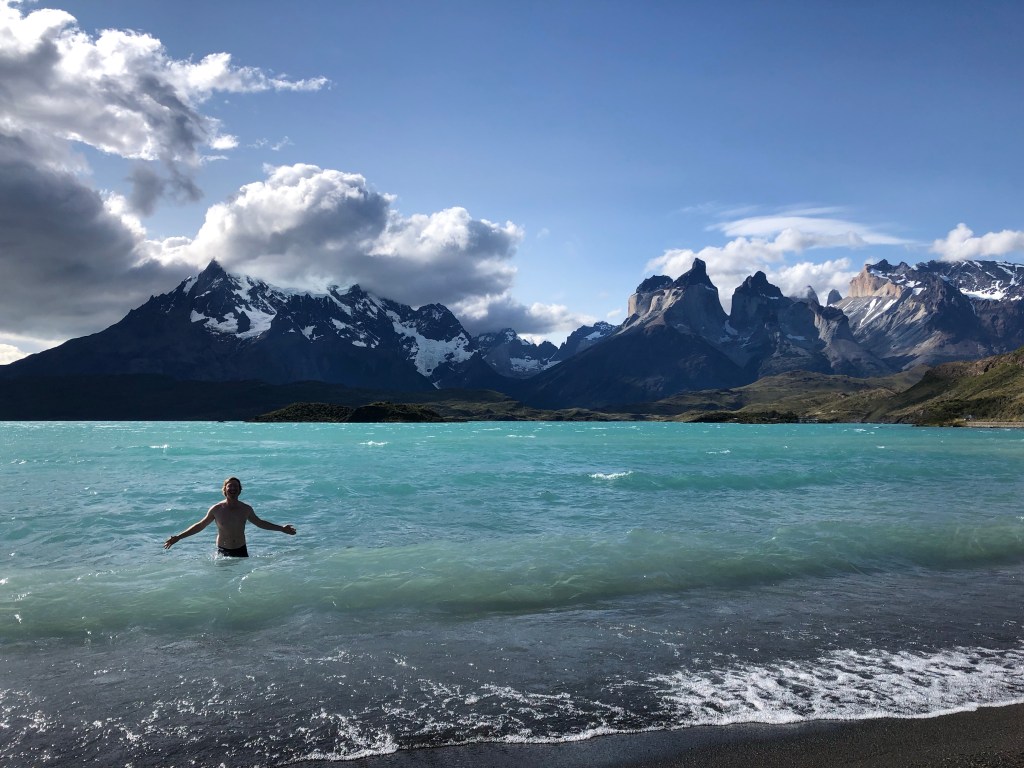
Two ladies – a mum and daughter – kindly gave us a lift most of the way back to our car, winding around these turquoise lakes lit up like a lamp by exposure to the sun. We joined them to check out the Salto Chico waterfall.

Between lifts, Dan jumped in the lake (not metaphorically)

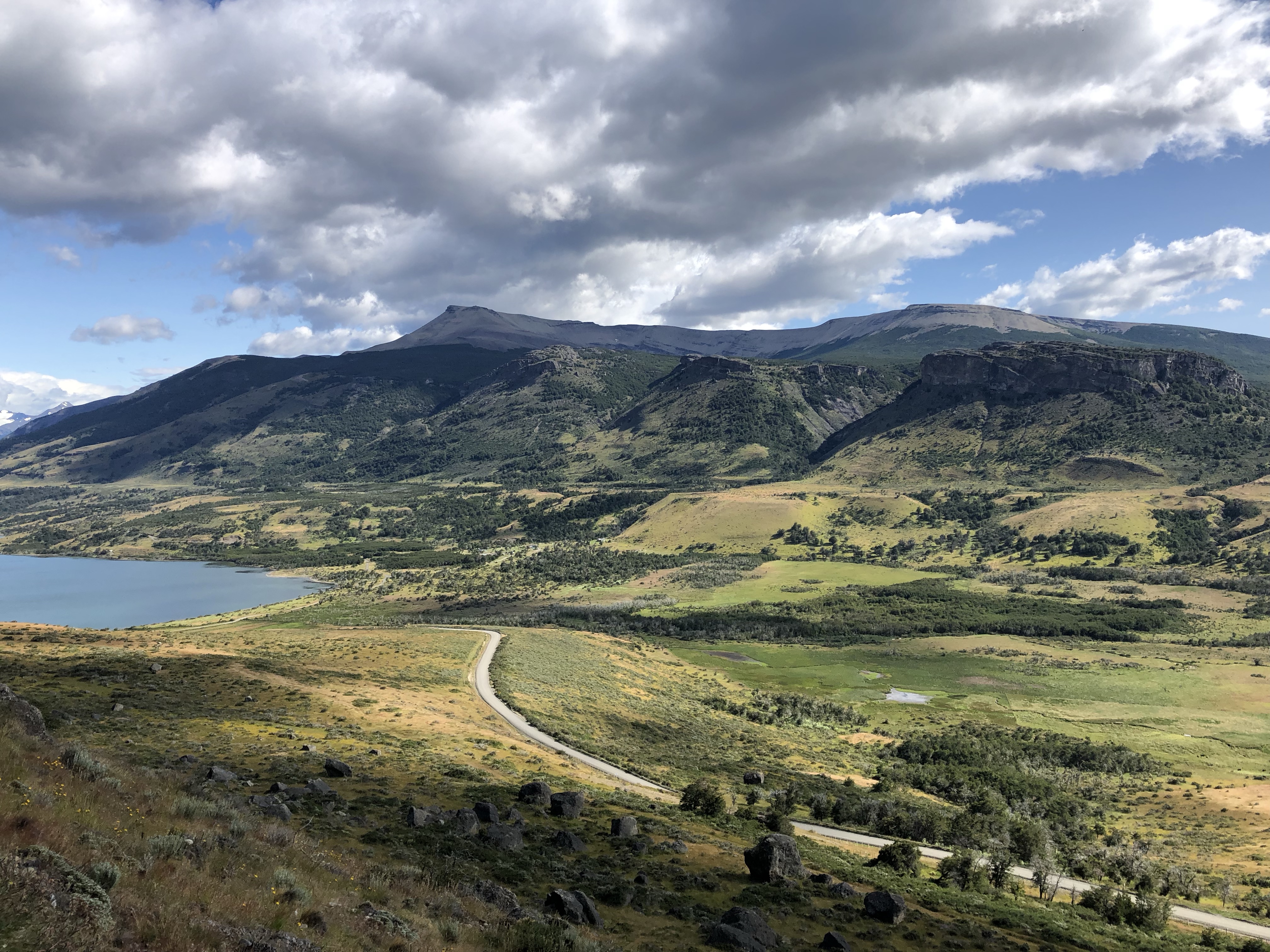
Our drive out of the park was just as stunning as on ones in and around. Dan described the rivers in the landscape as ‘slicing through open plains’. Hills around us we’re frequently topped by what looks like rock walls – you could have fooled me that they were the remains of medieval forts if I didn’t know a bit about the region’s history (no one was building medieval forts).

We pulled up in the camping area on the banks of Lago Sofia for the night. Like the national park, the sand was a dark almost-black (with lighter stones on top) and the water was crystal clear. The camping spot sits in a lush valley where, were it more conveniently located near Brisbane, I’d erect a cabin in a heartbeat. The hills on each side were topped by rocks, and across the lake was a view of mountains.

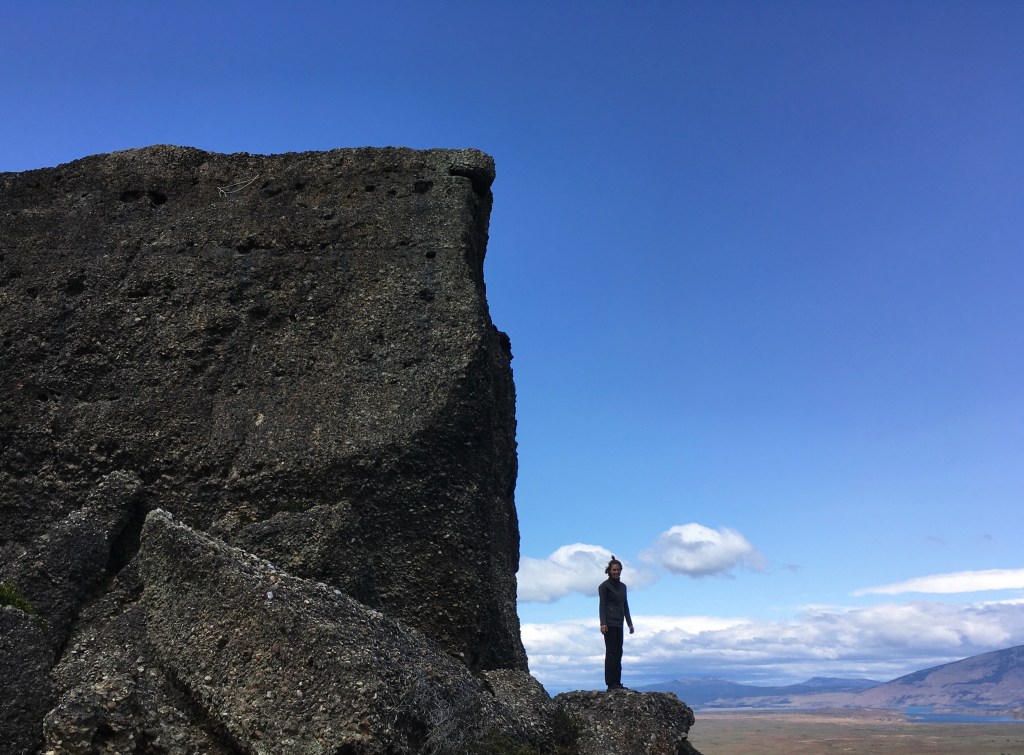
In the morning, we explored the rocks closer to us and watched some rock climbers on the wall. The rock looks quite bubbly, formed of whole rocks suspended in a compressed sediment layer. So many (tiny) handholds!

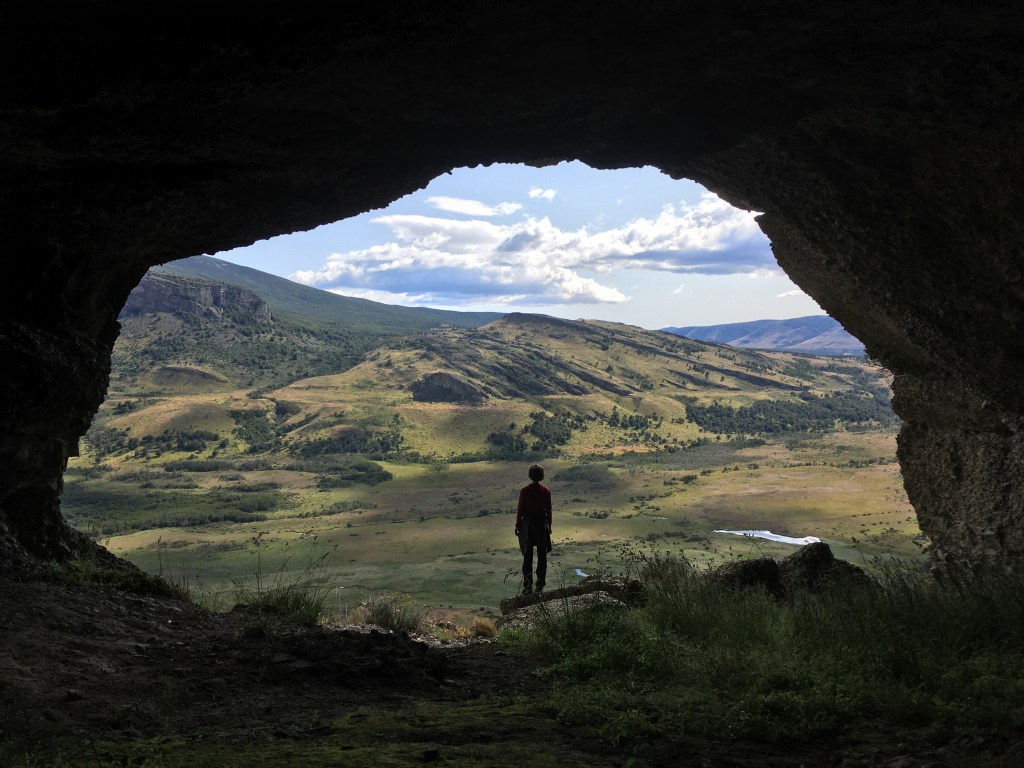
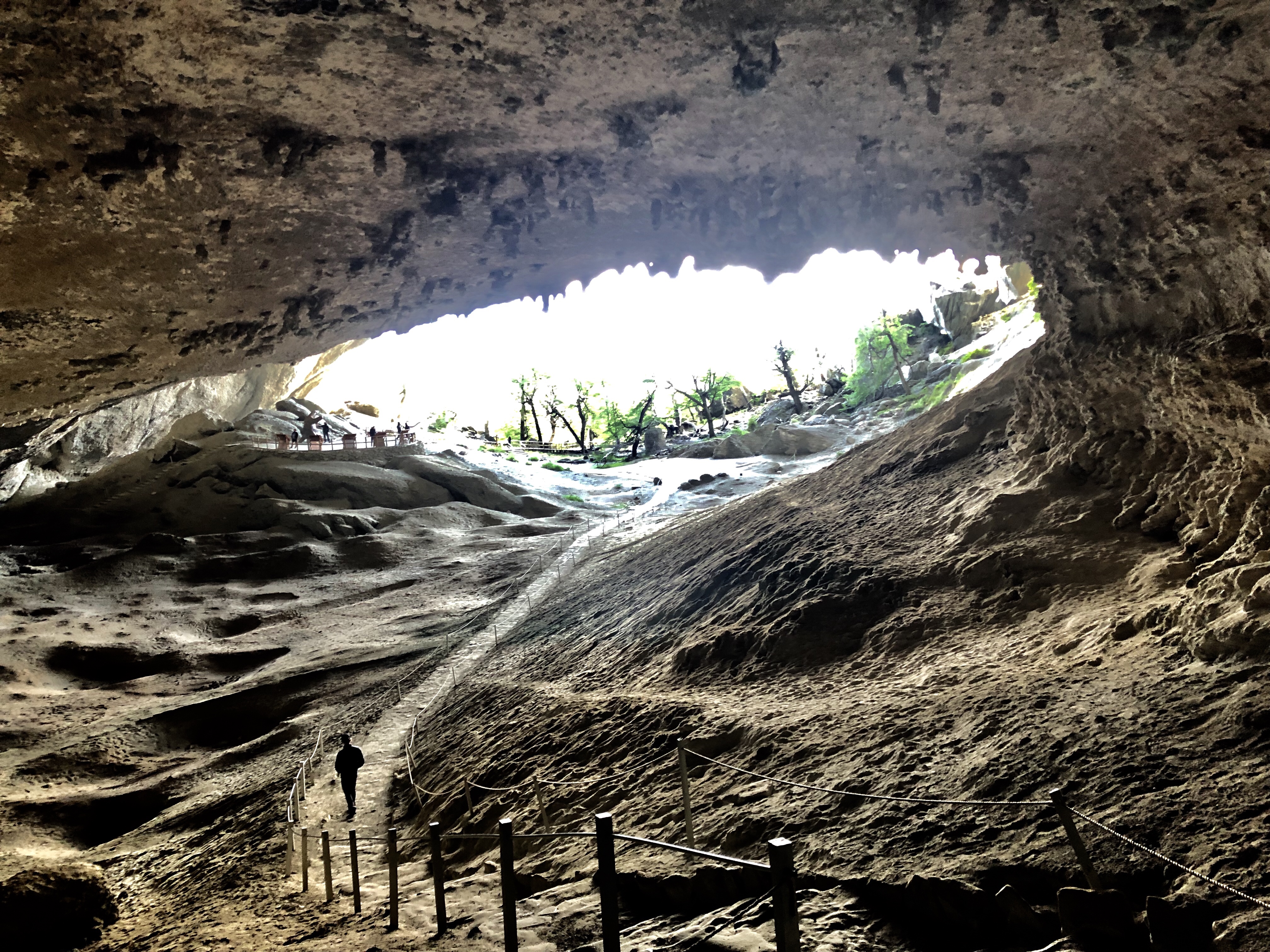
On our way back to Punta Arenas, we stopped at Cuevos de Miladón (Miladon caves) – enormous cavernous spaces which have preserved the evidence of early human life in the areas. We even got the bikes out to scoot along the paths between sights.

We’ve decided to shed our warm layers and head up to Santiago tomorrow. I’m looking forward to warmer weather, hopefully some dance classes, and re-engaging with city life. Full steam ahead!

VRPS (and DPS, who gives creative direction in selecting photos)

[Punta Arenas]
Checking out how chilly Chile is

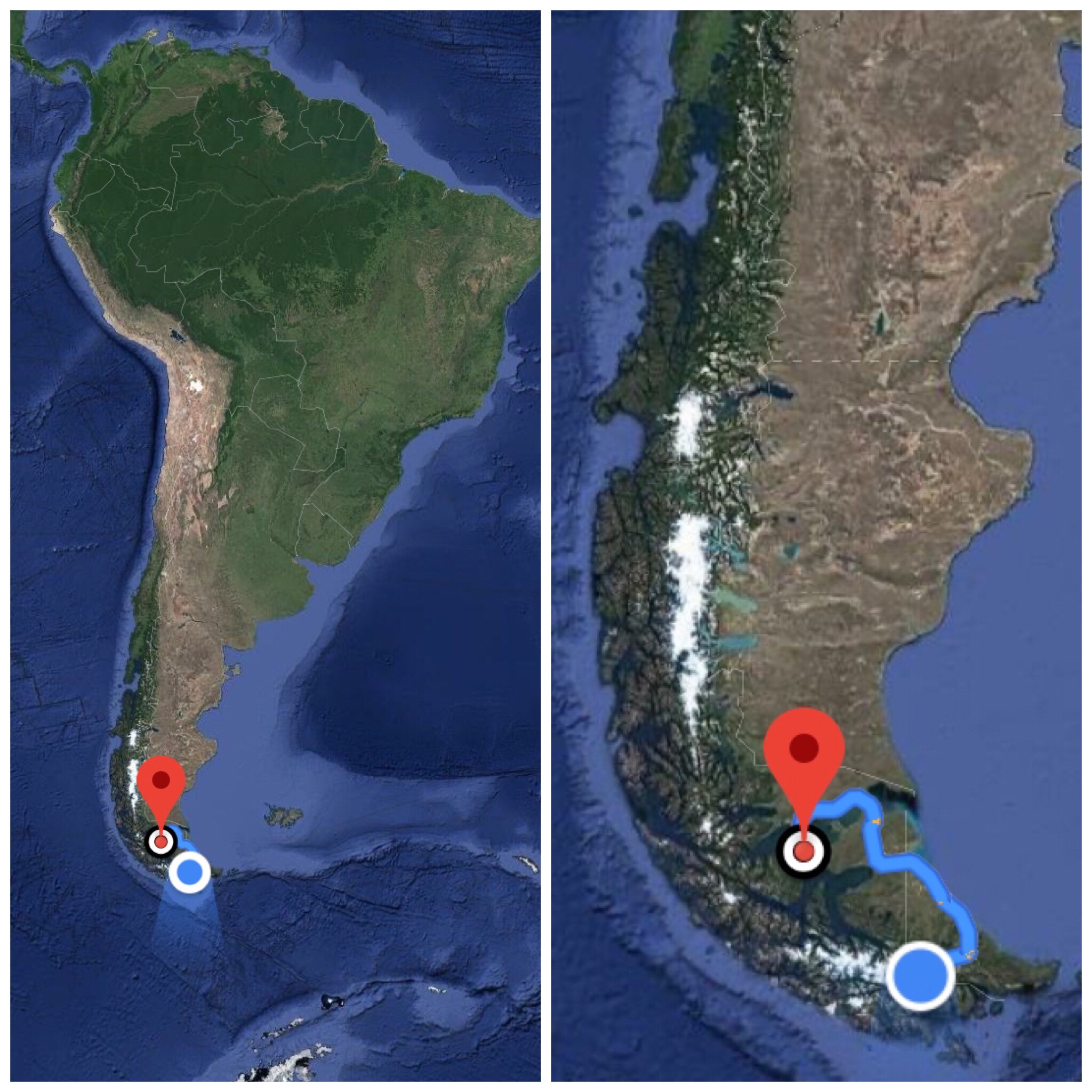
This is how far we got in ten and a half hours of bus travel today. This continent is bloody massive.

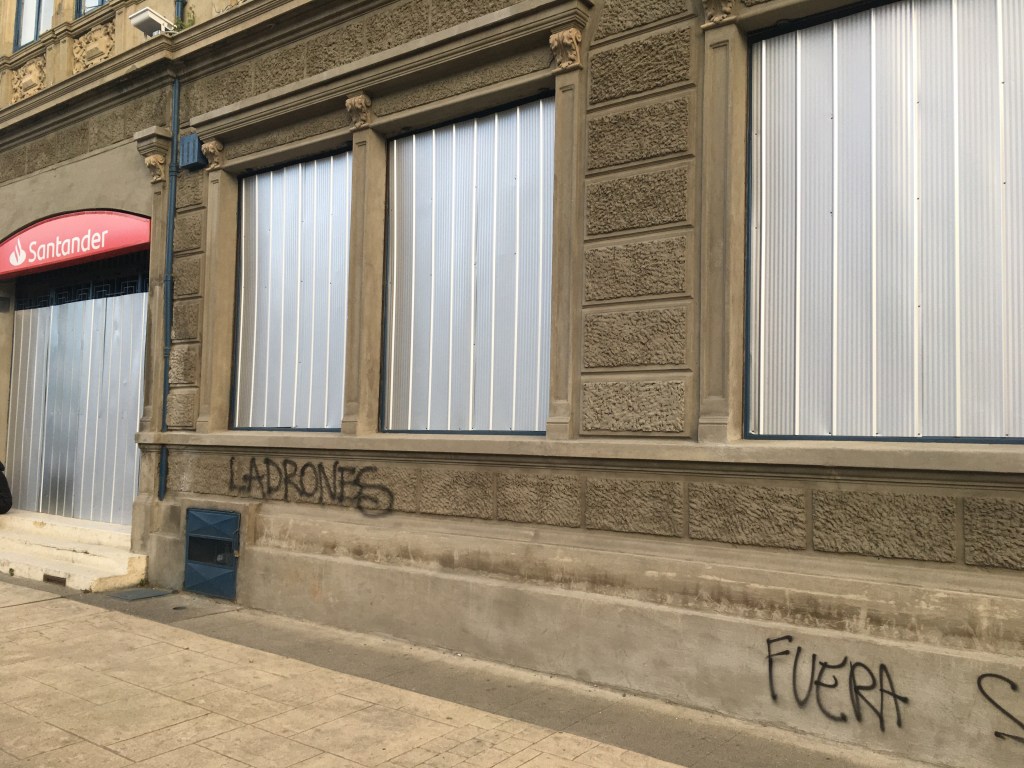
We’re now in the delightful Punta Arenas, Chile. There’s this incredible juxtaposition between this light, breezy city with its colours and wide roads, and the graffiti and tightly-locked shops which show that the Chile protests are not confined to Santiago.

‘Ladrones’ means thieves

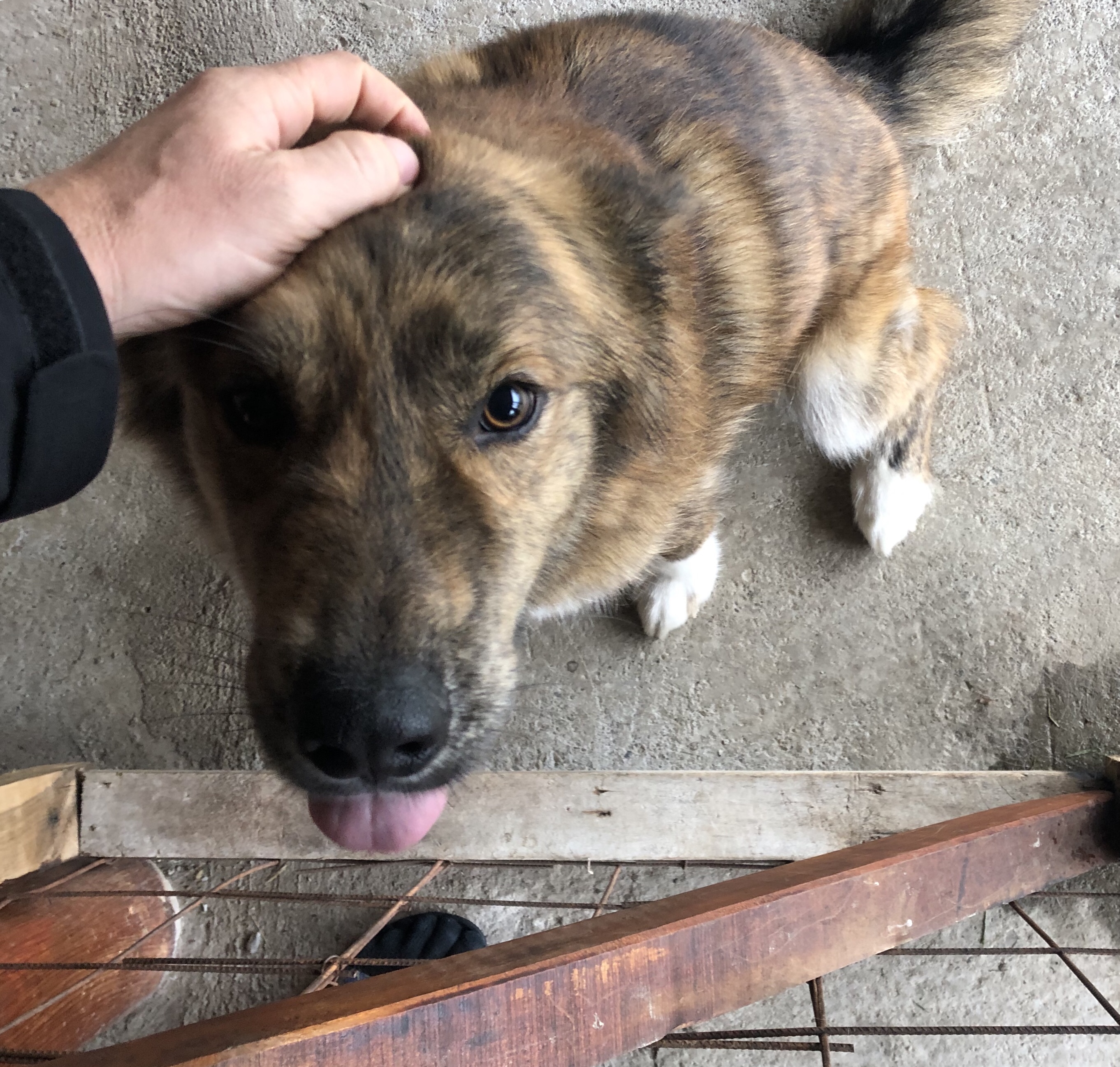
We may not (yet) have a charger that works in this new country, but at least our Airbnb is full of three affectionate cats and an affectionate dog.

VRPS

[Punta Arenas]

Llanos de Castor (the beaver plains)

The first day out of Ushuaia was a slow day. Sometimes I wonder if it’s worth writing on such days, but I want to enjoy the magic of slow, gentle experiences as much as the magic of the rapid, explosive ones. By attempting to capture moments in writing, it’s my way of acknowledging how special they are and how very, very fortunate that we are to be experiencing them.

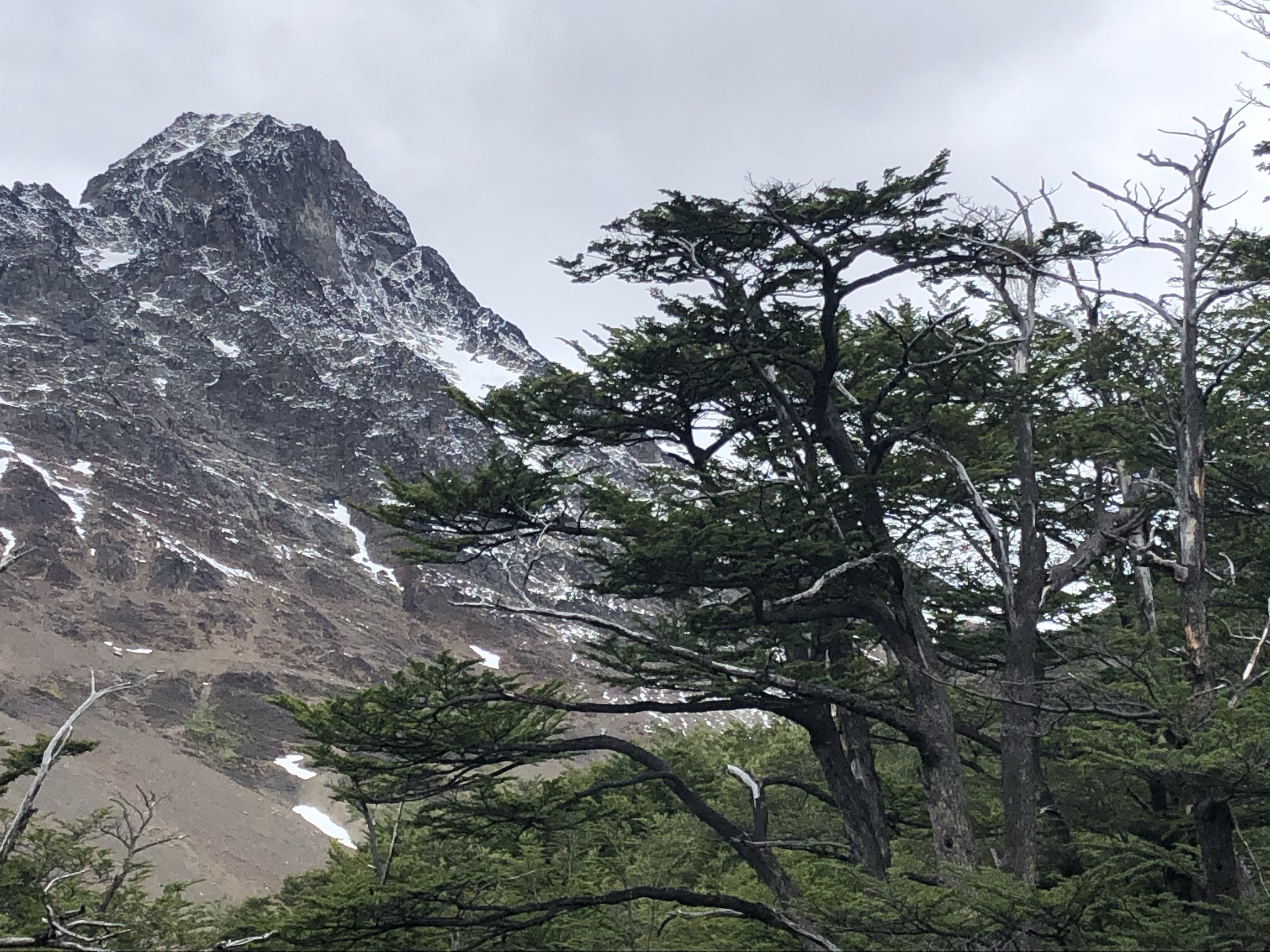
We took the highway out of Ushuaia winding east and north towards Laguna Esmeralda. The journey provided a shifting view of the mountains and their many layers. I’ve decided that the upper rocky layers (if you ignore the lush forest below) seem to be a scene from Mars – they are barren but have this ethereal marbled texture to them that seems to be most commonly used when depicting other planets.

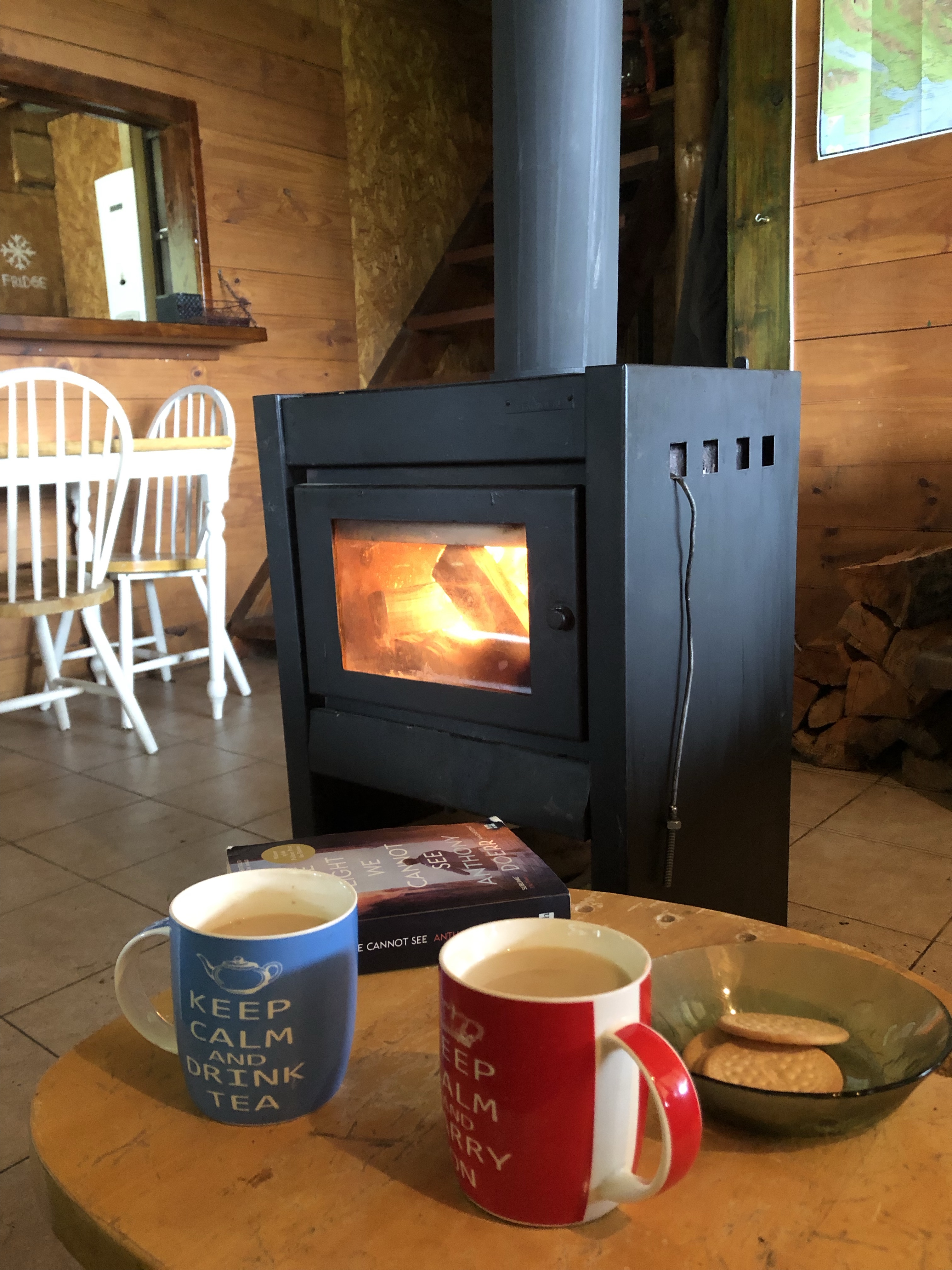
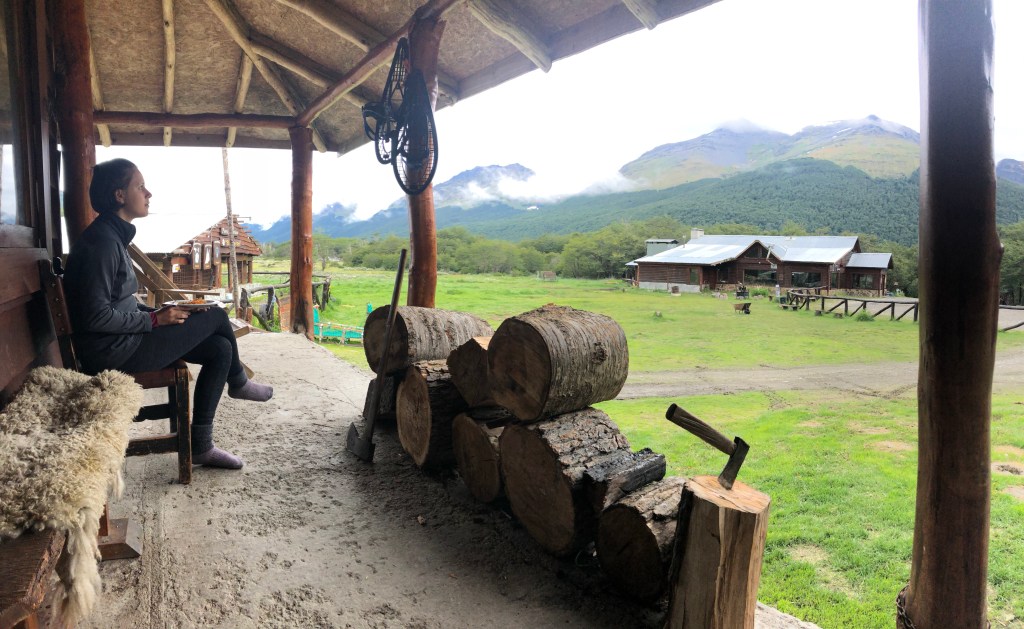
We are staying in a cabin on the grounds of a winter adventure centre. The place is very simple, but the couch is comfy, the fire is warm, and the views of the mountains fade in and out depending on how much rain there is, and how low the clouds are hanging. The mountain over is a ski lodge, and it’s quite amazing to see the different ski paths gently carved out in the soil. Such a foreign sight without snow.

There’s a unknown number of greyster dogs (maybe twenty/thirty?) staying in the large kennel complex next door to us and one on our balcony, all who are no doubt hankering for next winter for a proper sledding runaround. They’re gorgeous dogs. Every half an hour or so, one of them starts a wolf-howl and they all join in for a few minutes of all-our choir. Some take on the low tuneless drone, some do the traditional parabola howl, and others chime in with some guttural barks. It’s quite melancholy music.

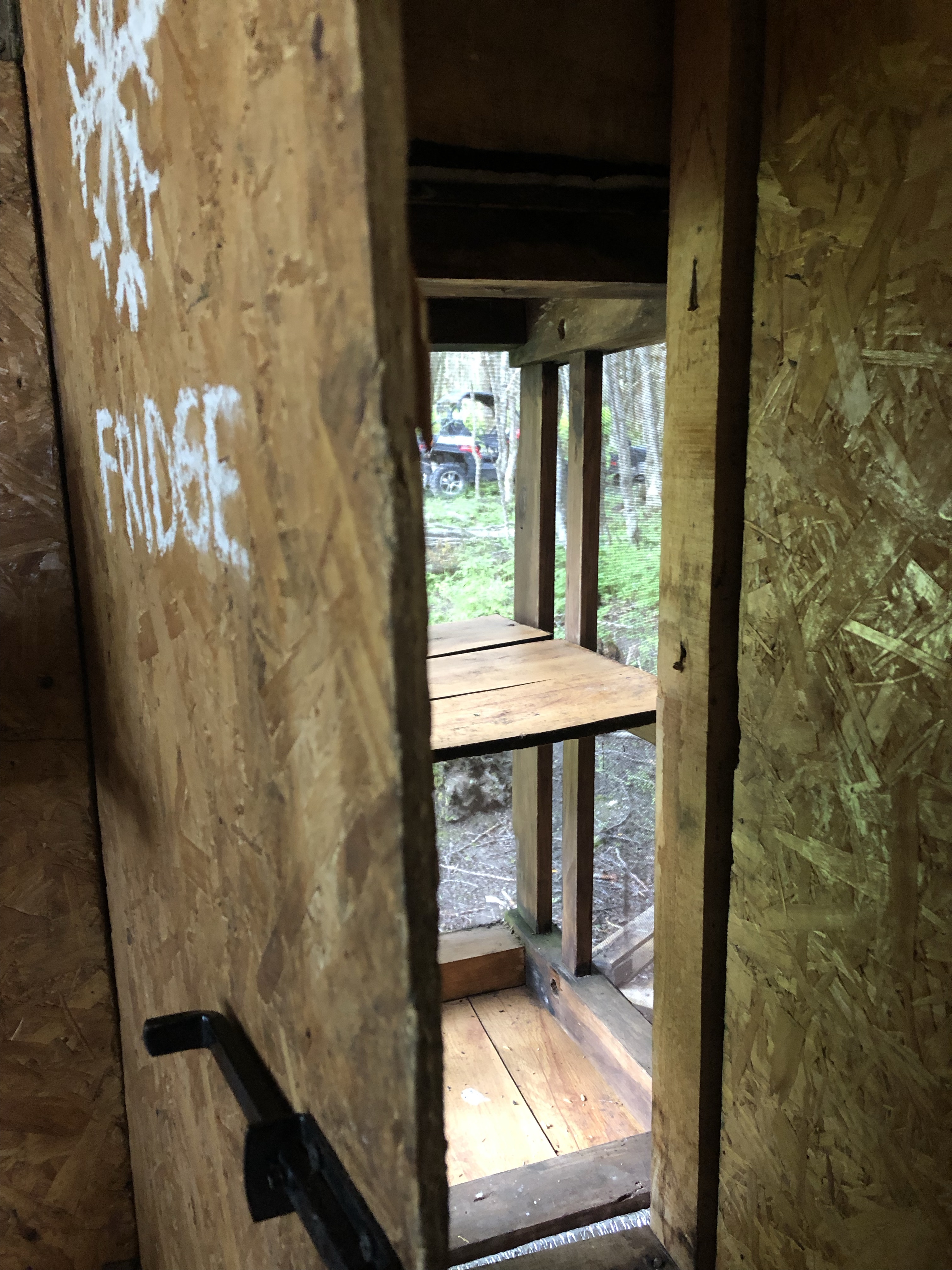
The final quirk about this lovely place is the fridge. Unlike the traditional whitegoods we’re used to, this fridge opens to an outdoor hutch – nothing more. Even in summer, the air is enough to keep food cold.

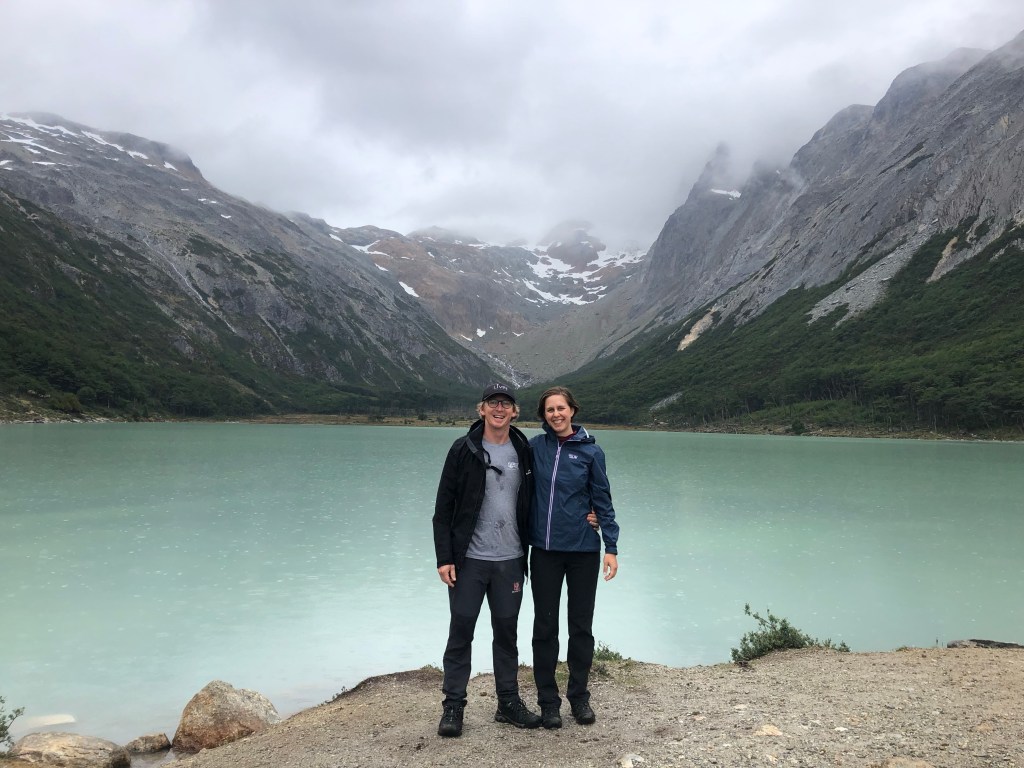
Day two out of Ushuaia was very cloudy and on-and-off rainy. When the rain was fairly light in the morning, we made our way to the Laguna Esmeralda trek where we started the muddiest, slushiest walk of my life. Dan has the balance and footing of a knight and gandered through, however I was less quick and less graceful. We made it through the forest sections, and then through the massive peat bog to the beautiful lake itself.

Not pictured: mud decorating the backs of our pants up to our knees

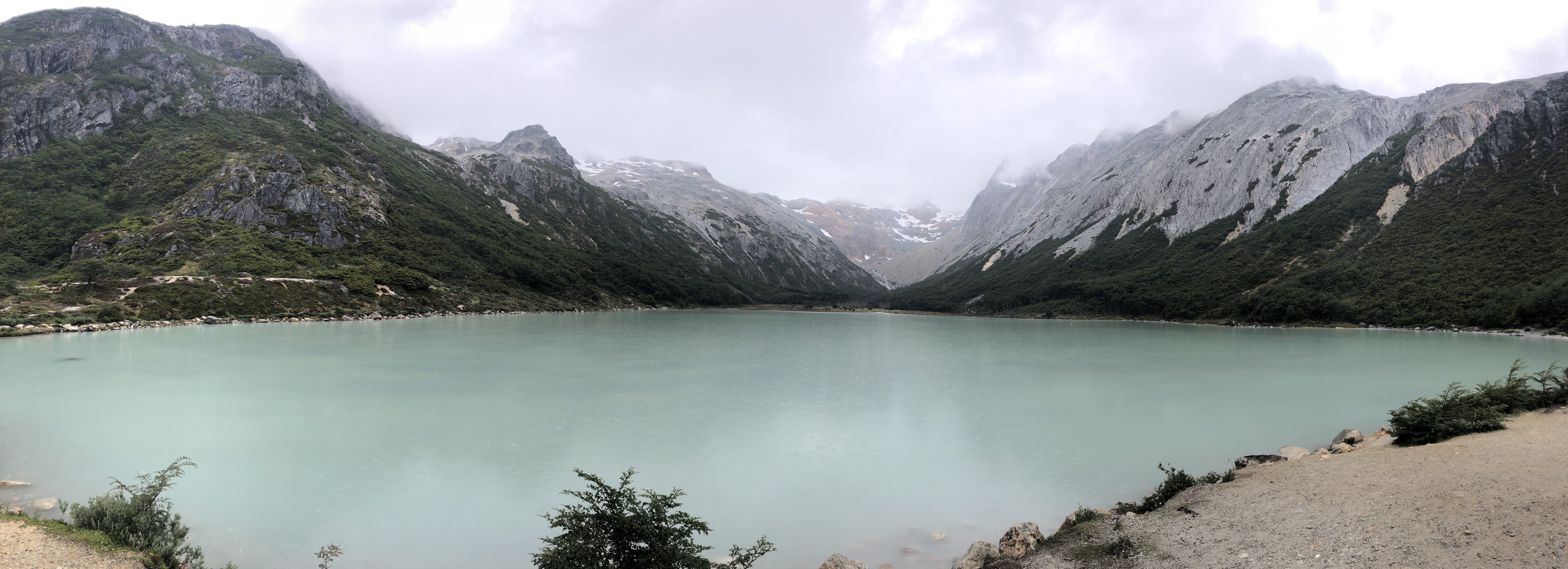
It was a very different colour to Laguna del Caminante. Esmeralda, at least today, is a pale milky blue. She’s surrounded closely by mountains, half of which were in the clouds. As we walked back, we got to enjoy the shapes the people in the tour groups made as they tried to pick their way through the obstacle course that was the trek.

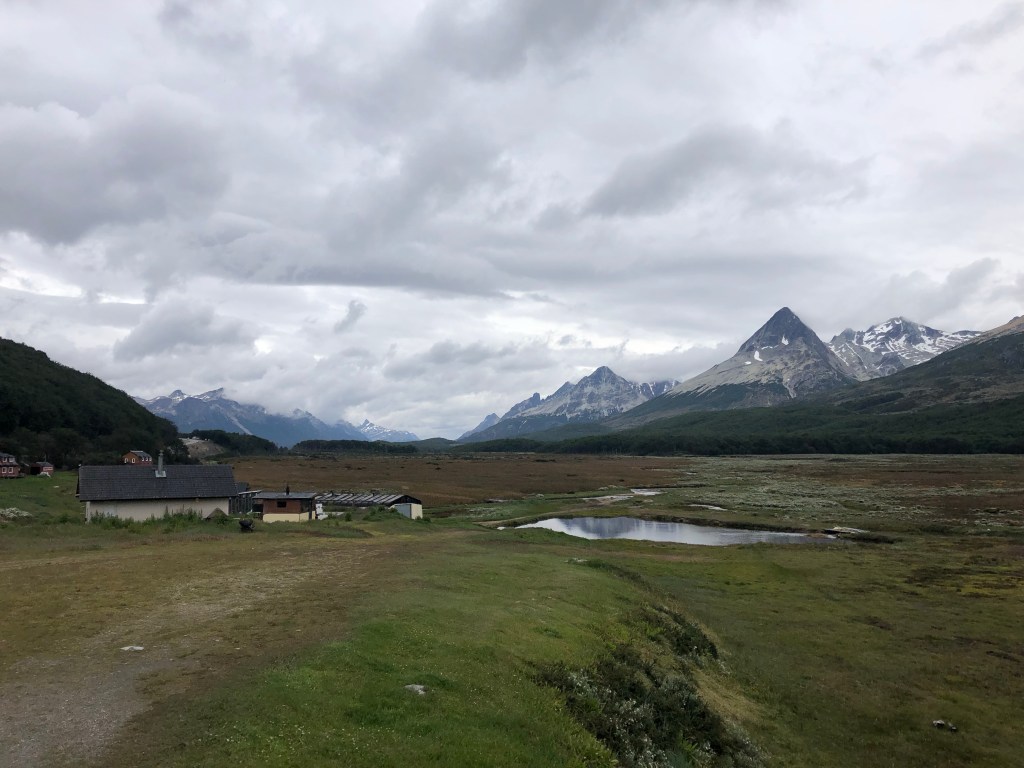
We continued on a different walk back to our cabin, via the incredibly-placed Tierra Mayor restaurant for lamb stew lunch. This impressive house sits on the edge of a valley of shallow peat bog, giving it an uninterrupted view of the mountains on both sides.

For the afternoon, we curled up in front of the fire like cats, and read books like humans. Game of Thrones continues to be enthralling, so I allowed myself only an hour at a time before partaking in some other activity – stretching, exercise, Spanish (preterite v imperfect). My own personal summary of today in Spanish came to less than fifty words – I can be so concise sometimes. Just not when blogging.

We’re back in Ushuaia now, enjoying the best coffee in this town (Cafe Xpresso) and shelter from the rain. Tomorrow we’re on a bus to Punta Arenas, where we pick up a campervan for a week of motoring around the Torres del Paine national park in Chile. Once we’re in the heart of it, I’ll have an update more exciting than ‘hour nine of the bus trip – I finish one book and start another.’

VRPS

[Ushuaia]

Incredible sights (and sites)

We left Ushuaia for the Laguna del Caminante trek on Friday 10th, and I’m now getting a chance to capture some of our experiences two days later.

What an extraordinary journey.

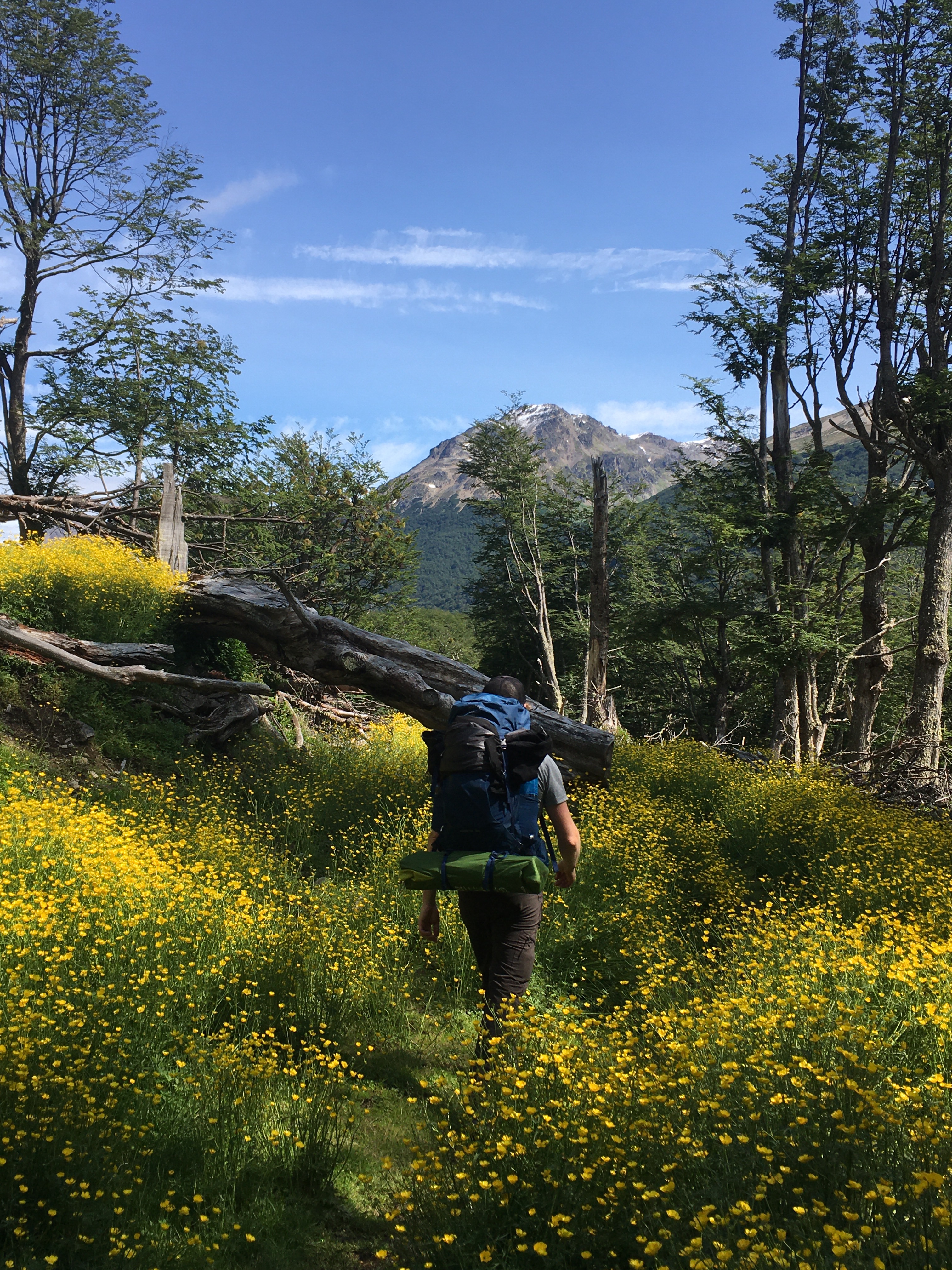
The first section of the journey in from Valle de Andorra starts in fields of buttercups – sunny yellow stretching in either direction. Soon after, for the next few hours, it become a forest trek. While the landscape is beautiful, the path itself is not so much. What felt like every few metres, we were stopped by muddy, boggy areas which required us to slowly and delicately squelch a path through.

On either side of us were mammoth (well, it seemed so from the base – they’re probably only 1000m high or so) snow-topped mountains, peaking through the forest trees. After peachgate about an hour in (peaches juicing all through my bag), it was fairly smooth sailing. We passed very few people – maybe eight or so – so it largely felt like we had the place to ourselves.

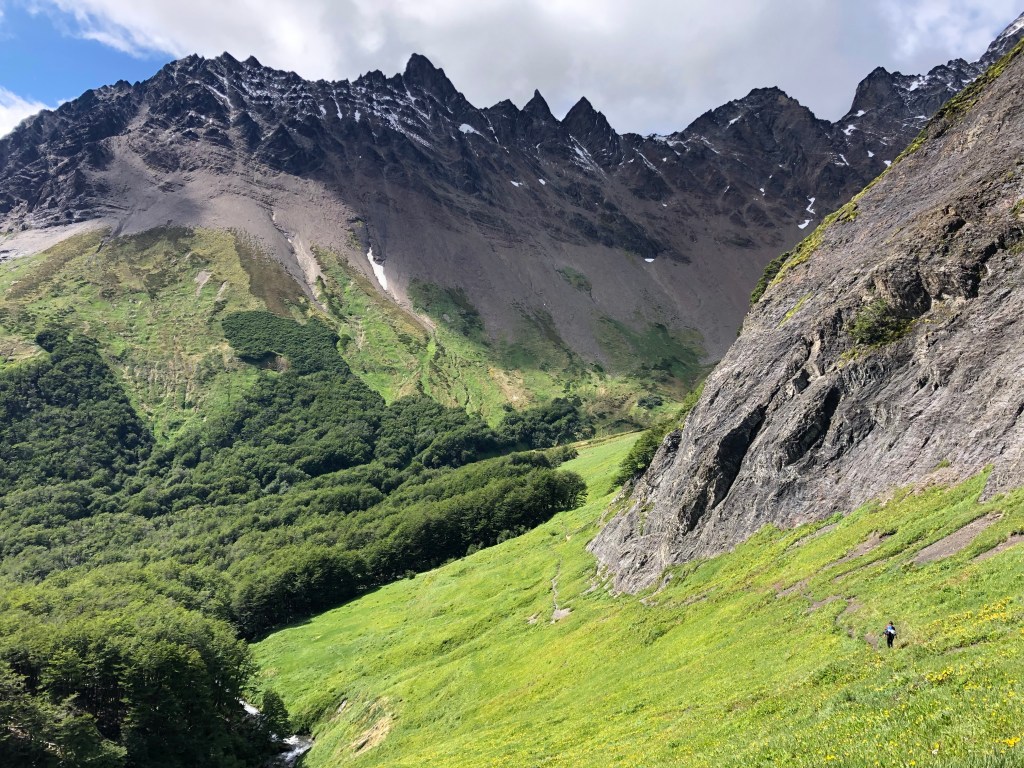
The final section was trying – a steep assent through the trees to finally emerge into the meadow layer of the mountain. While stunning, it was also a difficult section following a narrow sloping gravel track with steep meadows on either side leading down to a rushing river. The scenery was idyllic – not just immediately around us but we were gifted a view of the range.

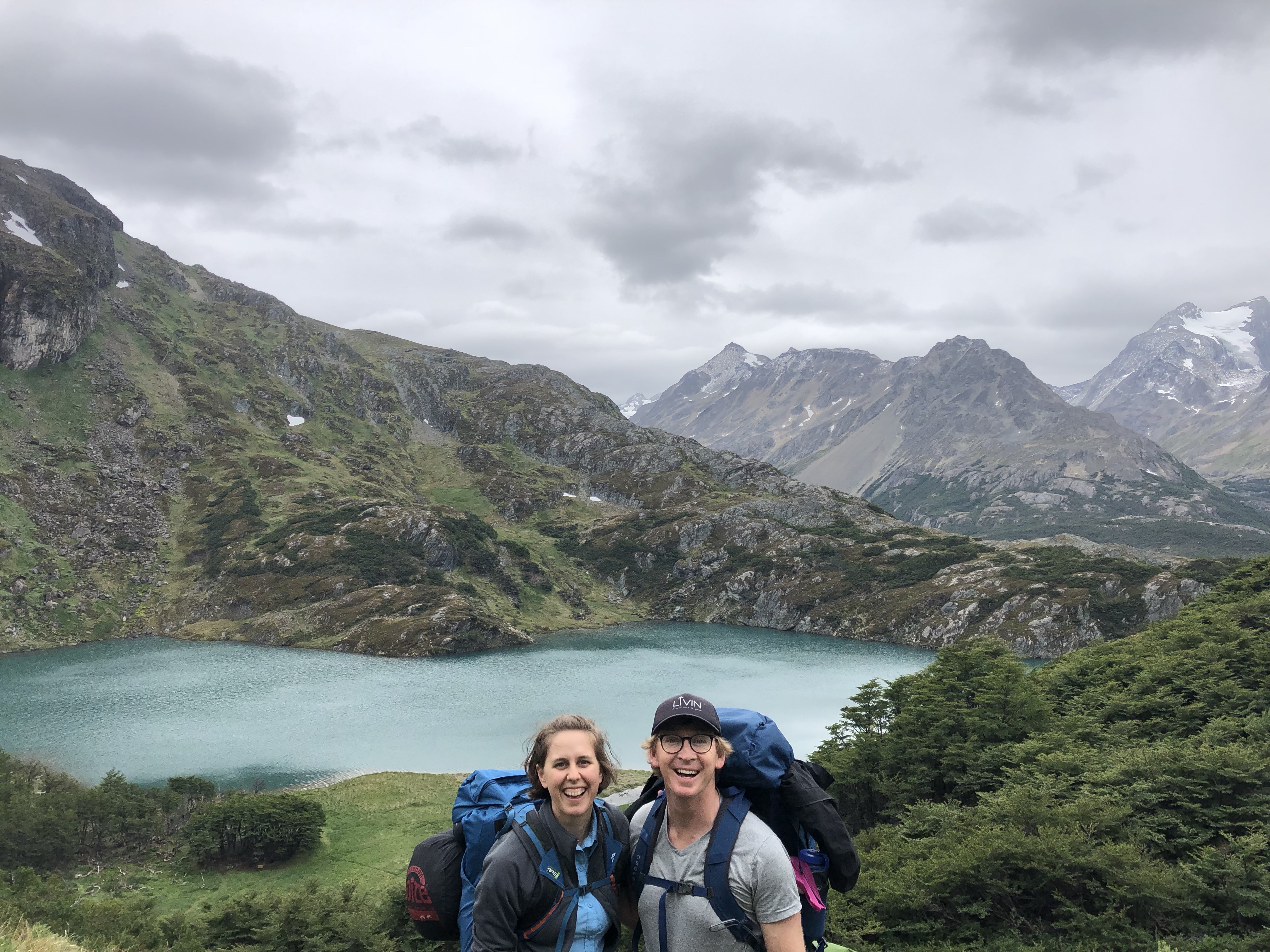
The pictures that capture this trip best are those that show us as tiny specks amongst a much larger landscape. We really did feel like we were in the presence of giants.

I’m in the bottom right hand corner (this is taken on the second day leaving the laguna)

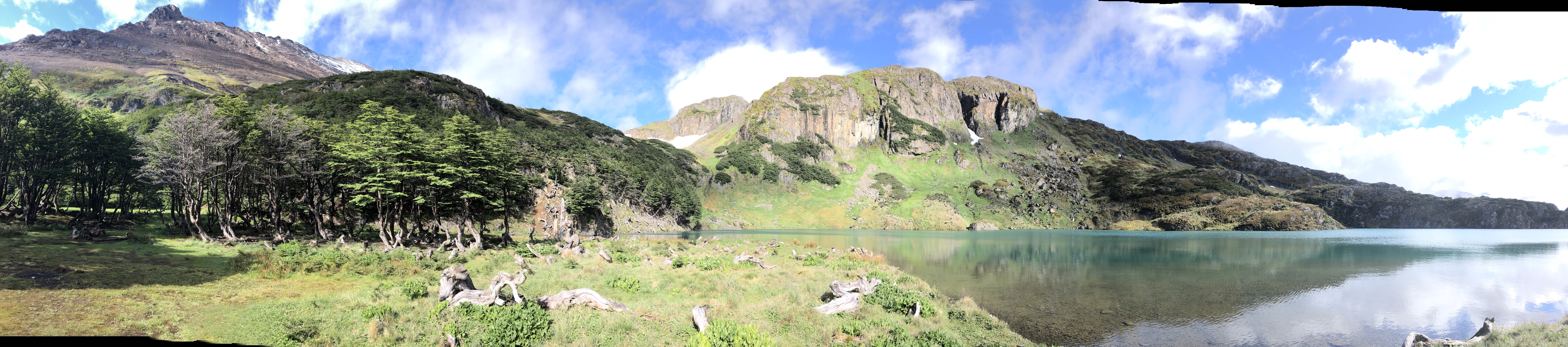
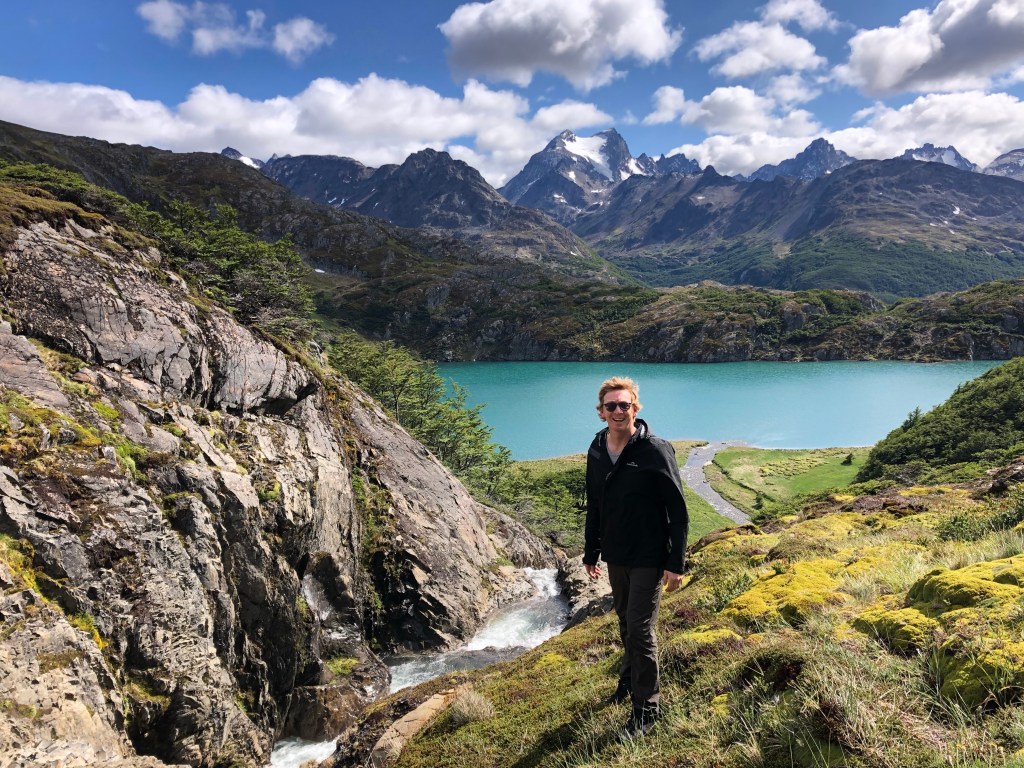
Passing the ridge, we then descended towards Laguna del Caminante – a stunning aqua lake around 550m above sea level. (Maybe it’s ‘teal’ instead of aqua – you decide. To me it’s a shade that almost seems self-illuminating – not just reflecting the light but seeming to create its own.)

We camped in the trees near the shore of the lake, listening to the thunderous waterfall leading into it and the rain which persisted from the time we got there until the next morning. It was strange going to sleep while it was still light. You don’t rise and retire with the sun here.

On the second day, we woke to thick clouds obscuring our view of the lake, which was only metres from our tent. Over the next few hours, the clouds lifted and the sun started playing peek-a-boo (and didn’t stop for the rest of the day). We both braved a refreshing dip in the lake and set off for the Paso de la Oveja.

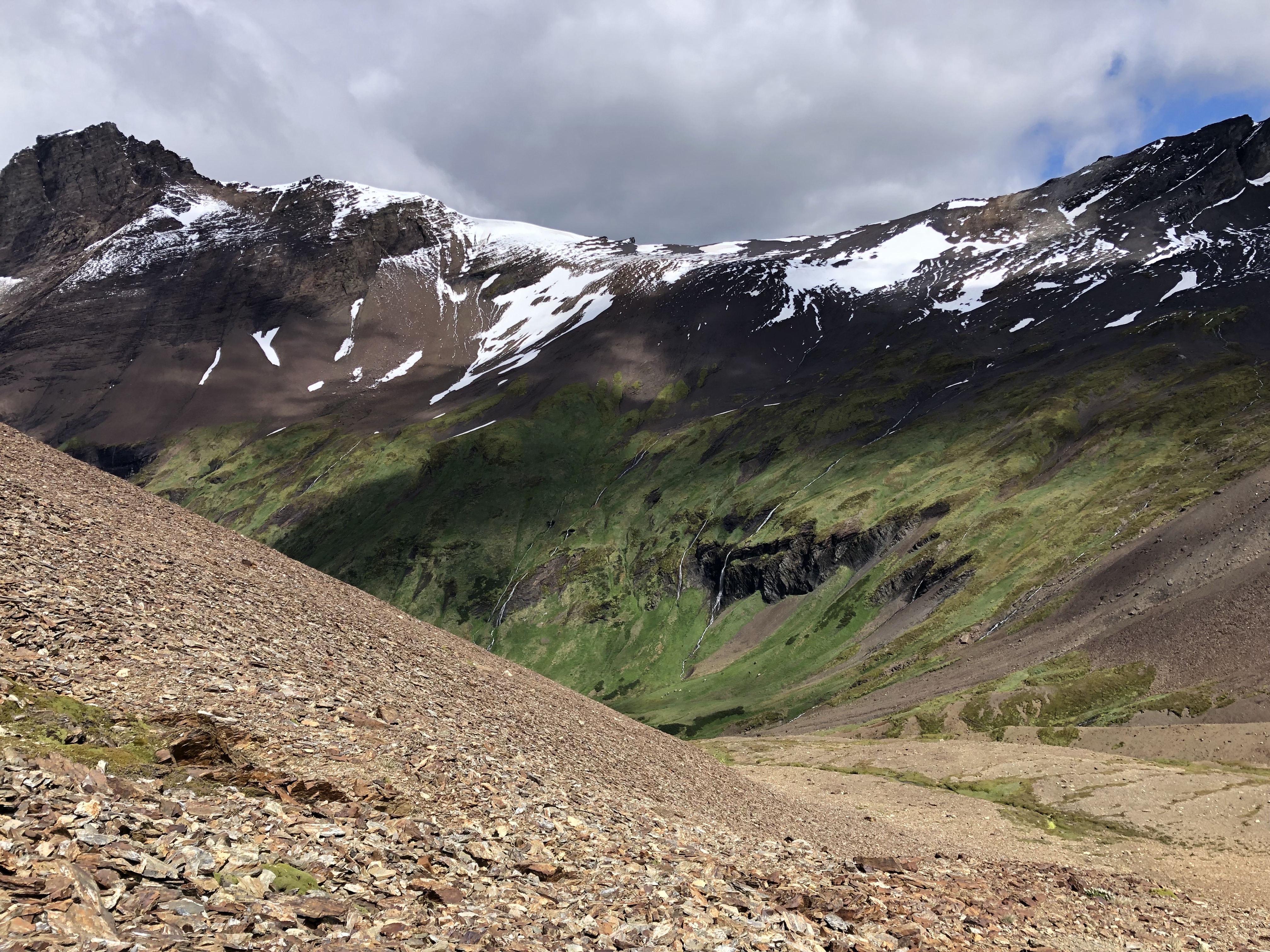
This day took us above the meadow layer into the slate layer of the mountains, above us only the rock layer with some snow and ice. Slate made for much easier walking than the mushy mud puddles of the forest and the rakish slopes of the meadows. We traipsed upwards, stopping at an icy section for Dan to have an accidental dip in the frigid waters of the stream, until the view of the next valley emerged – such an enormous, sweeping landscape.

Like most (or all) photos, this doesn’t do the real sight justice.

We followed the slate layer into the valley, staying fairly high up, with an amazing view of where we were going and where we’d been. The final section – winding down the slate layer and through the forest – was just exhausting. We finally emerged at a gravel quarry, and eventually to the highway. We were spent.

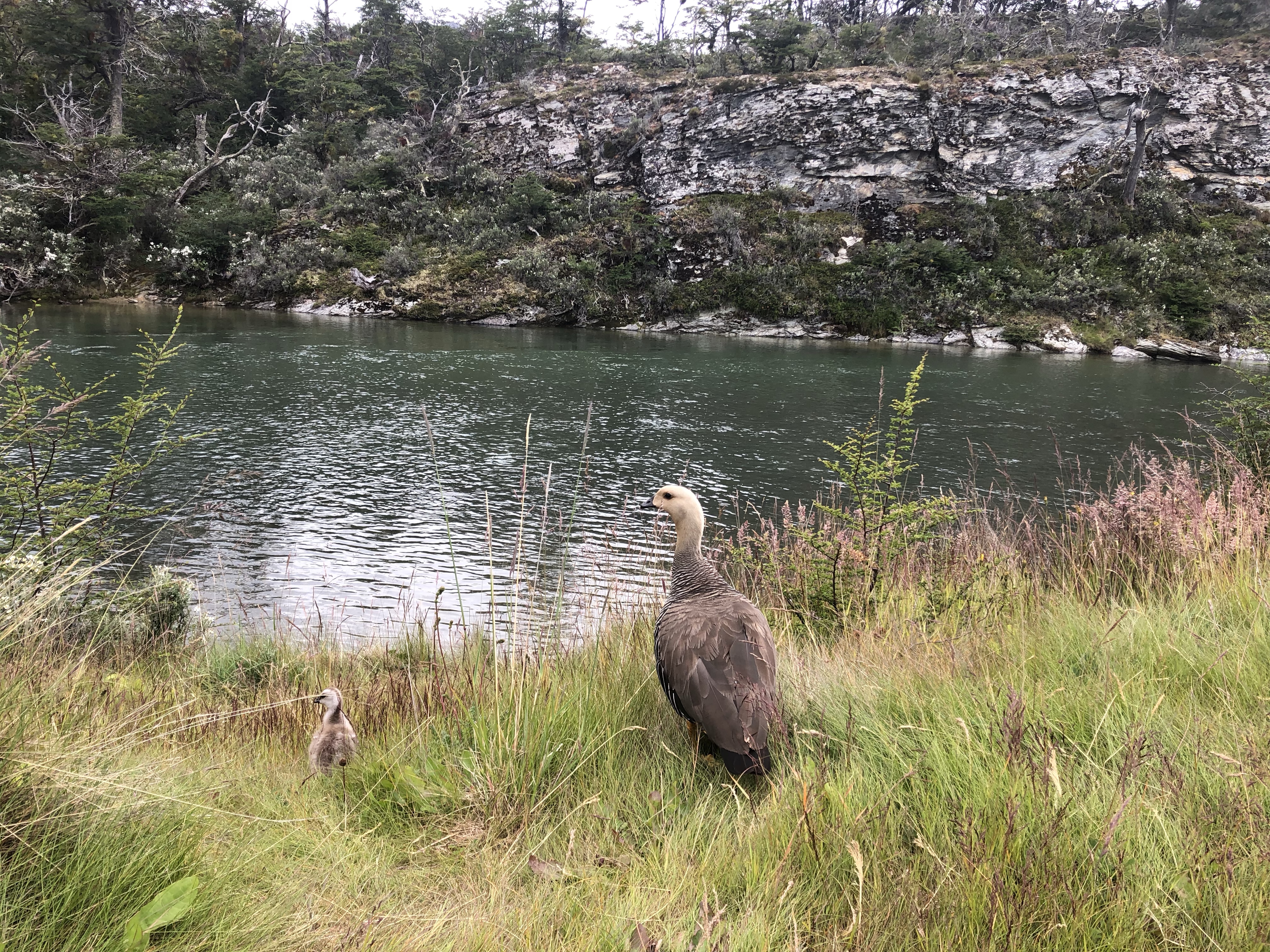
We made our way to the Parque Nacional Tierra de Fuego – the national park to the west of Argentina, on its border with Chile. Camping was free (though entry to the park wasn’t) and we set up in a beautiful spot to the west of the park where large grassy fields were surrounded by a gentle river, with mottled rock walls on the other banks.

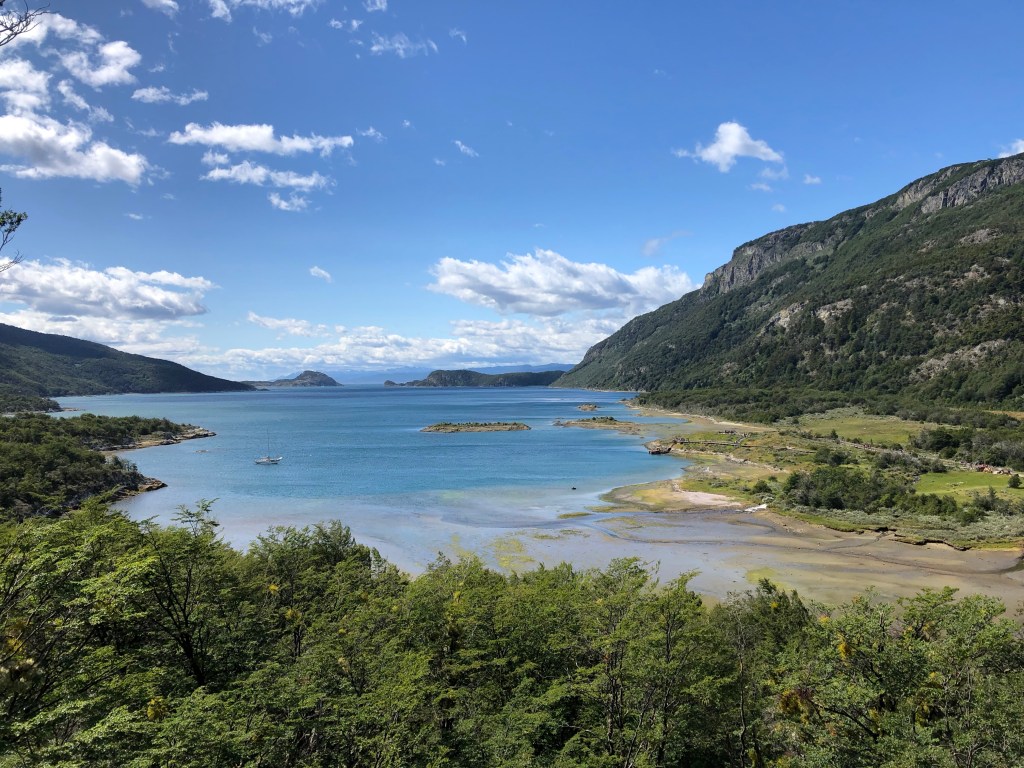
This morning, we set off on a number of different trails in the national park, with the standout sight being the Bahía Lapataia – a sparkling bay surrounded by beaches, forests and mountains.

The mountains are more sparse in the national park than the trek. I don’t think I can overstate just how much we recommend the trek – it’s an extraordinary journey to some extremely special places. Prepare to be challenged – especially if carrying the extra weight of camping gear. But it’s worth it – weather permitting, it’s absolutely unmissable. (We’ve later found out there’s also an amazing cave in the Paso de la Oveja so if you ever do the trek, seek it out!)

There are so many spectacular photos we have from the trek that it’s so hard to pick which to share but here’s a favourite

With all our various aches, we will have a very gentle arvo and will set out for a few nights out near Laguna Esmeralda tomorrow. It may be a few days before I write again.

VRPS

[Ushuaia]

Homely indulgences

While the rain has cleared, we still decided to take it easy today and prepare for a two-night hike starting tomorrow (so it will be a few days before I report back).

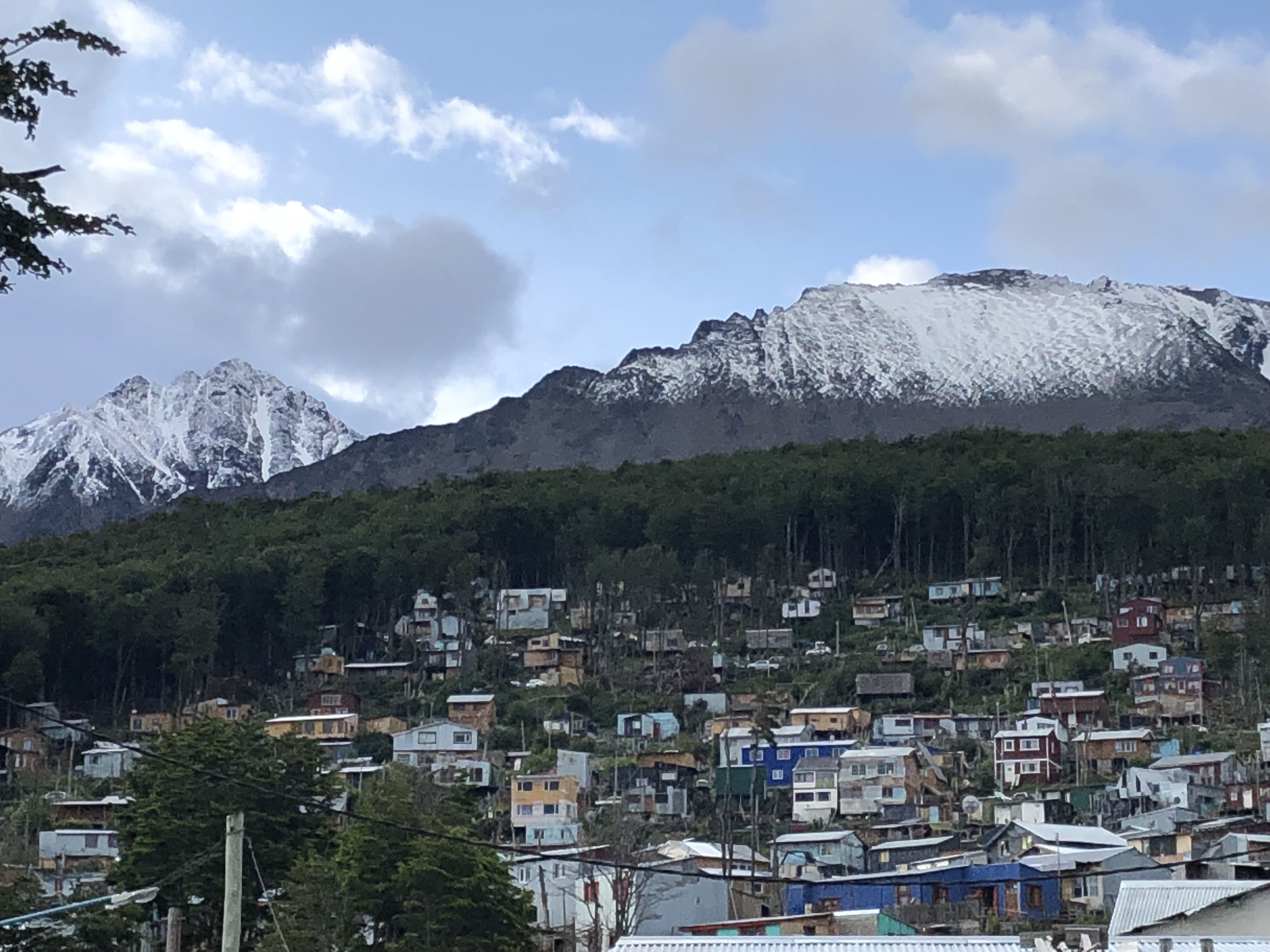
I went for a walk around the ‘burbs this afternoon (and by afternoon, I mean around 6 pm because the sun won’t set until 10/11 pm) chasing a shot of the icing sugar mountains that wasn’t obstructed by powerlines. I eventually found this beauty of a view:

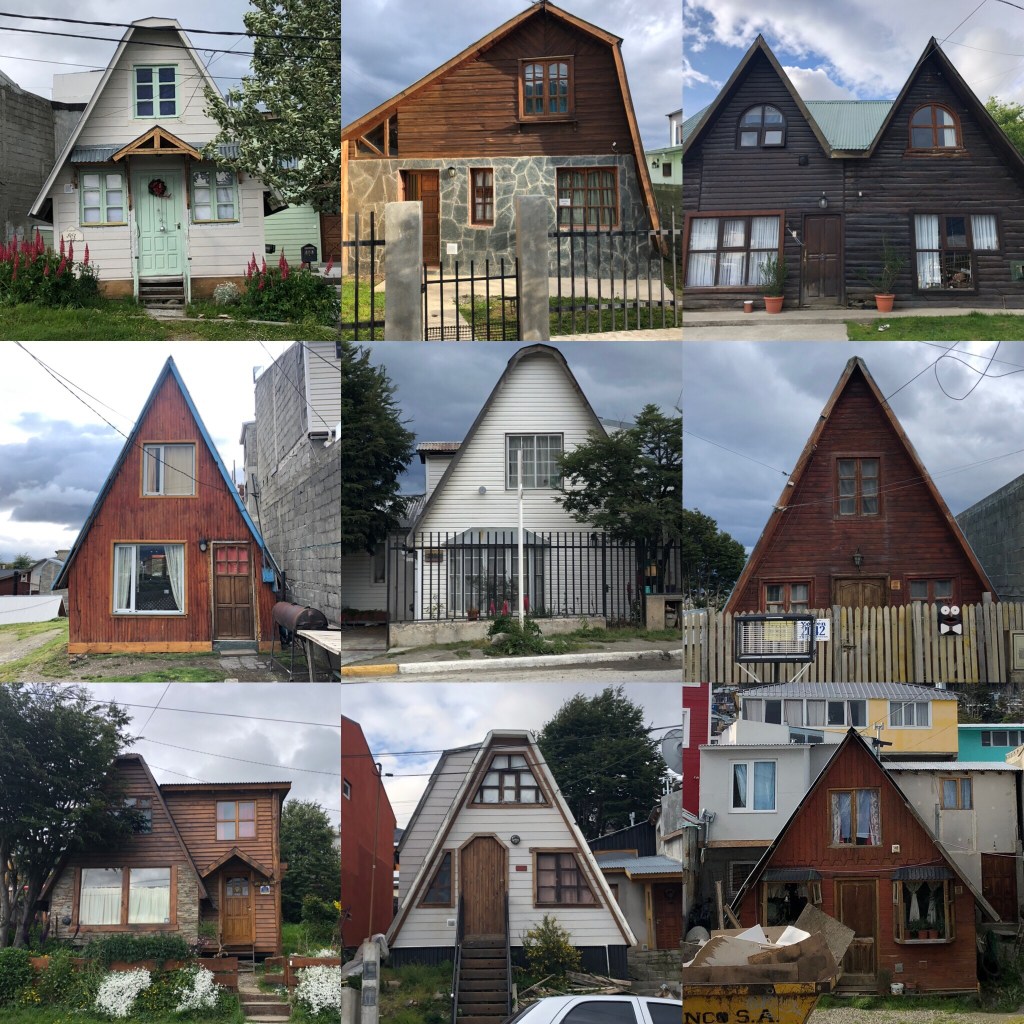
On the way, I also enjoyed the amazing and varied shapes of the houses. I can only imagine how adorable the set ups inside might be.

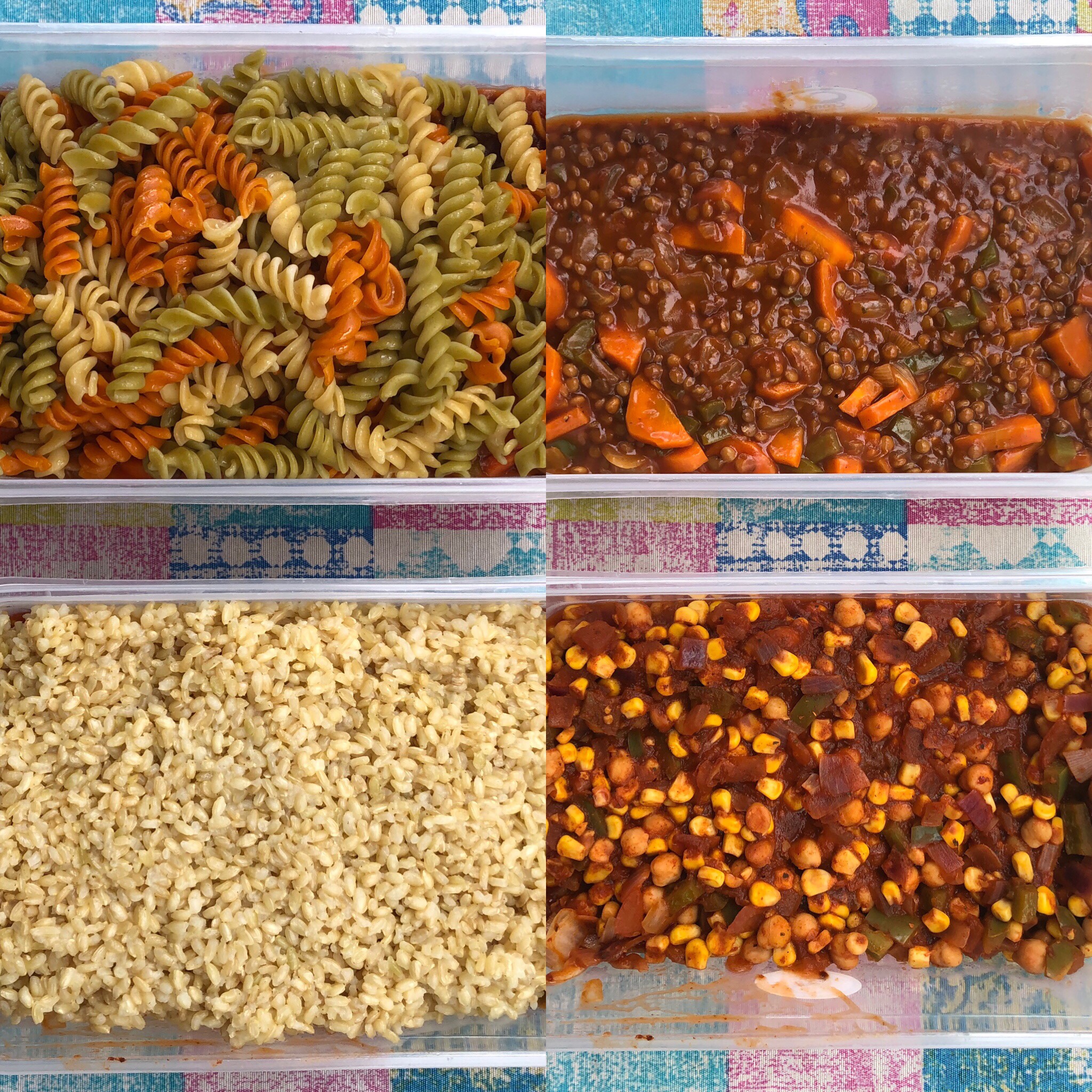
My other indulgence (the first being mozying around town enjoying the shapes of houses) was a whole lot of trekking prep cooking, while listening to some great music. I whipped up a mexican mix with brown rice to the tune of Tom Misch’s ‘Beautiful Escape’ (thanks to Josh for the introduction to that song), a pasta dish to the sound of Hi-Lo Jack’s ‘Wasted Time’ (thanks Simone) and hard boiled eggs to Django Django’s ‘Pause Repeat’ (thanks Spotify).

Going vego for a few days is probably sensible after our time in Argentina’s red-meat-heavy diets (sometimes accidental – I thought I ordered a beef pizza yesterday and instead it was ‘beef as a pizza’ with beef as the pizza base).

I’ll next write with news of Laguna del Caminante and the Paso de la Oveja!

VRPS

[Ushuaia]

They should have called it ‘Torres del Raine’

(OK, so we’re not really in Torres del Paine, which is north of here in Chile, but it’s all in the general Patagonia region.)

Mother Nature went a bit crazy with the icing sugar on the Martial Mountains overlooking the town last night. Where there were blocky dark grey slopes with the occasional blotches of bright glacial ice, there is now a breathtaking textured layer of bright snow all across the caps and fuzzy sections where the snow continues to fall.

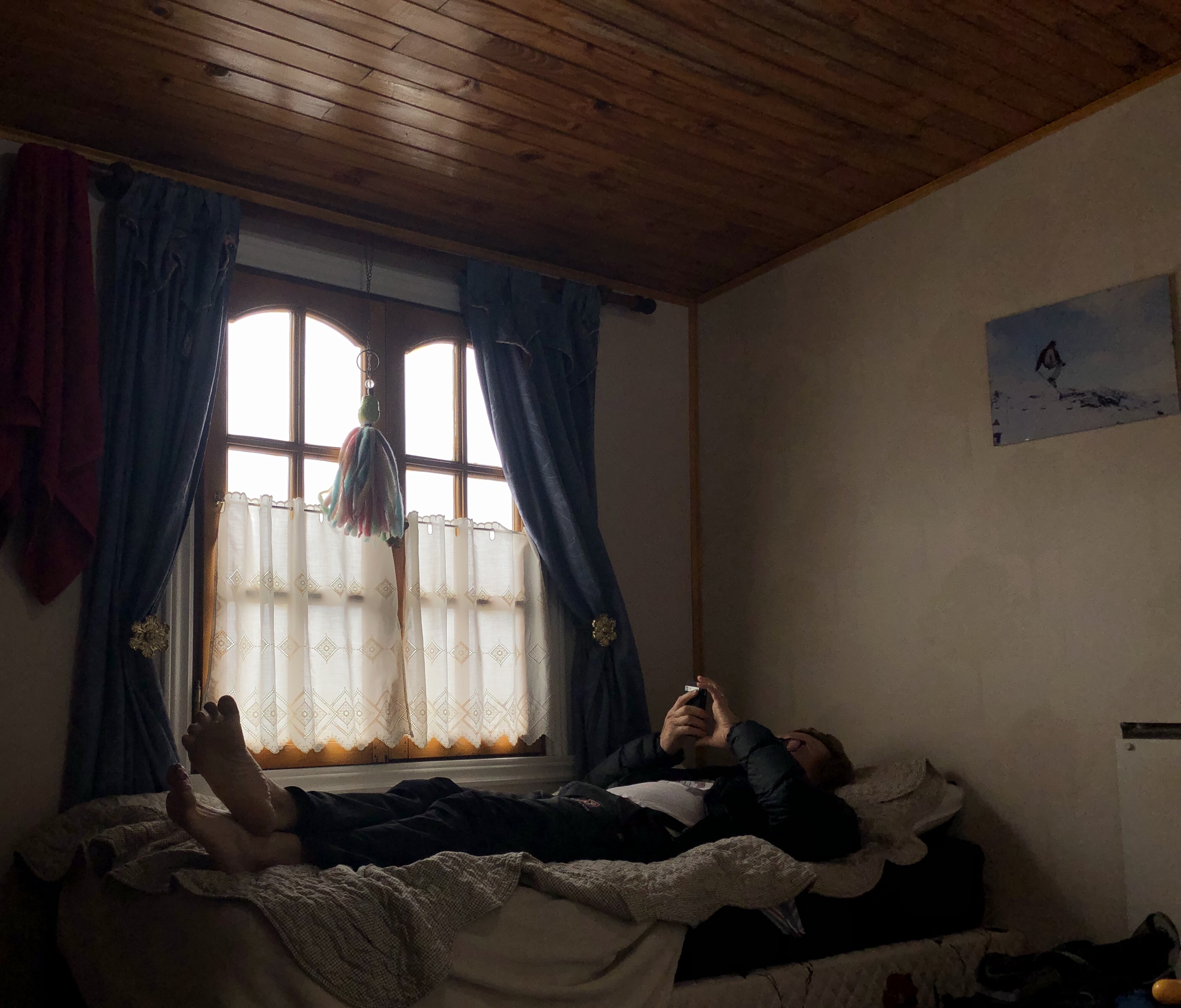
Today involved a lot of quiet relaxation:

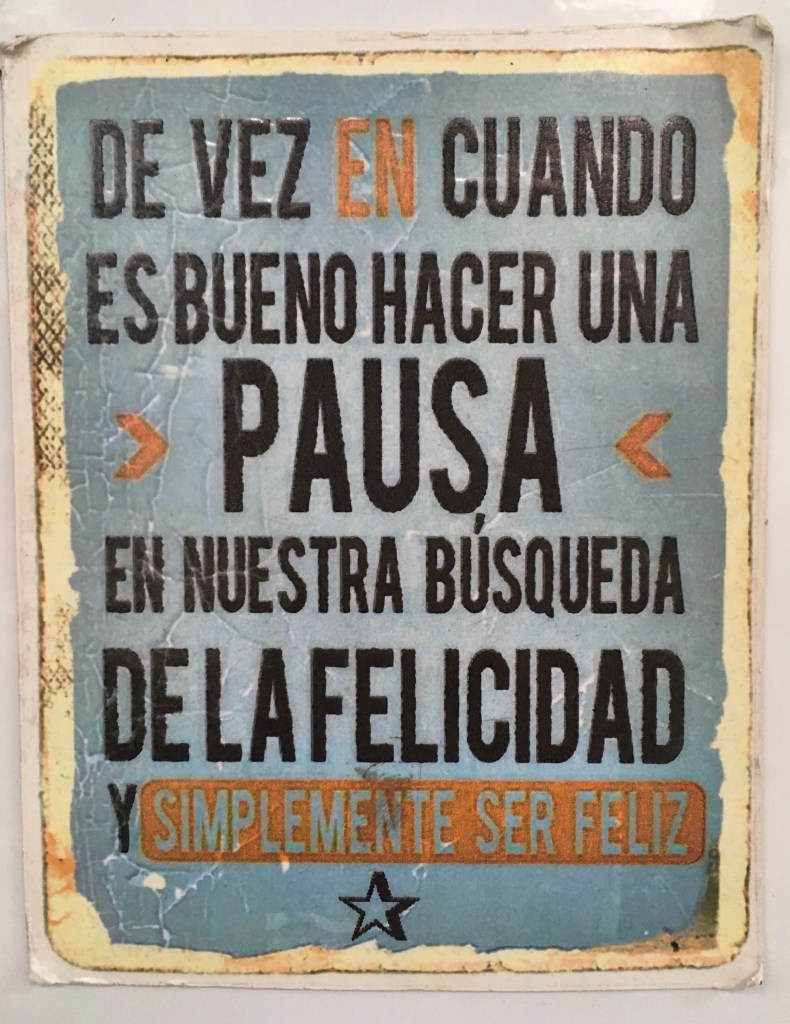
and trying to live the message of this fridge magnet:

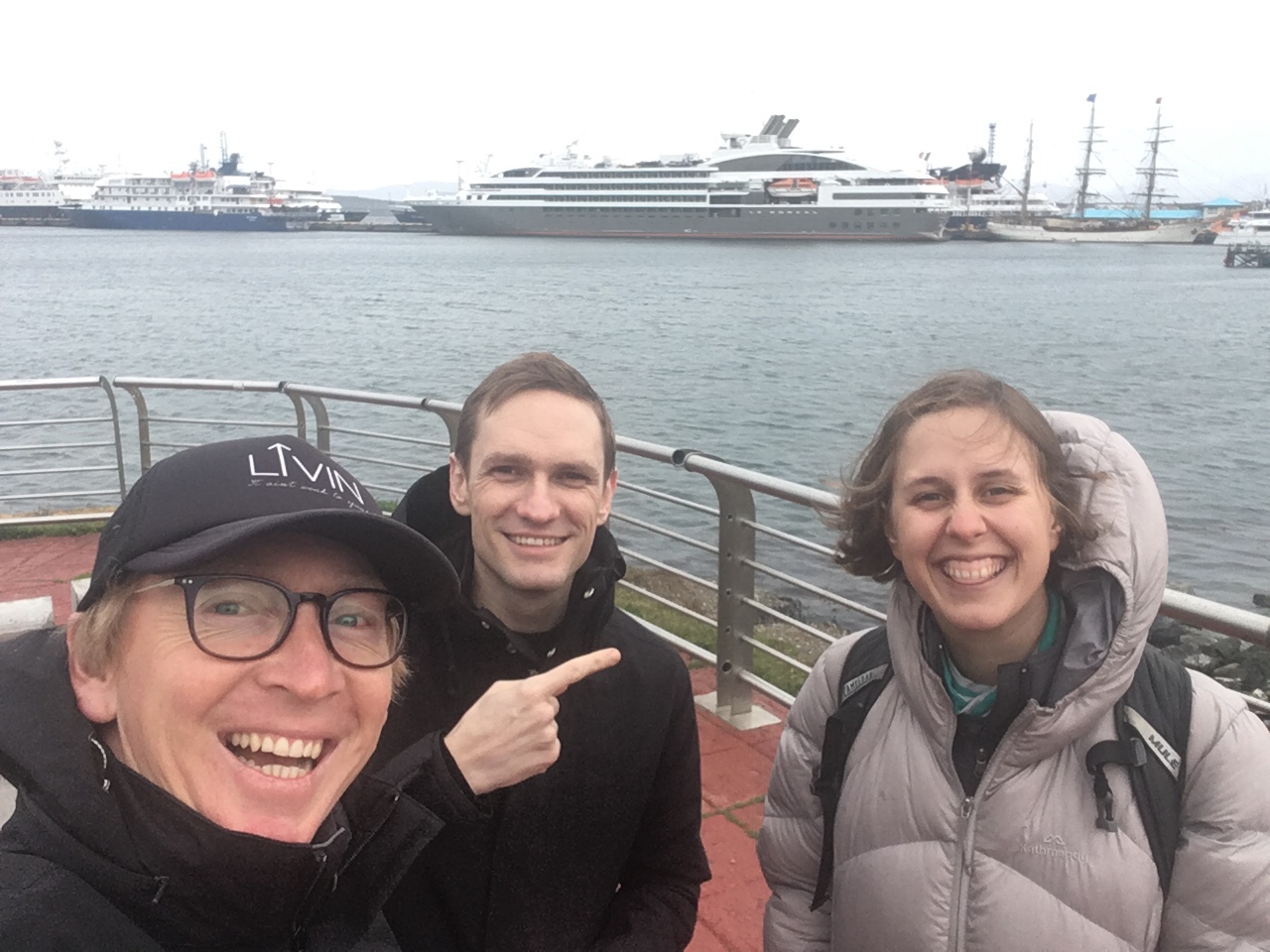
We spent the afternoon and evening with Tim, Dan’s friend (and now my friend) from Brisbane/Shanghai, who will be Antarctica-bound tomorrow. We generally traipsed in and out of food places and did laps of the main road and the pathway next to the Channel.

In brief, Ushuaia is super wet, super cold, and super windy. Perfect conditions for cold red noses and hands tucked into jacket pockets.

VRPS, with credit to Tim for the inspired title pun

[Ushuaia]

Not at a glacial pace

We’re overdue for a rest day – but today was not that day! Instead, we forged ahead with plans to hire mountain bikes and explore the surrounds.

And exploring the surrounds we did. We were told that there was mountain biking around the nearby Glacier Martial, so we set off for the long, gentle uphill climb towards the mountains overlooking the city. It is stunning land, with sprawling forests of dark green on either side.

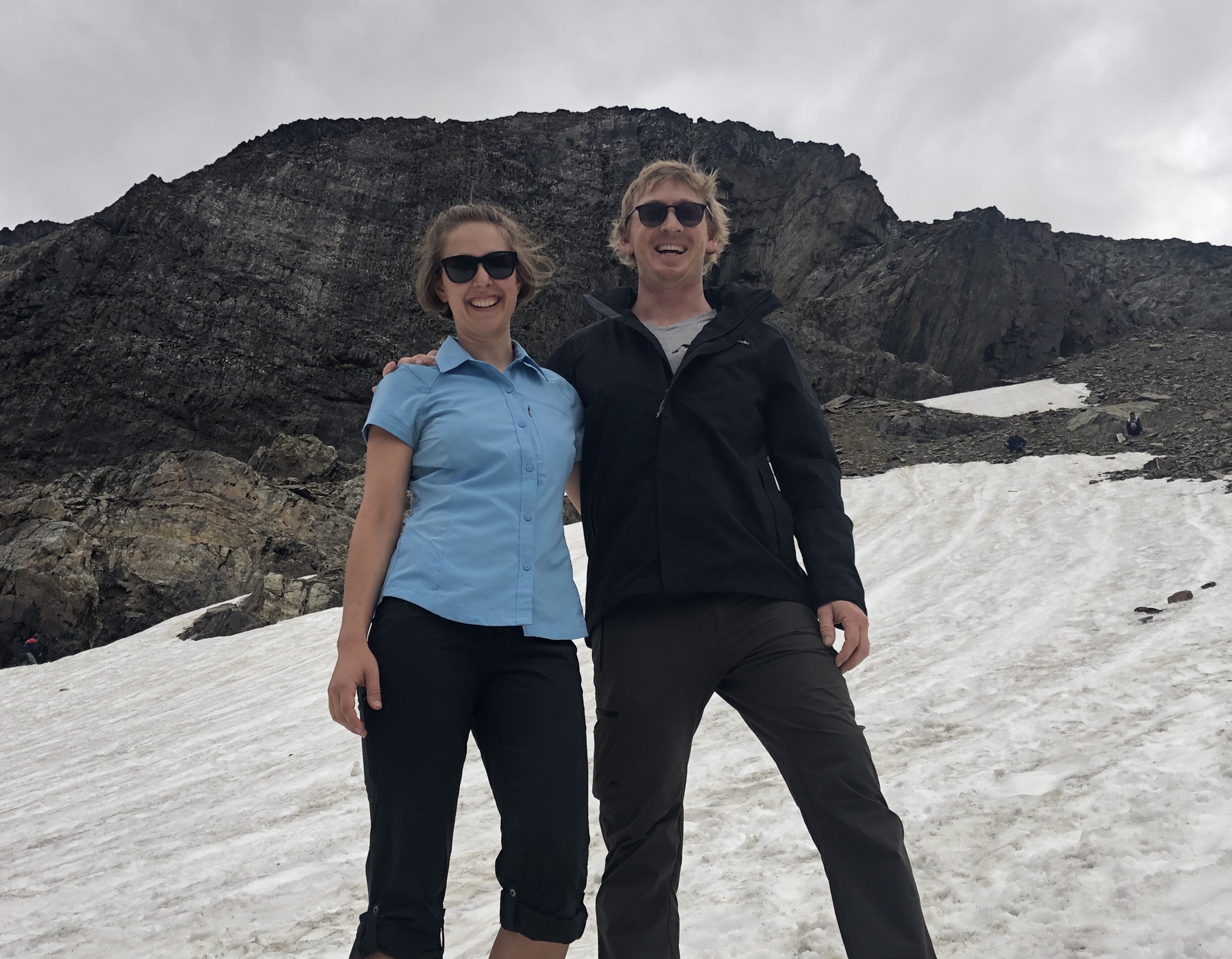
6km later and 300m higher, we reached the end of the road and started the ascent on foot, headed for the first section of the glacier. You can go further, but we instead turned around and bounded downhill, keen for lunch.

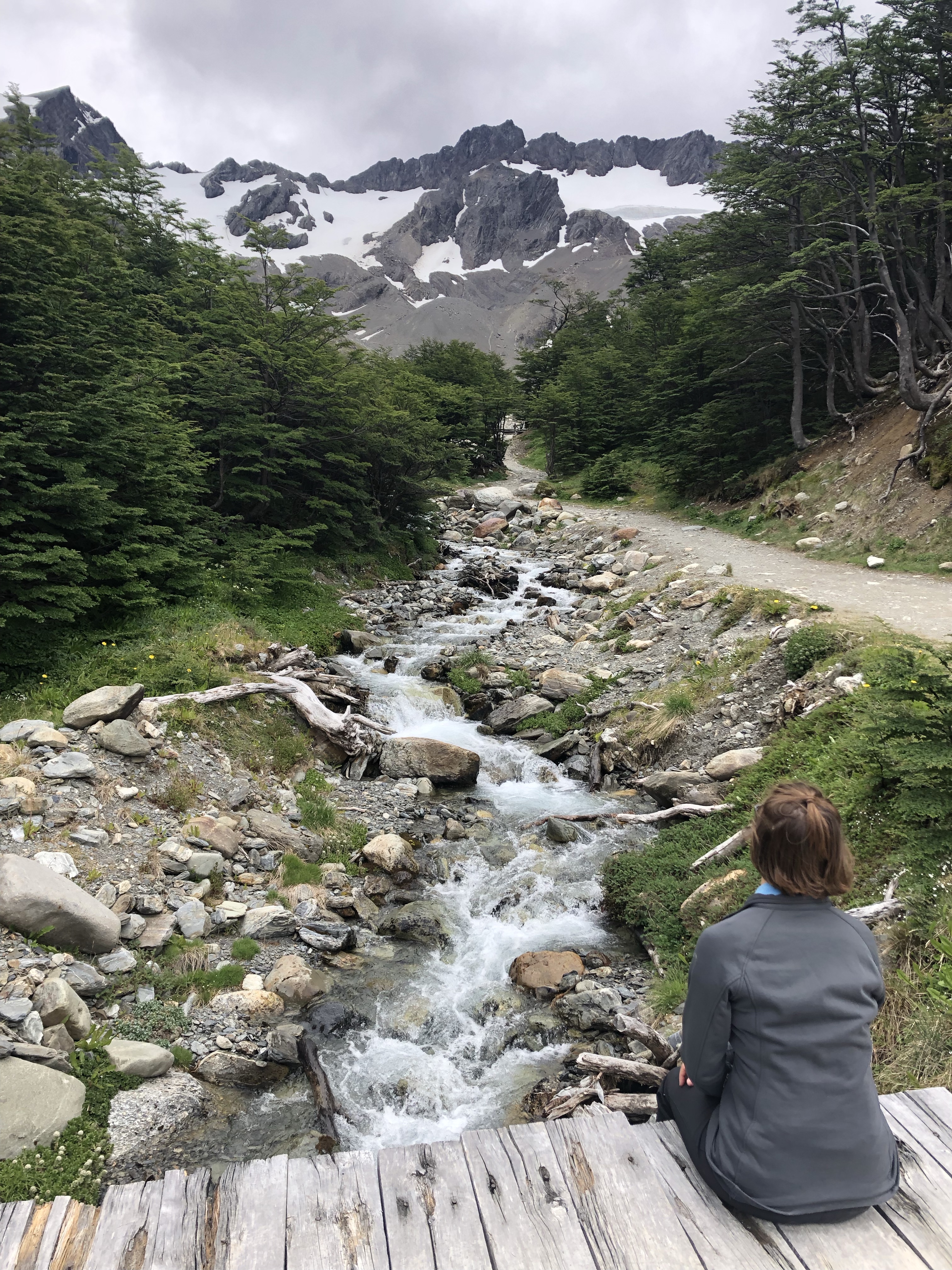
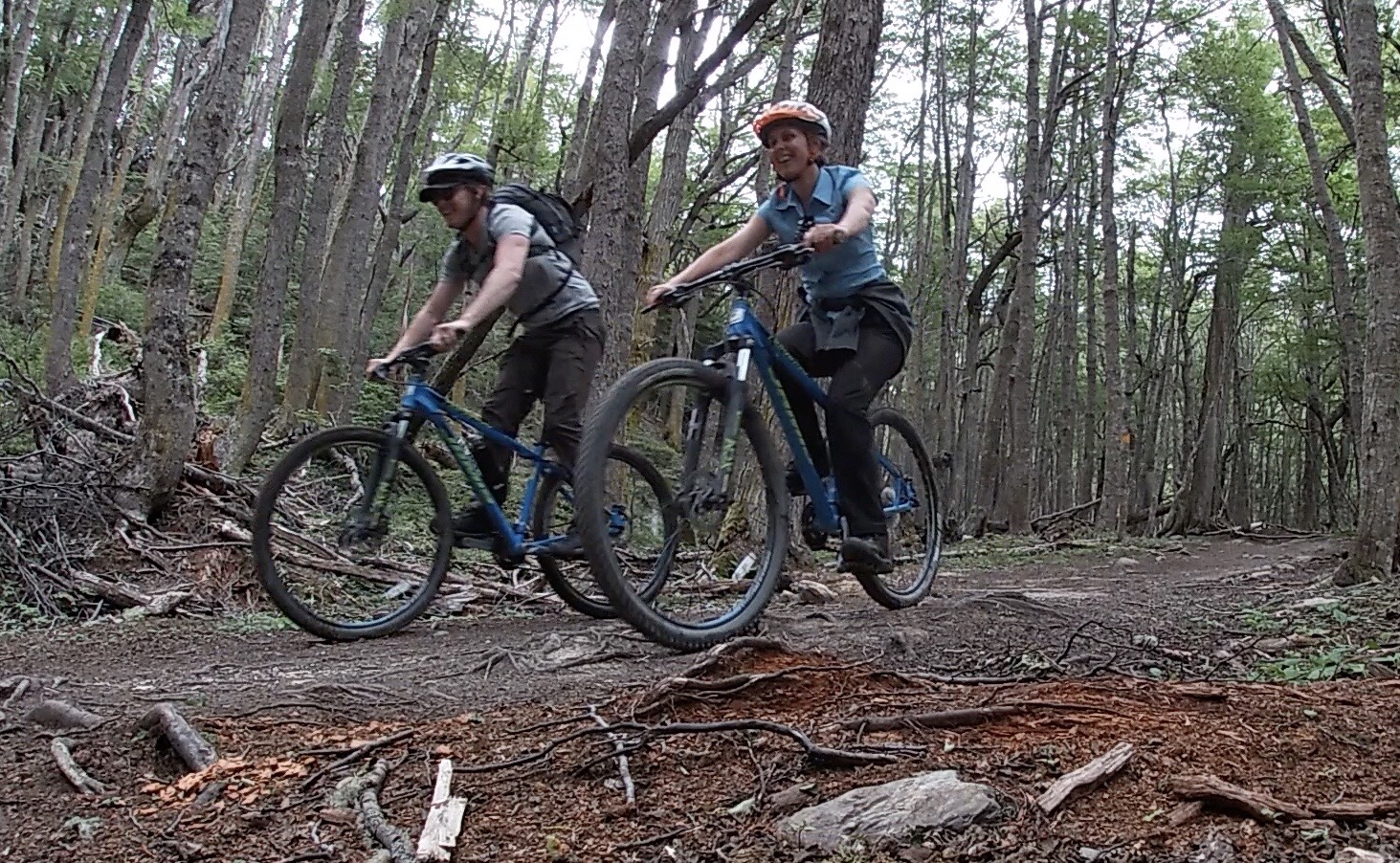
We then scooted downhill, picking out the (sometimes quite wild) mountain biking trails. We came across some amazing scenes, following the fast-flowing creek downhill.

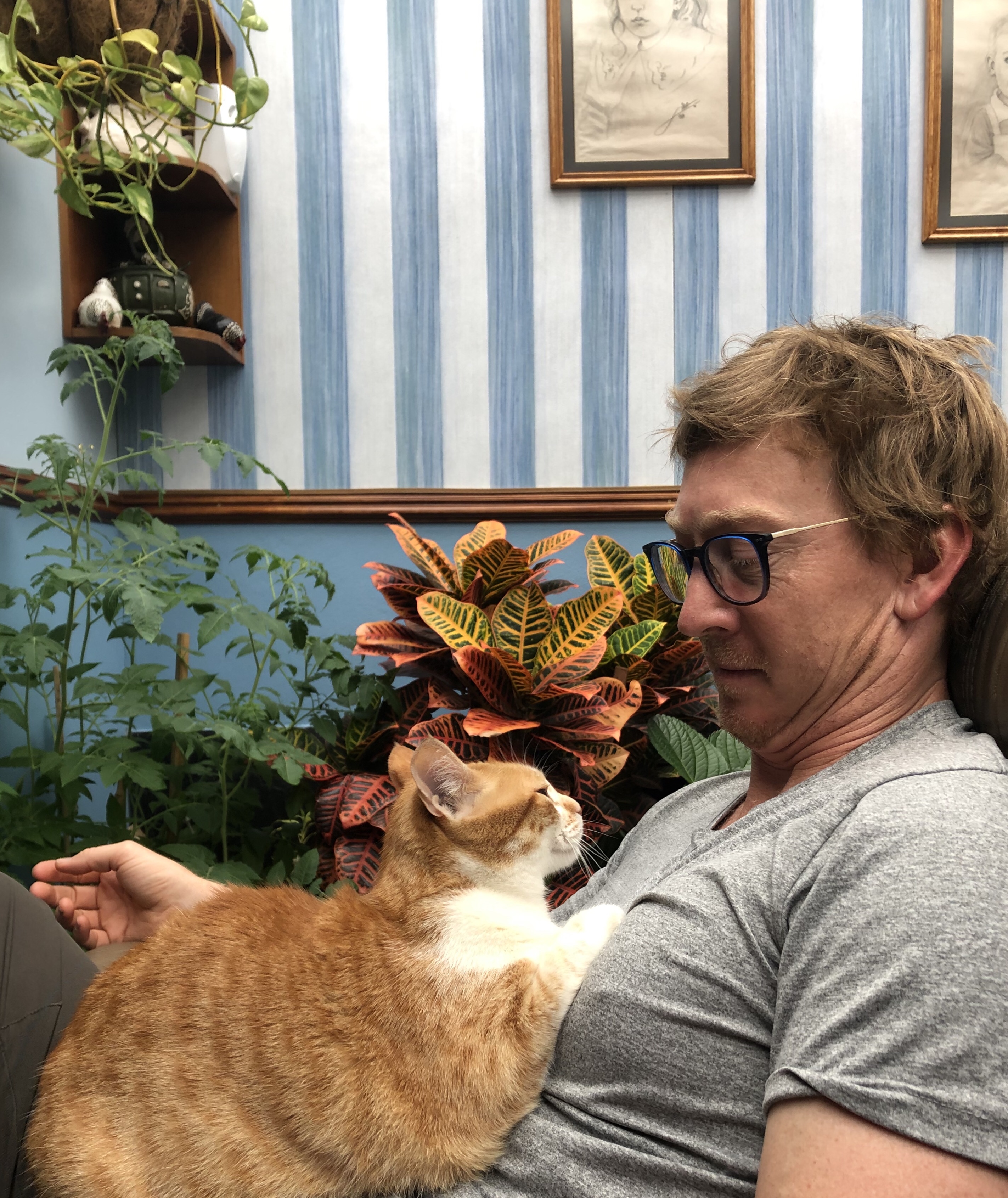
It’s been raining relatively steadily during the afternoon so there’s not too much to report. Instead, here’s a picture of Dan and our Airbnb cat:

VRPS, with credit to my beloved for the post title

[Ushuaia]