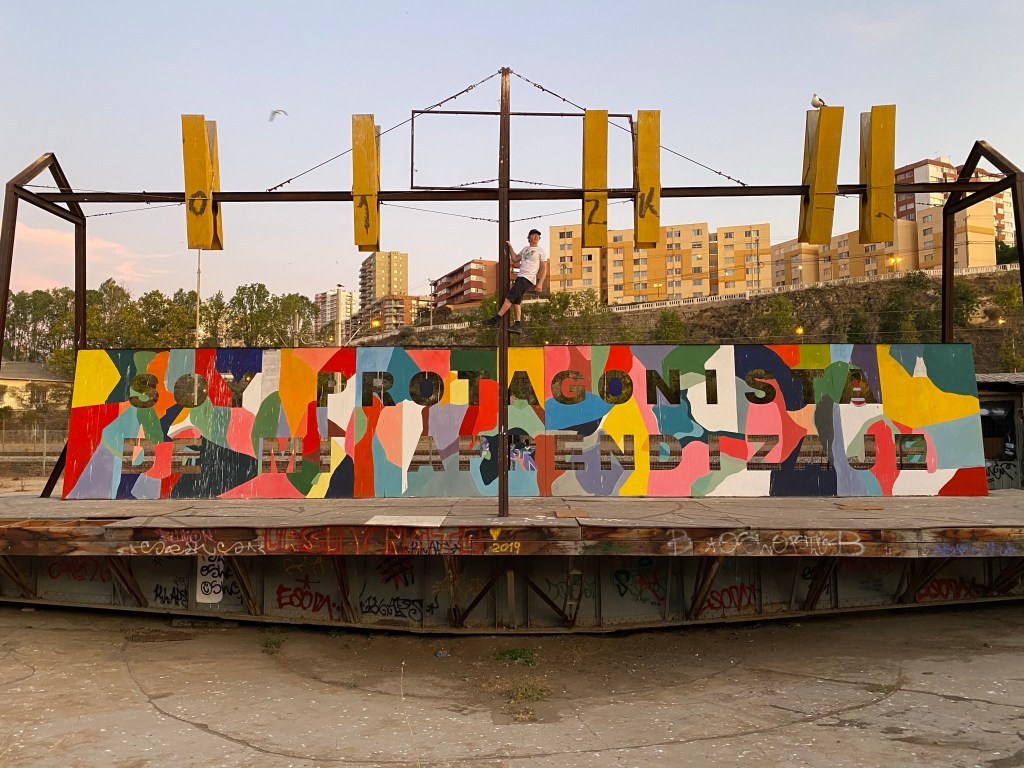
Settling in Sucre

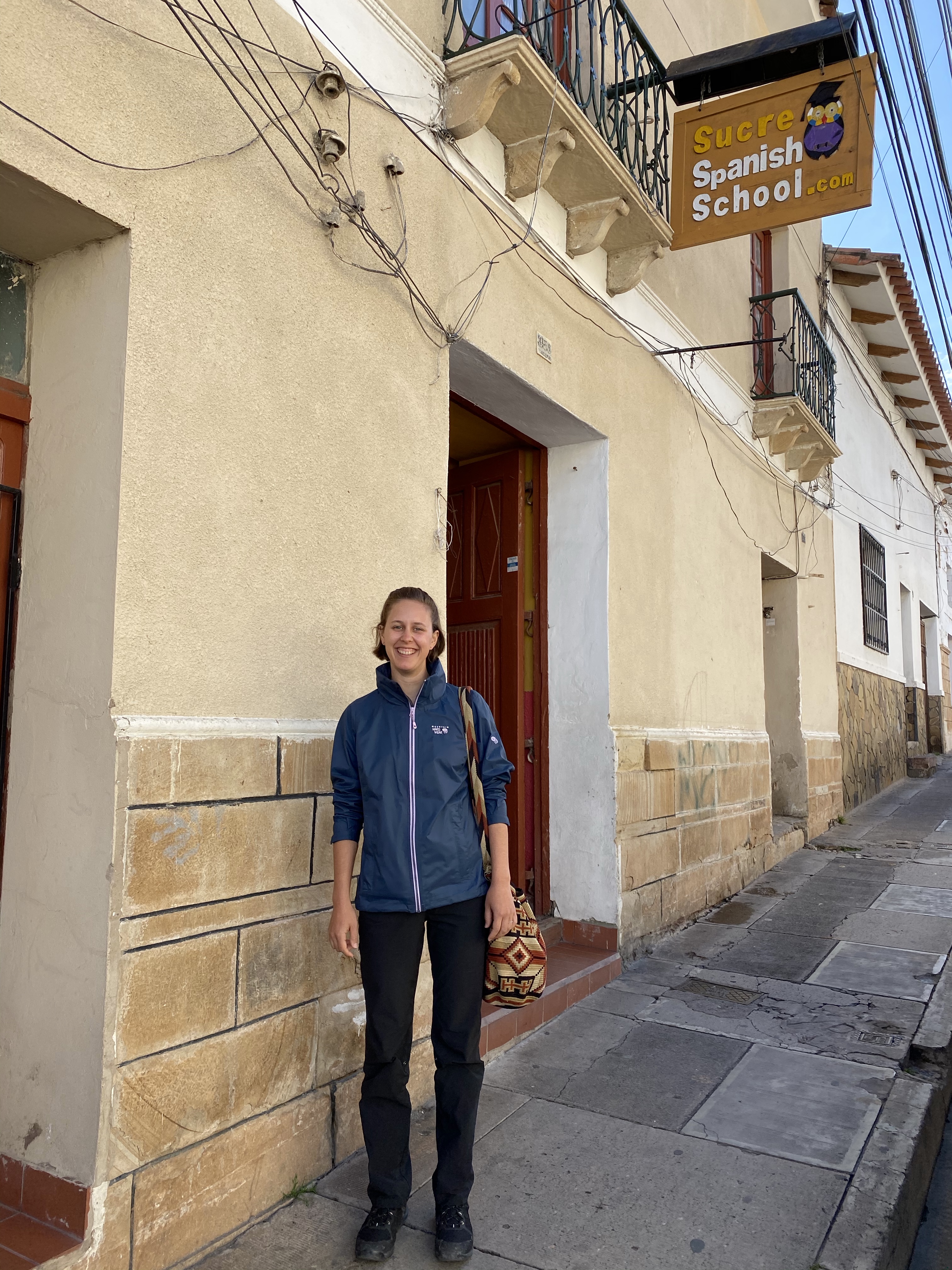
Today was a day of very minor milestones. I finished my sixth and final Spanish class in Sucre. We’ve finally invested in black pepper (which I’ve missed almost as much as fresh milk). We’ve achieved a five day streak of going to the gym. Nothing to write home about (but I am here, anyway, in a way) but it reflects a general contentedness with Sucre life.

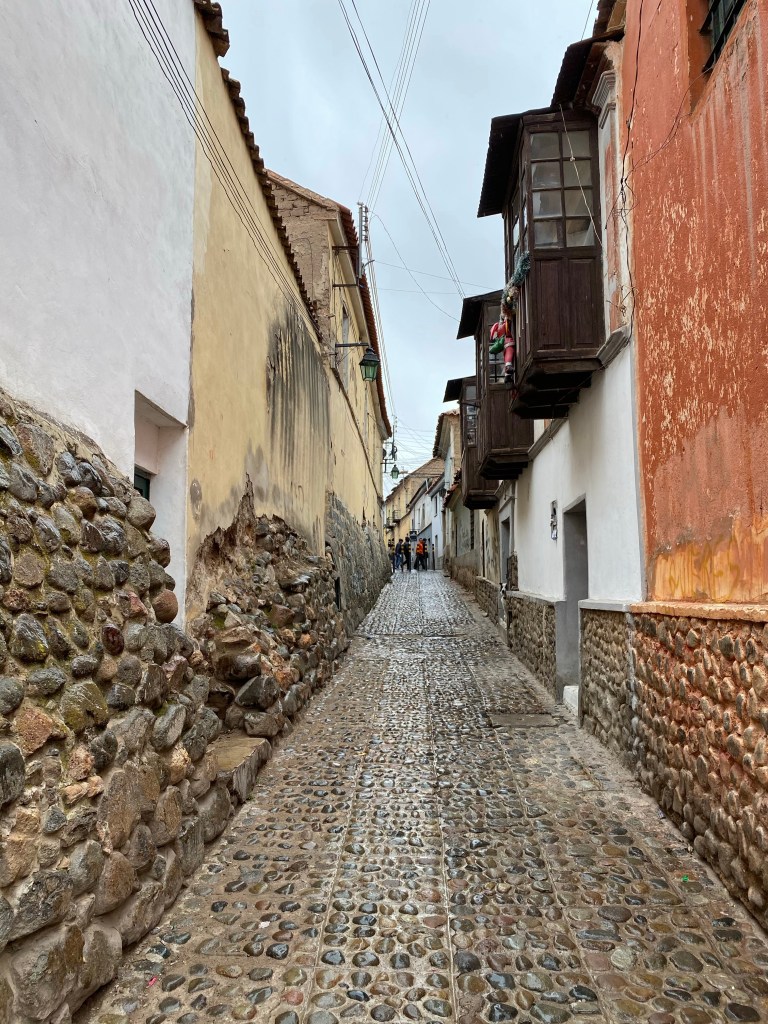
This city has grown on me like a moss, while I’ve been putting down some roots. I know I wasn’t shouting its praises when we arrived, but I now really love it’s white colonial architecture, wild school children and their foam guns, families and their pigeon-chasing children, the daily bread run and the avocado ladies in the central market.
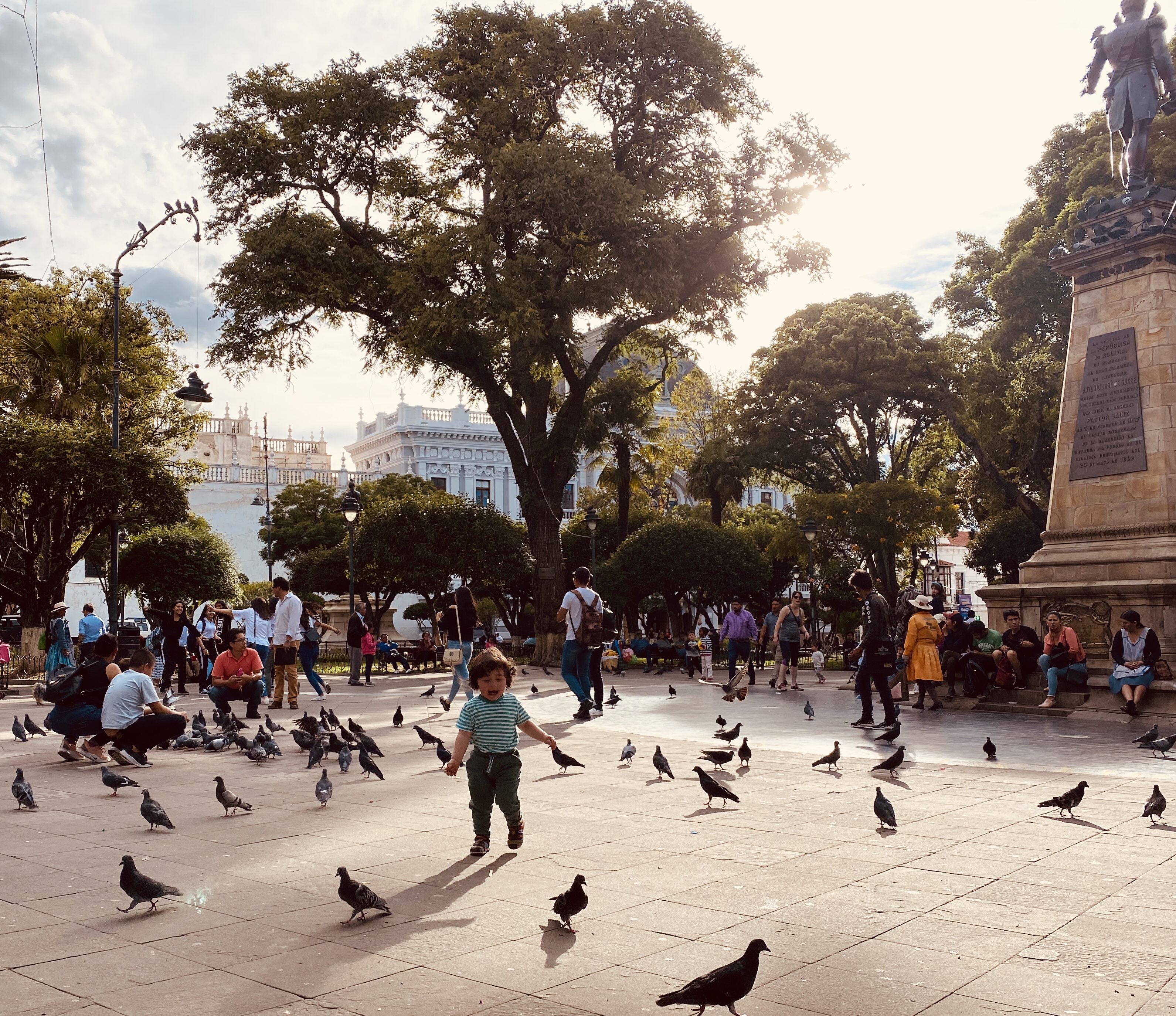
Since my minor meltdown a few days into classes, I’ve finally settled down into a degree of comfort with my error-riddled but well-meaning attempts at Spanish. Somehow today my prof and I got sidetracked on an hours-long conversation about Bolivian and Australian politics, immigration, taxation and the recent bushfires. It says something incredible about my teacher’s patience as he quietly waits for me to find words to express myself.

Meanwhile Dan “You Shall Not Pass” Swords was invited by last week’s tour guide to play football (soccer) with his mates. Dan took to the field – in someone’s property in front of the Florida Mansion – for two hours straight of dedicated goalkeeping and wowed the locals.

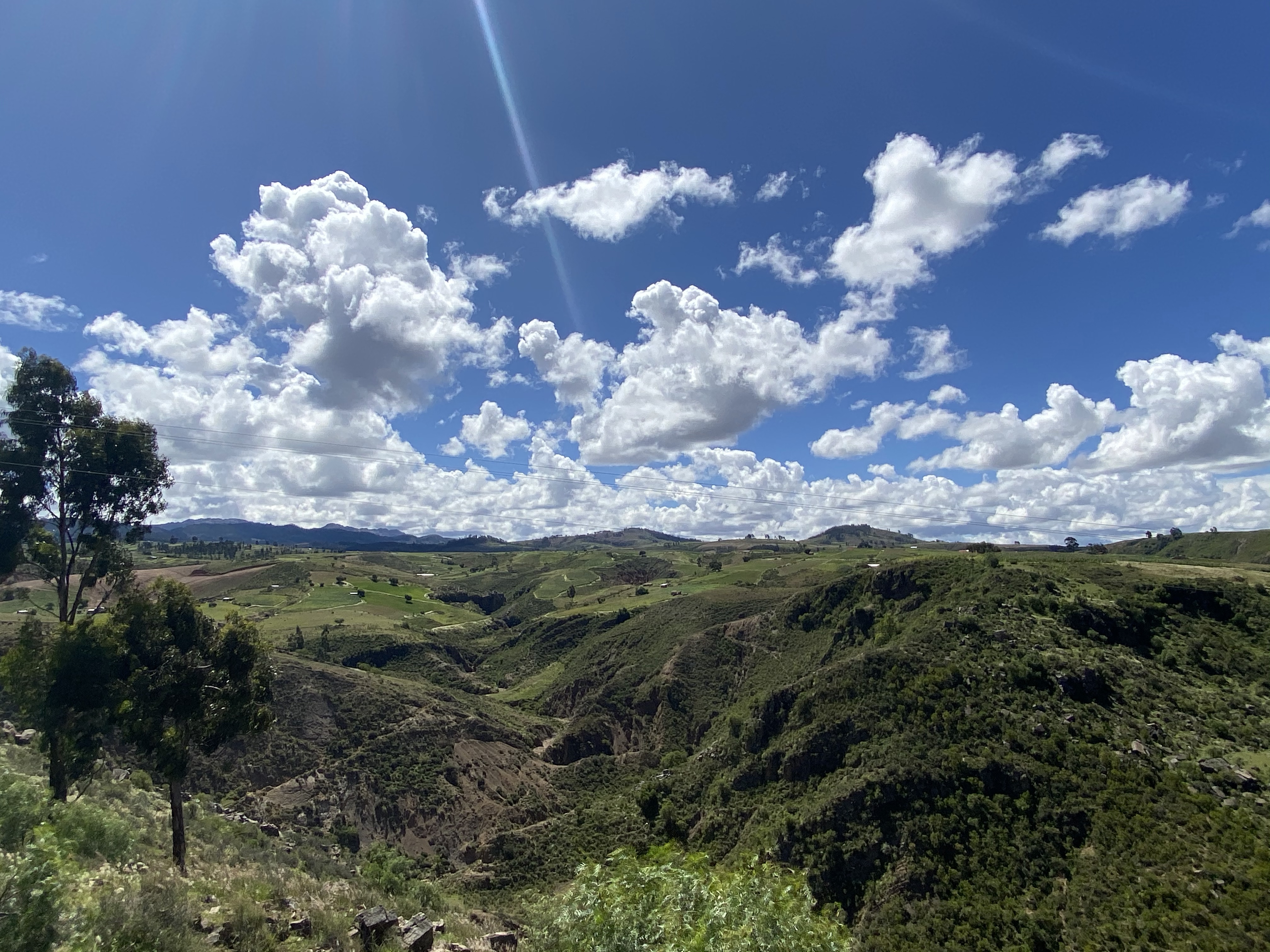
How have we passed the afternoons? On Thursday, we took a bus to the outskirts of town in an attempt to reach the Siete Cascadas (seven waterfalls). We were let off in a quiet barrio (neighbourhood) in the midst of rolling hills. It was hot and there hadn’t been much rain so we didn’t complete the walk, but I was glad to not only see a different side of Sucre in the hills but also the different suburbs on the way to and from the centre.
In one of those different suburbs we stumbled upon Sucre’s “witch markets” which caters for the ingredients required to sate various superstitious beliefs. There are some weird things available – let me know if you’re interested in a photo.

On Friday, I studied in the afternoon over a hot chocolate while Dan had a massage. We had dinner up at the Recoleta lookout with a spectacular evening view of the city.
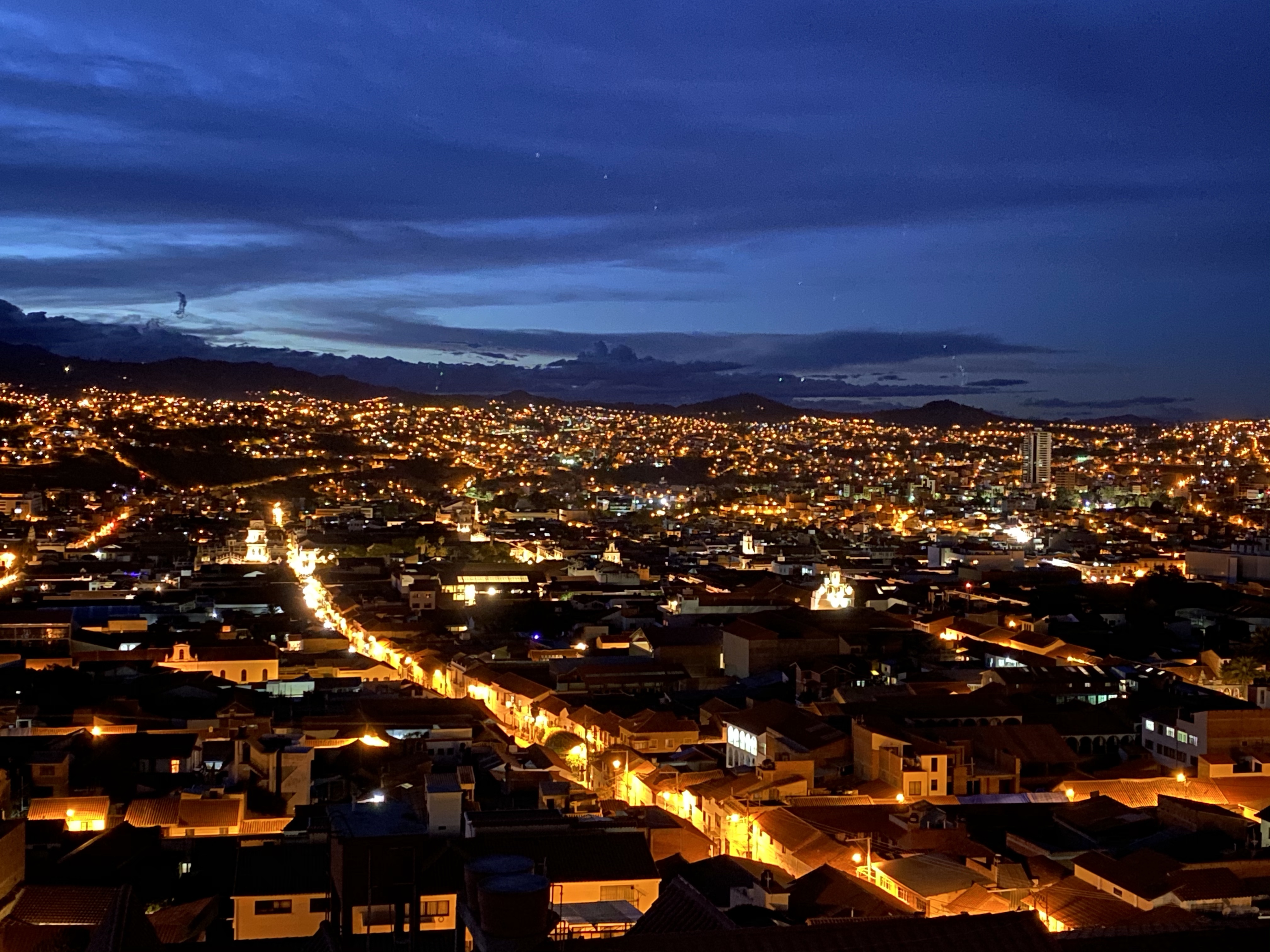
Today, we took out my Spanish teacher for lunch to say thanks, prepared food for tomorrow’s hike, and went for a walk around Recoleta.

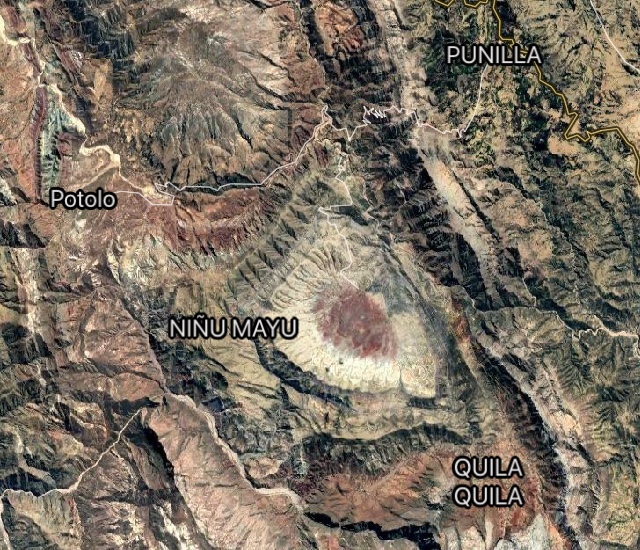
Tomorrow we set out for two days to hike around the Maragua (Ma-ra-gwa) crater near Sucre. It looks so cool on Google maps – I’m looking forward to seeing it in person.
VRPS

[Sucre]
The loud and the quiet wars

Dan and I made the mistake of being in the area of Mercado Central around 6 pm today. School had just finished, and the streets were packed with uniformed teens – Queen St Mall-style, except that each of them was armed with a little plastic bag of water or a foam squirter, and they were mercilessly attacking each other. Caught in the cross fire? Tough luck. It’s a war zone.

The other war, the quiet war, is being waged within me, as I wrestle with my Type-A-personality desire to perform well with the fact that learning a language is a slow, embarrassing and arduous process. My classes are going really well and I’m absorbing as much as I can but this sponge can only memorise the meaning of so many new words a day, and I’m confronted by so many more that are falling by the wayside.

My saving grace is my patient and talented husband, who speeds up my tarea (homework) by translating faster than I can search words in a dictionary, and helping me remember crucial rules.

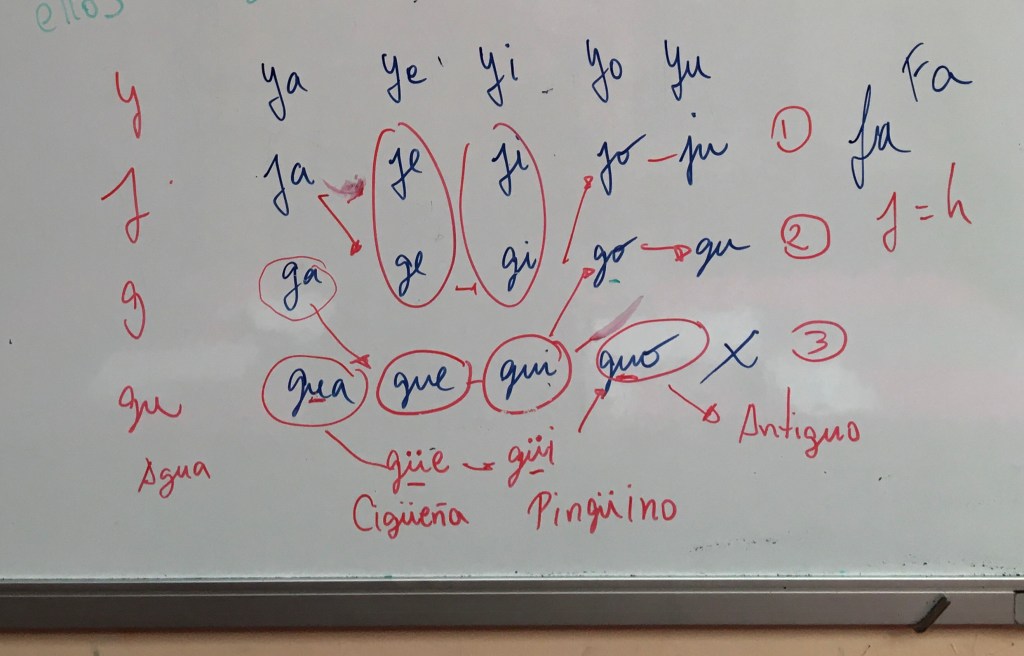
It’s not all just a tough climb uphill. Today’s lesson included some linguistic analysis about why some “irregular” verbs are not so irregular when you understand some of the phonetic patterns of the language. Phonetics! My happy place!

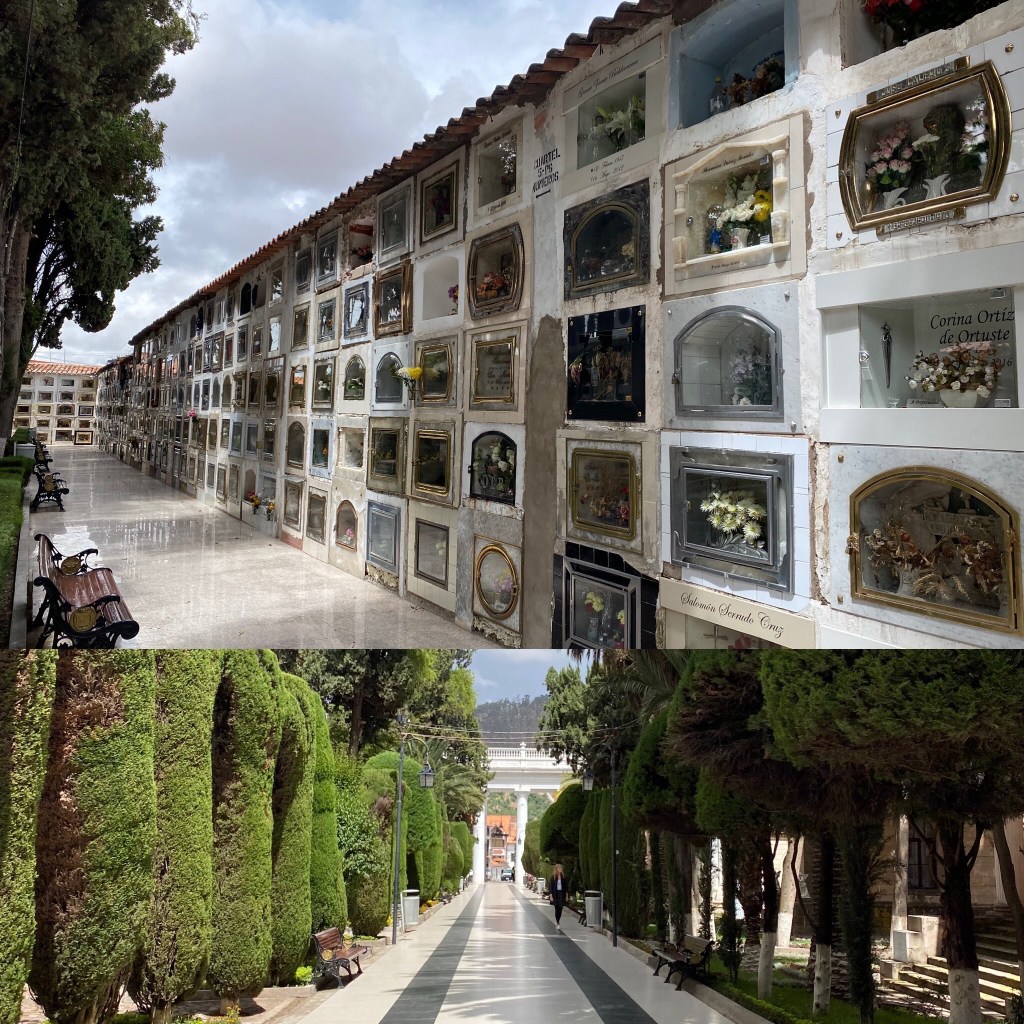
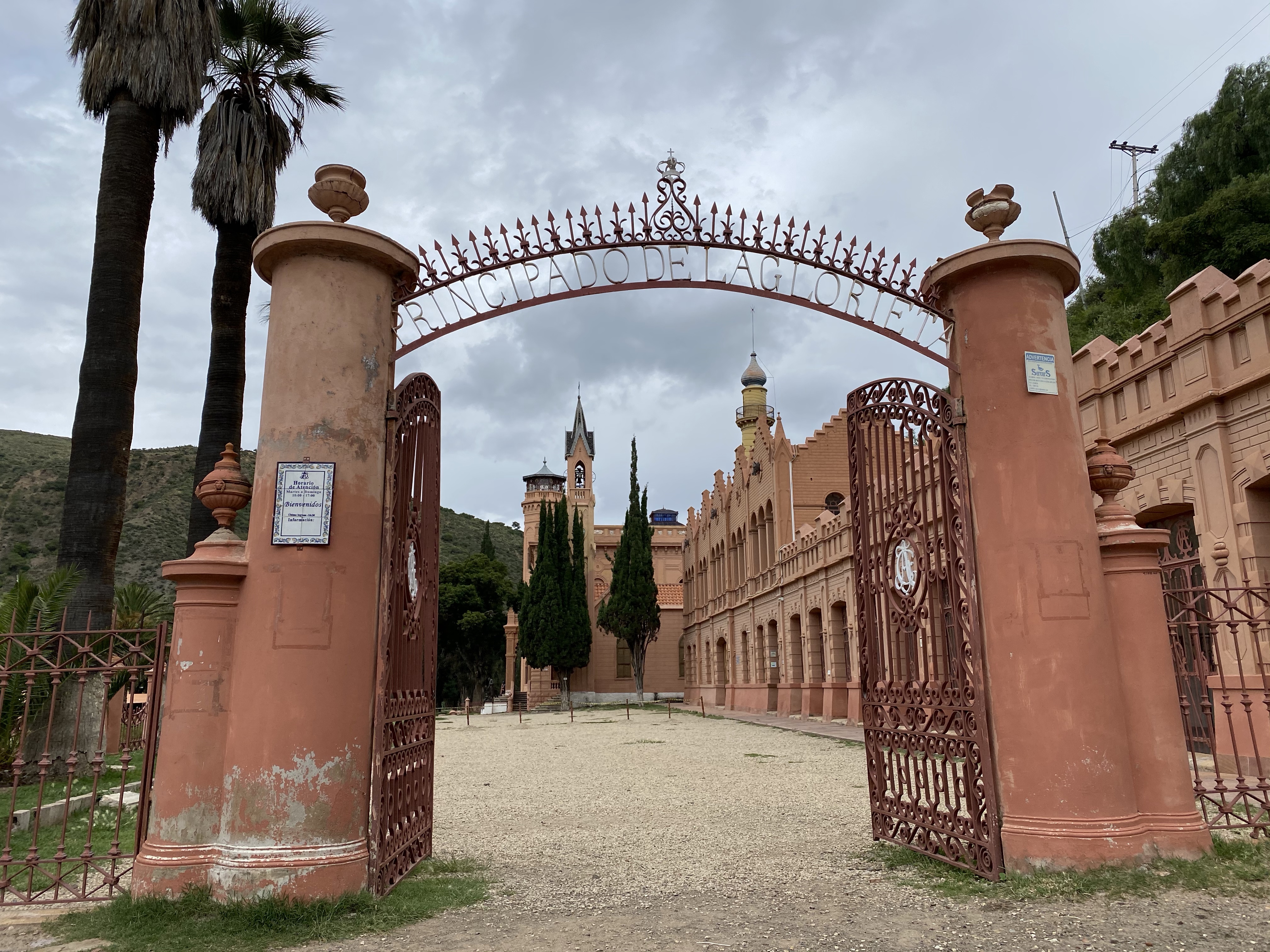
Yesterday after morning classes, Dan and I explored the peaceful general cemetery, with its box-shaped stacked permanent-coffins, and Sucre’s pink castle – La Glorieta. The latter is a sprawling mansion whose architecture aimed to capture each of the various European styles enjoyed by its mega-rich (but very philanthropic) 1800s owners. Needless to say, the result is eclectic.

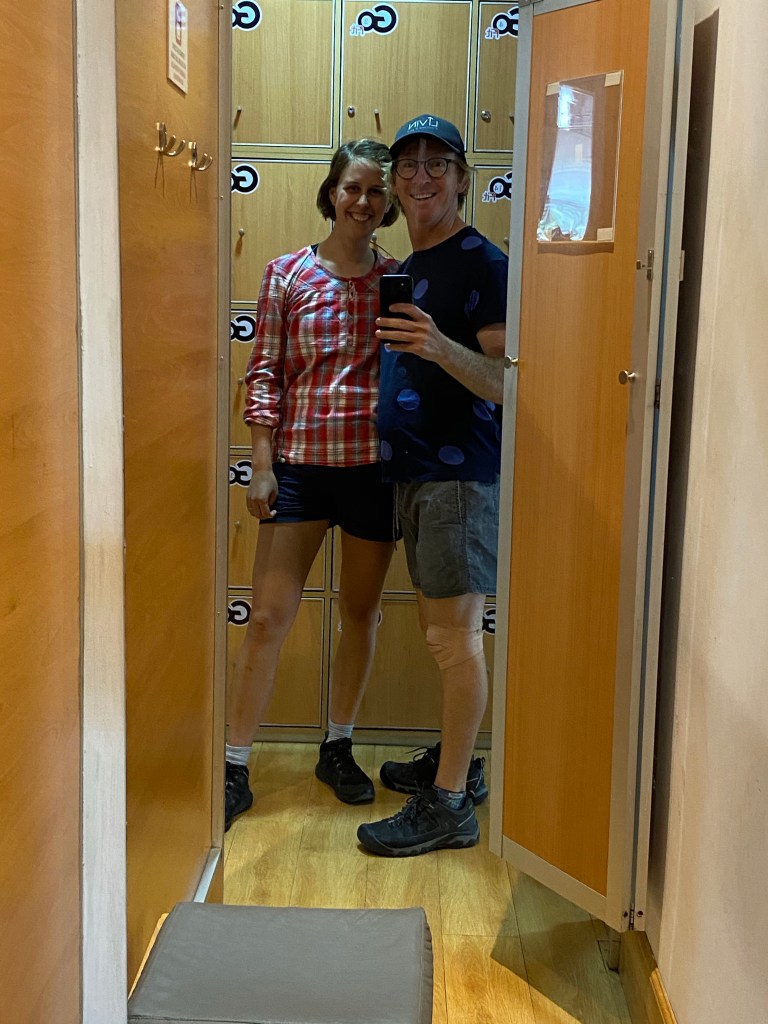
We joined a gym yesterday and I managed to survive a class of Body Pump without giving away that I didn’t understand too much about what was being yelled at us except “eso es!” (“that’s it)”. Fake it ‘til you make it.

Stand aside, Lorna Jane. Trekking boots and last-clothes-while-the-rest-are-being-washed are the new yoga tights.

Today was the first afternoon in Sucre that wasn’t cloudy or raining. It’s actually quite a different city in the afternoon sun – the plaza is more crowded than ever and the golden warmth makes you feel simultaneously relaxed and lively.

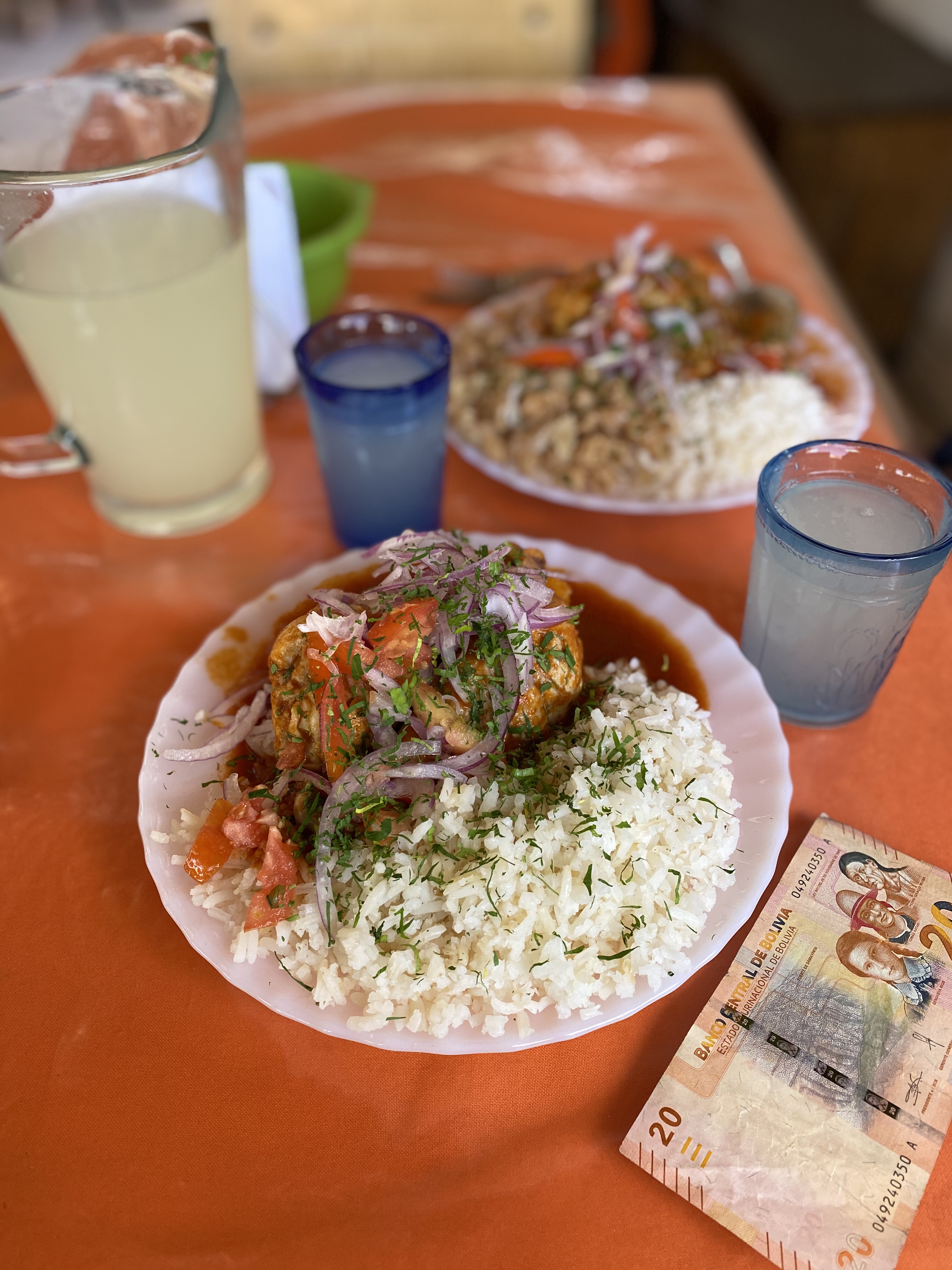
One final little anecdote: today Dan and I lunched at a truly local hall where seven or so different ladies set out their dishes and you. Incredibly, 26 bolivianos (approx $6) got us two large plates of picante de pollo (chicken) with a plentiful array of carbs (potato, rice AND pasta) and a large jug of lemonade. No prizes for guessing where we’ll be each lunchtime from now on.

VRPS

[Sucre]
First day of school

My Spanish class went at a million miles per hour, which means we probably covered four million miles in total. We cantered through how various present and past tenses are used, and I curated a collection of new vocabulary not just to recognise, but to master.

My teacher, Nelson, is a legend. He runs the class almost exclusively in Spanish and made sure I was constantly bombarded with new material if I understood what we’d covered. If I had to make a montage of our lesson, it would be set to the famous section of the William Tell Overture.

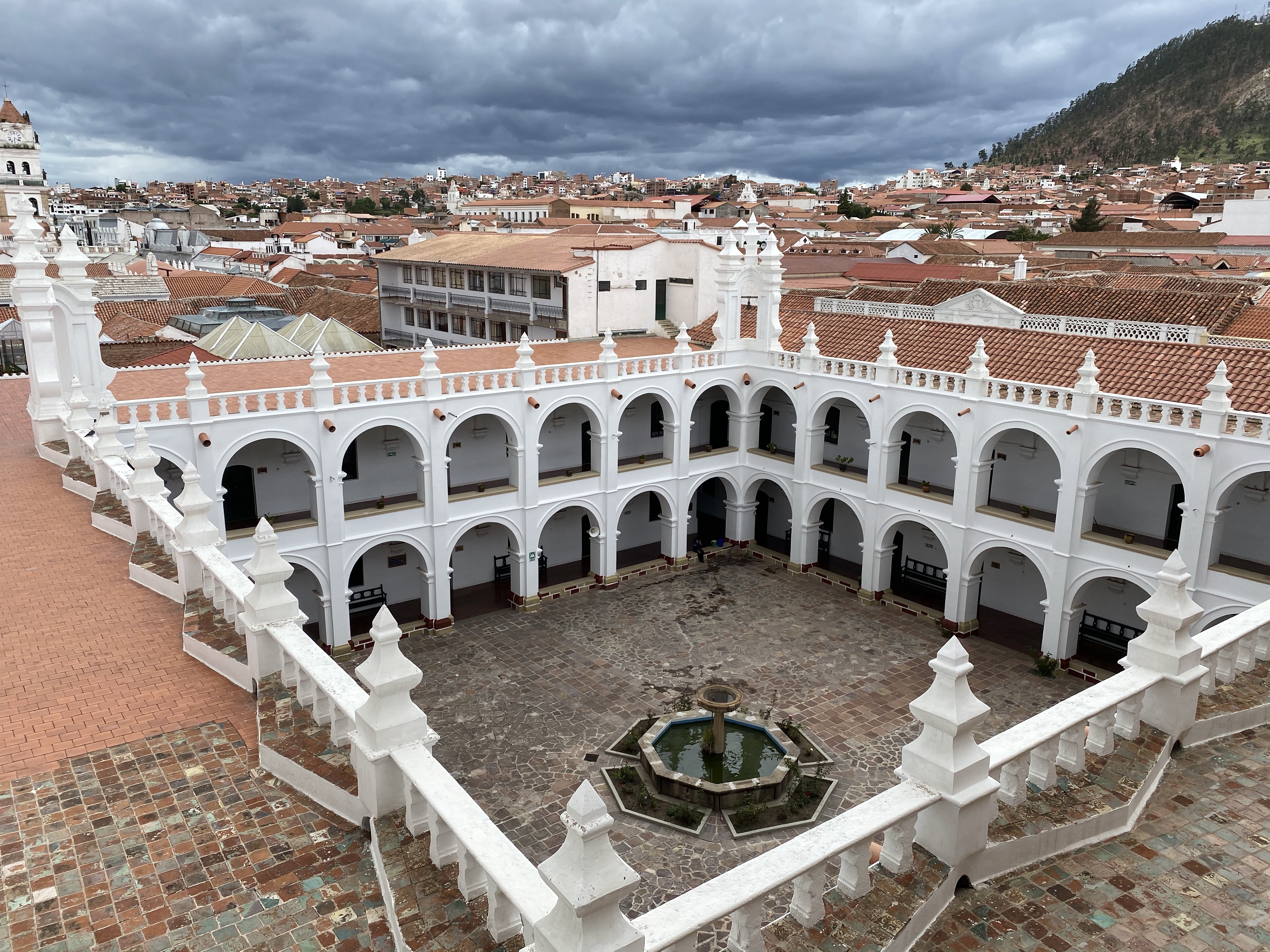
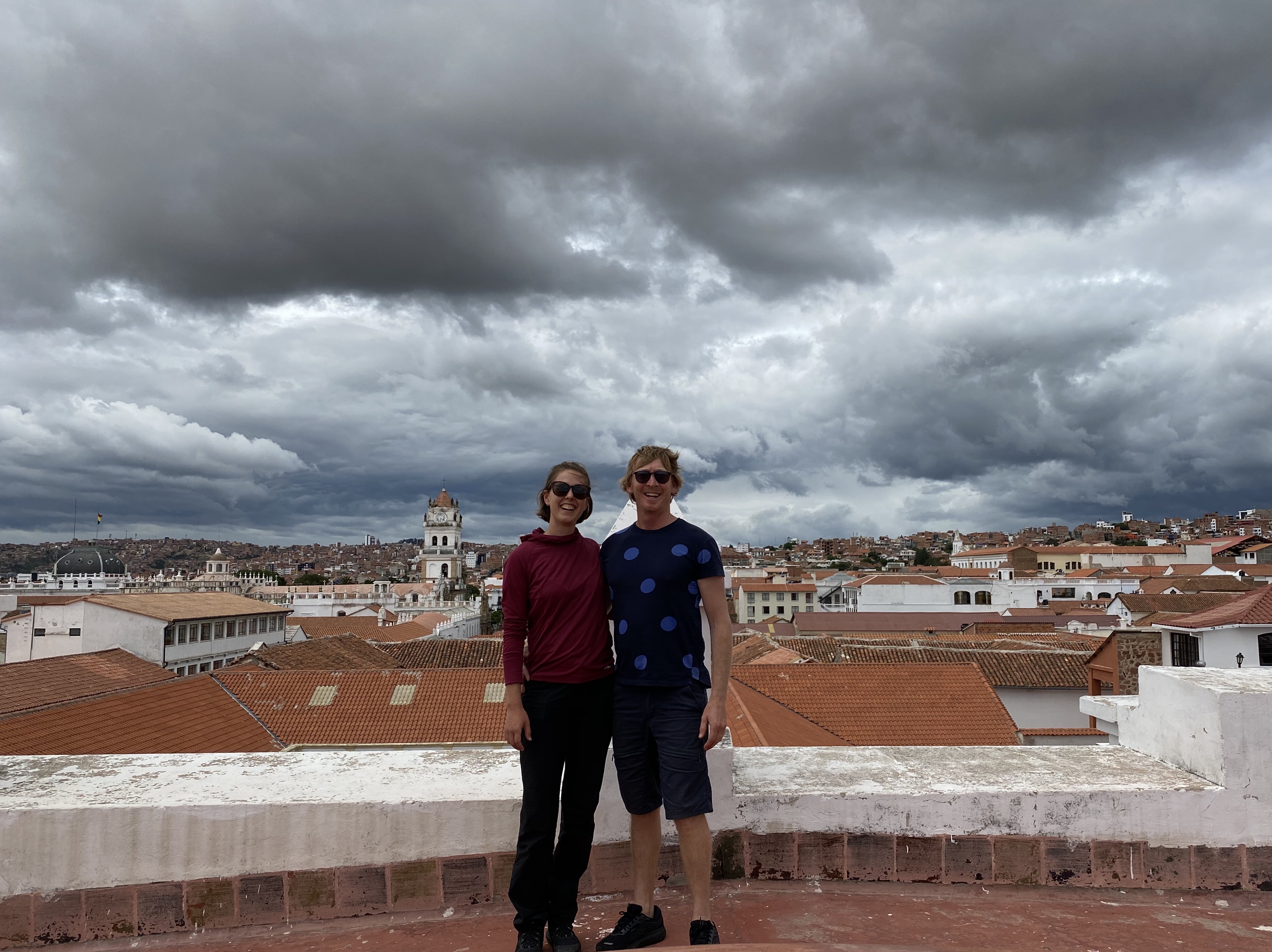
So starts un poco routine for Dan and I. I have four hours of class until 12.30 pm and then we meet for lunch and afternoon adventures. Today was exploring the Templo de San Felipe Neri y Iglesia La Merced – two of the city’s many churches and both with outstanding, unobstructed rooftop views. One’s always reminded that they’re not in Australia when there are no railings.

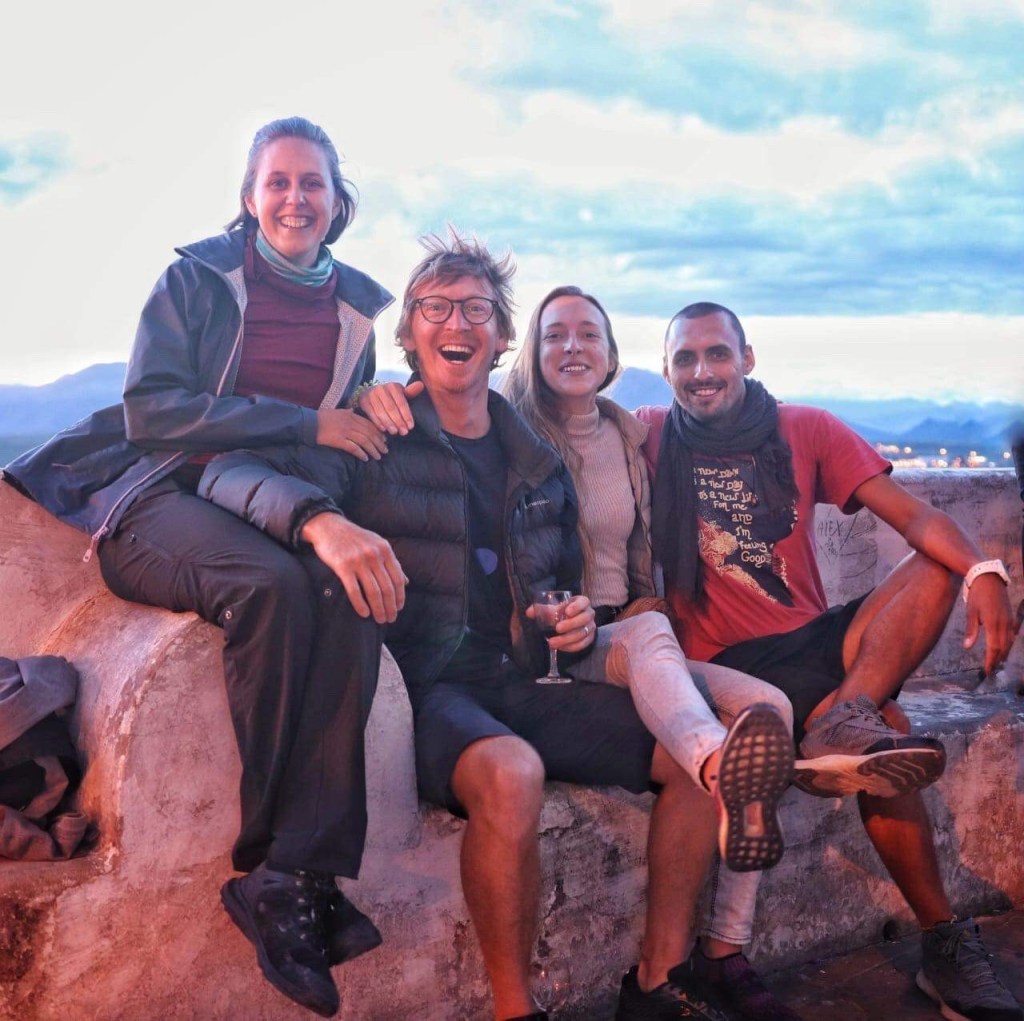
For sunset, we joined Yulia and Alex (our Atacama friends!) at the Recoleta lookout. It’s not just Yuli and Alex that we keep bumping into – there’s a number of different travellers and families we see time and time again in different cities.

Thanks for the photo @alexandrymizoni

We’re now booked to stay here until next Wednesday, so don’t be disappointed if all the stories are from sweet Sucre for a while.

VRPS

[Sucre]
Abundance in Sucre

The things I’ve discovered Sucre has in abundance (other than the to-be-expected white-walled colonial architecture) are the following:

  • Churches and convents
  • Stray dogs
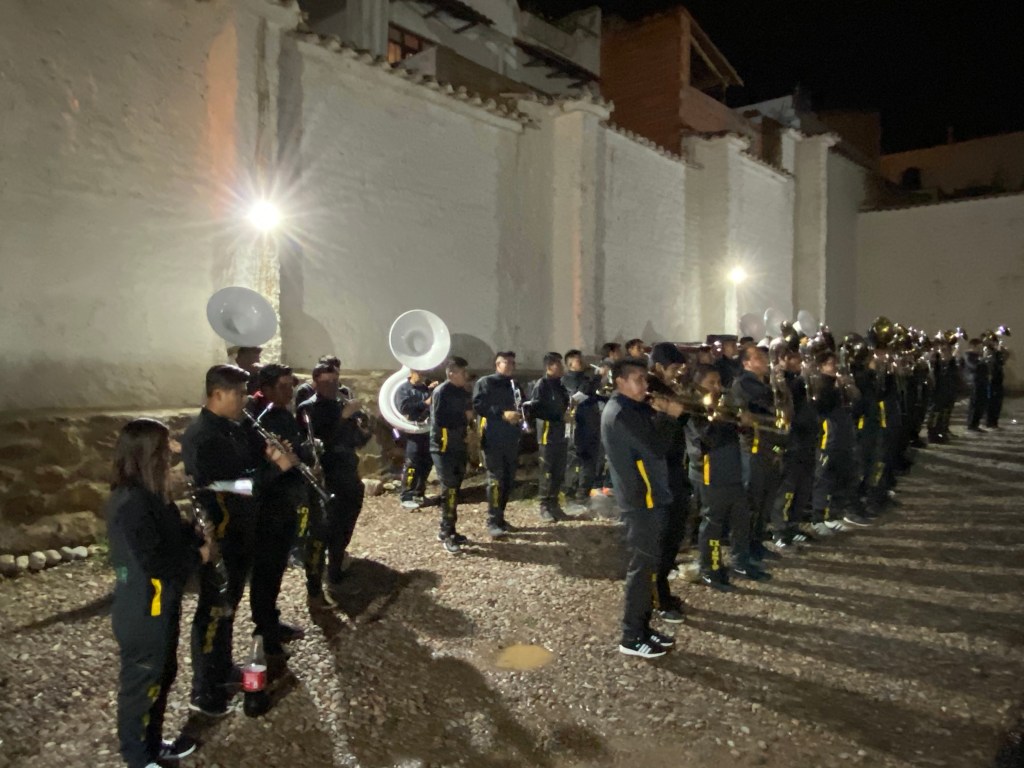
  • Brass bands parading the street
  • Pet dogs that are adorable, including lots of sausage dogs
  • Kids being driven around in remote control cars
  • Pigeons in the central square
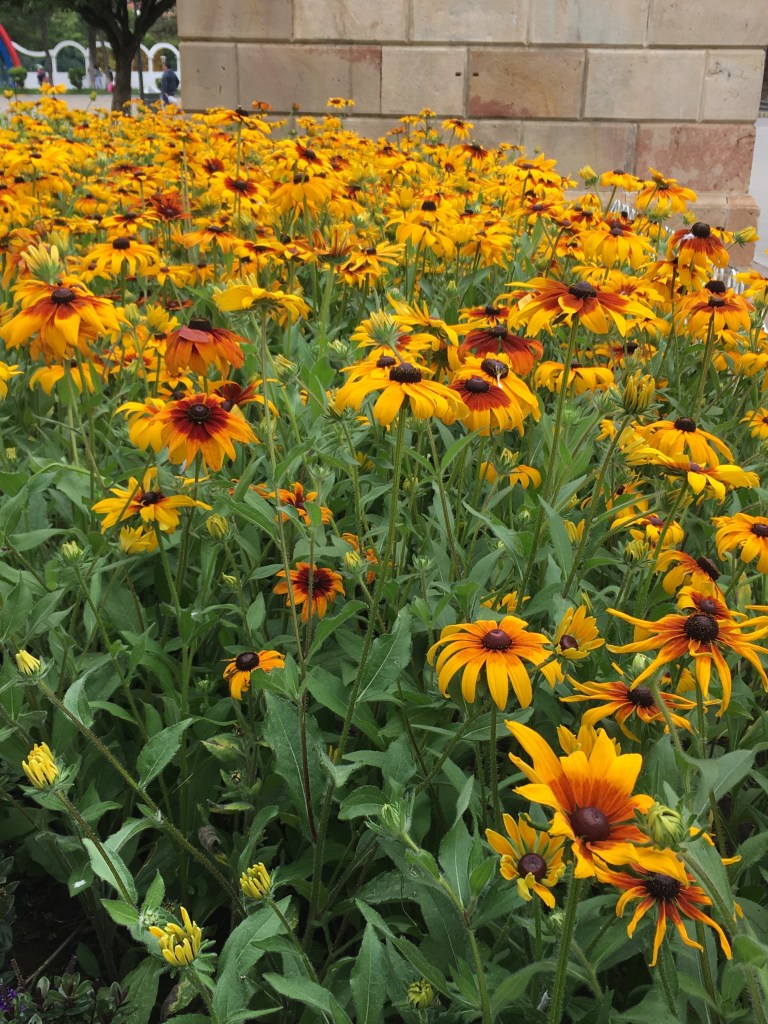
  • Trees and bushes with beautiful flowers on the streets
One could argue that five sousaphones is more than enough.

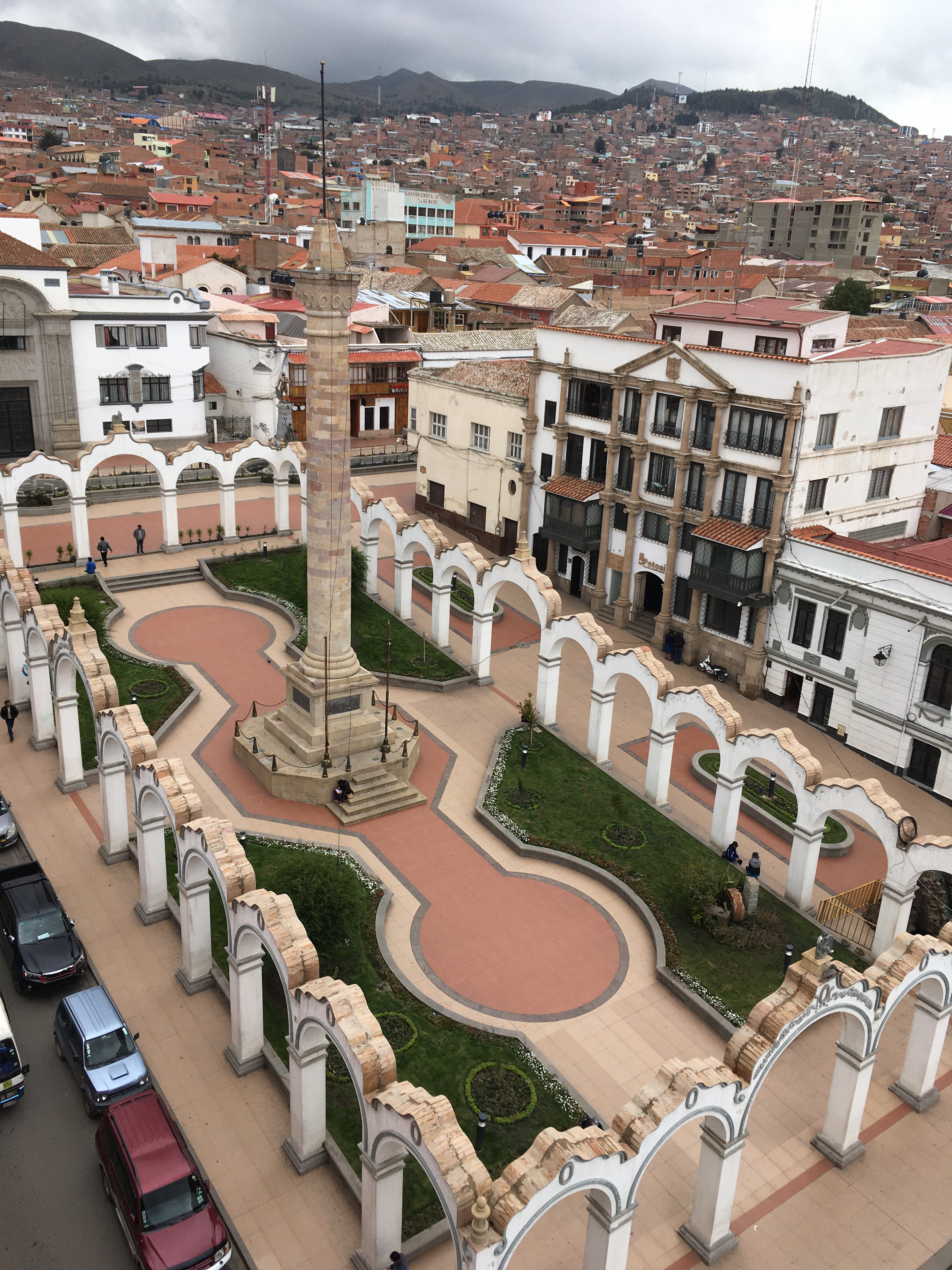
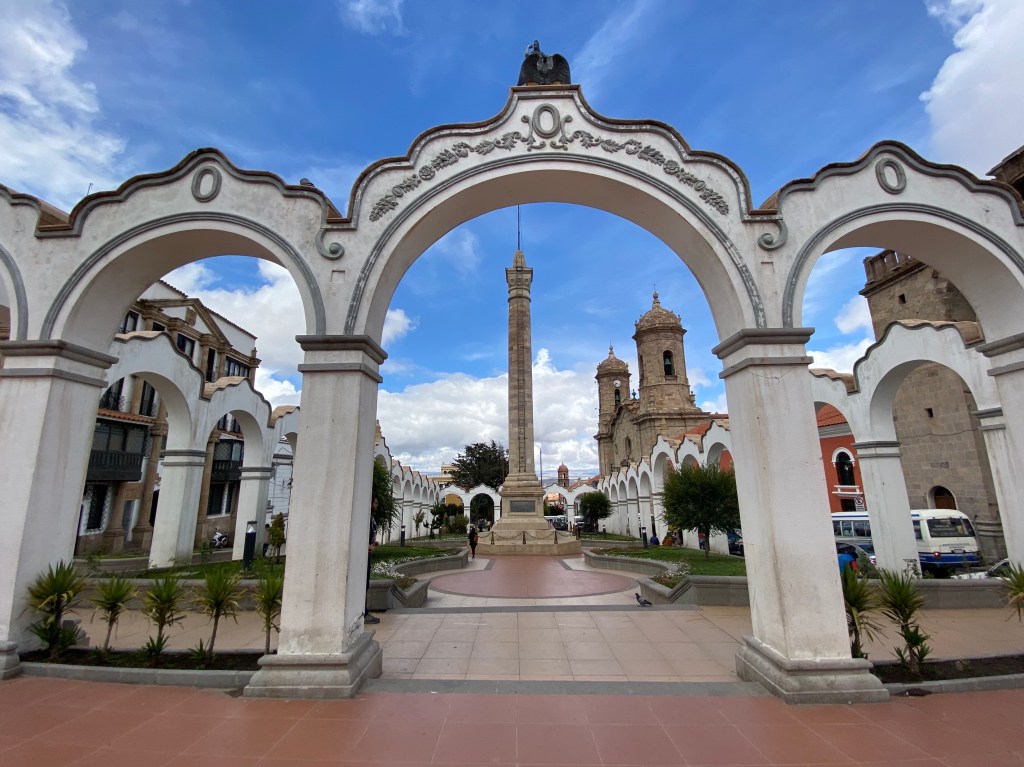
I wasn’t as enamoured by this city as I thought I would be when I first got here, but I’m definitely warming up to it. We arrived on Saturday after exploring Potosí’s catedral (and beautiful views from the clock tower):

That day, we explored Sucre in the rain and yesterday we explored it under the clouds. We were fortunate to take a tour yesterday morning with a local historian who studied Bolivia’s colonial history in England.

We learned a lot not only about the history of Sucre, but also about the social and cultural dynamics in the present day. François described how judgements are made as to whether Bolivians are ‘European’ or ‘indigenous’ and the various implications that arise from each. It makes me realise that, comparatively, Australia is further into its multicultural and reconciliation journeys – further than I had realised.

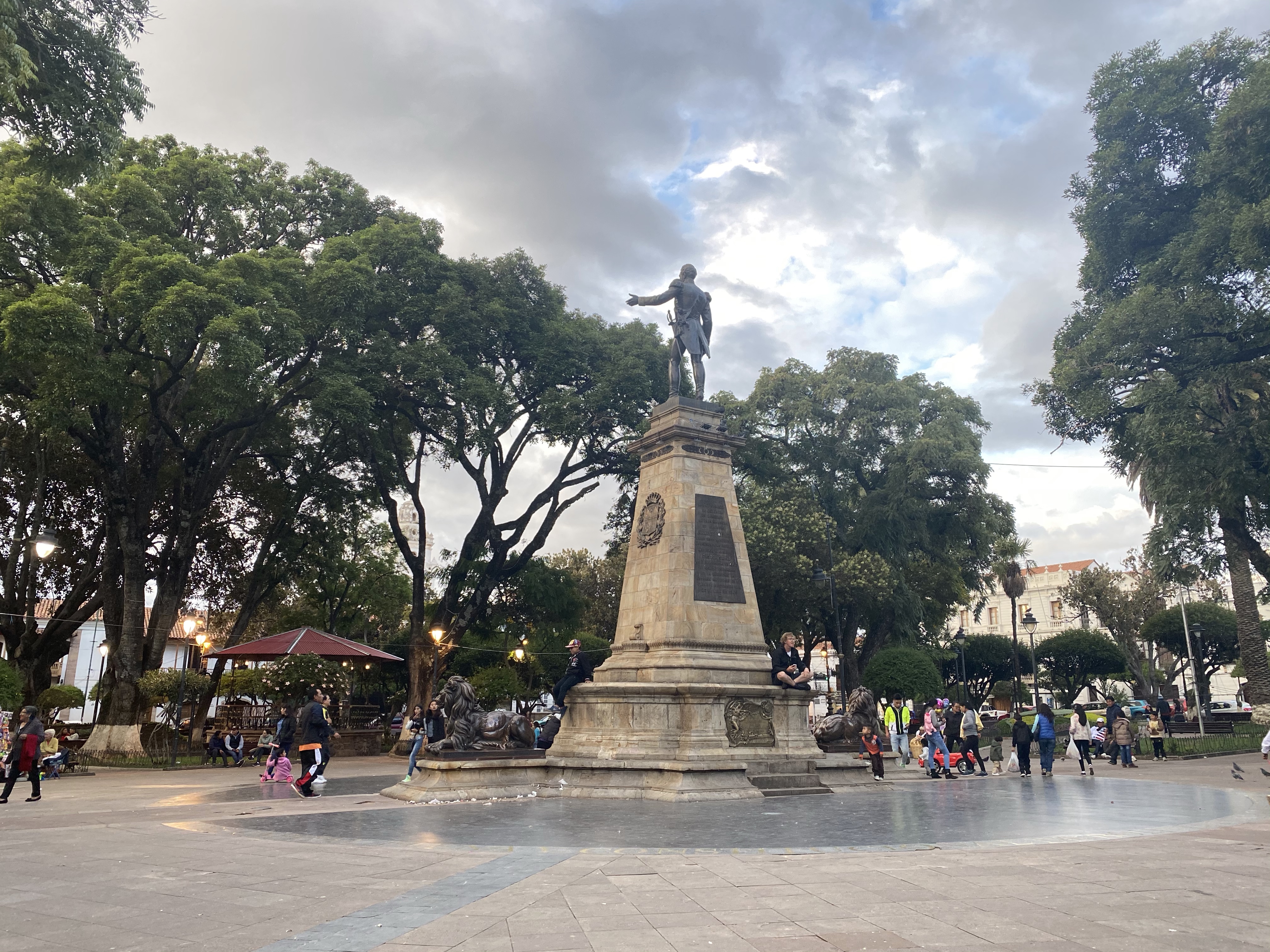
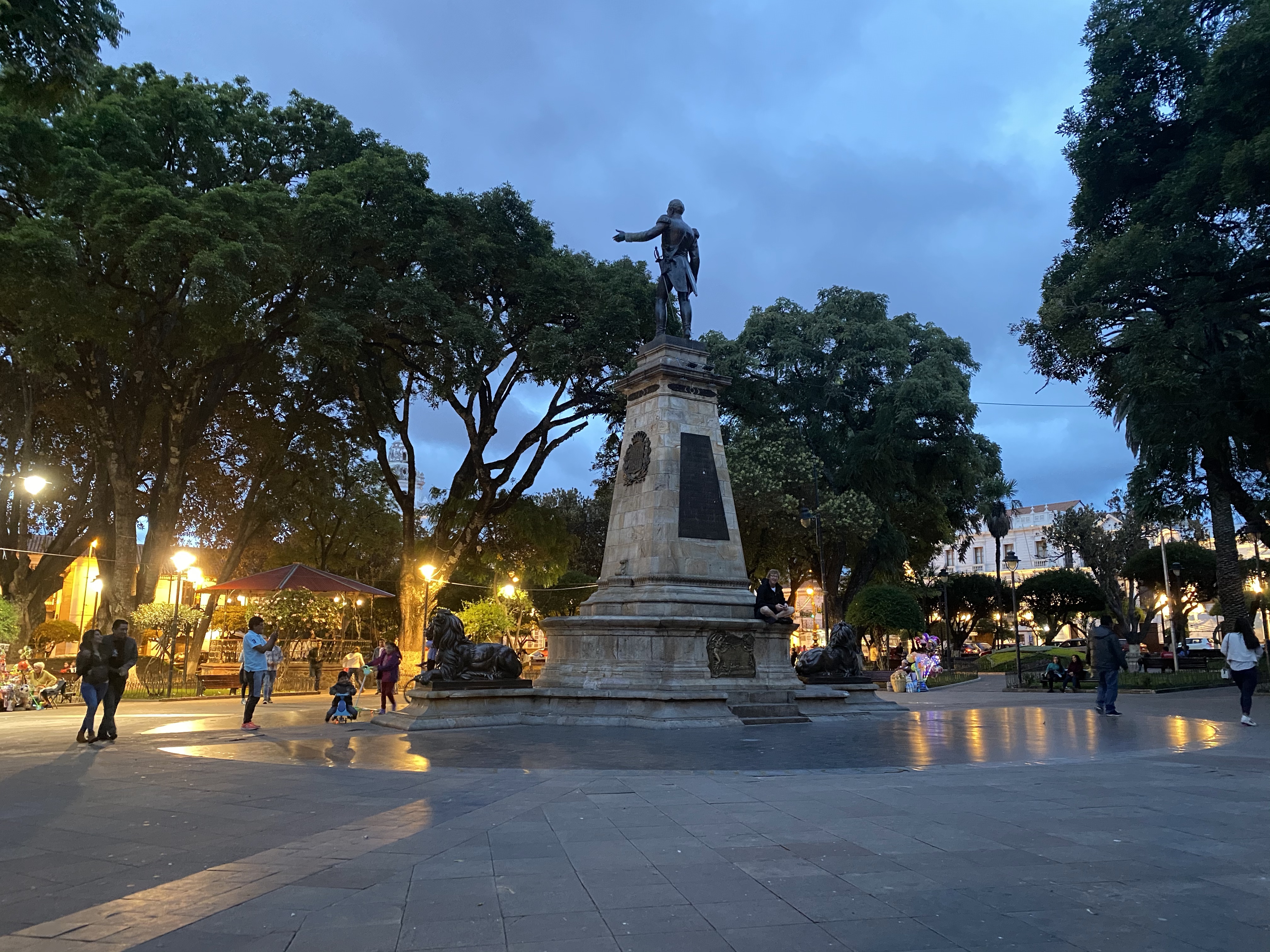
Yesterday afternoon, we spent sunset in the 25 de Mayo square in the centre of Sucre. It’s buzzing with locals and their kids, pigeons and dogs. I read while Dan perched on the statue while calling home. The atmosphere was relaxed and lovely.

I’m off to Spanish class now – wish me luck! Dan is off to find Sucre’s best coffee – wish him luck! (I think he may need it more than me.)

VRPS

[Sucre]
We’ve investigated, and Potosí is not a pot o’ sea

Dan and I have developed this high-altitude funeral-march gait so we can wander around Potosí without running out of breath (too often). As if the altitude wasn’t enough, this city is on a rackish hill so uphill needs to be taken gently. I’m so impressed by how they’ve pulled off their central squares despite the slope.

It feels noticeably different in Bolivia (at least Potosí) to Chile and Argentina. It’s poorer, with children and old women begging on the side of the street. It’s more vibrant in its indigenous culture, with Quechua spoken widely and many of the women dressed in traditional clothes of swooshy pleated skirts, long thick socks, often open-toed sandals and a bright hat, like a top hat.

And we are more noticeable, I feel. Where the Chileans and Argentinians didn’t know whether or not we were locals, the Bolivians appear to know that we’re not. It’s all in the looks that you’re given in the street.

However this particular outsider has just signed up to a week of Spanish classes in Sucre starting Monday and she’s excited like a five-year-old on their first day of school. What should I wear? (I shouldn’t be worrying. I really don’t have many options.) Should I study? (Of course, but the next few days won’t make much difference.)

But back to the present in Potosí. This place, to me, has a strange vibe but I’m not sure how much of that feeling derives from my preoccupation with its sad history. As I read up on the bus ride in, Potosí was once a significant jewel in the Spanish empire’s crown due to the extraordinary amounts of silver mined from the mountain next to it. The mining process was – and to a large extent still is – deadly, and during the colonial period, the Spanish sent millions and millions of indigenous Bolivians and African slaves to their death.

The silver in the mountain has now largely been extracted and the city is one of the poorest in the country, and maybe the continent.

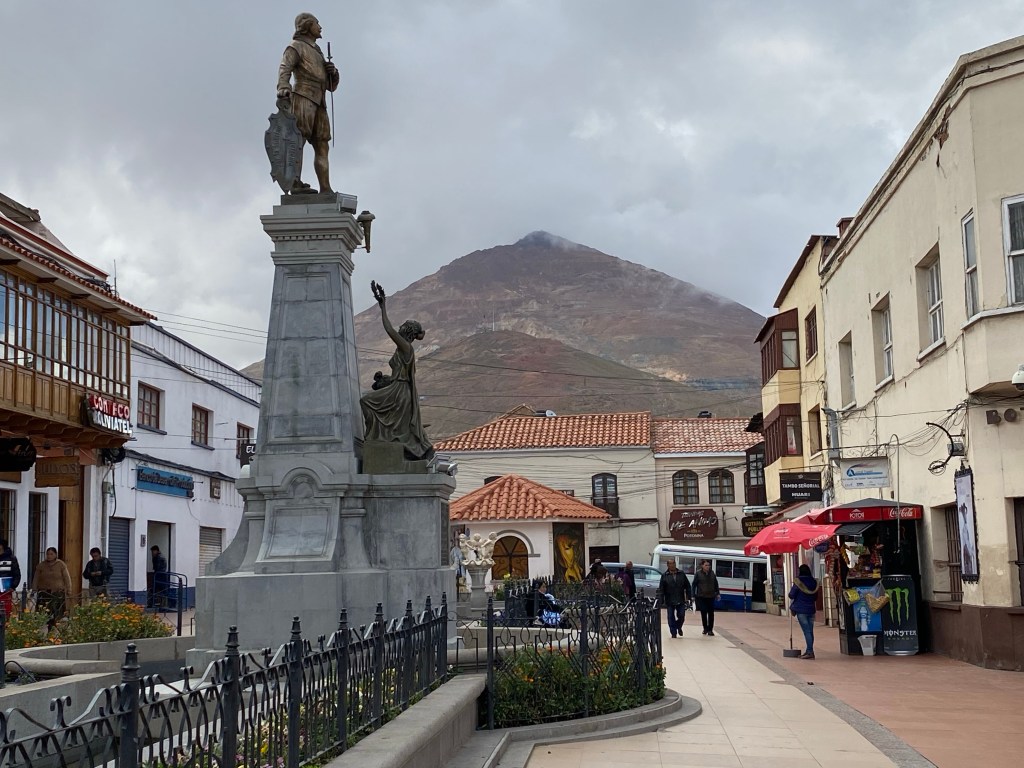
Cerro Rico, the silver mountain, is hanging out in the background

I’m pretty angry by this – but it appears that the local population are not (as much). We toured the Casa de la Moneda (the former mint) and the tone of the tour was more about celebrating the wealth in the mountain and the accomplishments during the colonial era like coin-making technologies.

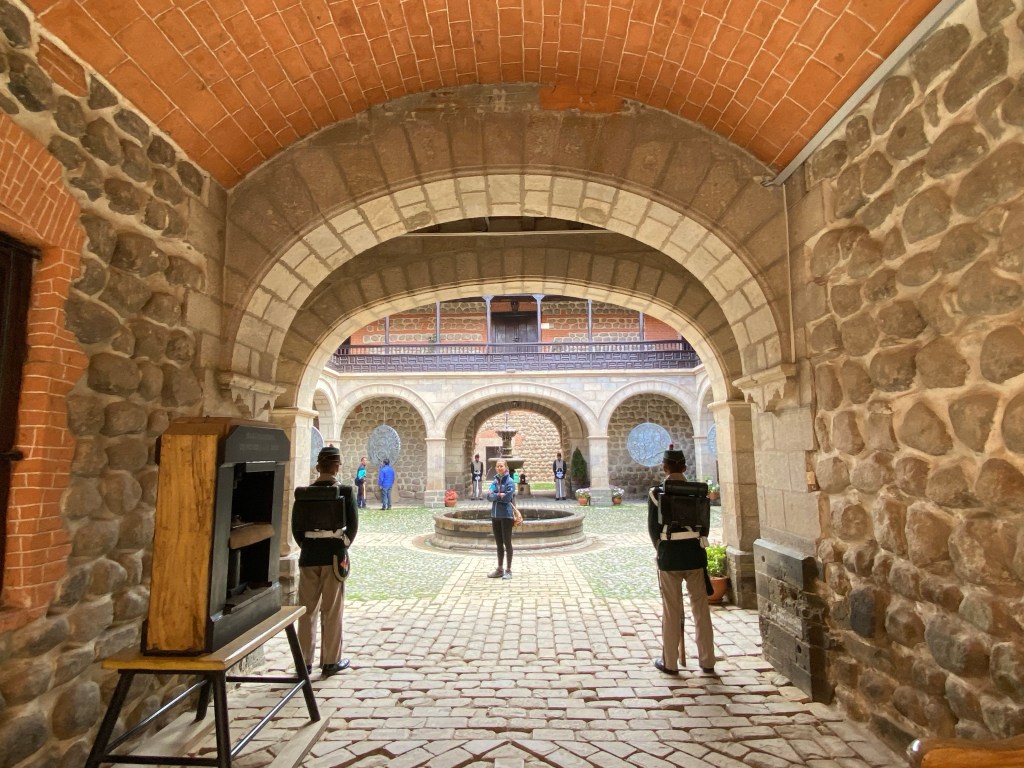
Casa de la Moneda

This city is full of such contrasting experiences. The menu del día set lunches are delicious and plentiful. The streets are narrow and often the footpath can’t accommodate two people across. Whenever a bus rumbled by, putrid smoke fills the air. Despite being 2,000km north of hot Santiago, Potosí had a top of 14 degrees so we have to rug up when we leave our deliciously heated hostel. We were treated to amazing live acoustic music by another hostel guest over a light dinner of tortillas. In parts of the Casa de la Moneda, we were left with a sharp smoky-acidic taste in our mouths.

It will be interesting to compare these initial impressions with the rest of our time in Bolivia.

VRPS

[Potosí]

Adventures in the altiplano

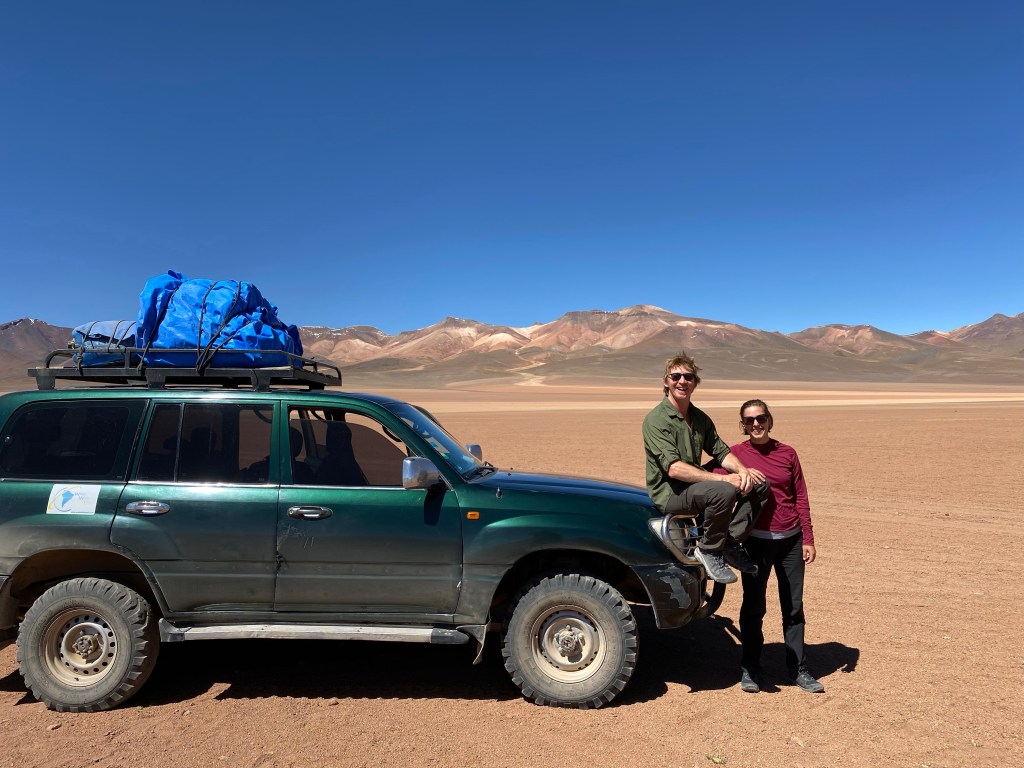
It has been a wild three days crossing the antiplano (the Andean plateau) between San Pedro de Atacama in Chile and Uyuni in Bolivia. We’ve spent most of the time around 4000m above sea level, getting short of breath whenever we walk up a gentle slope and sometimes even just from talking.

We booked a tour which saw us grouped with four others and a driver/guide for the three days. Our guide, Herman, was a gentle Bolivian who spoke in very slow (and sometimes a bit broken) Spanish. Our companions were a brother and sister from Chile who didn’t speak English and Vy and Titlau, Danes who didn’t speak Spanish and who picked up the rules of 500 super quickly. As such, it was a mix of languages in the car, with Dan patiently keeping everyone on the same page.

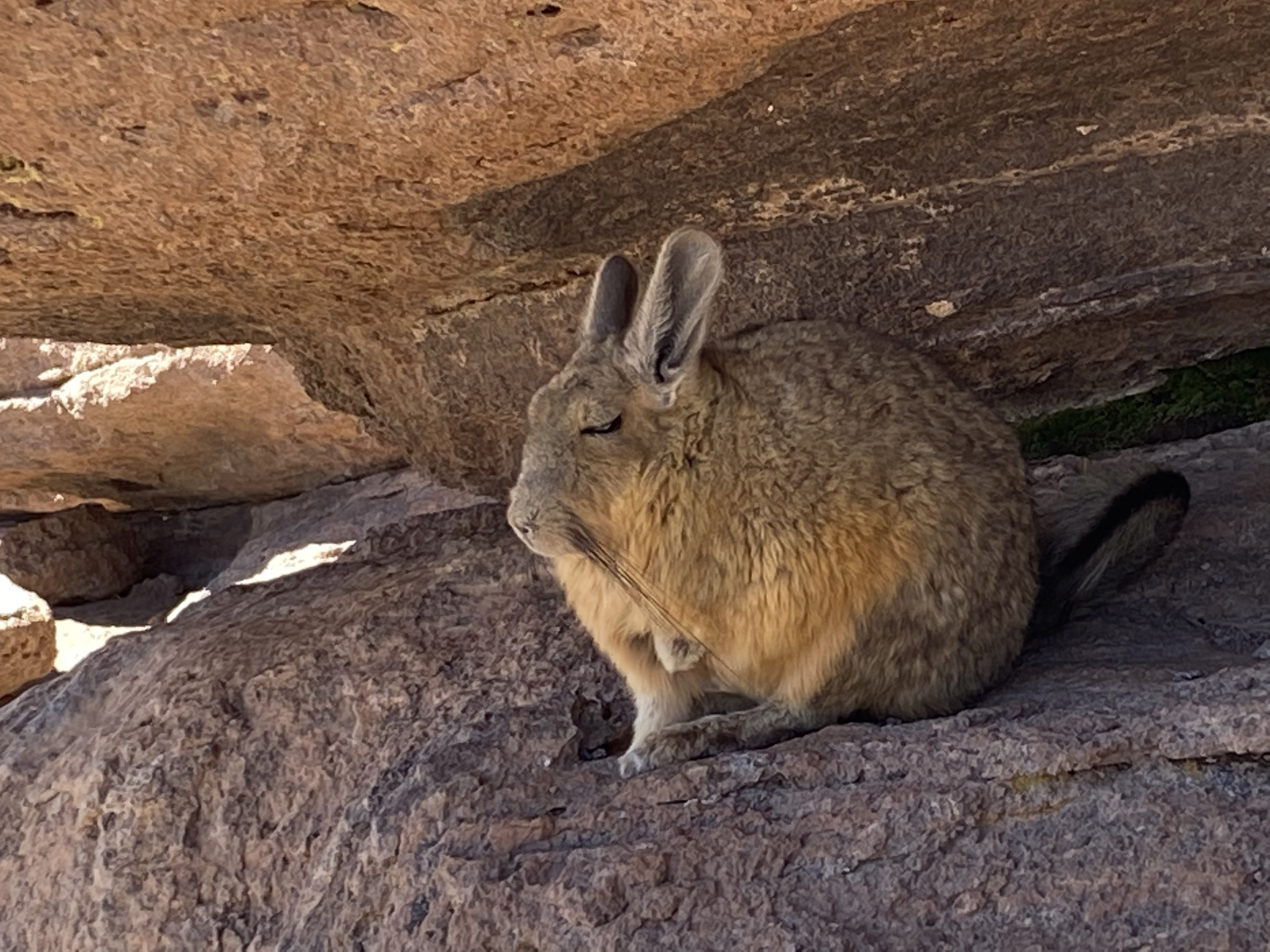
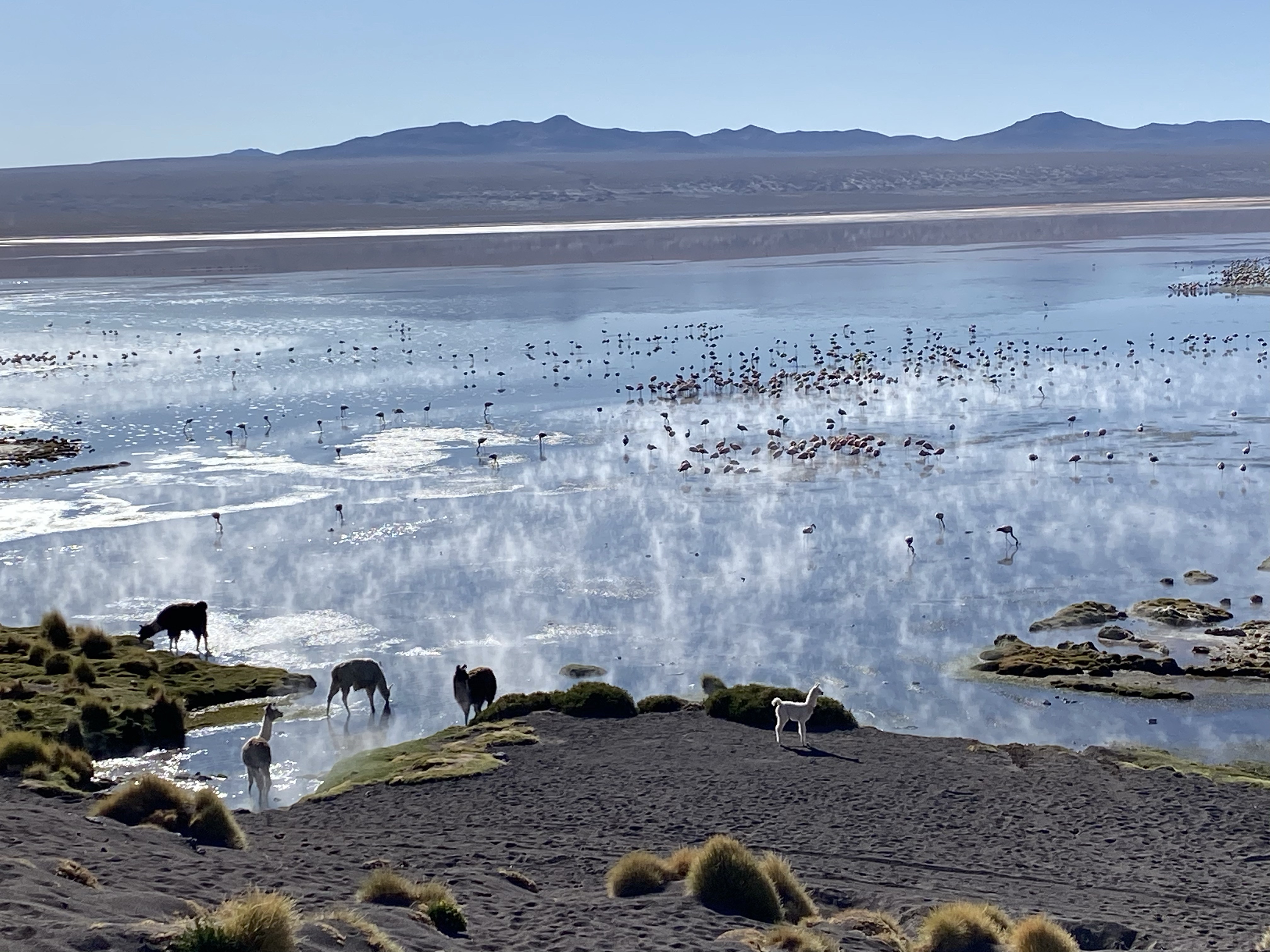
We stopped at so many different sights on the tour that I won’t attempt to name them all. We saw numerous lakes, hundreds of flamingoes, heaps of llamas, alpacas and their more lithe, shorter-haired cousins, vicuñas, as well as an emu and a couple of alpine bunnies.

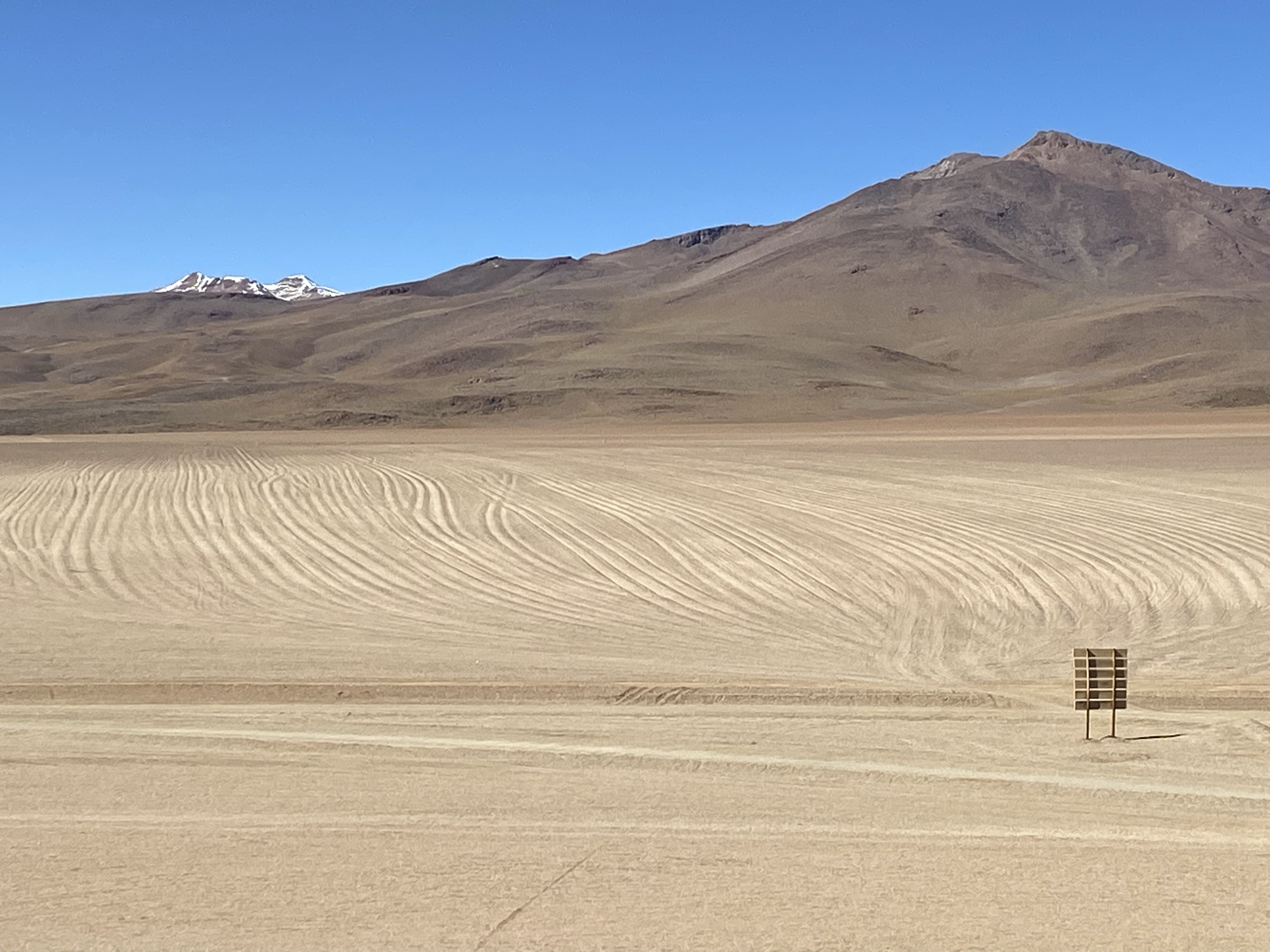
The landscape was, as you may imagine, pretty breath-taking (in part because oxygen was harder to come by). After the border crossing to Bolivia early on the first days, there were no roads – just a spiderweb of different dusty 4WD tracks. Volcanoes often lined the horizon, and the near landscape flitted between dry, lifeless dirt, tufty grasses, and the occasional field of boulders (it was easy to imagine the volcano eruption that caused them to land there).

For us (I’ve consulted Dan so it’s not just yours truly off on a frolic), the stops that were the highlights were:

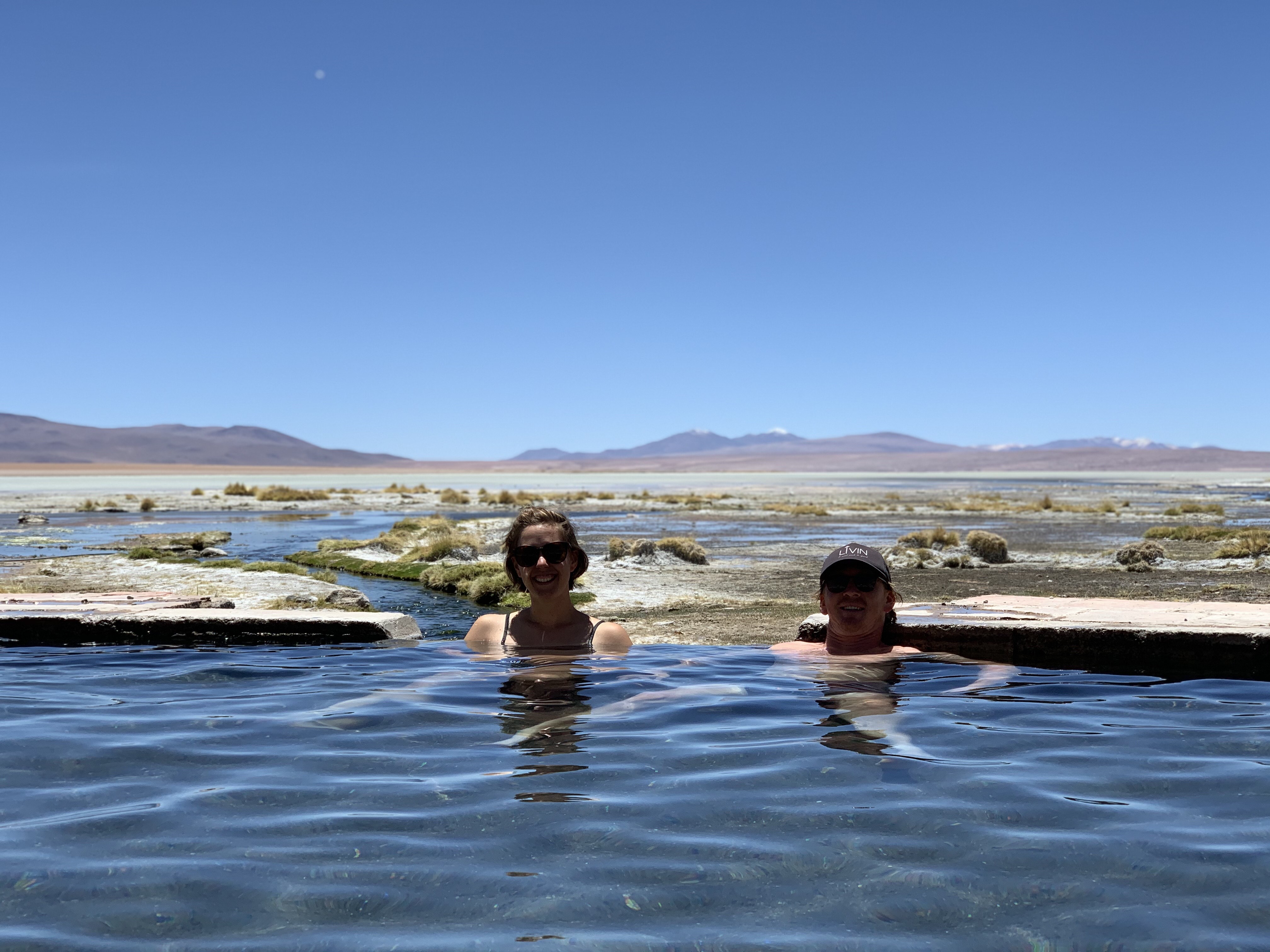
  • Thermal springs – we took a dip in these steamy springs on the first day
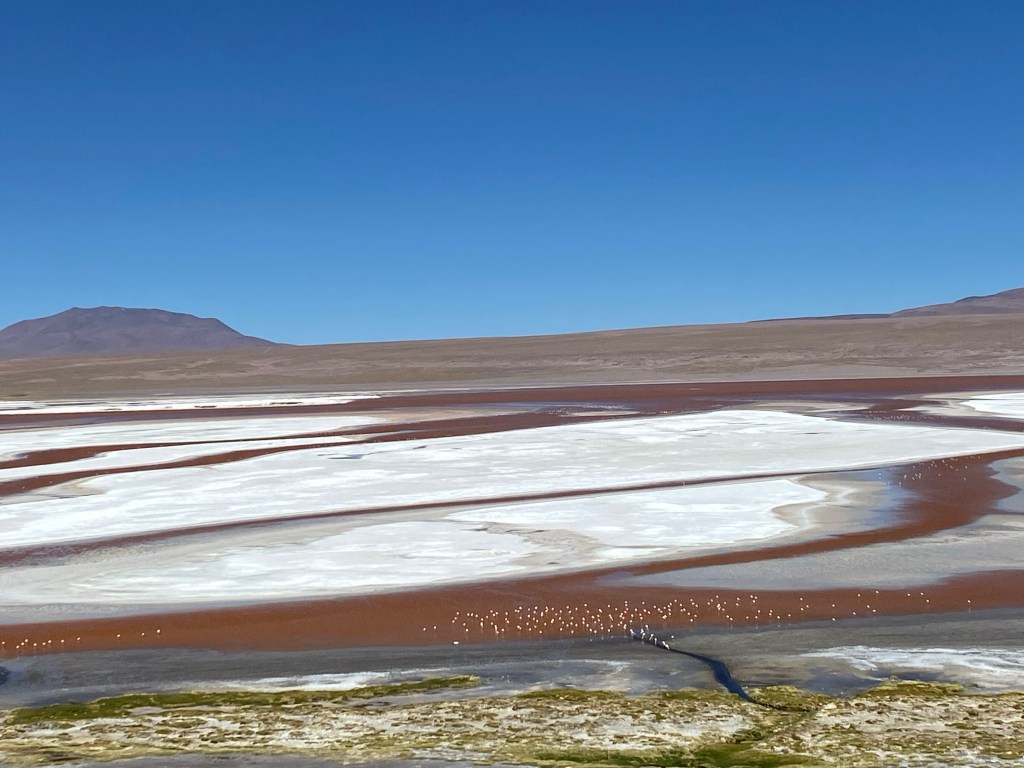
  • Laguna Colorada – this incredible lake appears as a deep peachy-red at the right angle
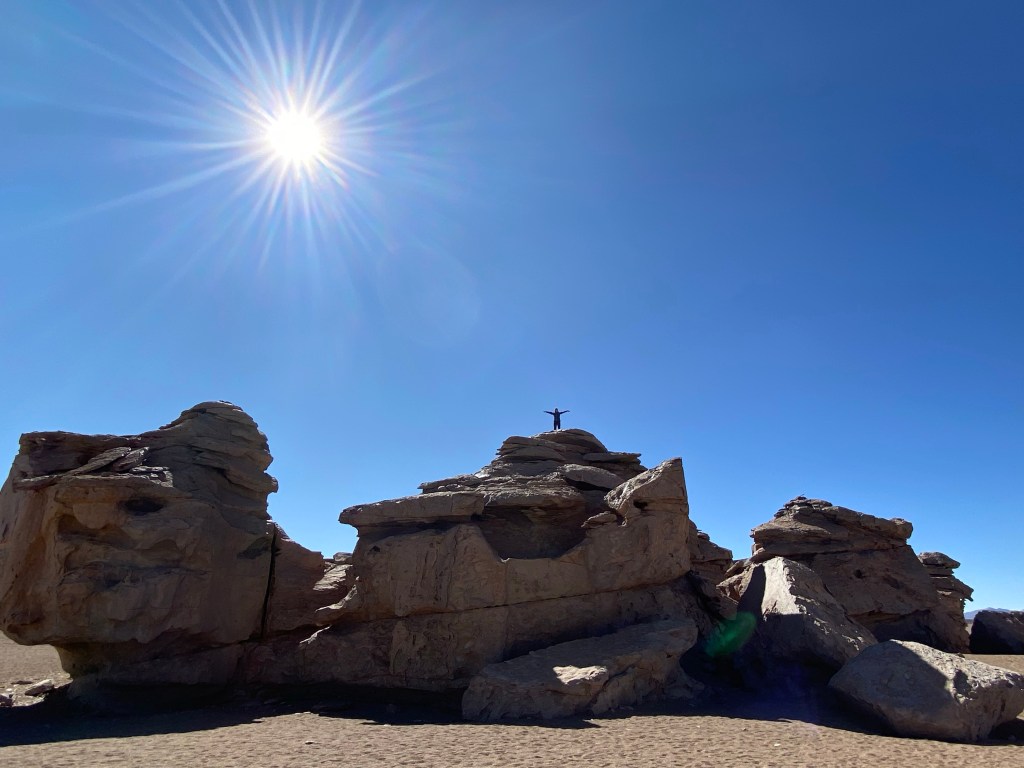
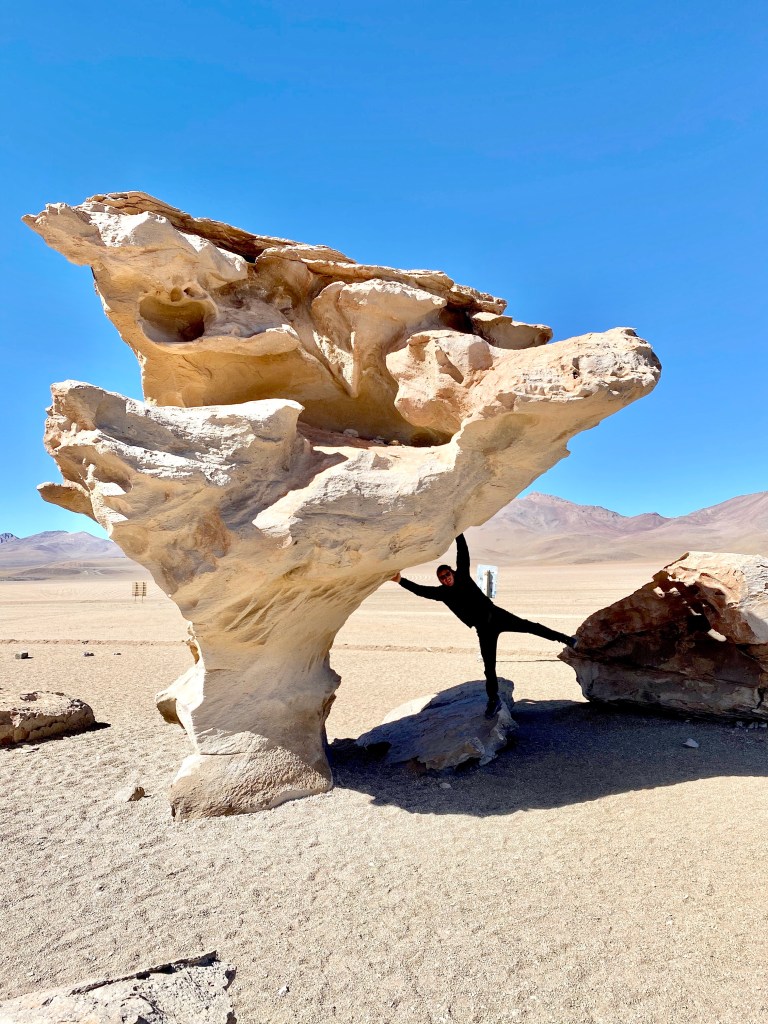
  • Piedra de Árbol – I could have spent so much longer crawling on these intricate rock formations. Dan’s recreated a photo that was taken of him when he was last there in 2006
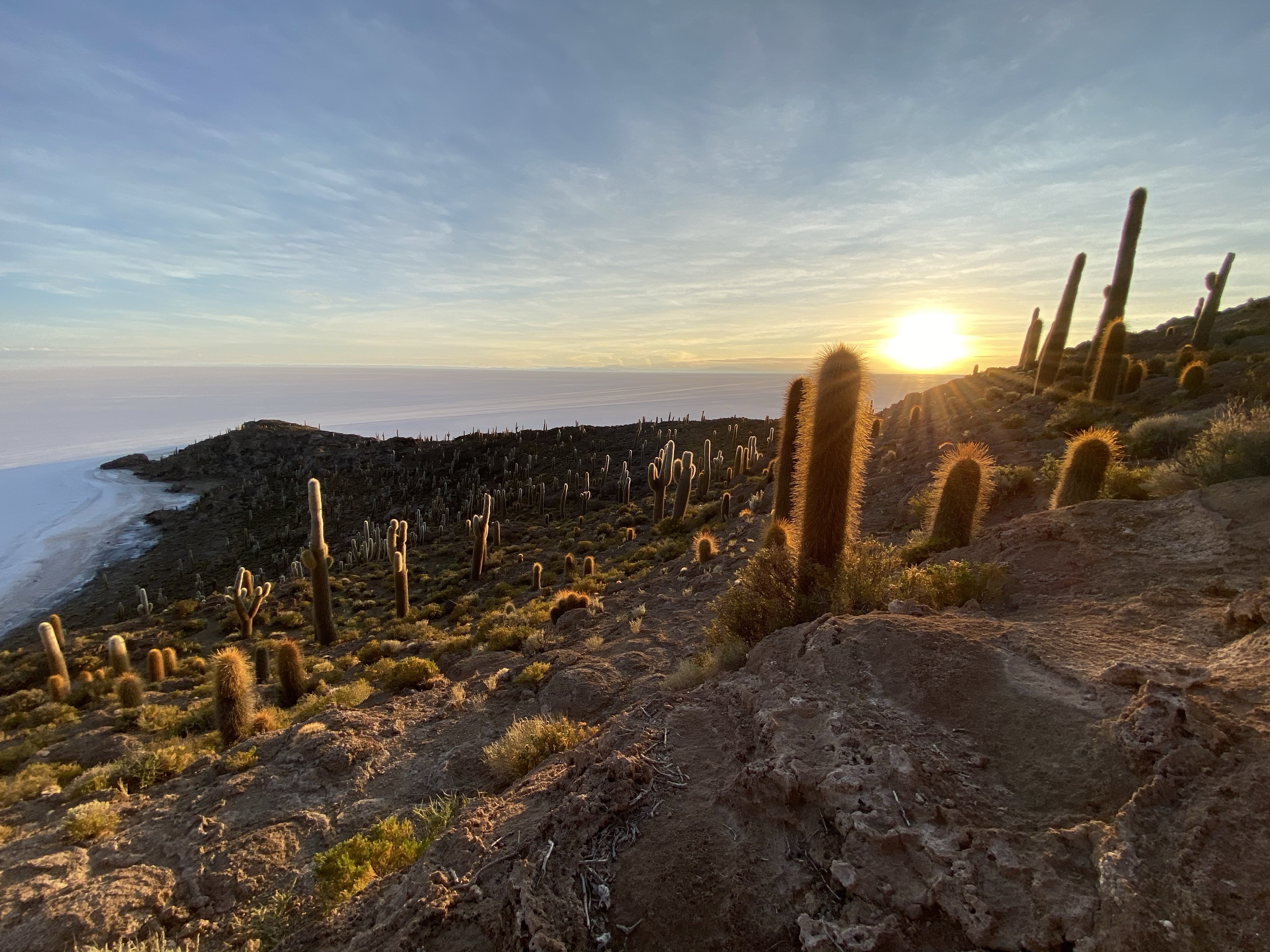
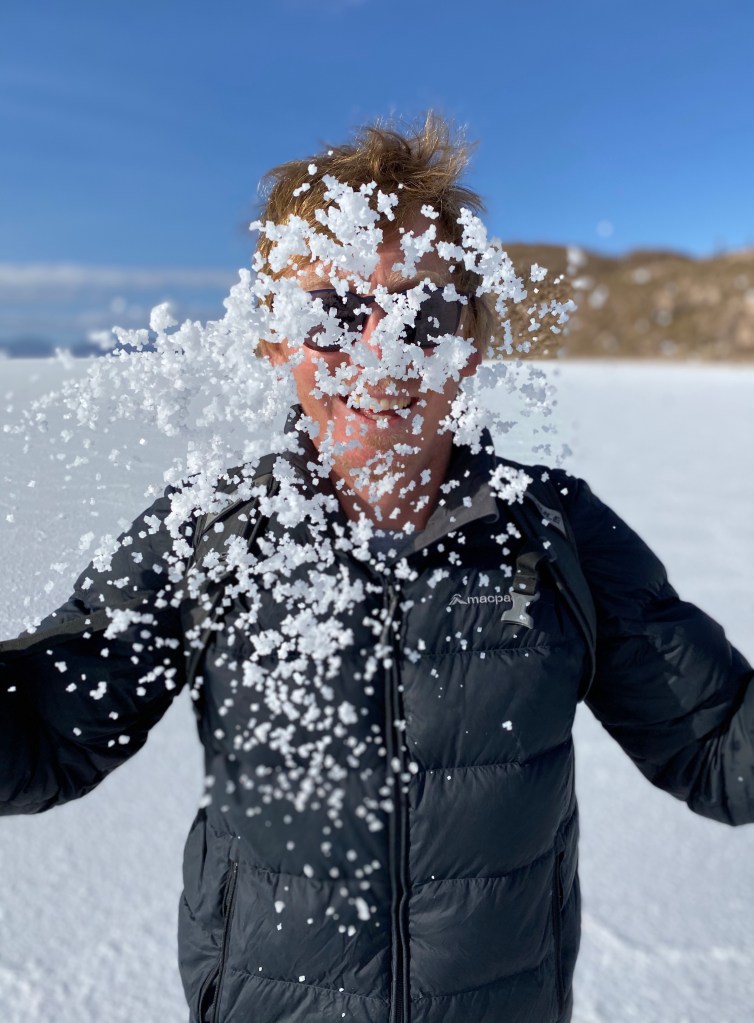
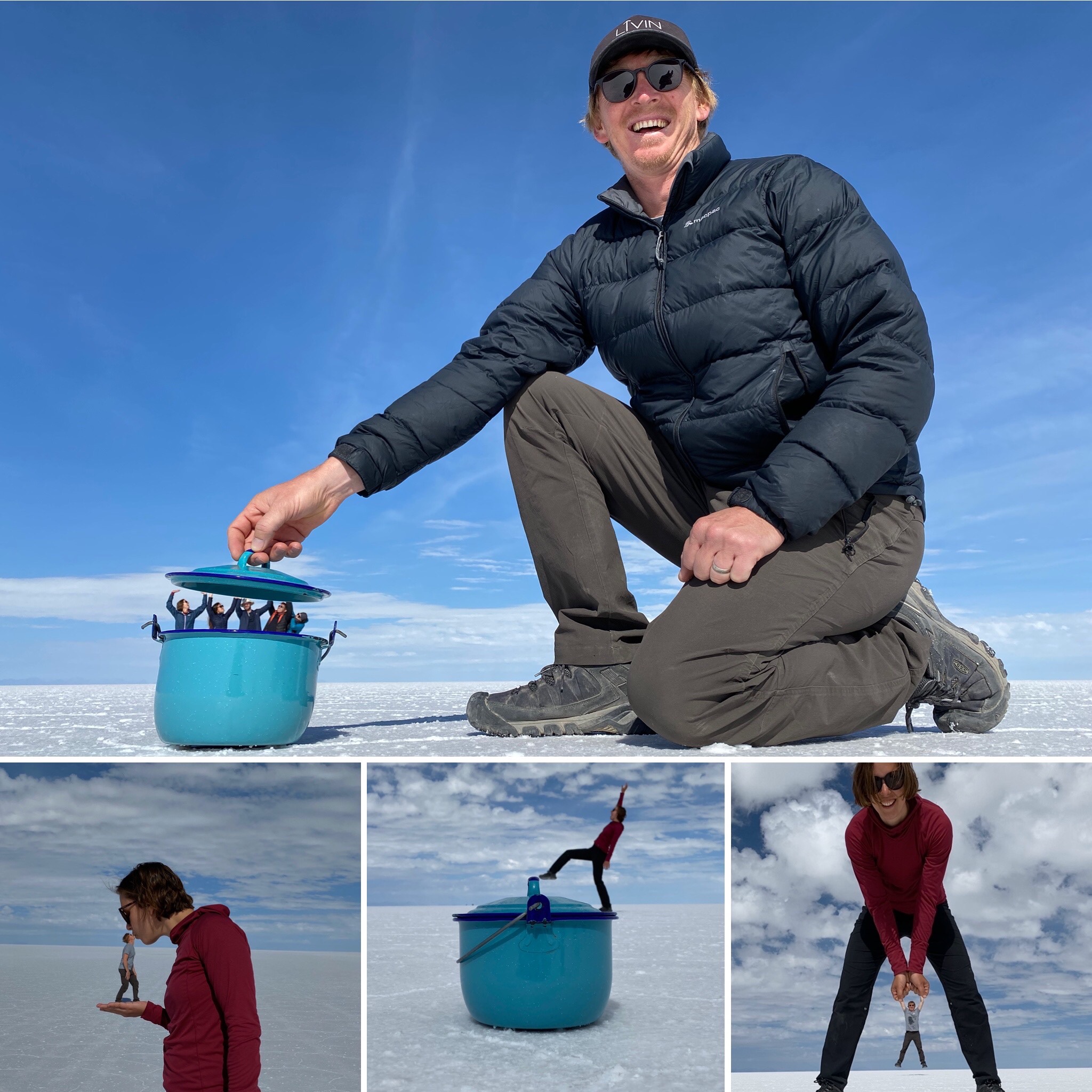
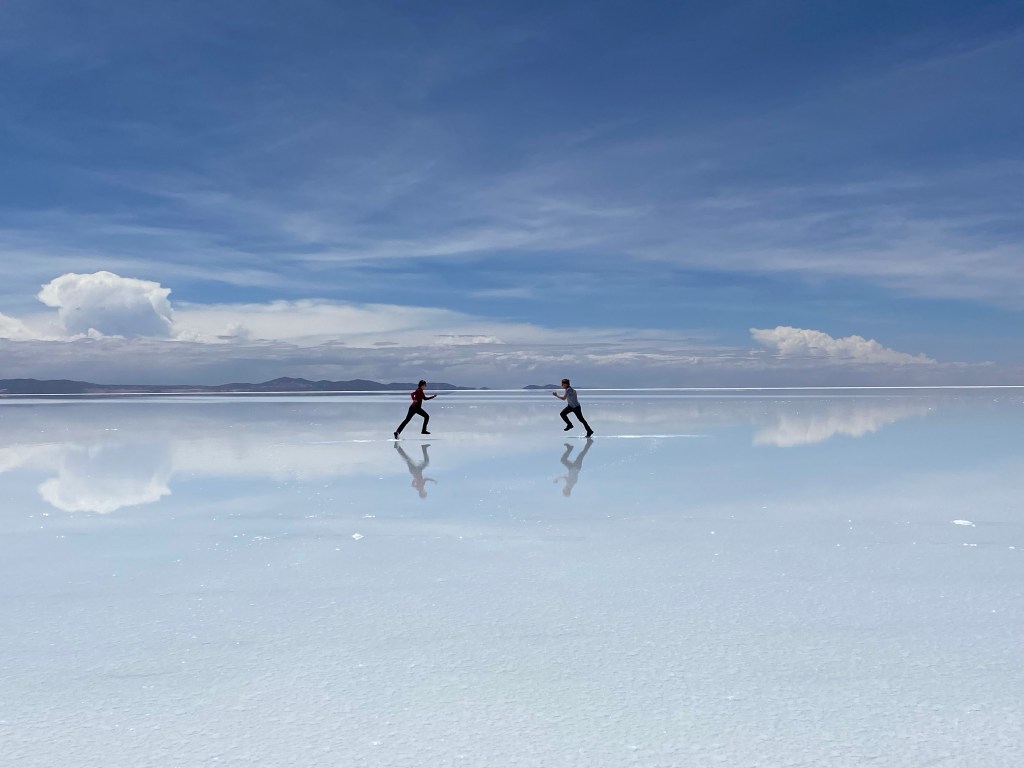
  • Salar de Uyuni – Bolivia’s 11,000km squared salt flat was made when the Andes split the Pacific Sea and the patch in Bolivia dried up. The salt is up to 10m deep and on top is a pure unadulterated white. We saw dawn from a coral island covered in cacti, took all the usual touristy photos that play with the lack of depth perception in the white landscape, and were also blessed to see a section covered in a few centimetres of (super salty!) water, which made for the most outstanding reflections
Our pants and shoes have been outstandingly salt-crusted since this escapade

The other less expected highlight of the tour was the food – we were treated to super delicious, fresh, vege-filled meals. I counted ten vege and two fruits served for lunch yesterday!

I could go on and on, and share dozens more photos, but I’ll exercise restraint. While the tour was amazing fun, we’re tired from the constant moving and the pre-dawn start. It will be nice to set up in Sucre in a few days for an extended stay and hopefully some Spanish classes (for me).

VRPS

[En route to Potosí with half the Bolivian army, getting occasionally squished by people in the aisle of the bus who have different cultural ideas about personal space]
Flamingos in the desert

(In my head, I read the title in the tone of Professor Quirrell’s “Troll! In the dungeon!” because, like him, I thought you ought to know.)

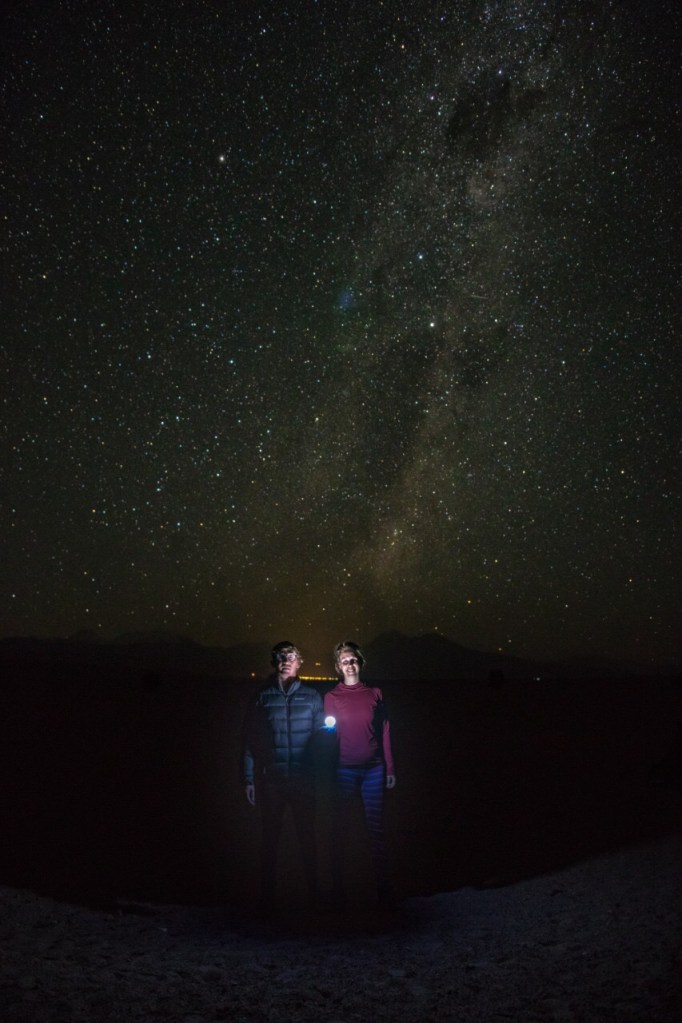
The stars were everything we hoped they’d be. The concentrated band of the Milky Way made other areas of the sky look bare in comparison. Here’s one of Alex’s photos:

Alex’s Instagram is @alexandrymazoni

I should give you a bit more of a background of our travel companions. Alex is an exceptional photographer, as you’ll see if you visit his Instagram page. He sells his photos through a stock photograph company in Brazil. He and Yulia have been travelling together for a month or so. Yulia’s been travelling for two years or so, and will continue to do so until she runs out of money.

Another Alex photo! Here’s Alex and Yulia.

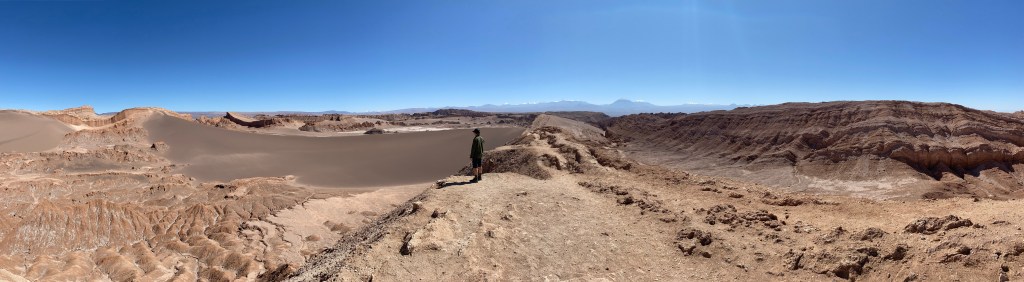
Yesterday, our second full day in the desert, was bloody magical. We started by heading to the well-hyped Valle de la Luna with moderate expectations, and we were absolutely blown away. This valley, so named because apparently it resembles the surface of the moon, is full of these incredible rock patterns and smooth sand dunes. The walk through takes you up on the ridge between two incredible scenes on either side, which I’ve attempted to capture as a panorama:

Having largely ticked off the sights to the south, we headed back through San Pedro (with a stop at its French bakery for an exceptional baguette) and then north.

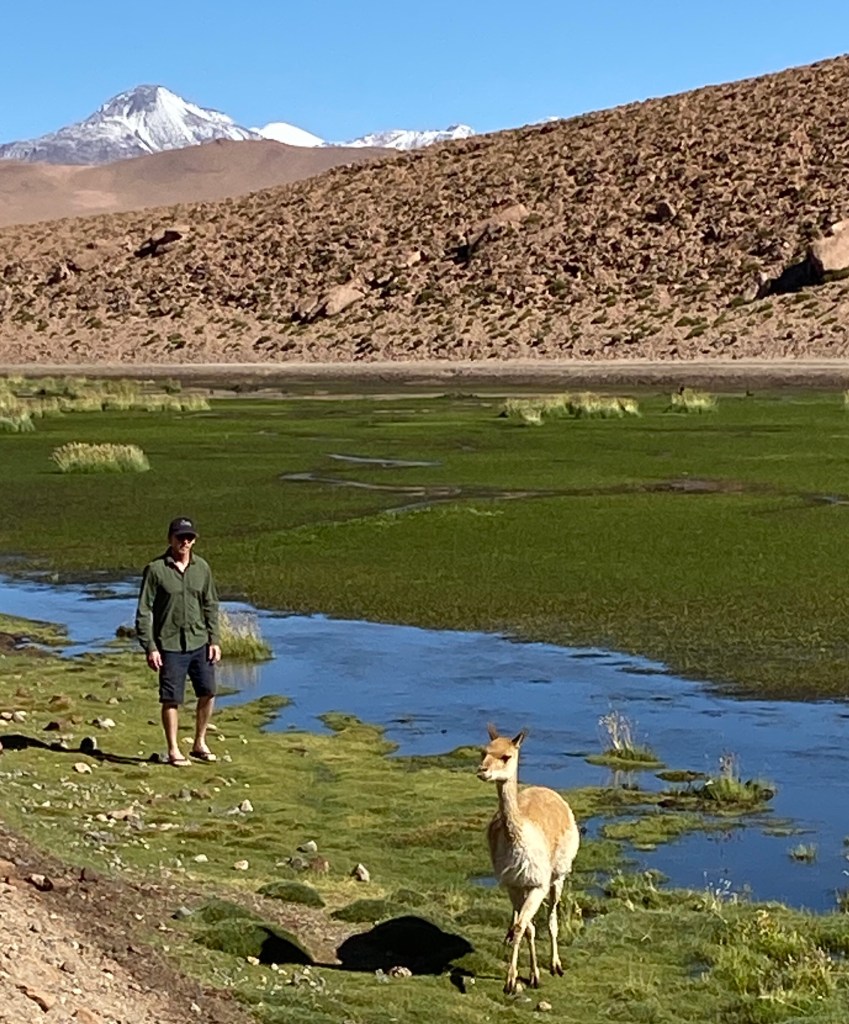
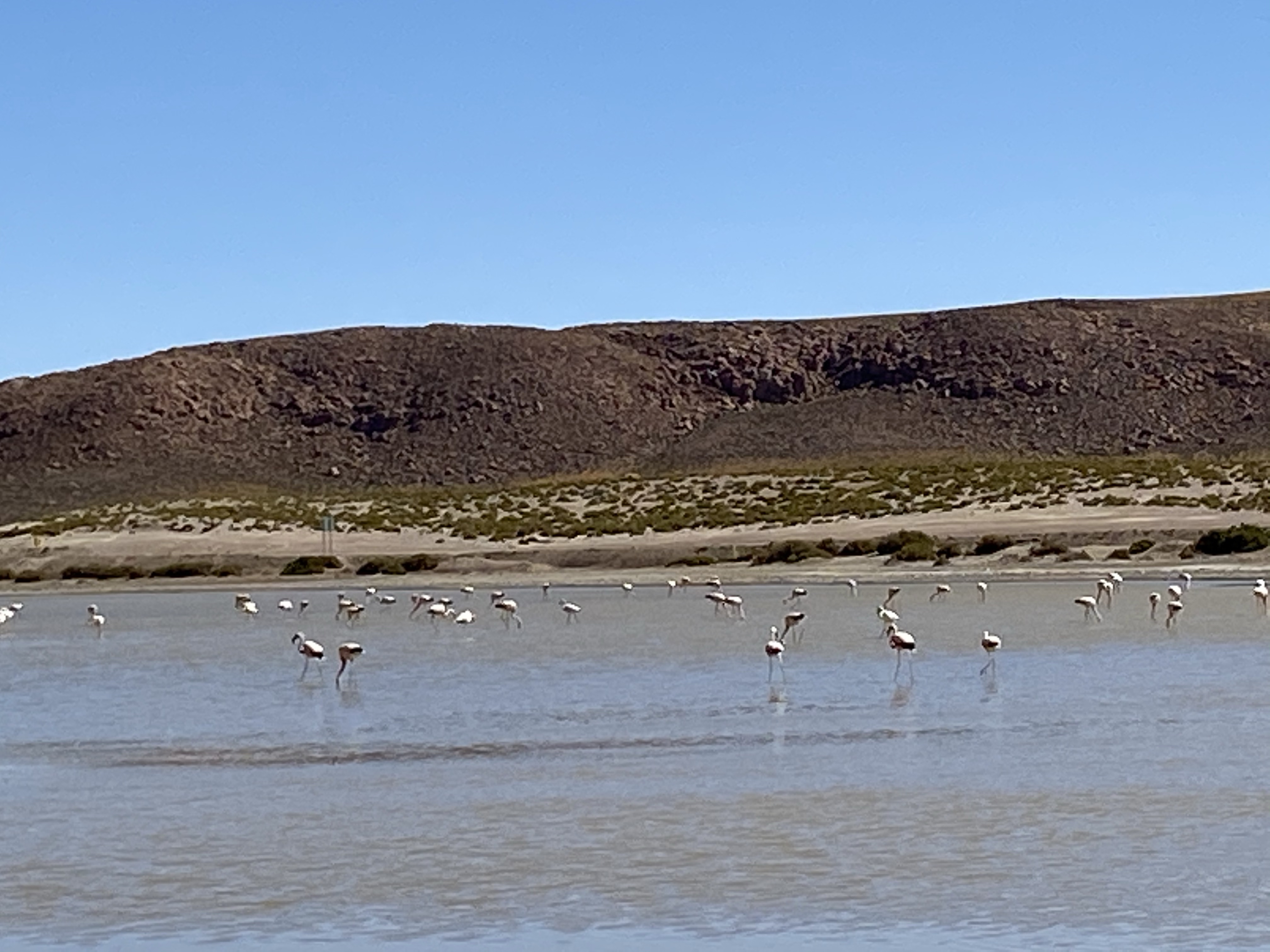
We meandered (in the car) in the direction of the El Tatio Geysers with lots of stops – at a creek for a swim, at gorges, canyons, lakes with flamingos, to say hello to llamas and alpacas. The drive took us up from approx 2,400 m above sea level to around 4,000 m. The summits of the incredible mountains we could see at a distance from the town were now much closer, as if within reach (they weren’t). The air was thinner and it was noticeably colder – even in full exposure to desert sun you’d want a jumper.

Dan is in his best camouflage.

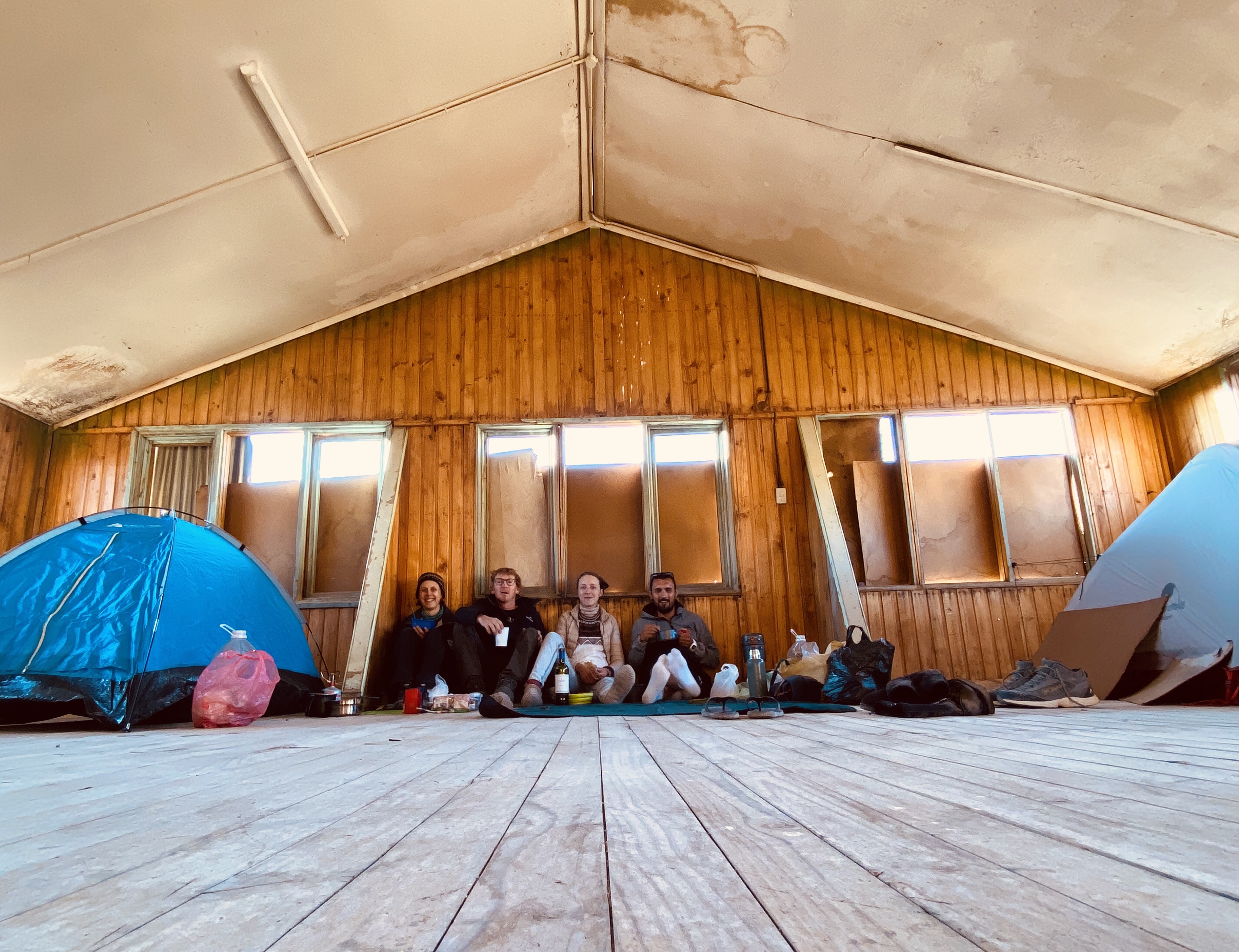
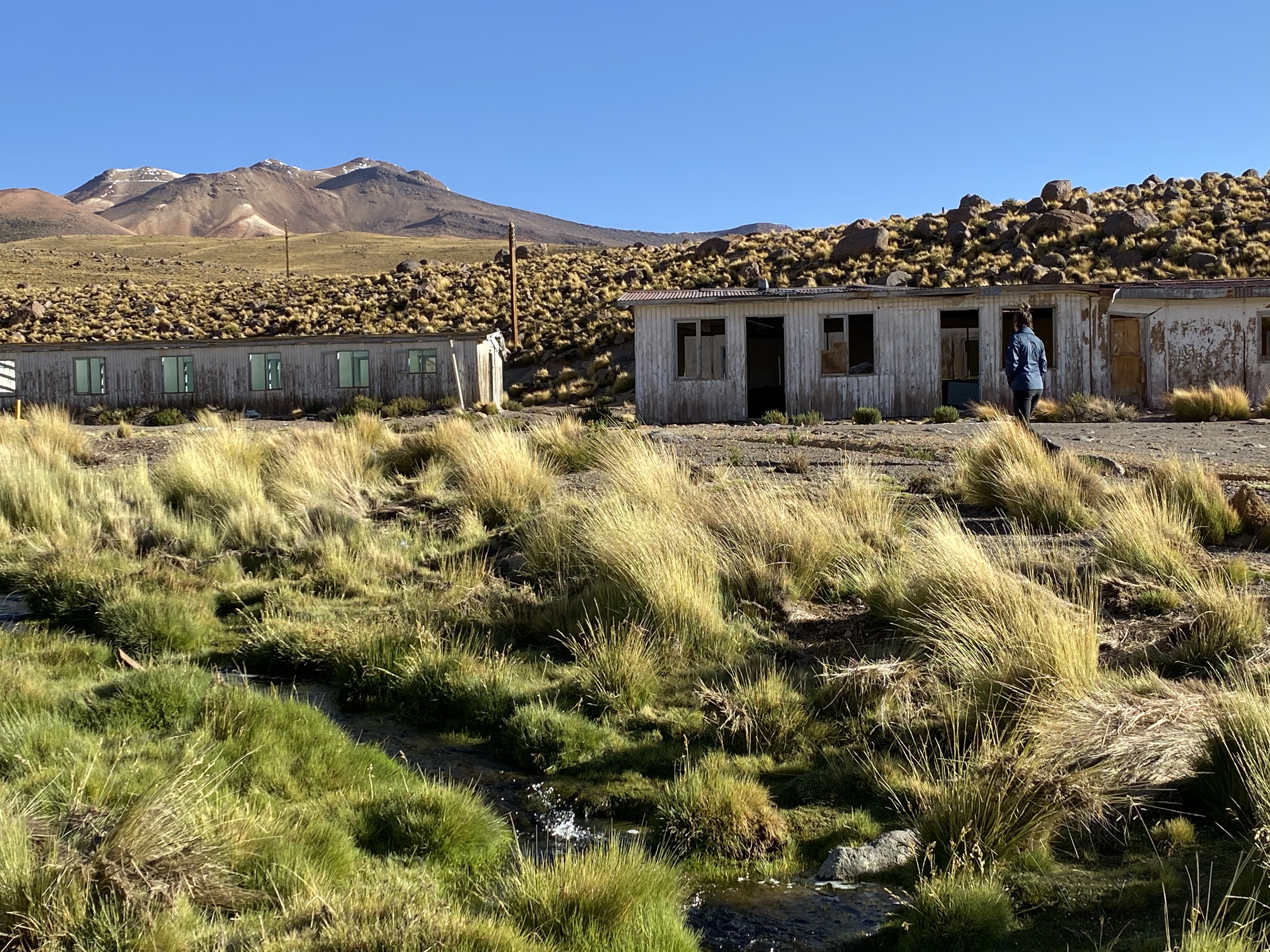
To set up camp for the night, we took a side road within a few minutes drive of the geysers that took us to an abandoned set of buildings. There were old kitchens, workers’ rooms and in the distance some industrial equipment – all obviously disused. We picked the beautiful wooden house to set up camp, covering the empty windows with cardboard to keep the winds out. Through the complex ran a beautiful clear stream. We’ve since found out that the site was probably used by a geothermal energy company, and probably fell into disuse in the late 2000s. As the sun set, the temperature dropped dramatically and we rugged up in every warm piece of clothing we had. We all didn’t have particularly warm sleeping bags, so we harboured secret doubts about whether we’d make it through the night.

We survived … just. I think the night counts amongst each of our most touch-and-go cold nights, and I think we were all relieved when our alarms started going off at 5 am. It was still dark and bitterly cold, but at least we could get up and moving.

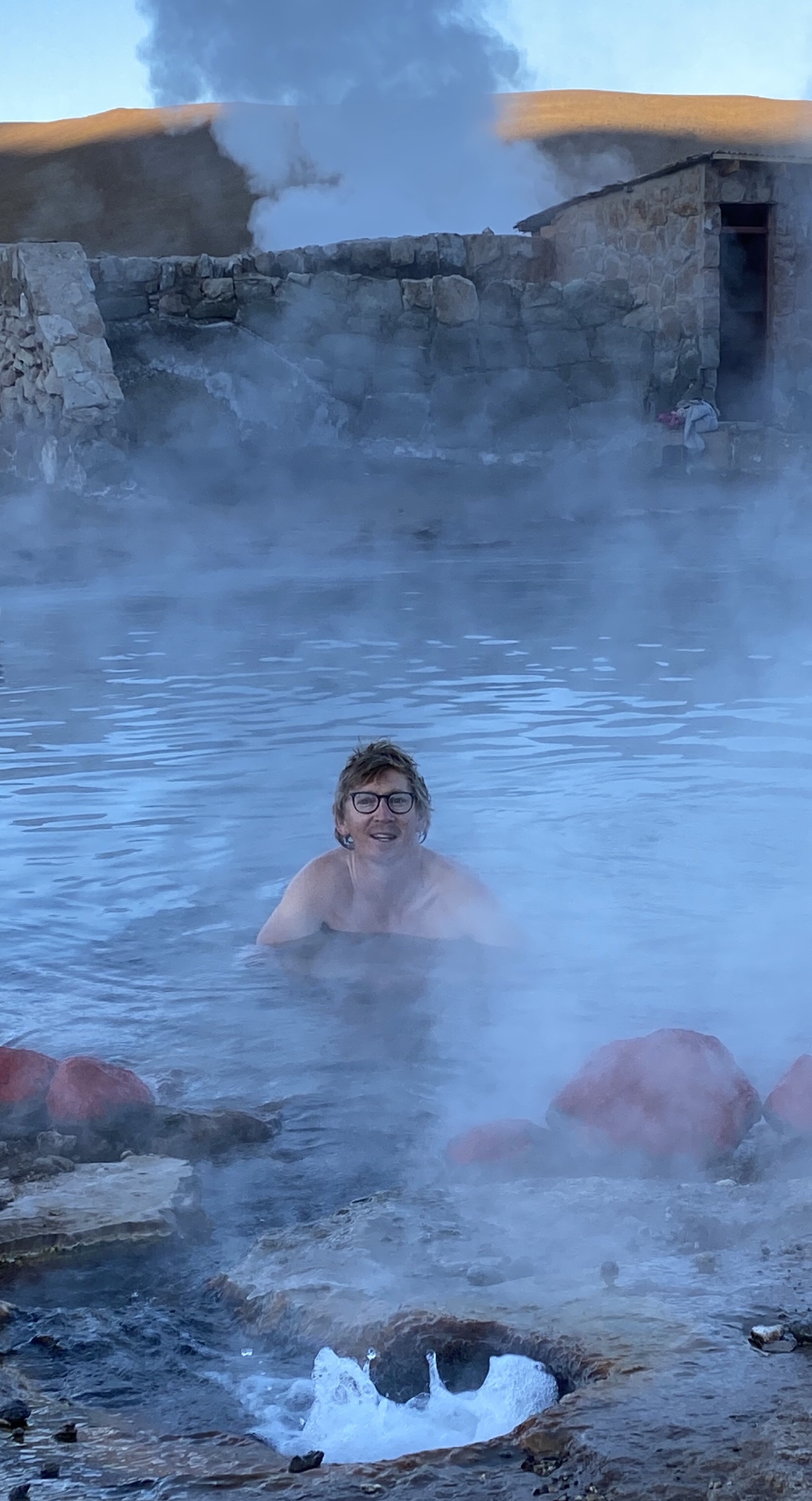
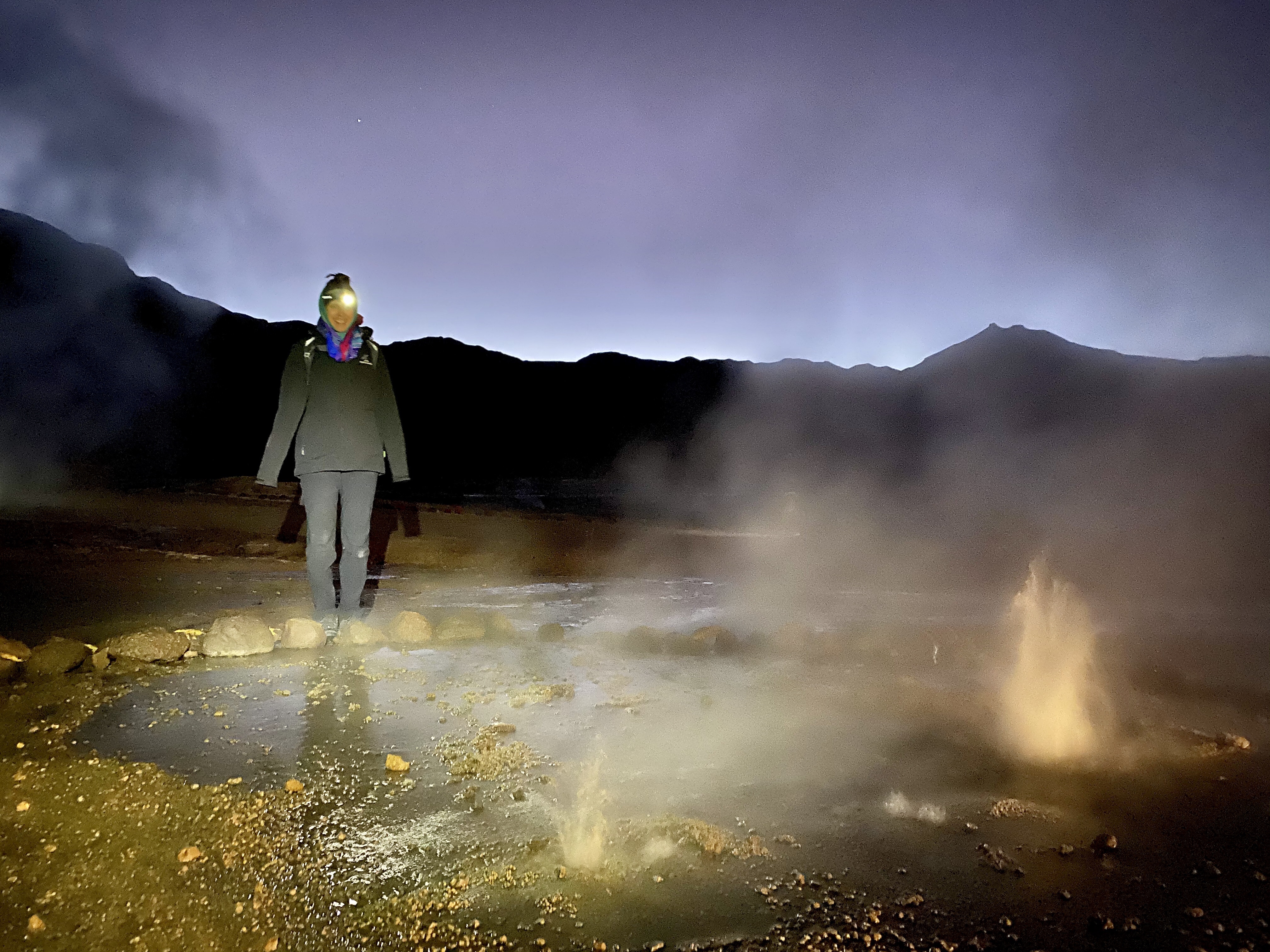
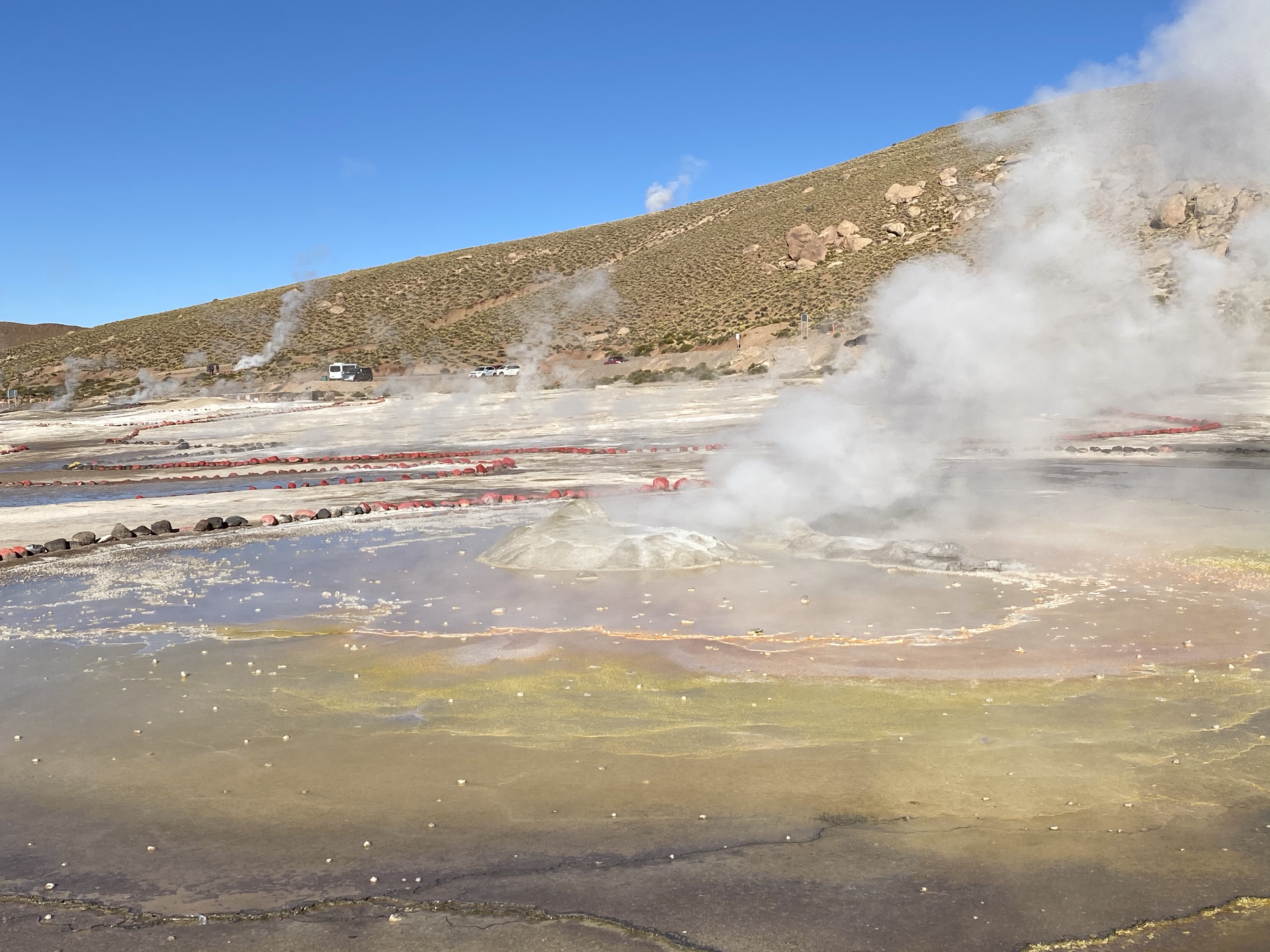
We moved out from the former Campamento and headed for the nearby El Tatio Geysers. We wandered through the geyser fields, lighting up the steam with our head torches but not having a clear sense of the full picture before dawn. As the sky started to brighten, we got to appreciate the tens of steaming geysers covering the field. Some were surrounded by rings of coloured rocks – salmon orange, mustard yellow and ‘snot’ green (Dan’s descriptor).

Dan, Yulia and Alex also braved a swim in a geyser-heated outdoor pool. (I was turned off because apparently the temperature was patchy and I didn’t want to endure the cold patches to find the hot ones.)

Otherwise, our day has been reasonably uneventful. We are all exhausted. Alex is checked into a San Pedro hostel, Yulia is now couch surfing in Calama, and Dan and I have a room in a different San Pedro hostel. Making stir fry for dinner was made all the more exciting because we have access to a wok here! Small but genuine joys. I expect tomorrow will involve nothing much more than reading, eating, visiting the French bakery and otherwise minimising time spent outside under the fierce gaze of this desert sun. It is brutal – but it breaks the cold before dawn so I am grateful.

VRPS

[San Pedro de Atacama]
Atacama treasures

Last year, I had this idea of taking paints with me on this trip. I’m no real artist, but I wanted to make swatches of landscapes – mixing the four colours that stand out most – and turn them into postcards or something. It’s only now that I miss not having followed that idea because the Atacama desert contains some striking colours thrown together.

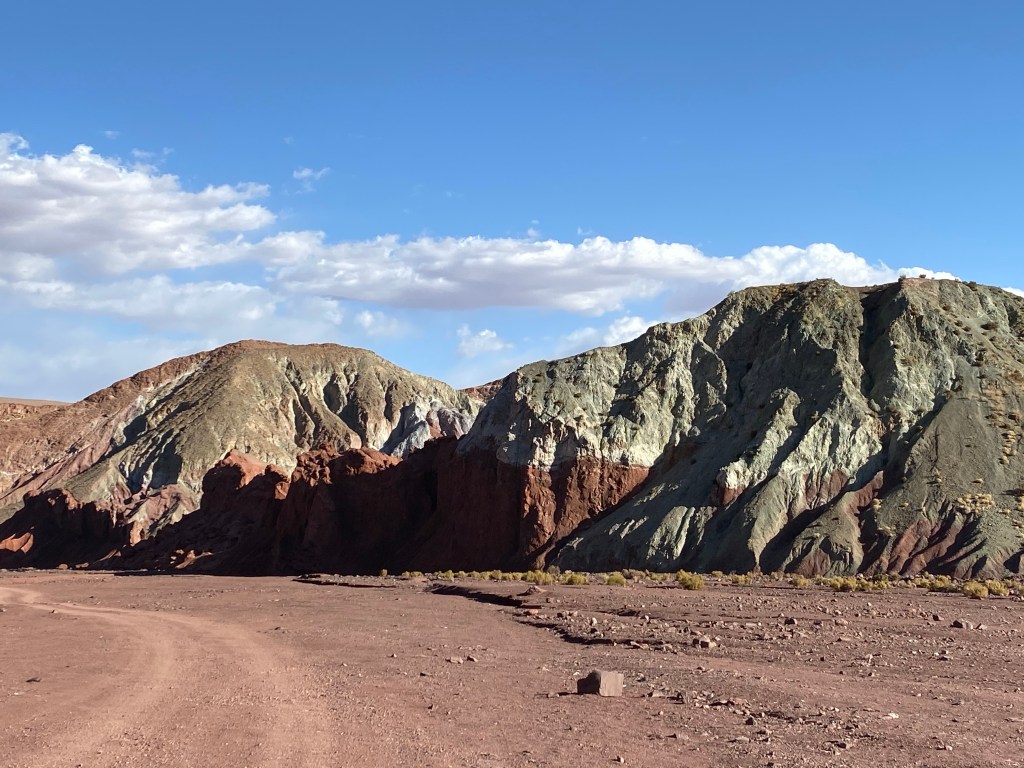
There’s the obvious – a barren grey (with a touch of orange) of rocky plains stretching out to the snow-topped Andes to the east. There’s a dark, rich green of the occasional crops of trees – usually a sign that humans have cleverly cultivated water in the same area. There’s the sunset hues – dusty reds, dusky purples staining everything the light still touches. And there’s even more wild shades – a bright lime green for some of the sections where short bushes cover the ground – a cold, light mintish green-grey colour staining the rocks in the Valle de Arcoíris – a murky light brown of the salt flats where salt has crystallized over or in dirt.

There’s my swatches – in words. And here’s the mint green-grey colour I was trying to describe:

Does it look like mould to you too?

We got to Calama yesterday afternoon, picked up a hire car and groceries, and set out towards San Pedro de Atacama. Our car was supposed to be a “Toyota Yaris or similar” but somehow we scored a 2020 Peugeot station wagon.

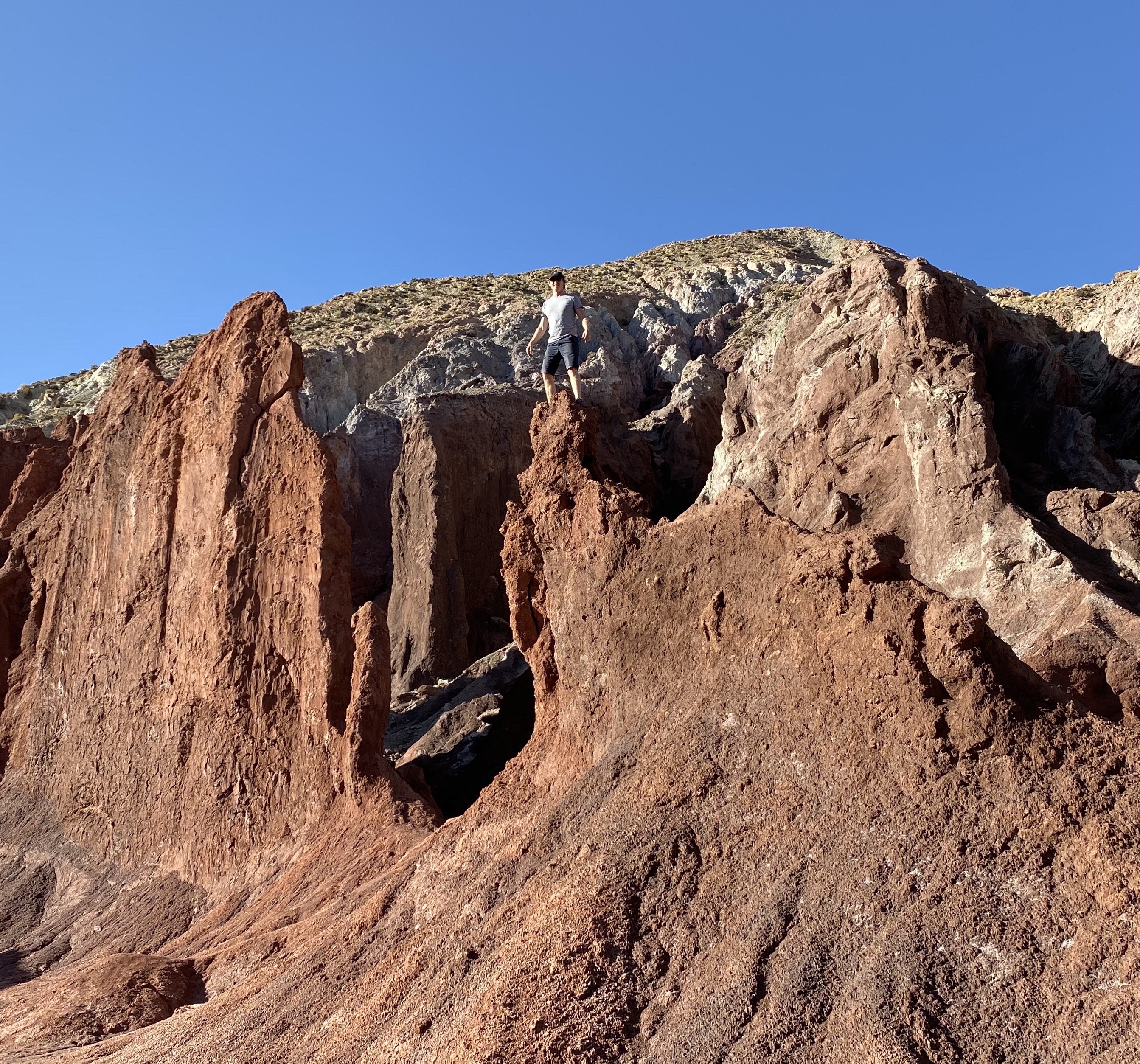
We visited the Valle de Arcoíris on our way and were the only ones in this eerie maze of incredible rock formations. We scurried up crevices, fast losing breath as we realized we must be at an altitude our bodies weren’t used to.

We then met up with Yulia from Russia and Alex from Brasil, who we are now exploring the desert with during our car hire. For the night, Dan and I set up near the Valle de la Luna.

Traveling with Yulia and Alex is fun. Yulia speaks both Spanish and English well (and Russian as her native language) and Alex speaks Spanish well and understands, but doesn’t speak much, English (on top of his native Portuguese). He’s my polar opposite. Our conversations are this beautiful blend of Spanish and English – where Alex and I can follow but not easily chip in in our not-confident language. The Spanish is slightly slower and articulated slightly more, which makes it so much easier for me to understand. It’s such a fun dynamic.

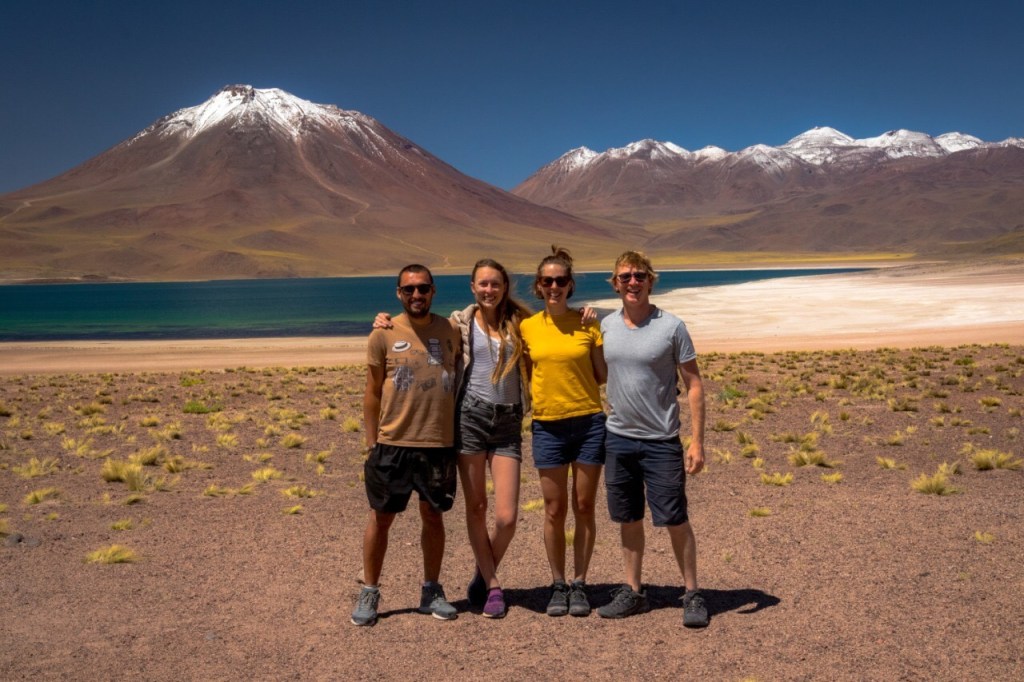
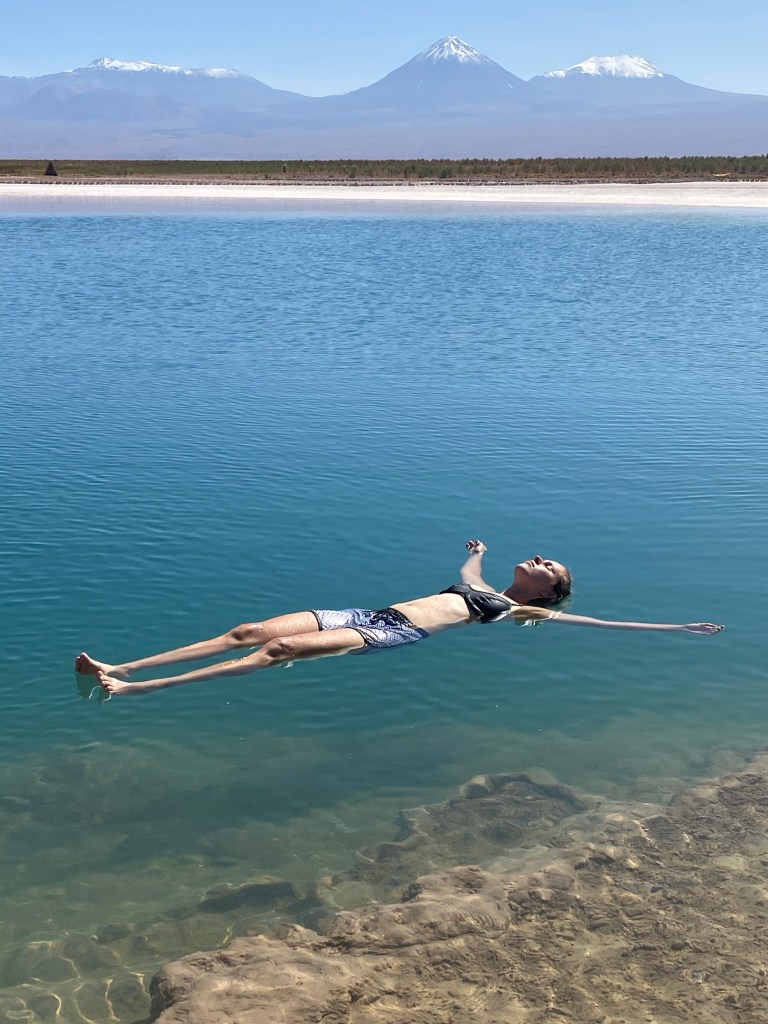
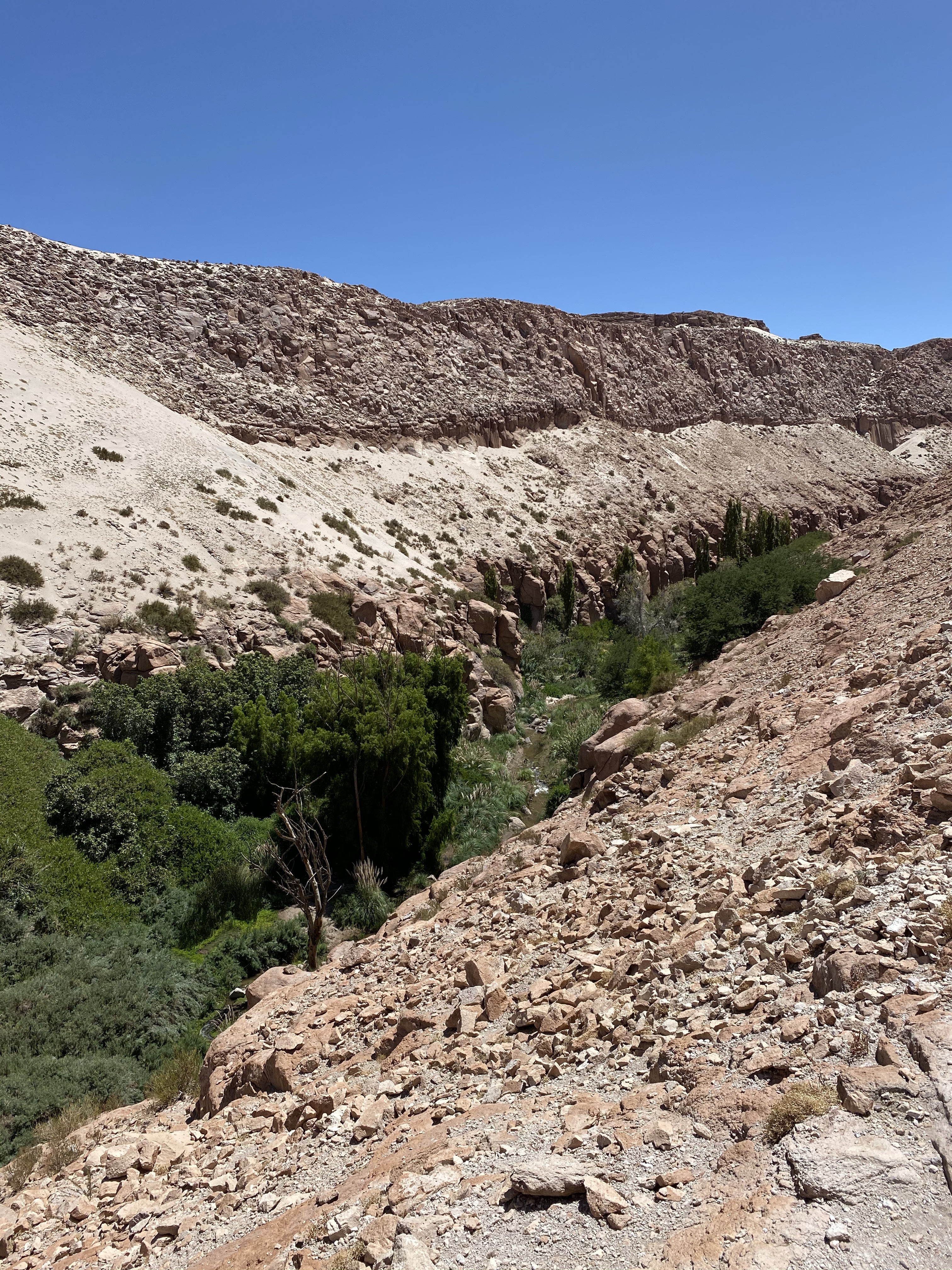
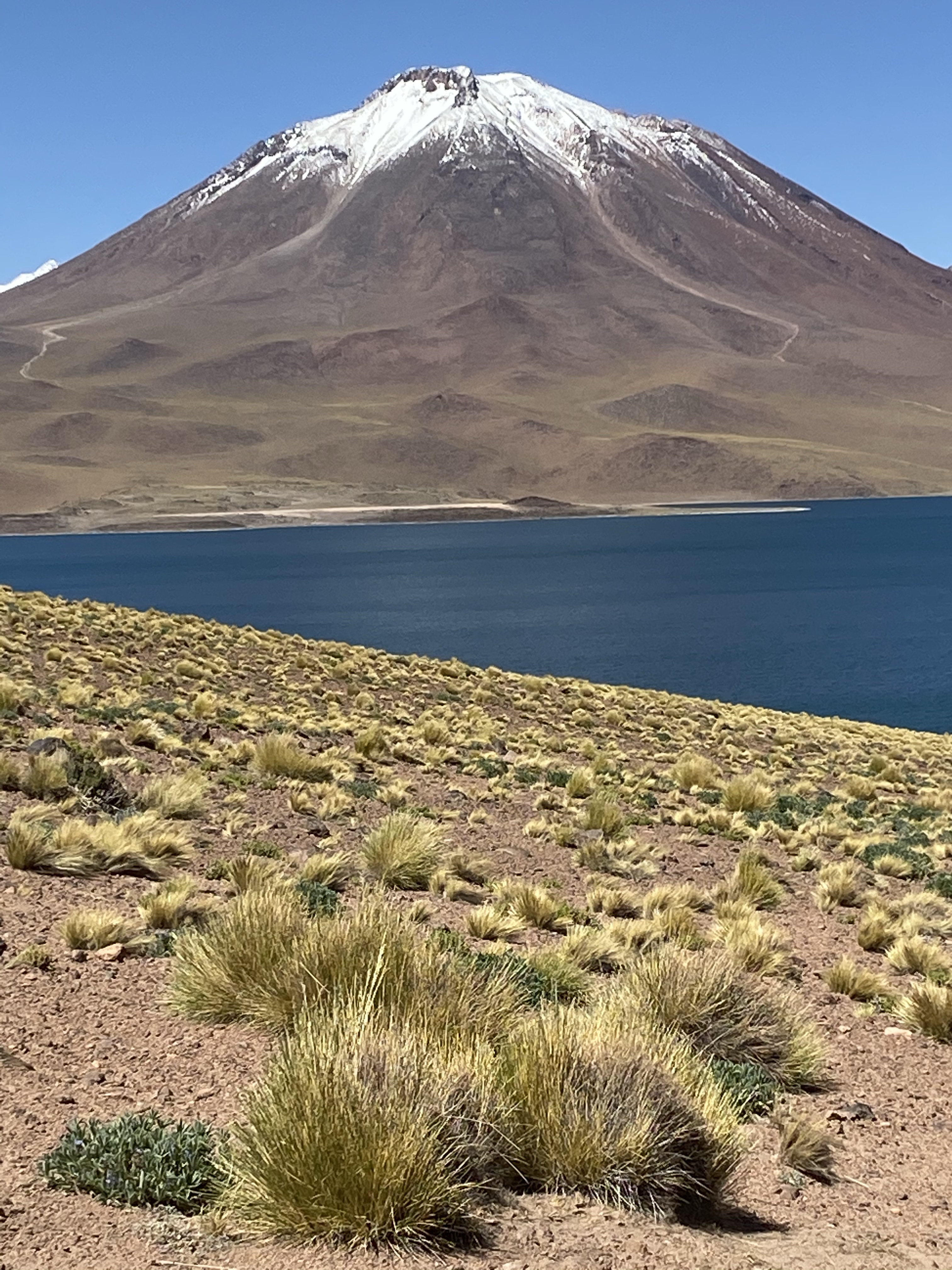
We picked up Yulia and Alex this morning and had a full-on day motoring around the desert seeing various sights. We started with Laguna Cejar (Atacama’s Black Sea), then explored lust Valle de Jede where an orchard grows in a canyon, and the twin dark blue Lagunas Miscanti and Miñiques. We tried Laguna Chaxa from various angles but couldn’t get to it.

It’s an amazing experience. You can’t breastroke because when you bend your knees, your feet float above the water and so you can’t kick properly.

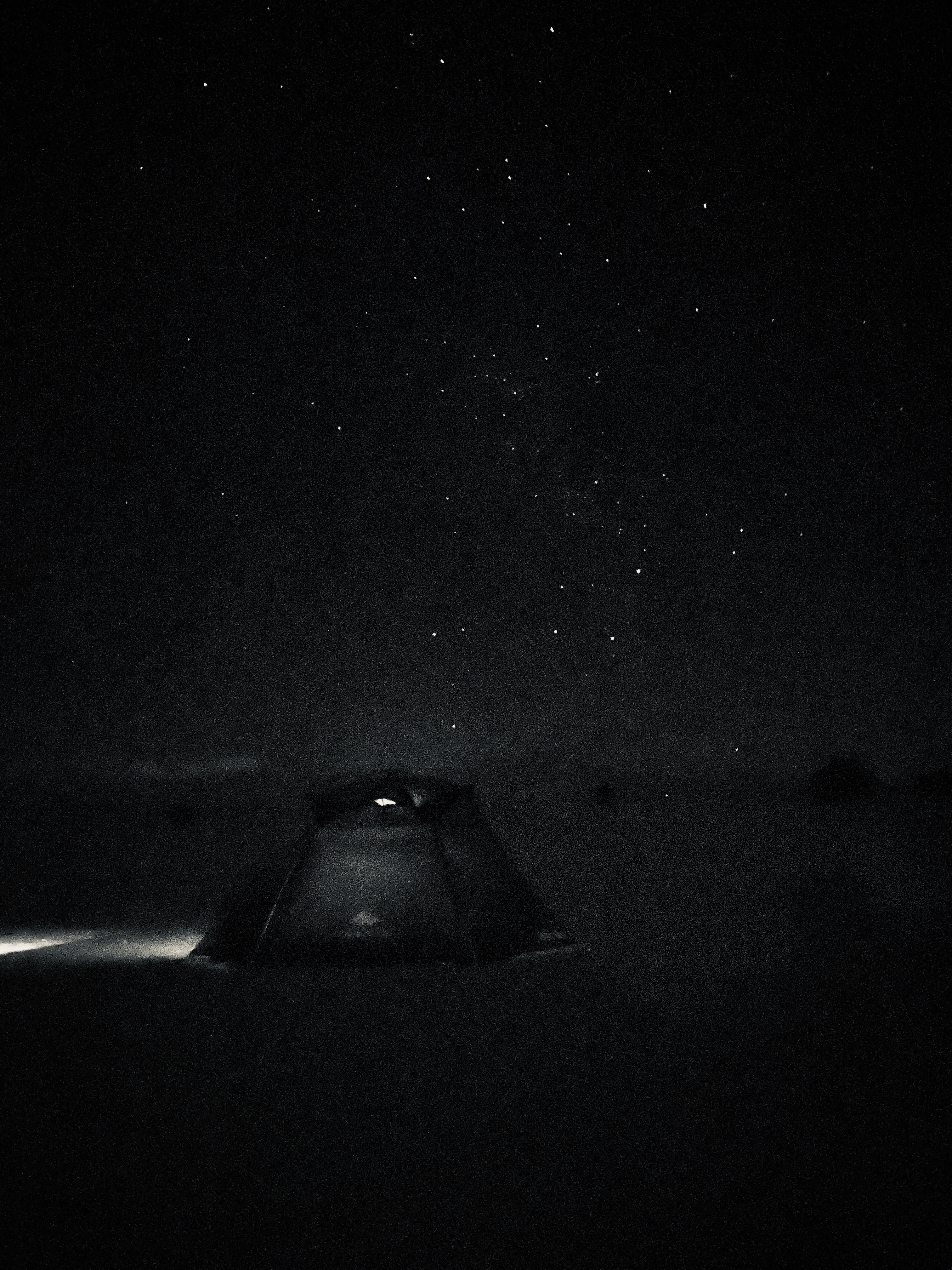
We’re now set up for the night kind of near the ALMA observatory, with an impressive view of snowy mountains and an even more impressive view of the stars. We’ve already seen Elon Musk’s SpaceX satellites pass over – a close-knit train of lights moving in the same arc. A few hours sleep, and the moon will have set so we’ll get the full show.

Dan not only has been effortlessly switching between languages but also has done all the driving – which is quite a feat given what we’ve accomplished today. What a champion.

VRPS

[Atacama Desert]

Final Santiago Days

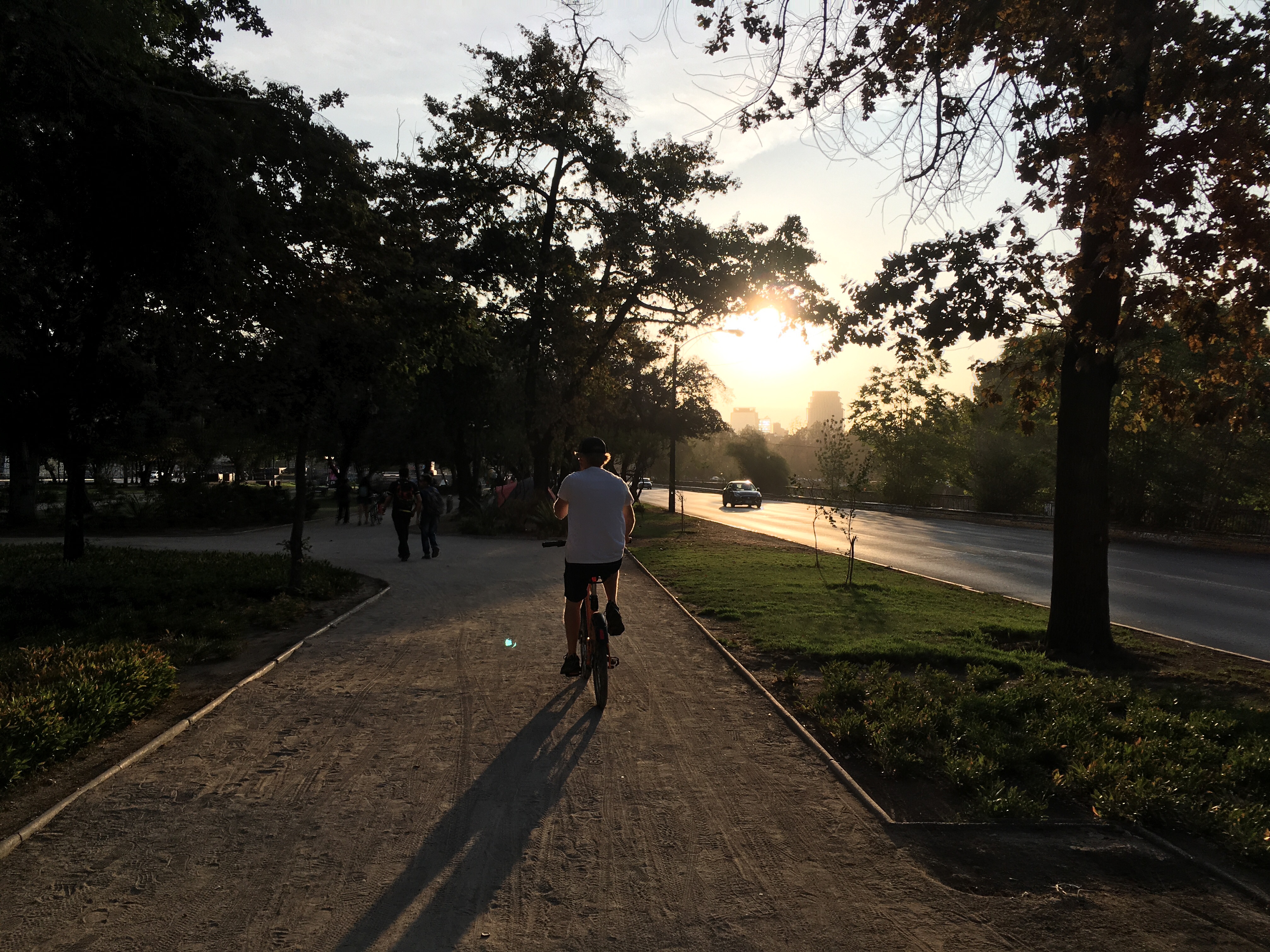
We’re back in the bustling city of Santiago. We’ve been tactfully avoiding the Law of Inconvenient One Way Streets by finding these long stretches of bike paths that take us to different sections of the city.

Yesterday we took the metro out to the area called Las Condes, which almost feels like it’s own city. The people there aren’t protesting – they’re probably the wealthy ones. Amongst the leafy streets and un-graffitied apartment blocks, we found a store where we bought a tent and sleeping bags for our imminent desert escapades.

We ended the day at a screening of Almodóvar’s “High Heels”, which I was only able to follow (no subtitles, not even in Spanish!) because I snuck out and read the wiki plot summary in the first few minutes. I’m so far away from actually being able to understand fluent, fast Spanish …

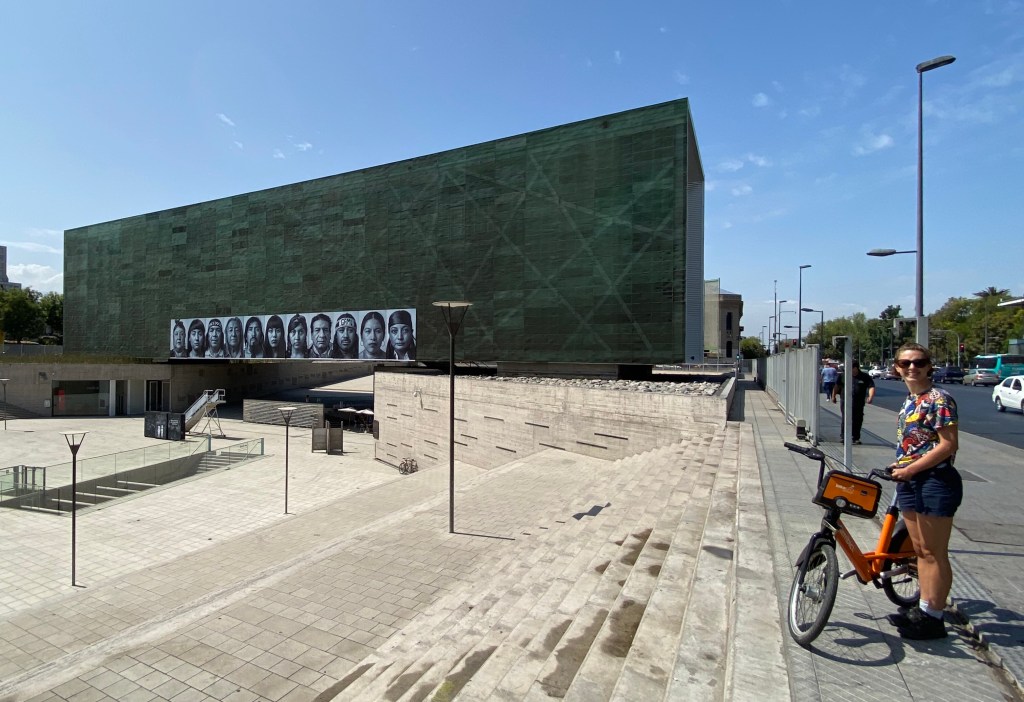
Today, we visited four different museums, at a cost to our wallet of … nothing. Entry to the Museum of Memory and Human Rights, the Fine Arts Museum, the National History Museum and the open-air sculpture museum on the banks of the river are all free. I think the first is the one I’d recommend highest – it’s a deep dive into the dark side of the Pinochet dictatorship and how the people came together to protest the human rights abuses during it, and ultimately bring it to an end. The displays are sensitive and comprehensive. Seeing some of the photos of the water trucks mowing down protesters makes me realise why some Chileans are reminded of the dictatorship in the police response to the current protests.

Museum of Memory and Human Rights

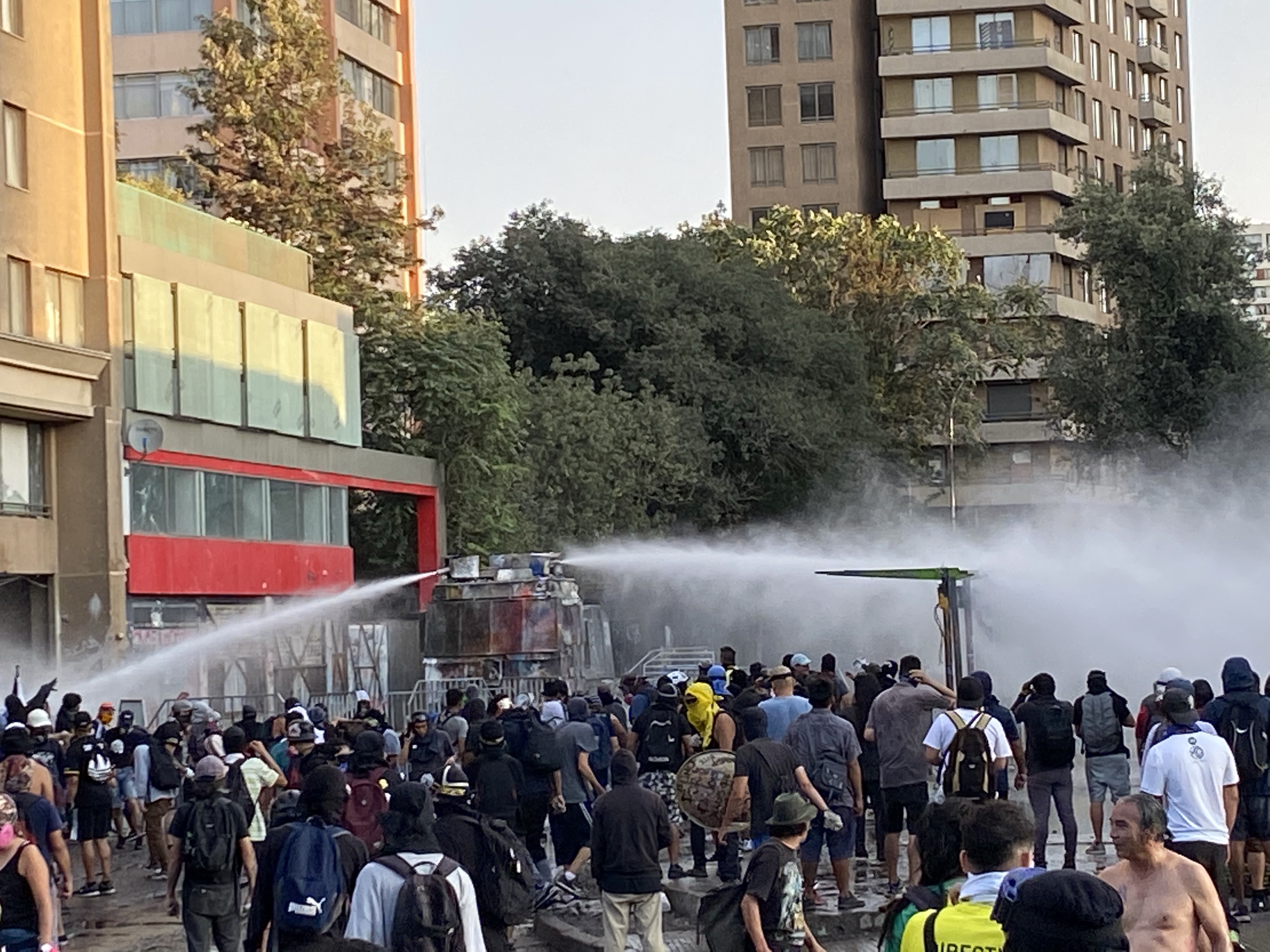
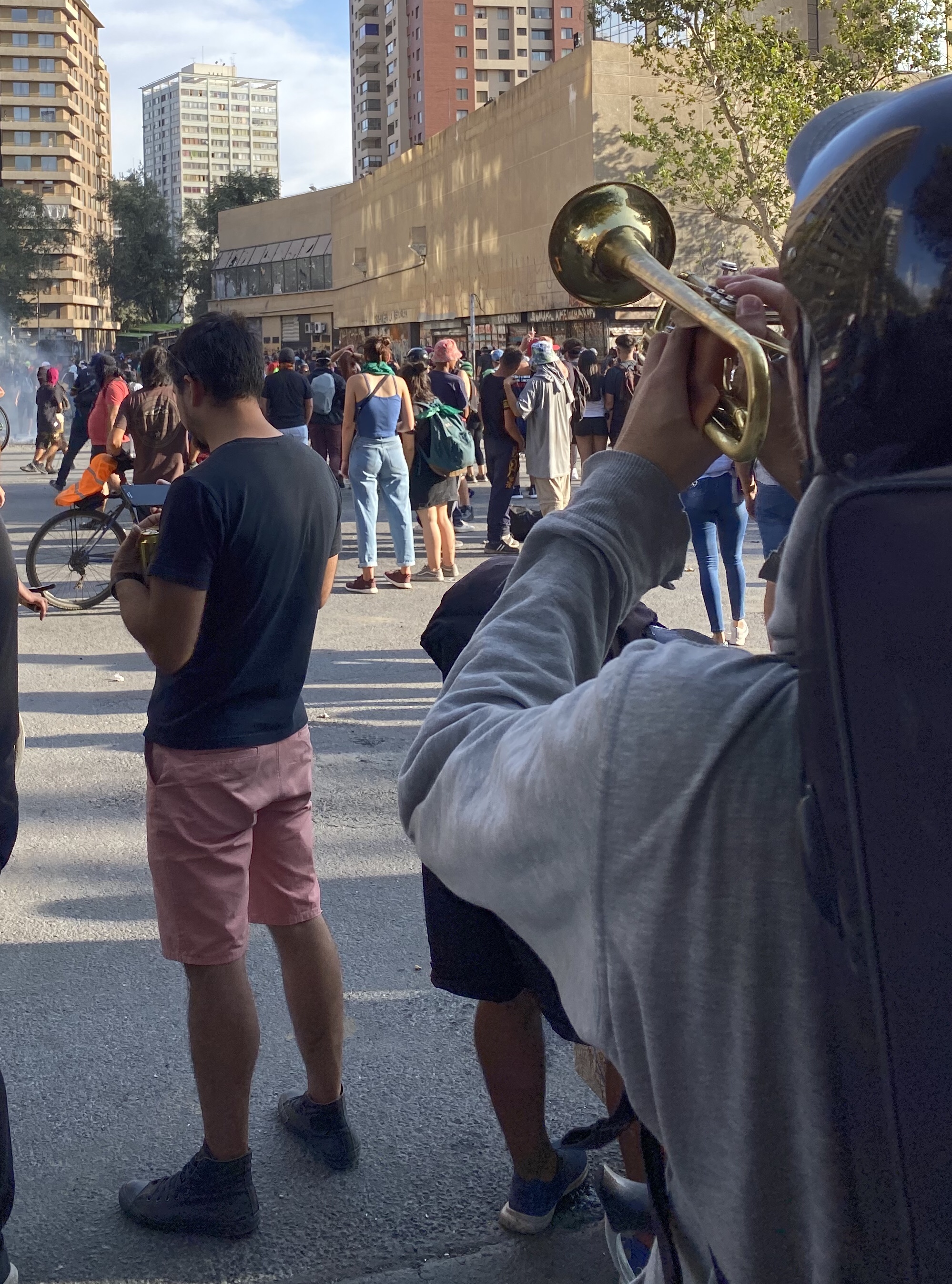
Here’s our final insight into the protests – something we’ll be watching closely on the news from now on. While it’s only a Wednesday, the streets near the epicentre were still heaving with people and police vehicles were shooting water and tear gas. (I’m always confused about the presence of police here. It really doesn’t calm things down. It only triggers a more heated and destructive response.)

Someone turned my stolen iPhone on today in Santiago, so we leapt on our bikes and peddled our way down to what we found to be, when we got there, the dodgiest block in the dodgiest suburb of Santiago. It’s a market filled with thousands of phone shops, and it was closed. We scooted out of there empty-handed, and we’ve been ignoring the spam texts sneakily trying to elicit passcodes and the like. Cyber security vigilance! (Read it in a Mad Eye Moody voice, if you feel like it.) You can’t have enough of it.

So, so, so very excited to bring stories from the desert shortly.

VRPS

[Santiago]

All the bus drivers think they’re in rally cars

We’re just finished our second day in Valparaíso and Viña Del Mar, and it’s been a rollercoaster with exactly one big dip. For the rest of the time, we have been flying high.

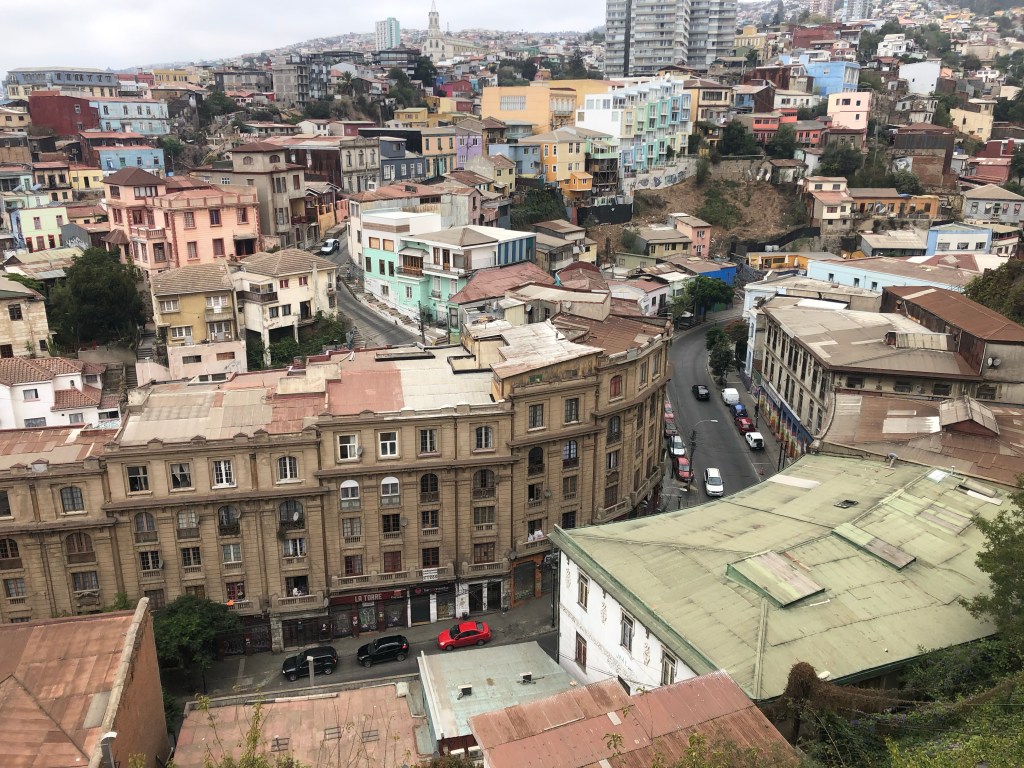
“Valpo” is a seaside city on the west coast of Chile, just an hour from Santiago (which should give you a sense of just how skinny Chile is given Santiago is just right of the middle). Viña is it’s sister city- it’s Gold Coast to Valpo’s Brisbane, except only ten minutes drive apart. Where Valpo is a bohemian wonderland of colourful and winding streets over hills and hills and hills, Viña is huge stiff apartment blocks close to rollicking beaches.

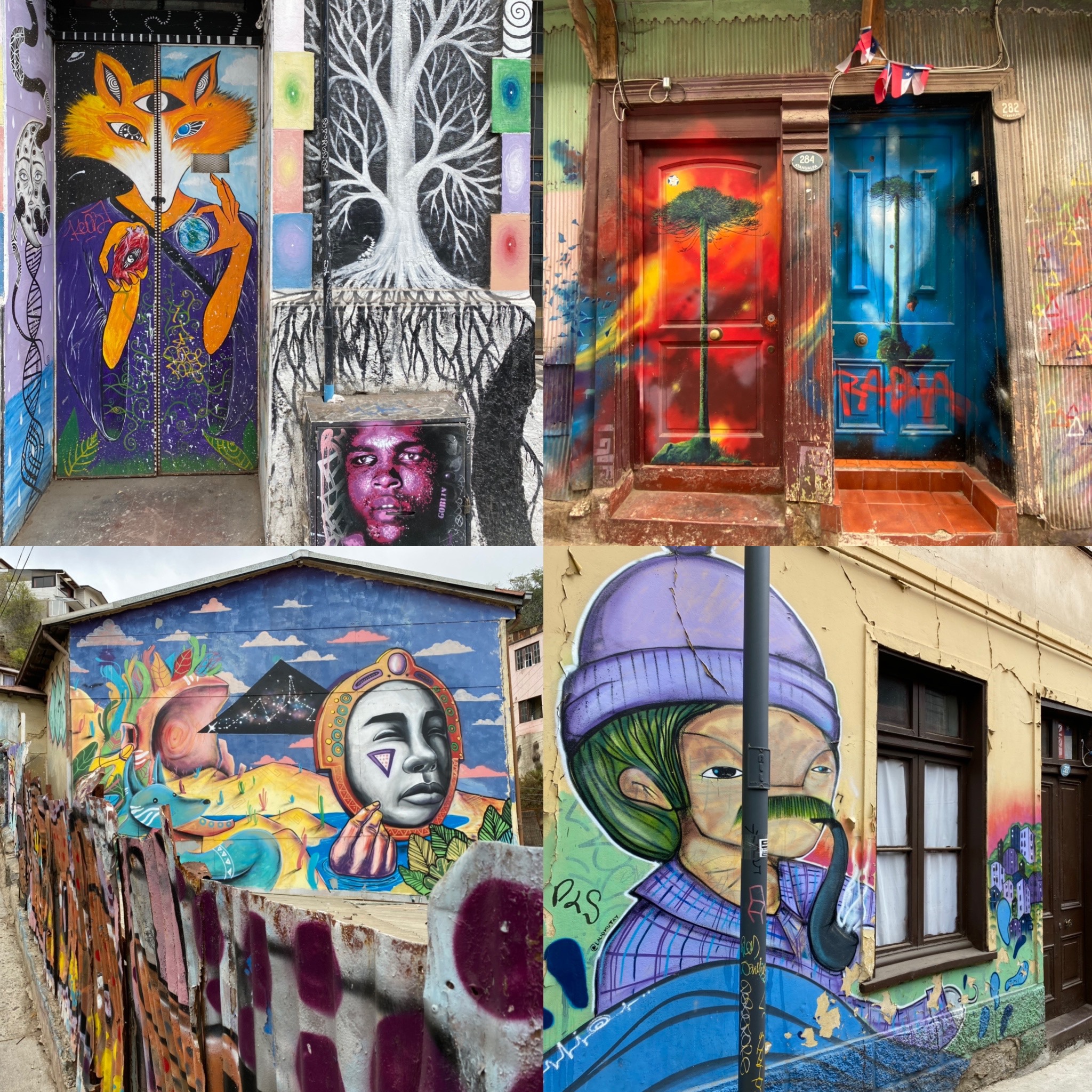
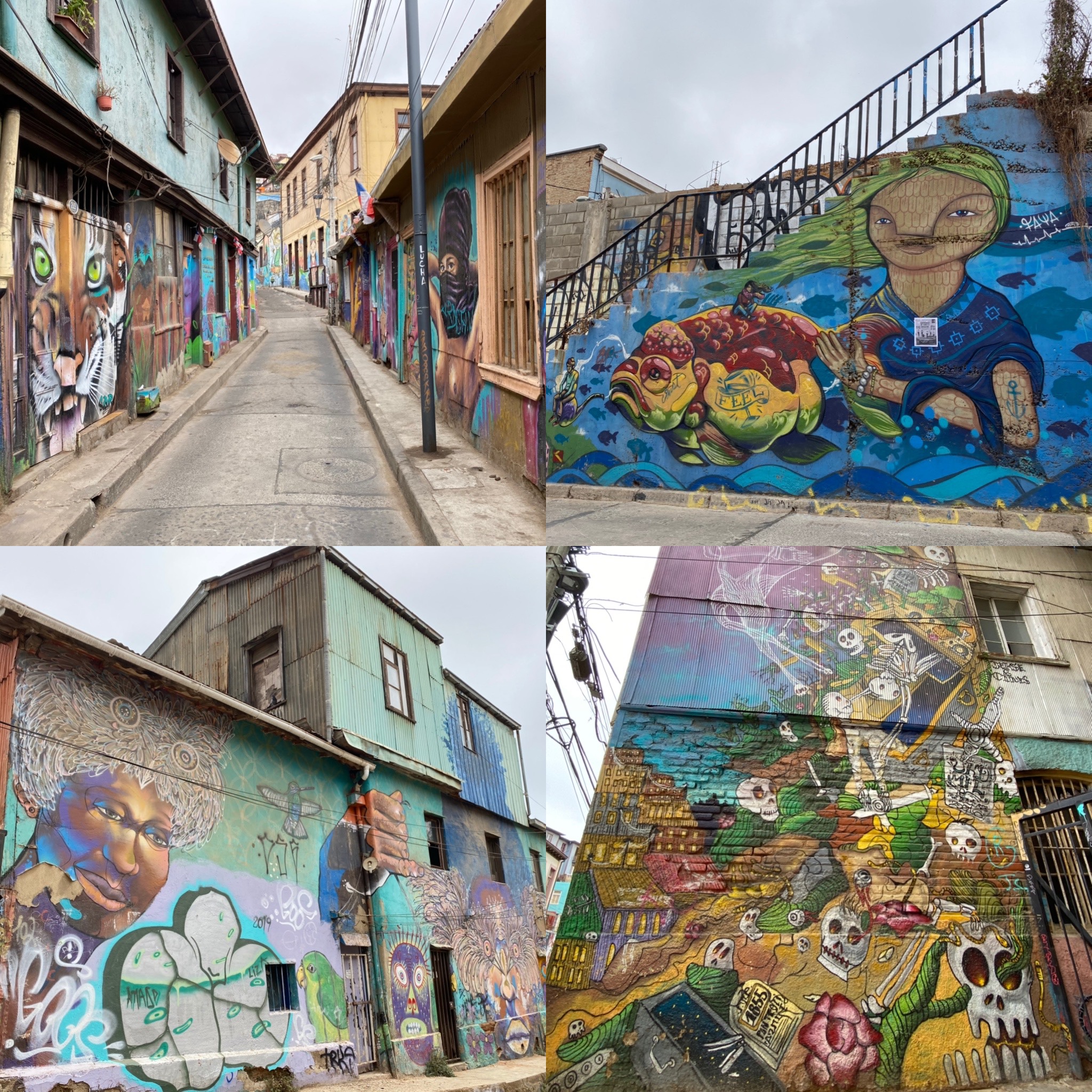
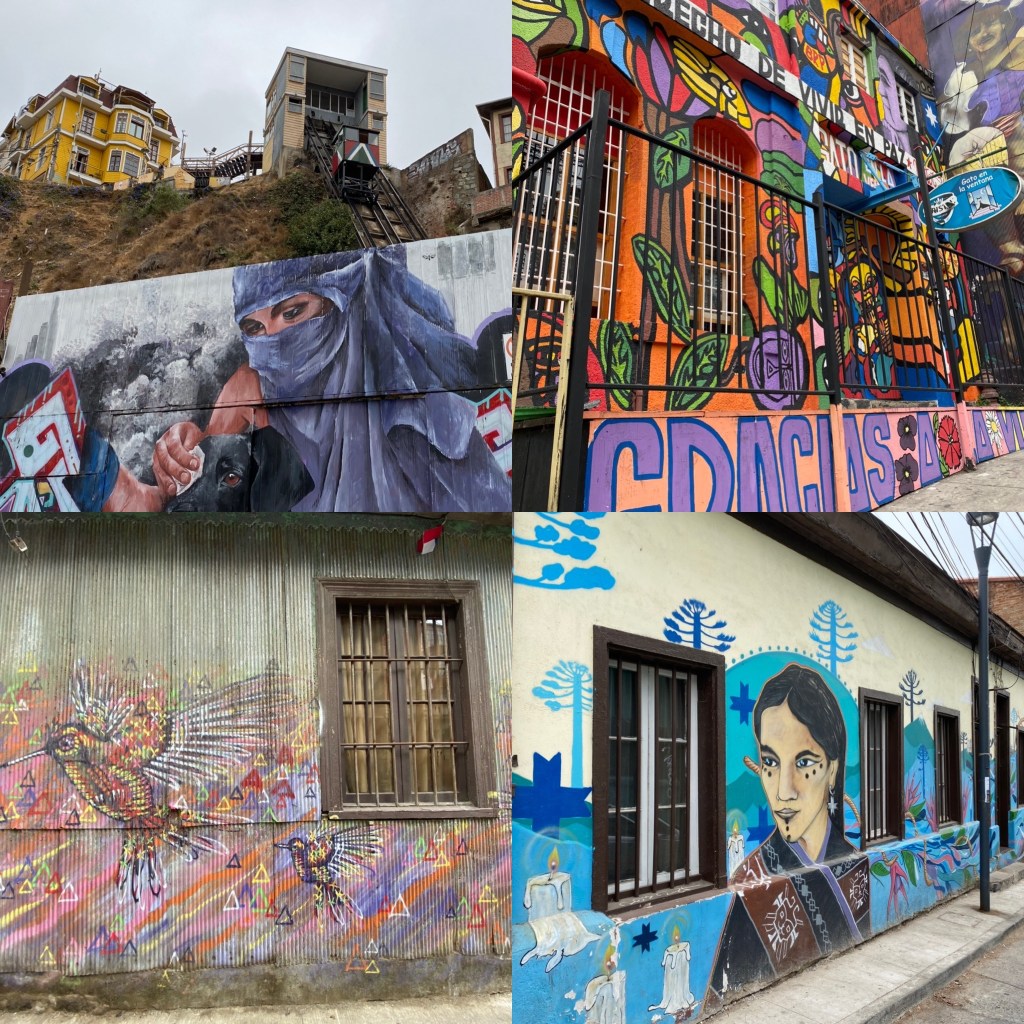
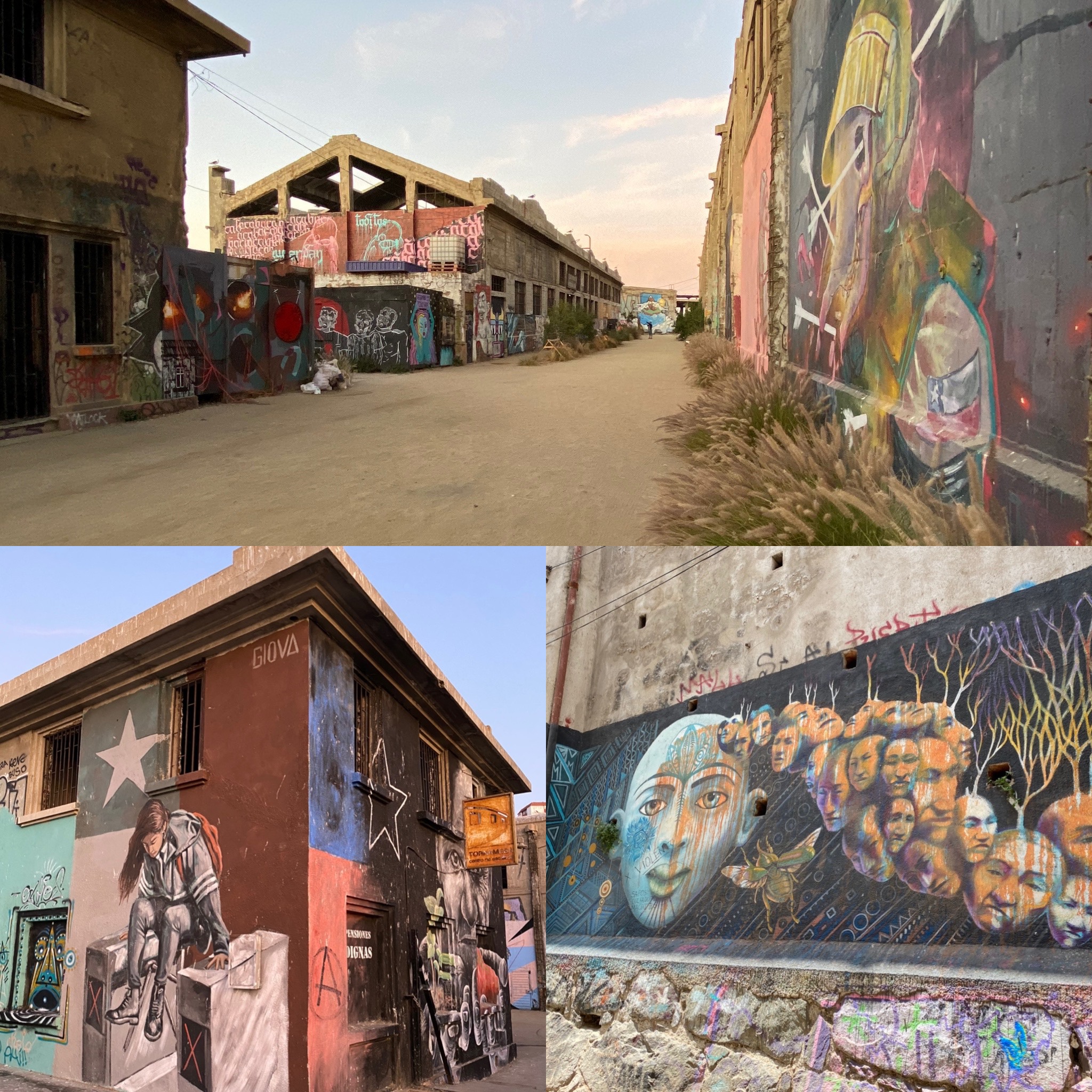
I can’t understate just how colourful Valpo is. There is so much street art – not just protest messages, proper professional pieces – stretching over kilometers and kilometers of streets, lining every edge of the various abandoned buildings in the city. It gives this place life.

Yesterday, we went for a wander around Valpo, around Playa Ancha region, and then around Viña. To get around, we took the small buses that hurtled – I mean absolutely hurtled – through the main streets between hubs. The bus numbers aren’t displayed large and you barely have a moment to comprehend what it is and where is going before making a split-second decision whether to flag it down and then throwing yourself into it while it barely stops to pick you up. There’s no margin for error. Then you’re screaming through the streets, overtaking the cars.

Today, we took an amazing street art tour, where various pieces and artist styles were explained in detail, intertwined with knowledge about the city and its history. It was so amazing to have the detail in the art explained – there’s so much in it, and knowing the back story brings it to light in a new way. We have thousands of pictures so I’ll leave it to dear Dan to do the hard part of picking which highlights to share.

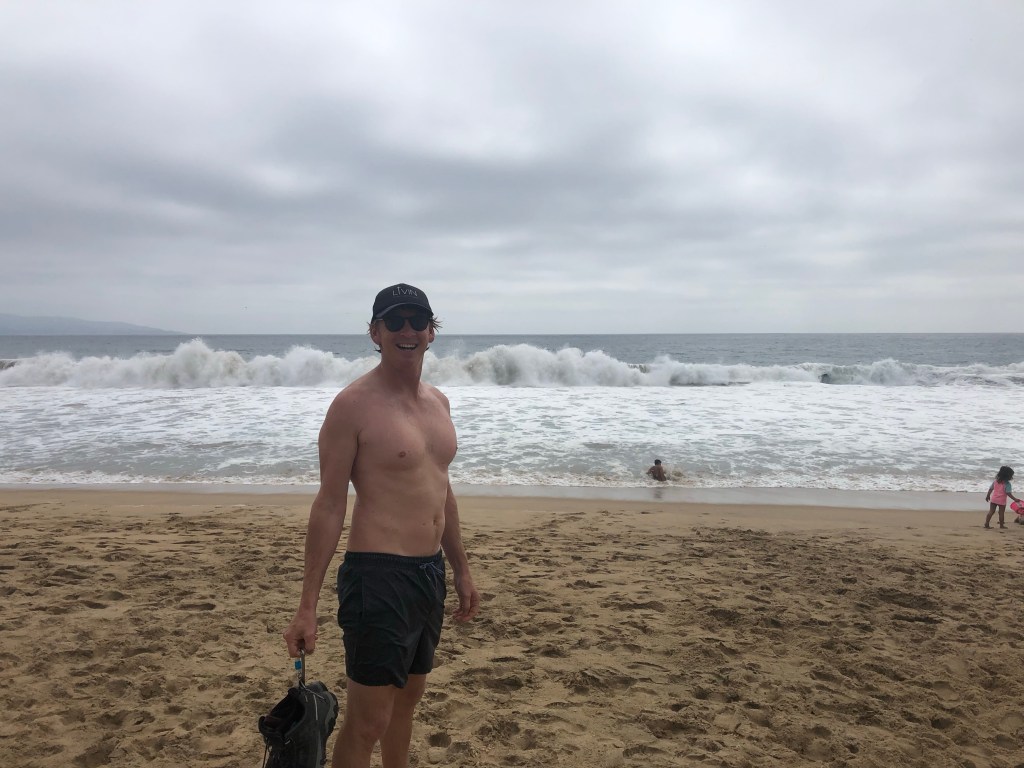
We spent the afternoon exploring more of the street art precinct, and then headed to Playa Reñaca in Viña for a swim. The swim was brief and shallow because the waves were out of control wild – sucking up half the beach to slowly create one massive dumper at a time. It was still lovely to get in the water and enjoy the atmosphere of everyone at the beach.

On the way back, in just a few moments of jostling as we got off the bus, my phone was stolen. We noticed within seconds, and logged into “Find My Phone” within a minute or two, but it was already a fair way away before it had been turned off. So disappointing. That was the foreshadowed ‘dip’ in our time here.

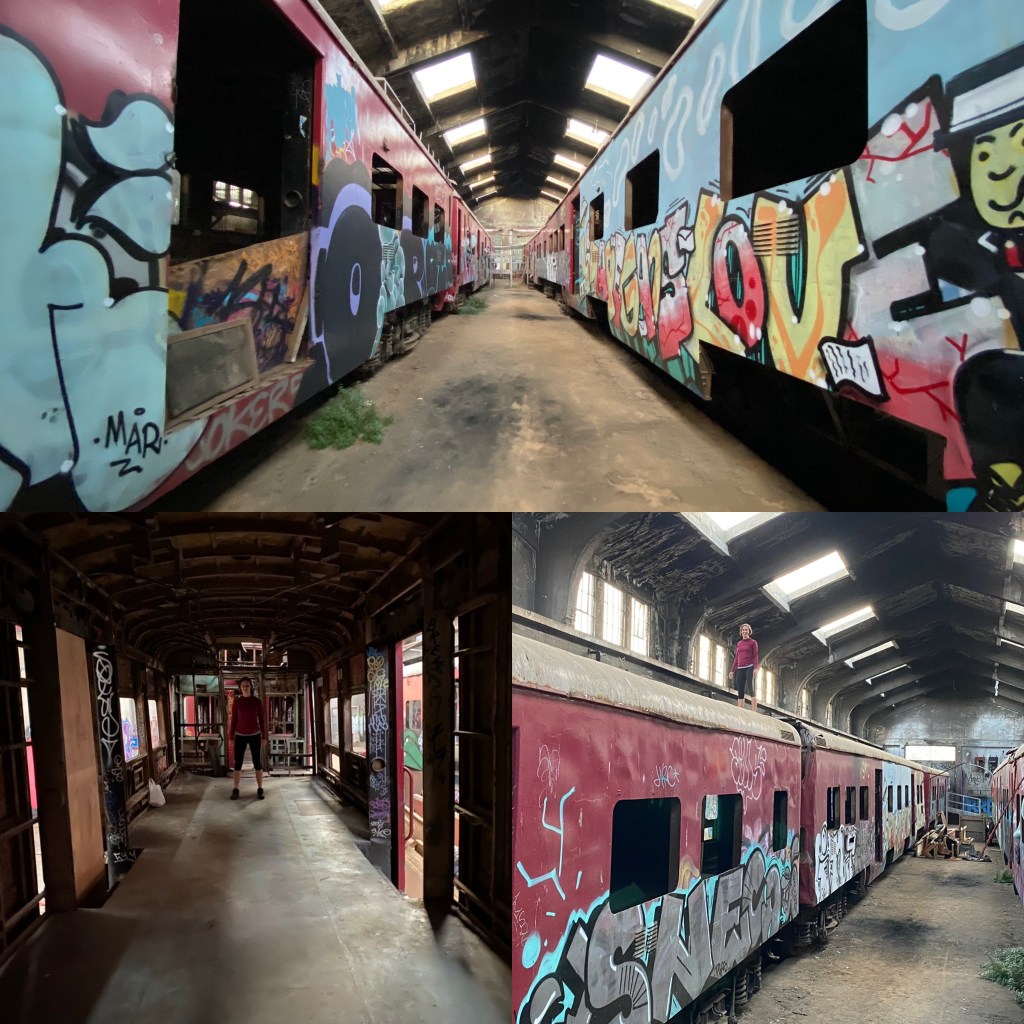
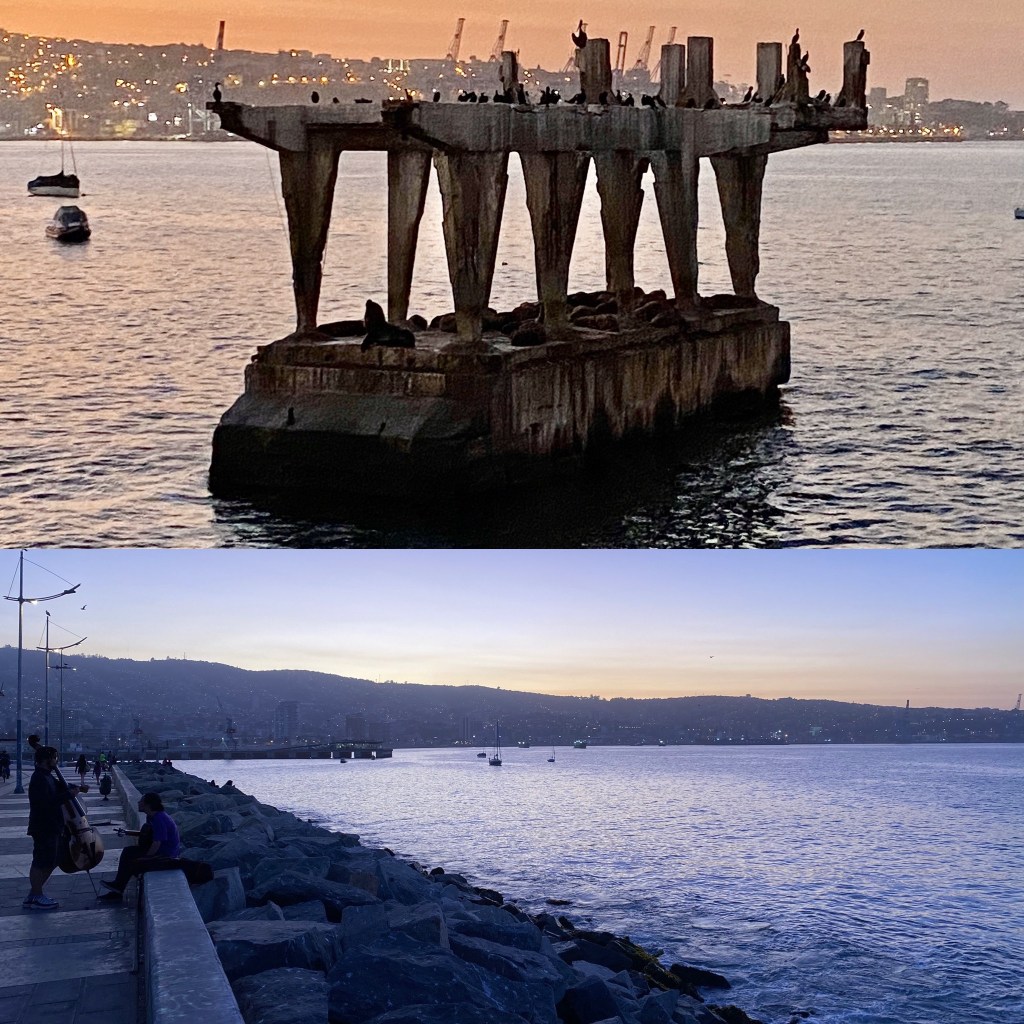
As if to make up for the bitter taste in our mouths, the city delivered us an exquisite evening. We explored the seaside Muelle Barón area – we weren’t allowed to go up the pier but our walk the other way took us past a former section of pier covered in sea lions, like a lumpy carpet, and an abandoned rail yard now covered in art, converted into a rock climbing and acrobatics space, and another festival-like space featuring old train carriages. We emerged from these warehouses to the most stunning sunset over Valpo – bright gold, pink and purple in the sky, and the hills a dusky blue dotted with golden lights. We enjoyed this as a guitarist and double bassist filled the air with experimental jazz.

We go back to Santiago tomorrow, and will head up to the Atacama desert on Thursday. I can’t imagine finding a city more colorful on this trip, but we’ll see!

VRPS, with big thanks to DPS for the collages

(I’m the protagonist of my learning)

[Valparaíso]