I asked Dan how he’d sum up Bolivia in five words. He answered:
- Hats (the ones worn by cholitas)
- Mountains
- Altitude
- Coca
- Politics
It’s a concise summary, which I agree with whole-heartedly. I can’t believe how the thirty days since we started the Salar de Uyuni tour have flown. It’s been thirty days of breathing (and getting out of breath) at altitude, thirty days of cold, despite the fact that it’s summer. (Can you tell I’m getting excited for our sea-level beach time in Paracas? Imagine the joy of wearing shorts…)
Bolivia is poor in wealth, but rich in culture. Its indigenous peoples flourish in the practice of their traditions. It’s a joy to see women in their traditional wear, even in the cities. It’s incredible to see the ferocity and joy with which they celebrate their culture through Carnaval.
Bolivia is a place of sprawling markets, and saleswomen to whom you are expected to remain loyal. There’s something delightful about going to the avocado-only seller, who will give you a taste of how good her avocados are, and then will select for you the right avocados ripe for eating ‘hoy’ (today) or ‘mañana’ (tomorrow).
Bolivia is a country of hard work over long lives. As an Australian, there was something confronting about seeing elderly Bolivians who should have been enjoying retirement working the land, running shops, or begging.
It’s political situation is precarious and everyone is anxious about whether the May elections will make things worse. Numerous parts of the economy have already been hit by reduced tourism due to political unrest and high visa fees for Americans and Israelis. While there are tourists visible in all major cities, it feels like a country for Bolivians what accommodates visitors, not a country for the visitors.
And, of course, it is a country of exceptional natural beauty, which comes with a degree of hostility for living and transport. It is amazing the life that thrives at altitude in the Altiplano – including the llamas and the flamingos. It is also amazing that they’ve managed to build roads winding around steep, relentlessly wavy valleys and mountains.
And for me, one of the highlights was undoubtedly my Spanish lessons with Nelson. They’ve put me on a path that I’ve managed to continue following in the weeks since finishing formal classes, and will hopefully continue following for the rest of my life.
We’re now in Peru.
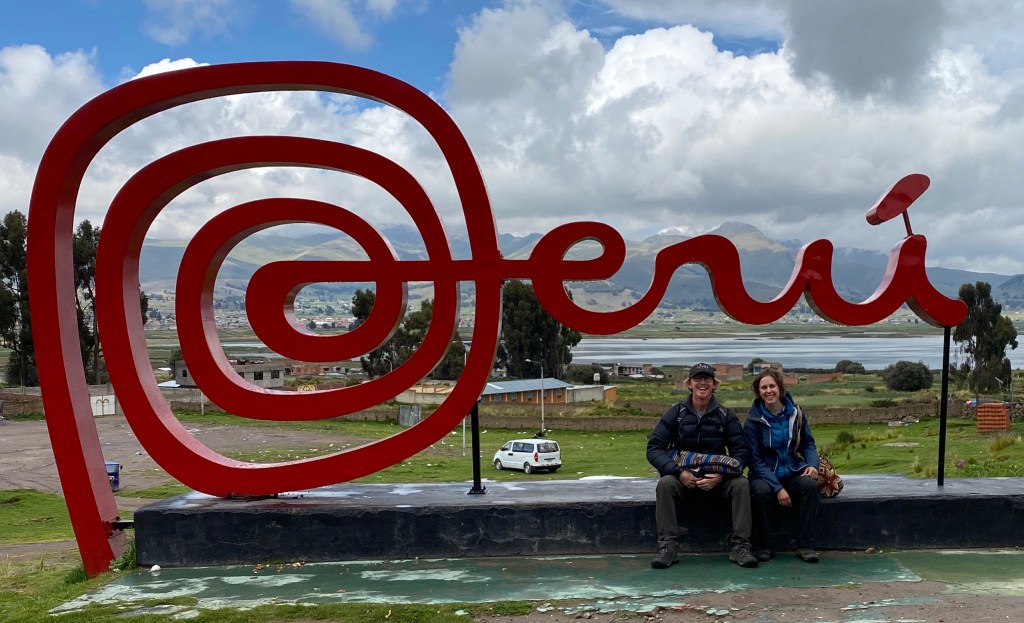
We spent yesterday morning tracing the edge of the enormous Lake Titicaca to Puno, and we’re now en route to Cuzco. (Every time I think or say the name of the city, it’s to the tune of the theme song to the Emperor’s New Groove. If it’s stuck in your head too, now, you’re welcome.) The time around Lake Titicaca has actually been really lovely, albeit brief. The towns around it seem to have this beautiful peace that comes from being near such an elegant body of water. They also serve lots of delicious trout.
This bus trip to Cuzco, while long, is a bit of a treat as we get to enjoy views of rolling green hills and farmland from our ‘panoramic’ seats at the front of the top level of the bus.
VRPS
[En route to Cuzco]
 The Two Swords