We found the funniest mistranslation of our trip so far at the entrance to a six hundred year old Inca trail through the mountains outside Sucre. In English, it informed us that the locals would use the trail to transport goods “in flames” (a little uncouth!) but in Spanish it clarified that it was actually transport “en llamas” (exactly what you think – by llamas). In the writer’s defence, flame is a correct interpretation of “llama”, just not in this context.
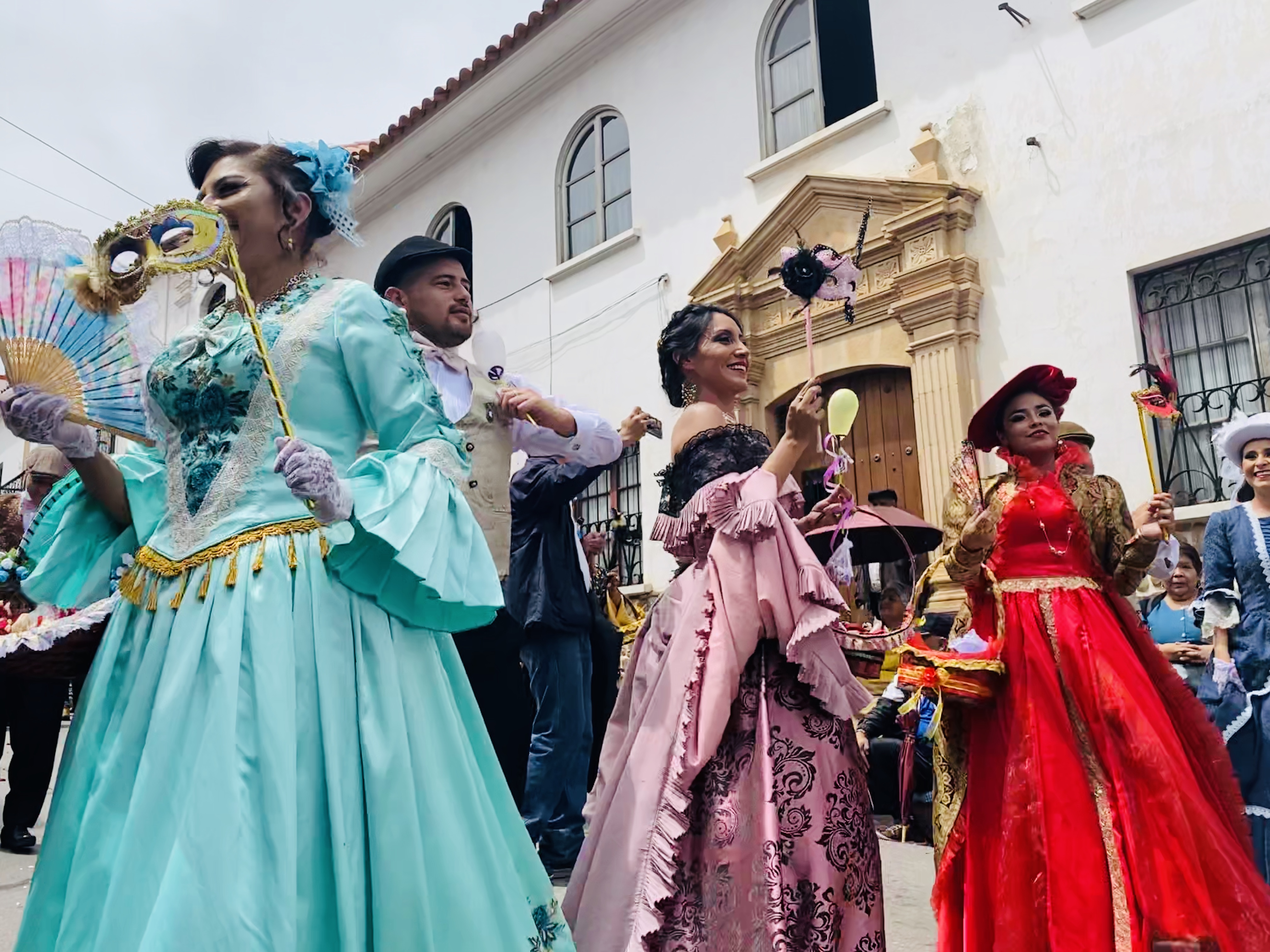
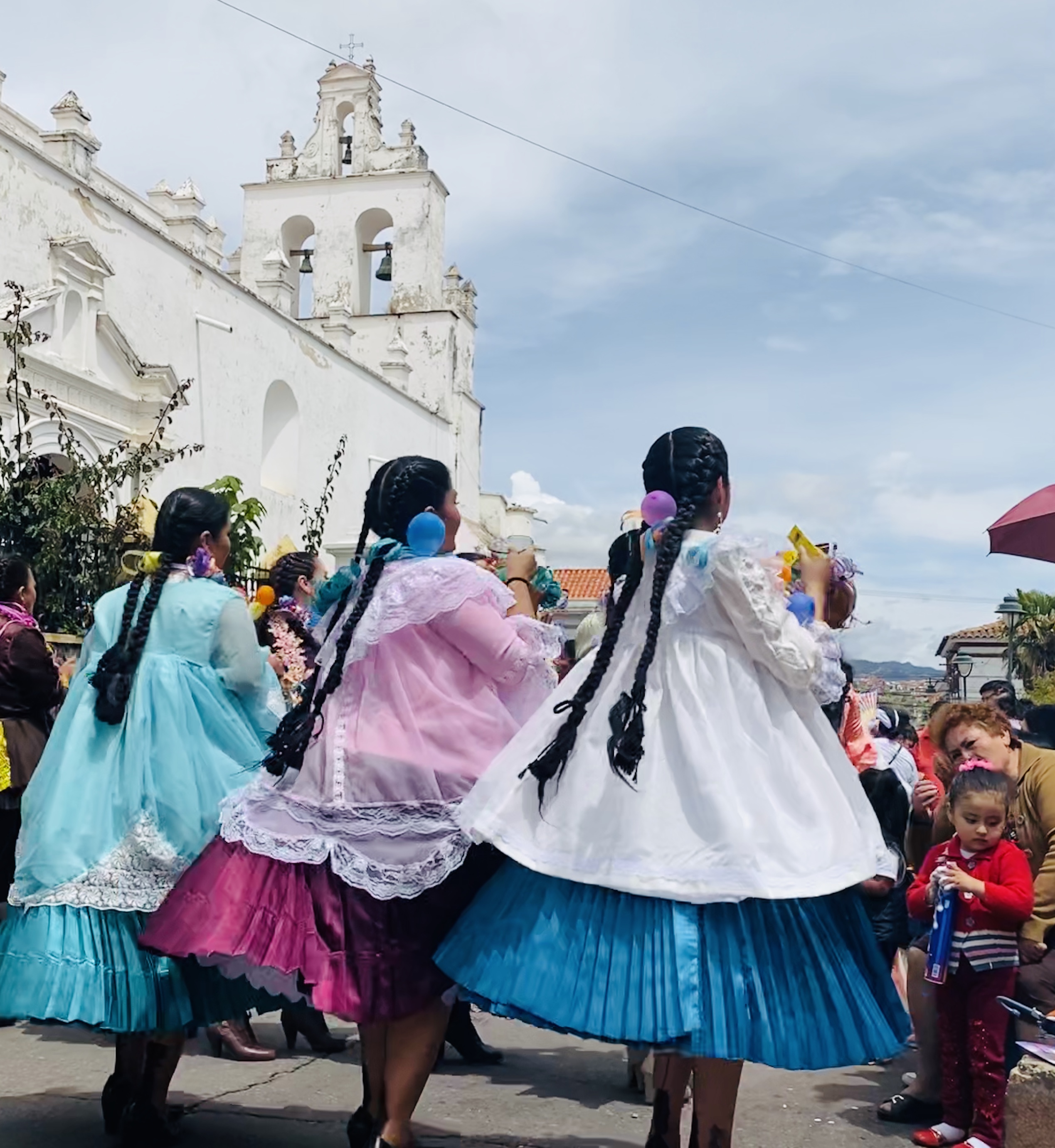
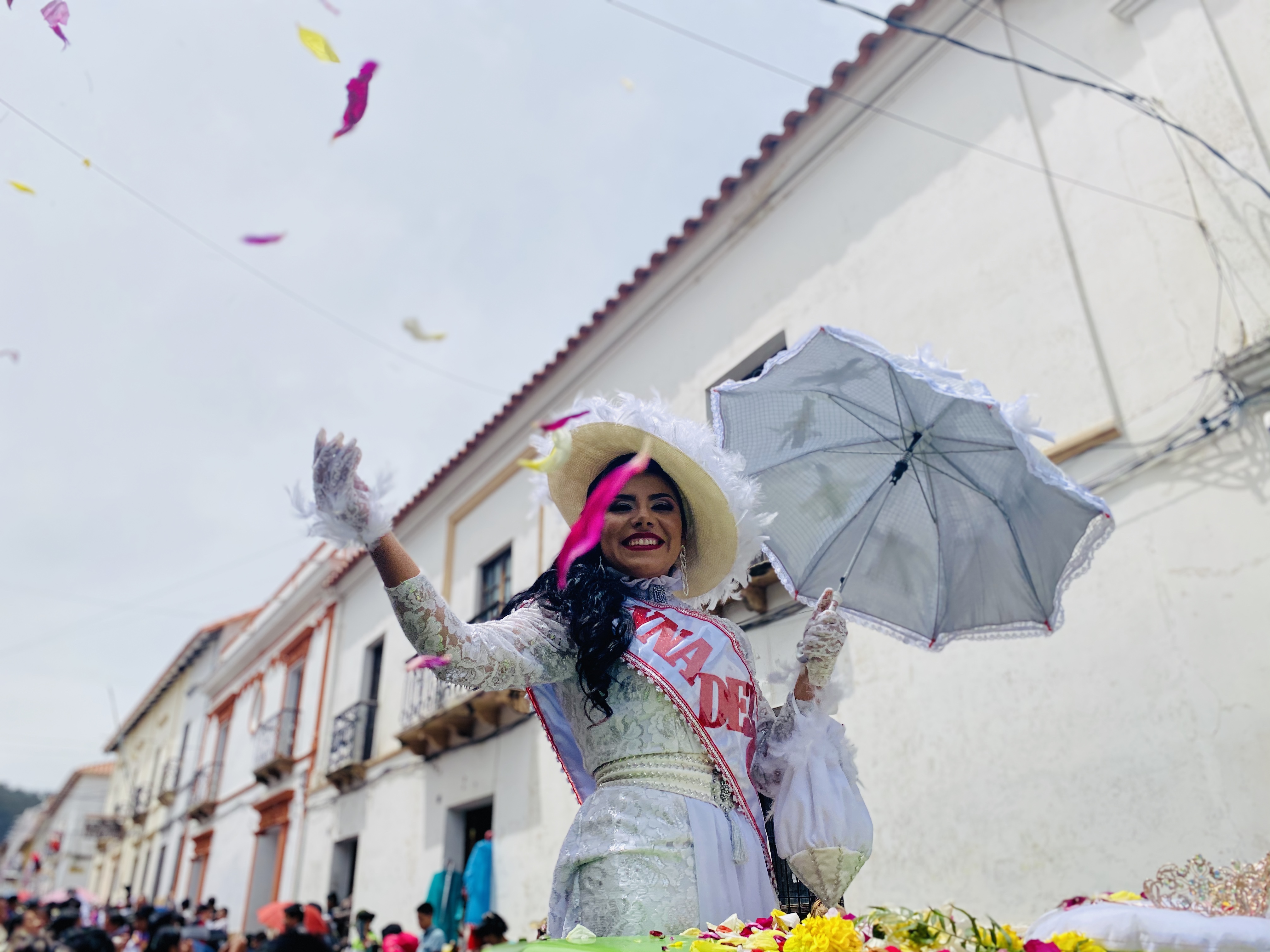
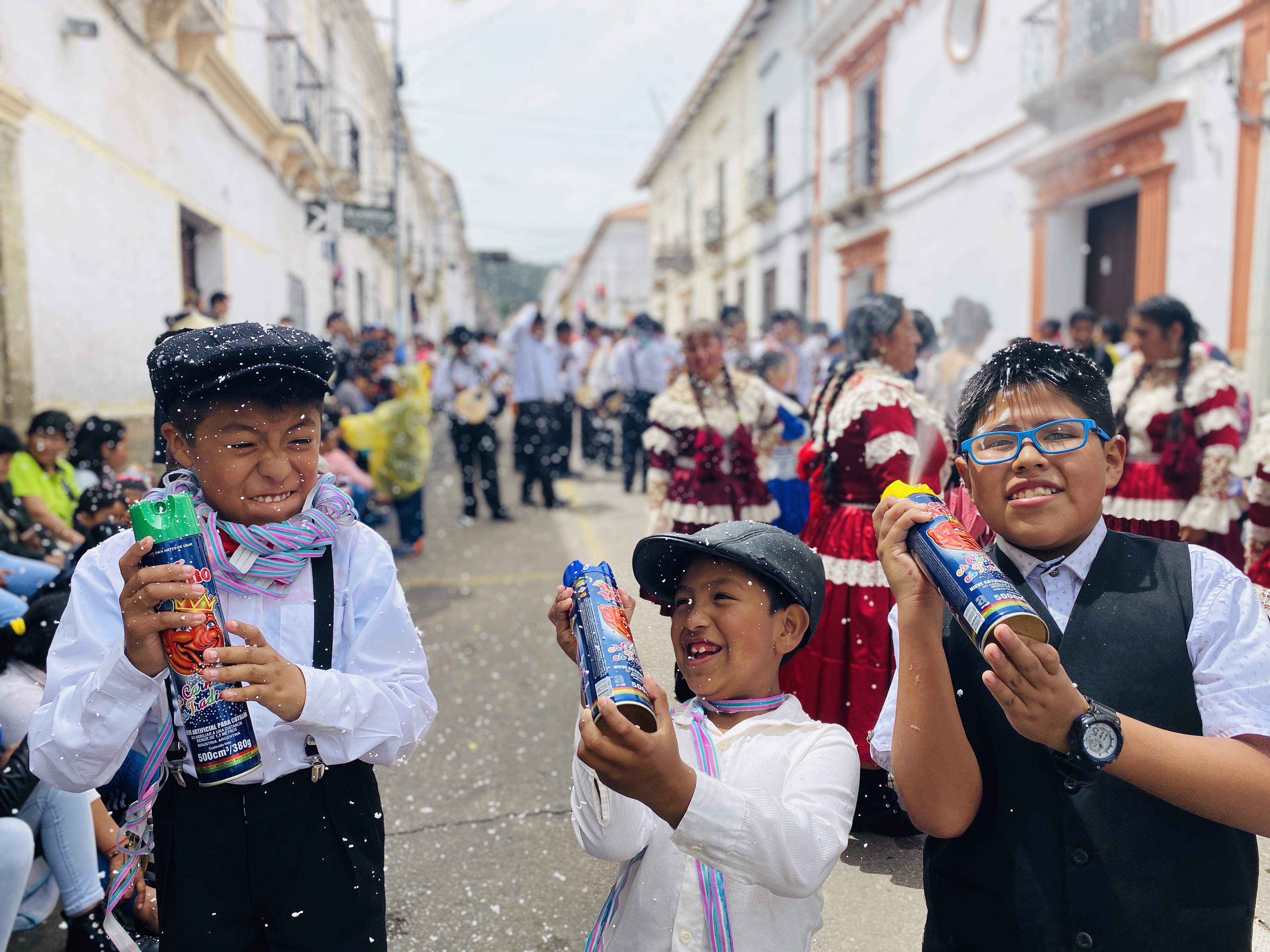
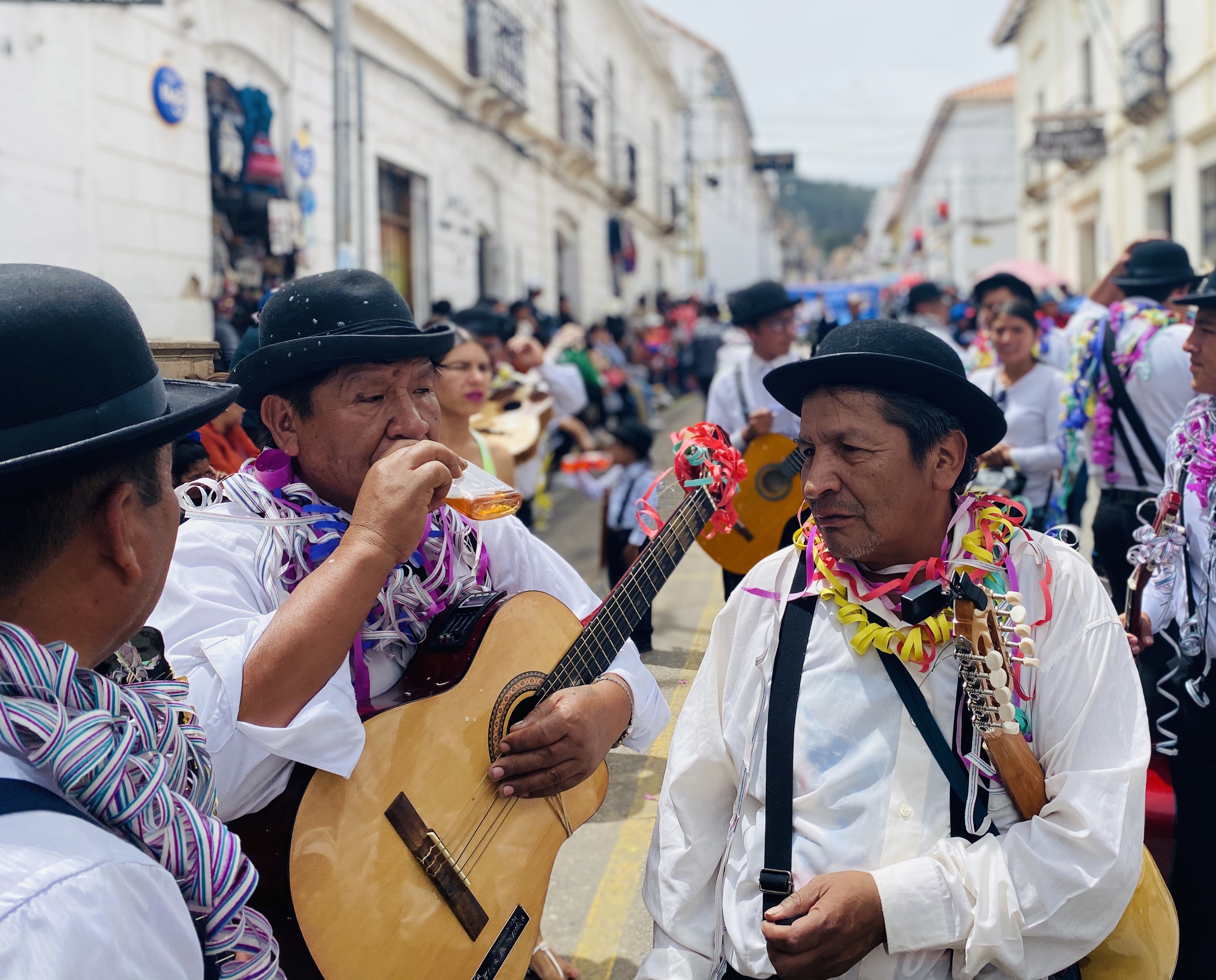
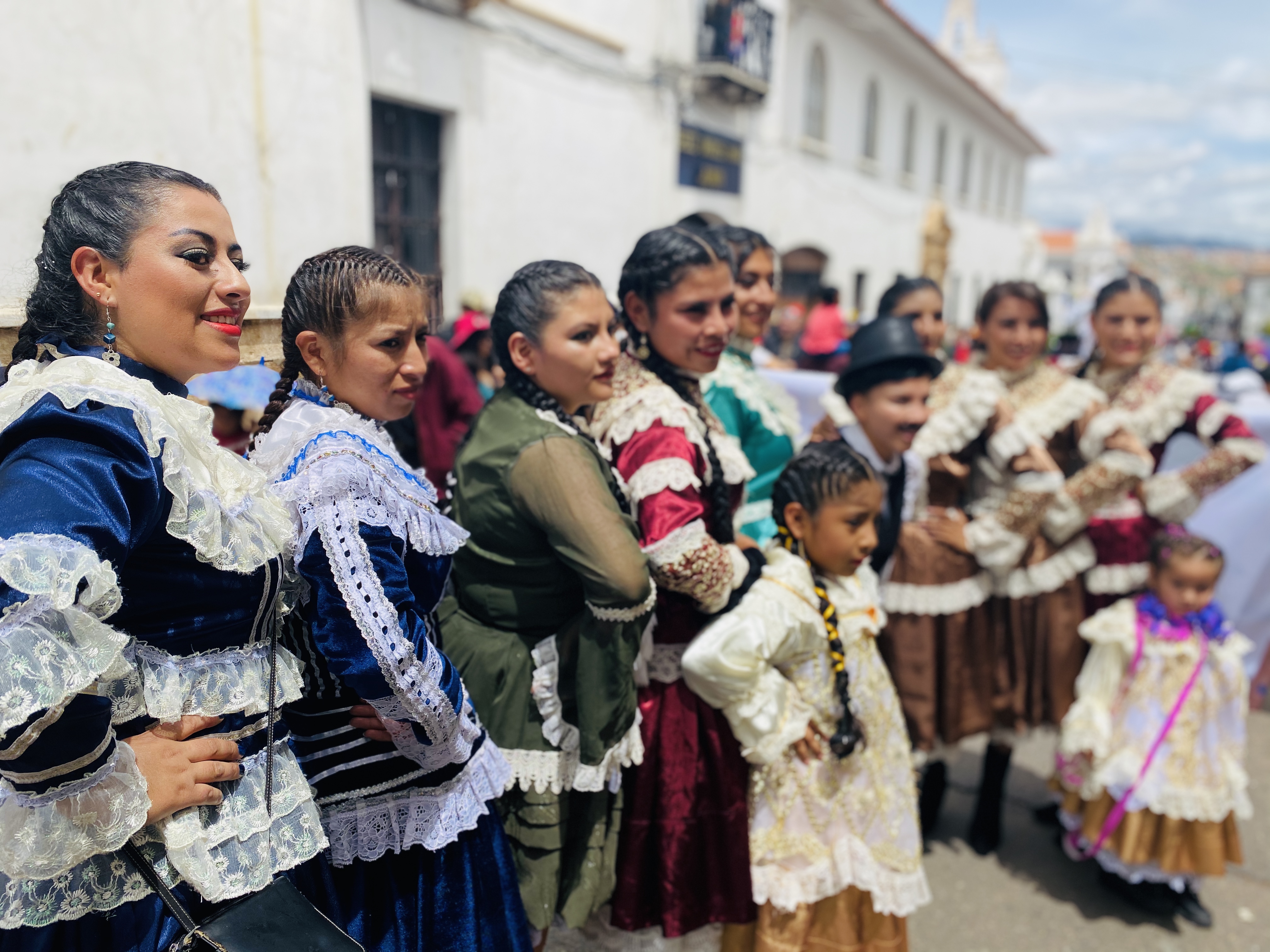
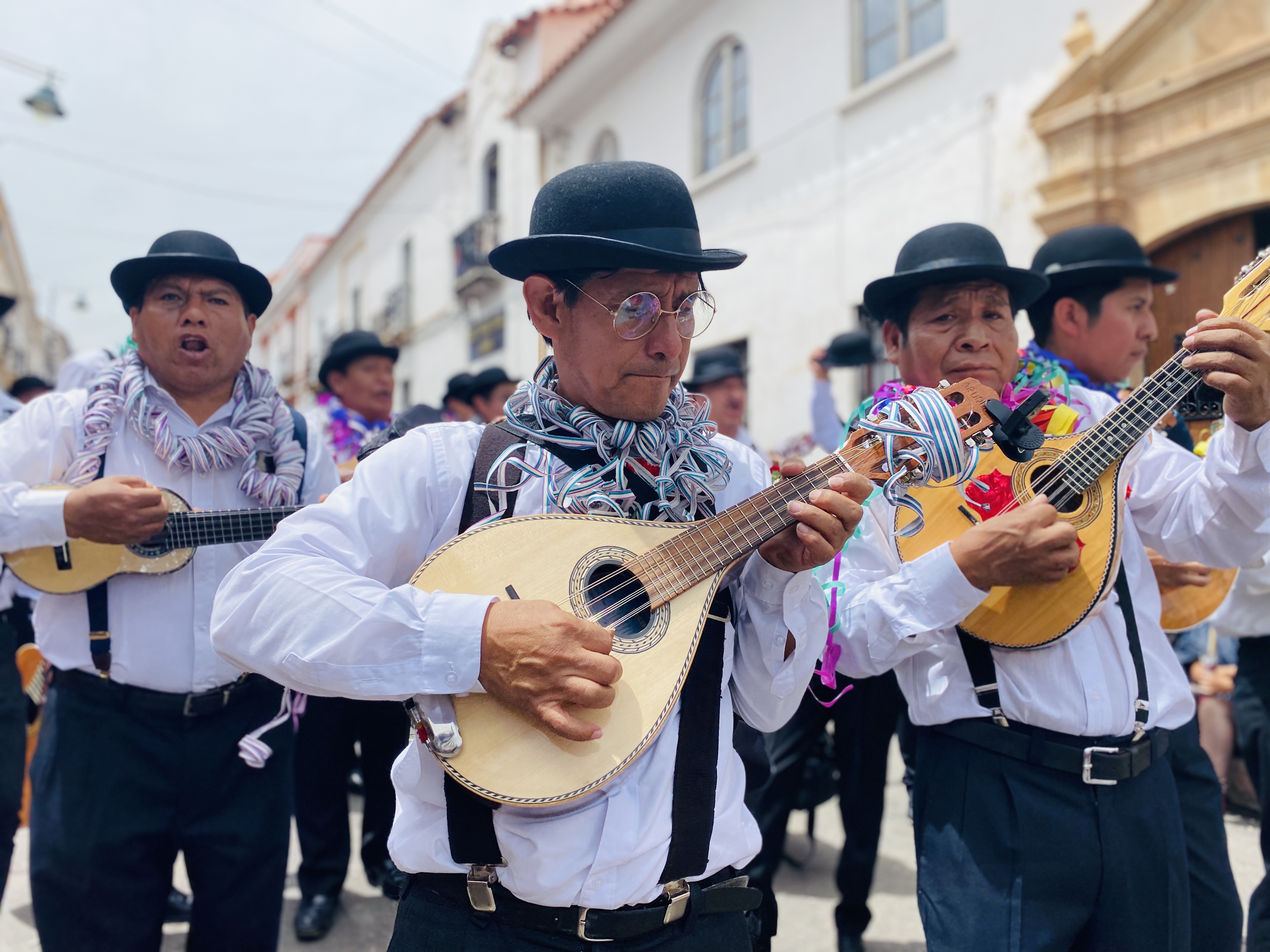
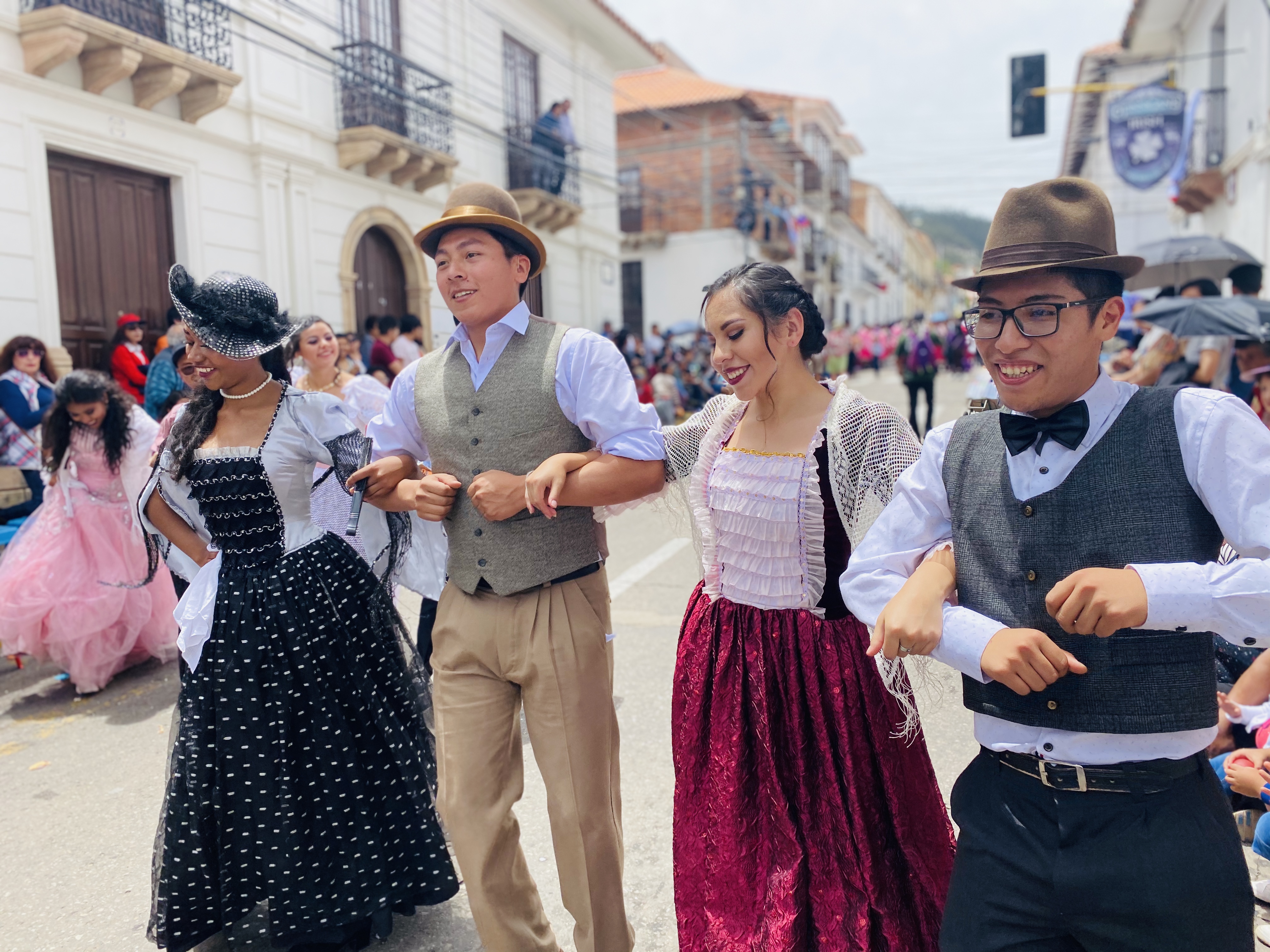
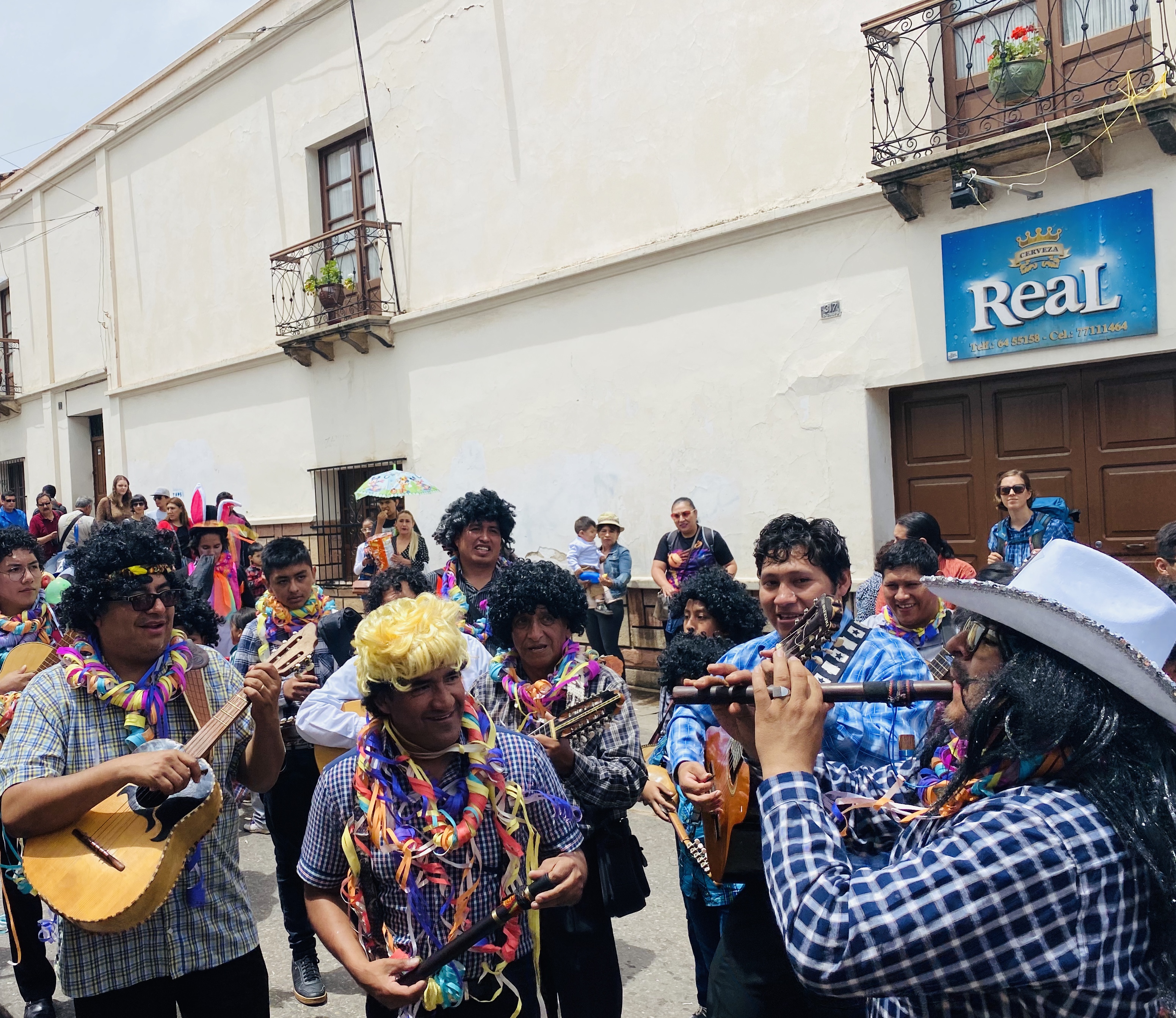
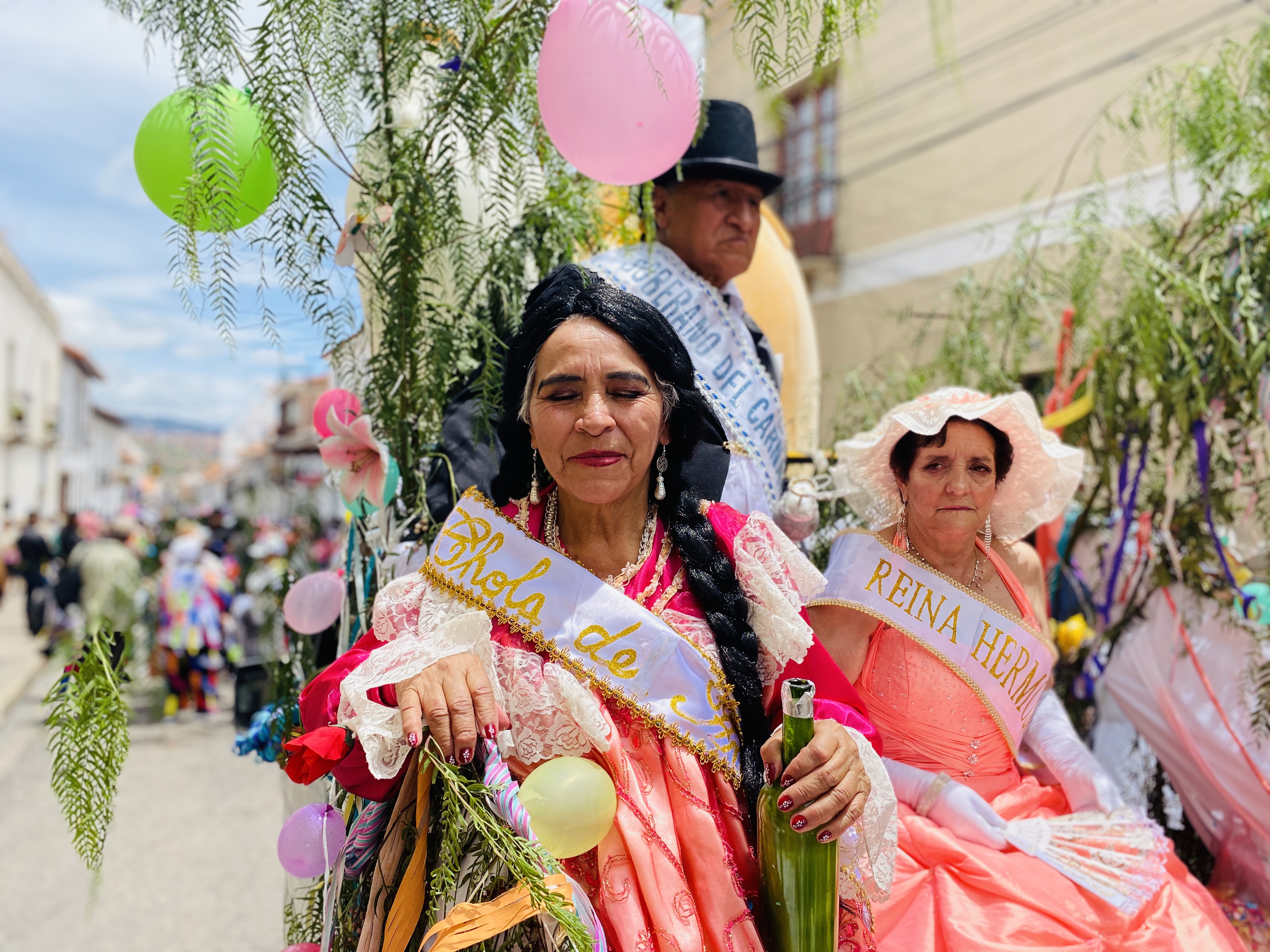
We expected the morning getting to our trek would be quiet and uneventful. We left the house to find the streets closed off and people slowly preparing for a big Carnaval parade. We waited a few hours and I was glad we did, because the parade was lovely. The audience was given wax-sealed eggs, chocolates and candies but beautifully costumed performers and music school after music school presented their dancers and their enthusiastic musicians.
It’s near impossible to pick a smaller set of Dan’s photos to share, so here’s more than a couple:
Just after midday, we took our extremely broken seats in a squashed, rattly minivan which would drop us at Chataquilla. The bus slowly wound its way up the mountains behind Sucre. At Chataquilla – a top-of-the-mountain sacred site with a church and a little amphitheatre – we started the Inca trail down.
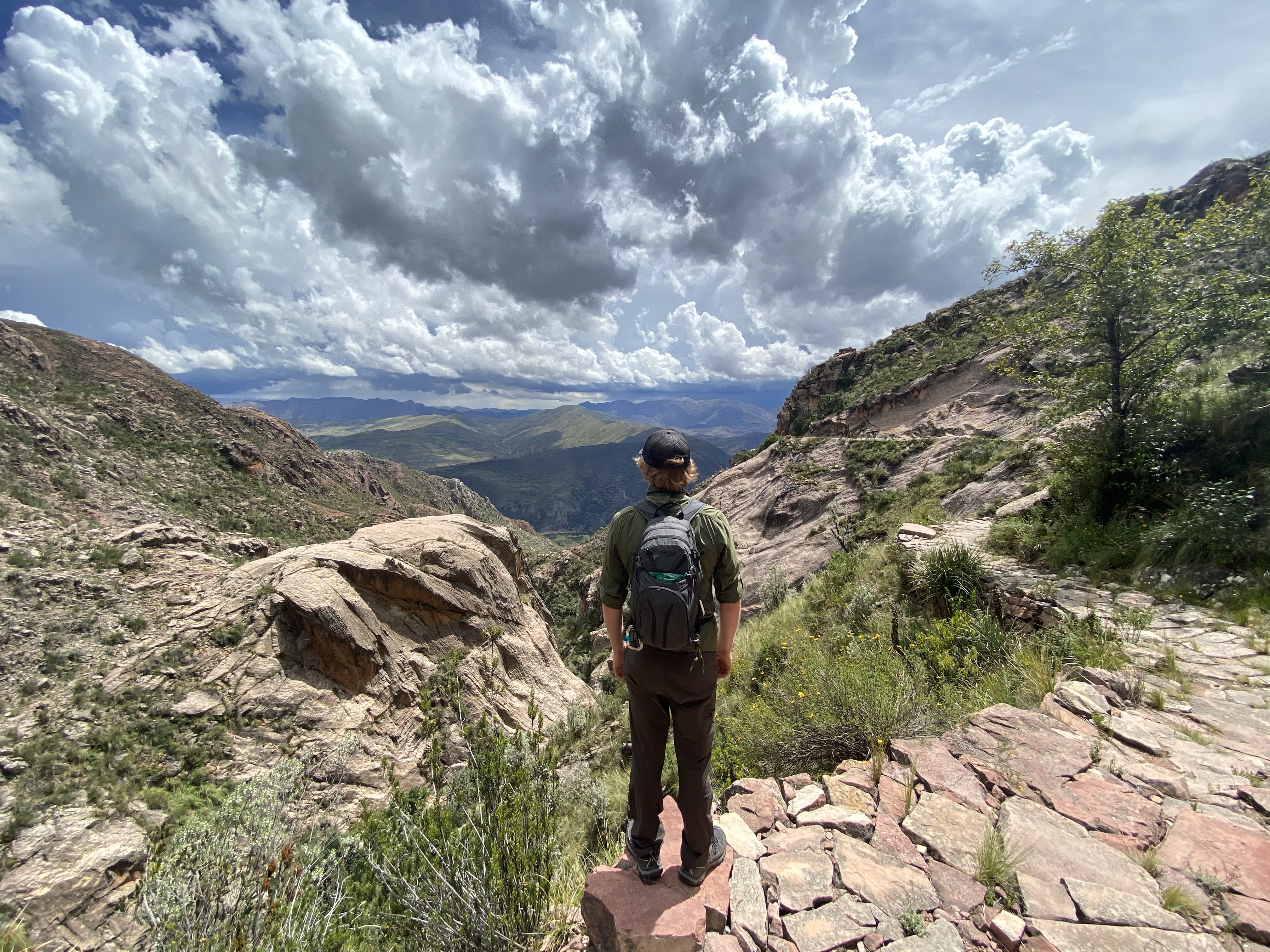
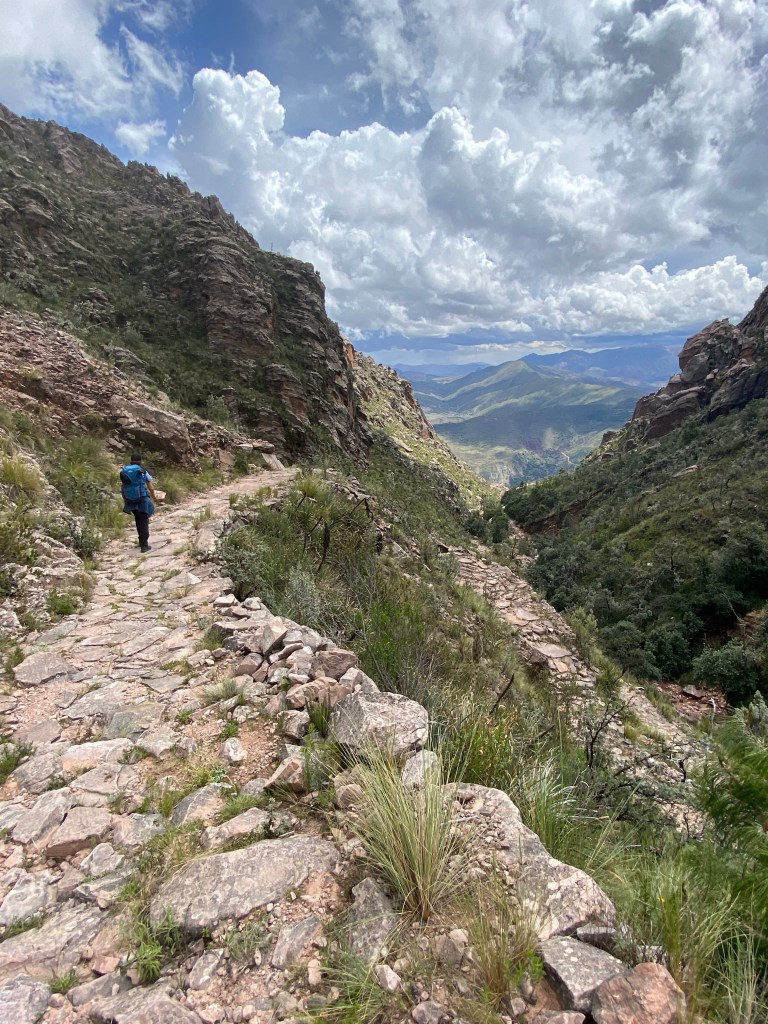
The trail was surprisingly wide for such a steep section of mountain, made by placed flat rocks. We were blessed by spectacular clear views, including of a storm in the distance with its rumbly thunder. The descent was never ridiculously steep, but over two hours of downhill trekking exhausted us.
We stayed overnight in the only two spare beds in the small hostel in Chaunaca, as a tour group of eight already had the rest. When we went to buy provisions, we also discovered that the same group had bought up all the available bottled water in the town, so we made ours stretch (without much difficulty).
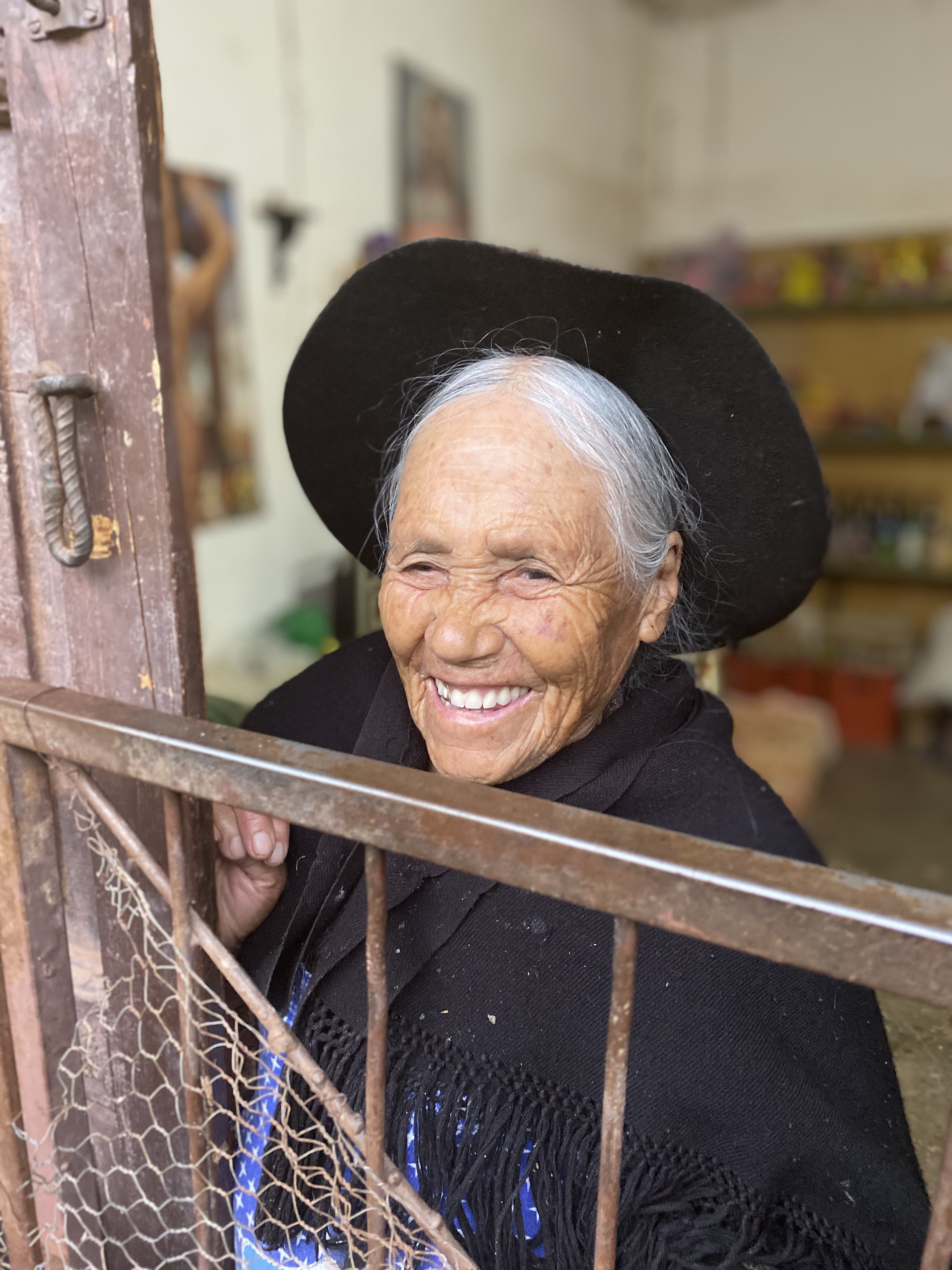
What’s the feel of Chaunaca and surrounds? Surprisingly green and lush for an area whose dry orange and red rocks remind you of a desert. It’s a tiny town in the crook of a bunch of different hills and mountains. The shopkeepers of the two little shops in town are both elderly – one over one hundred years old – and still happy to serve.
This whole trek kind of unfolded as we went. We knew that there were lots of different towns along the way but maybe didn’t appreciate how small they’d be. In the morning, we opted to take transport to the Maragua crater so we could focus our energies on the trek from there to Potolo.
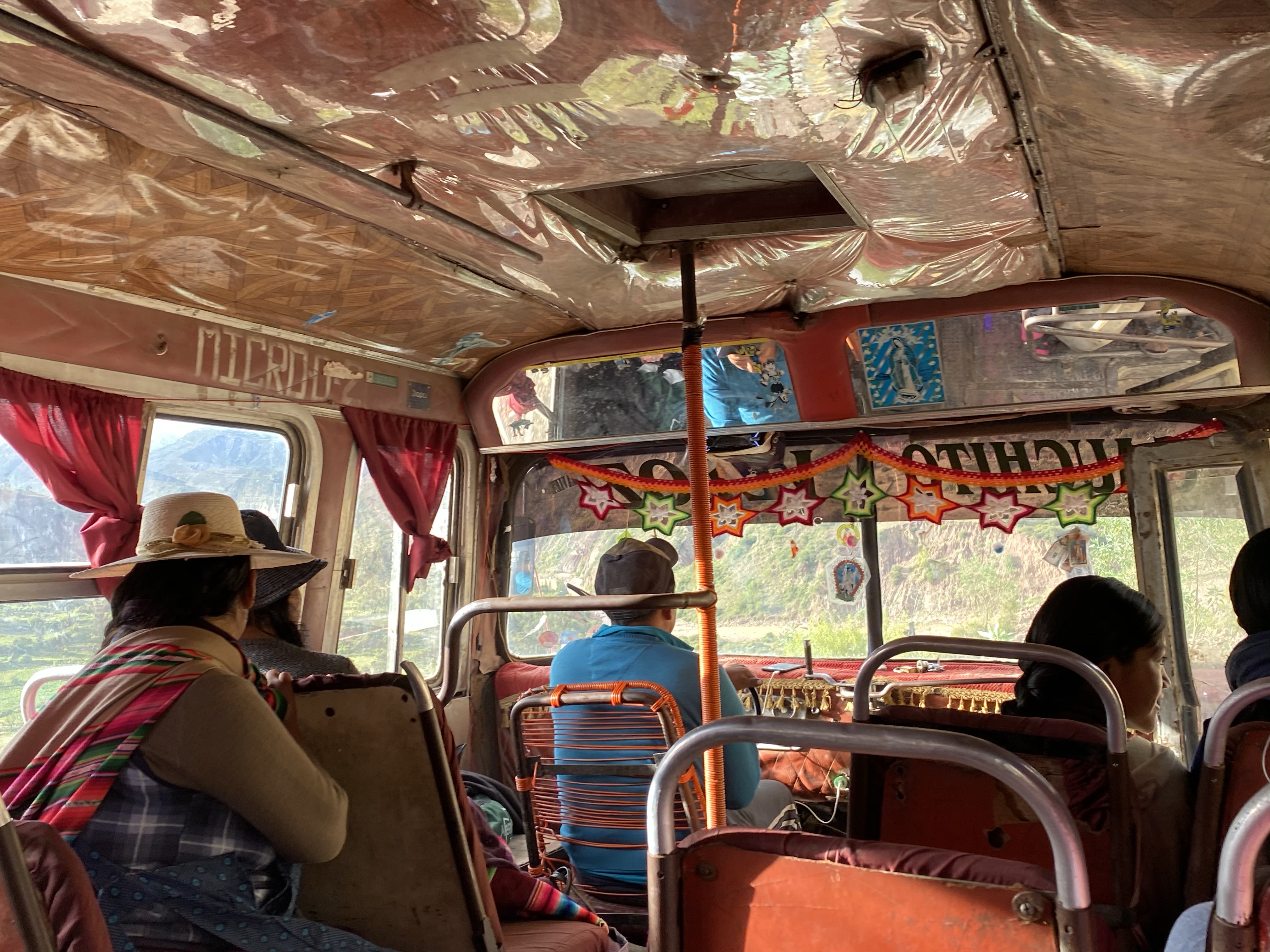
The transport we ended up taking was the school bus, that for almost an hour rattled around the sides of mountains. The uneven dusty ground made Jesus and the llama swing wildly under the decorations adorning the front of the bus, while the kids looked utterly unfazed by this part of their morning routine.
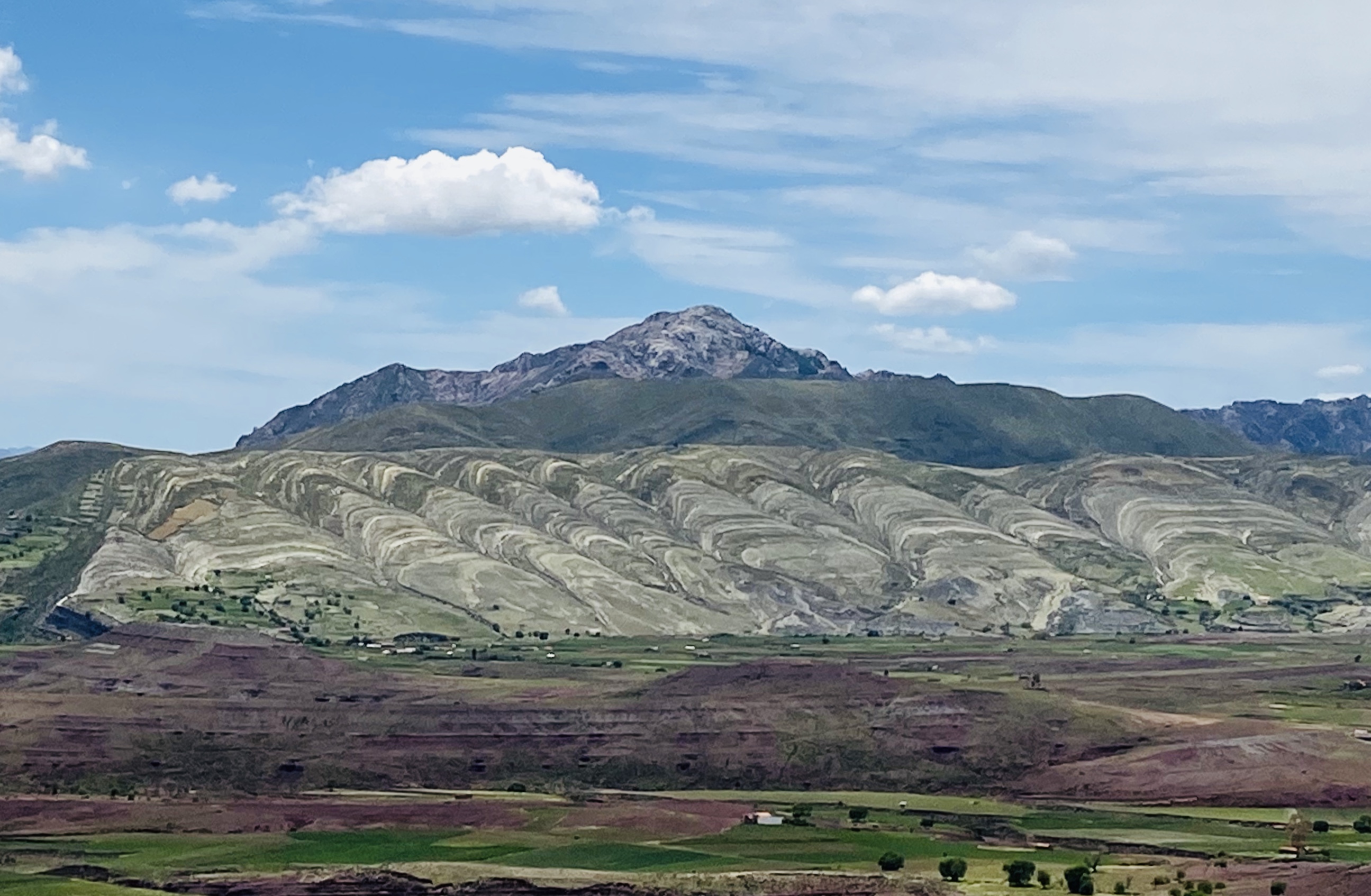
Maragua was even better than I imagined from Google maps. It’s like someone gave Pachamama (Mother Earth) a canvas of green fields and she drew heaps of parallel wavy lines all through it – sandy yellows, sandy pinks and light browns – so many waves encircling the crater. The fields were a jubilant green and the sky peaking through the clouds a rich blue.
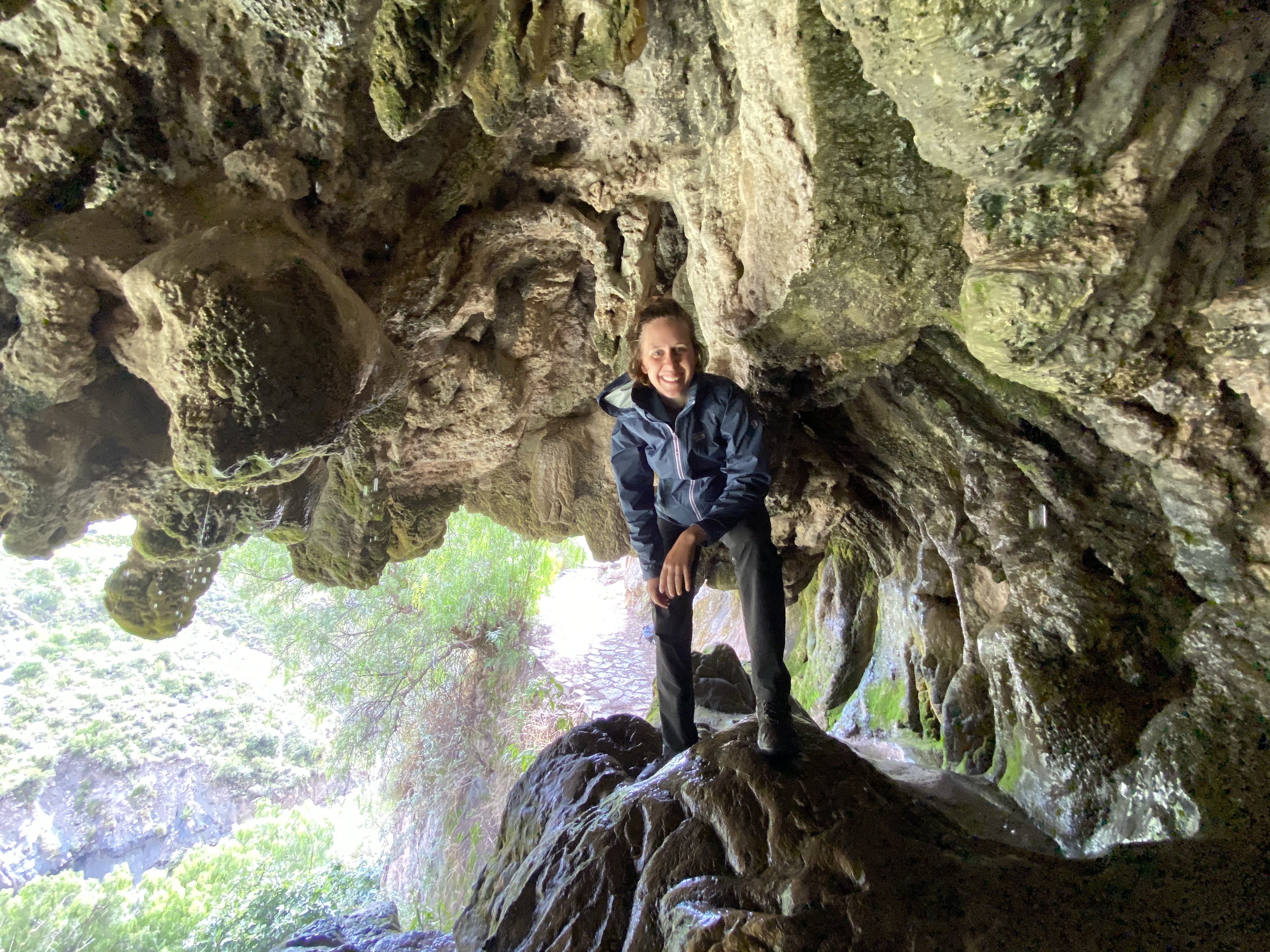
At Maragua, we visited the Garganta del Diablo (Devil’s Throat) waterfall and spent some time there in a cool wet cave and with a cup of tea musing about language learning. We had an early lunch back in town and set off to the edge of the crater for Potolo.
The walk to Potolo was stuffed full of rewards, but was also truly exhausting. Beyond the crater, we were greeted by farming lands streaked with smoky mauve and dusty maroon coloured soils, which gave off the impression of a rainbow when mixed with the usual grassy and rocky colours. Another range looked like the wavy sizes of the craters, but this time in dark pink, as if it were permanently lit by a rich sunset.
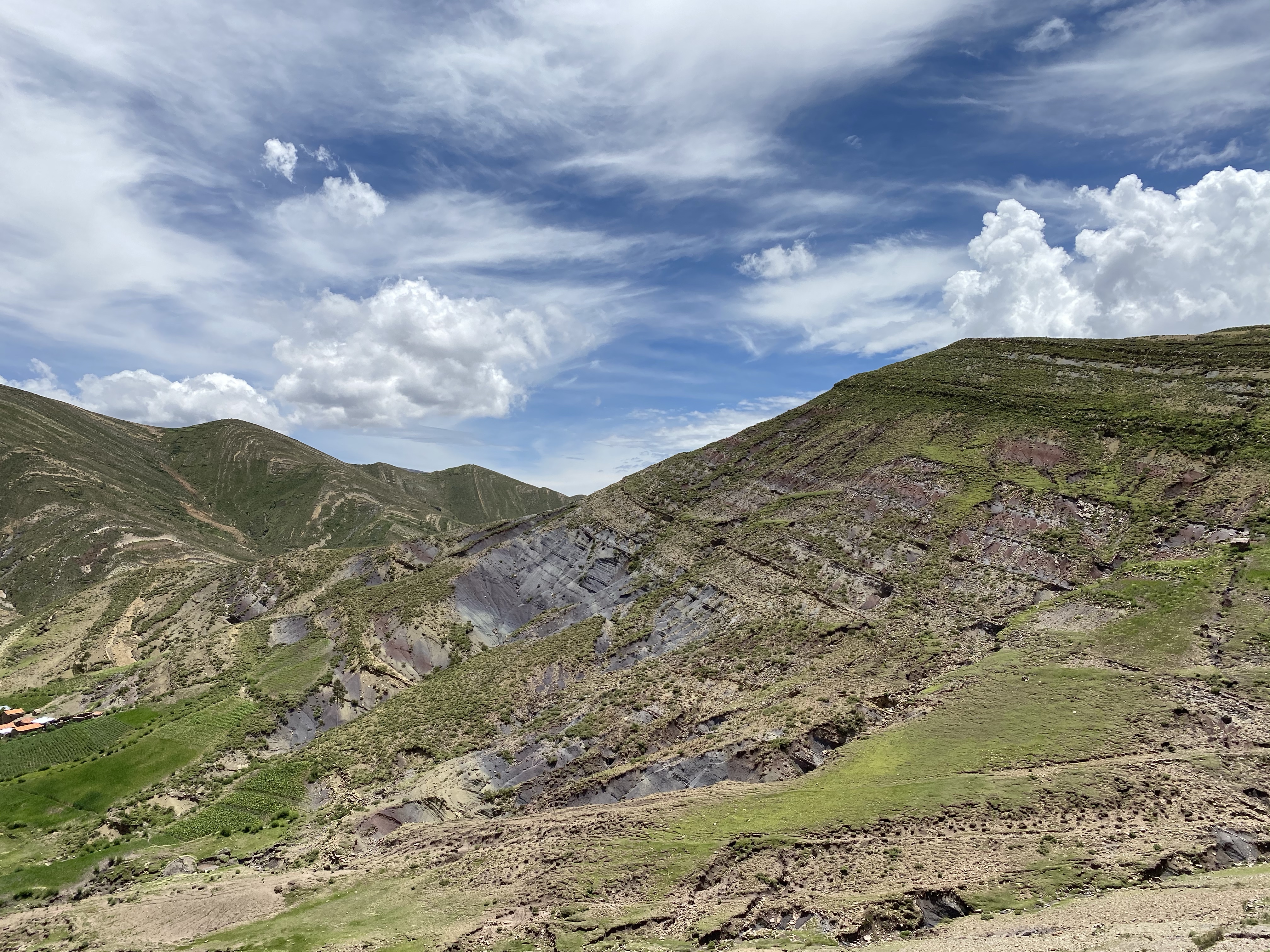
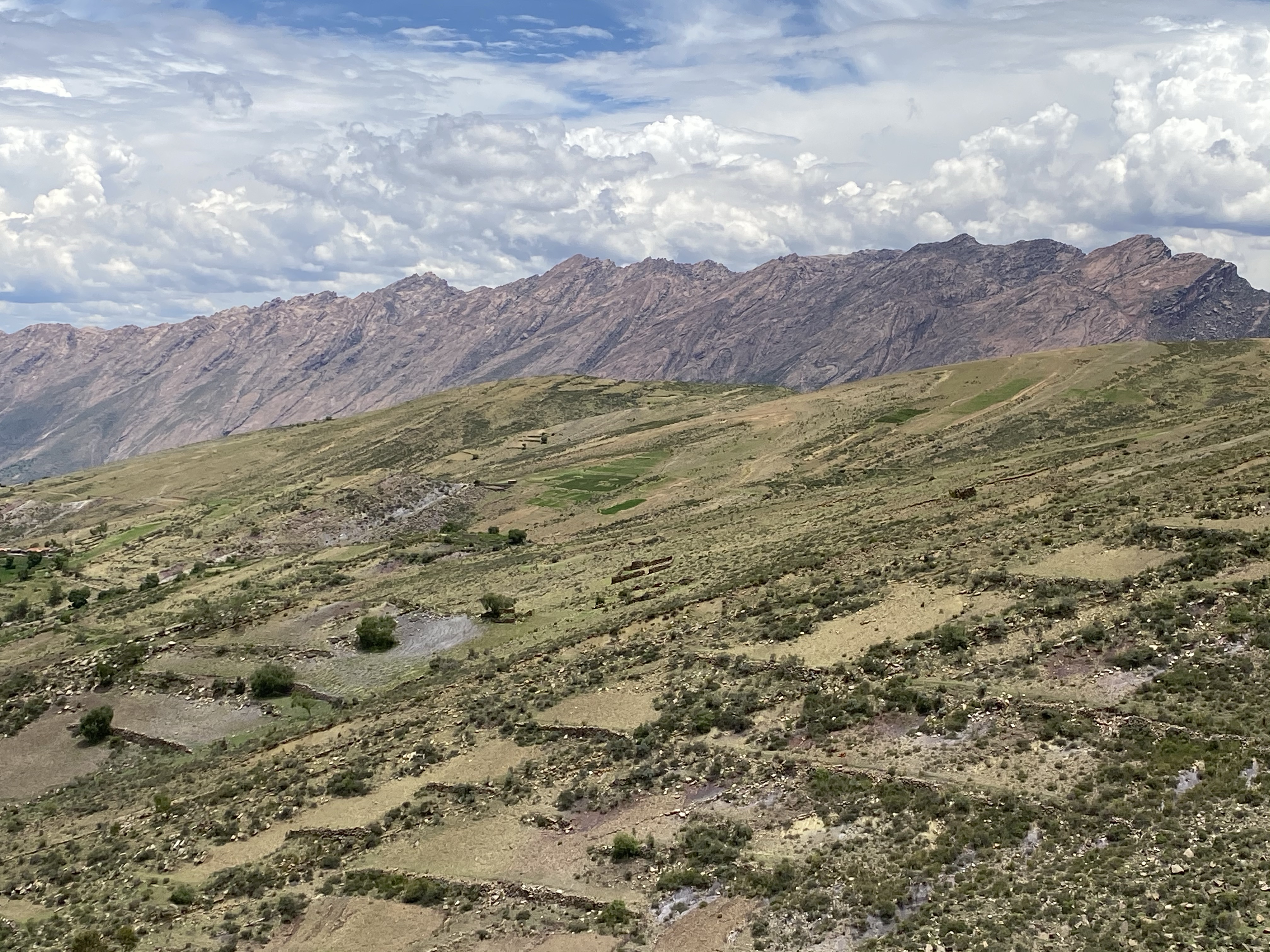
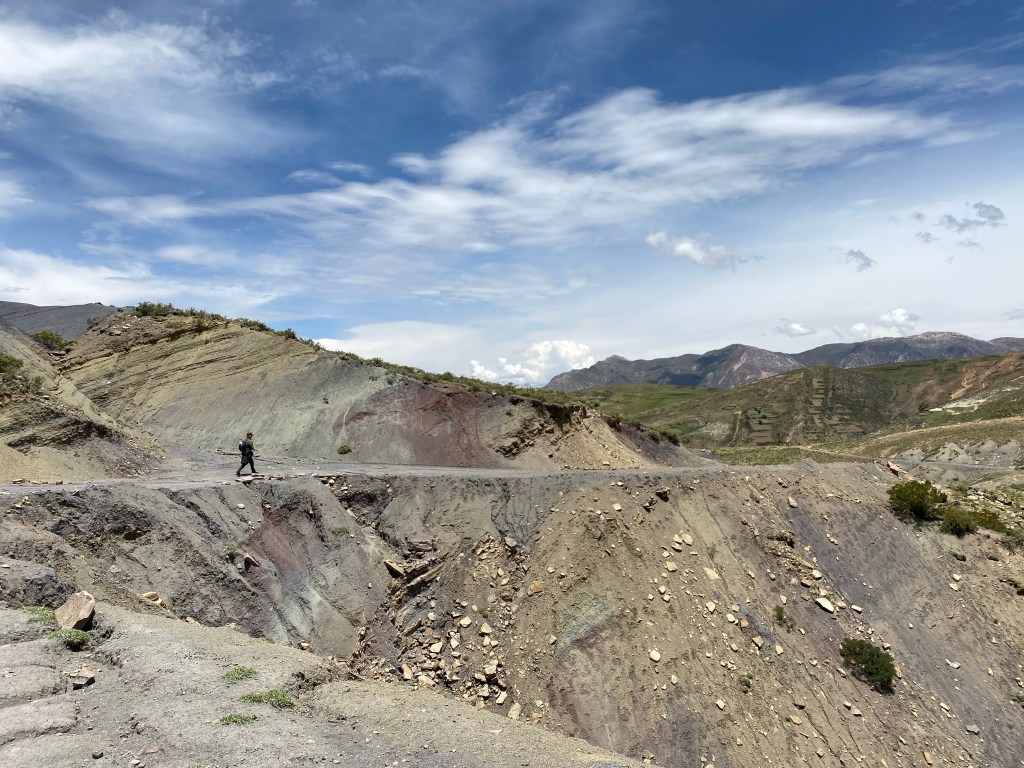
We tried to find the dinosaur footprints but the area was very poorly signed and we didn’t have enormous amounts of excess energy saved for getting lost.
We crossed valley after valley, chatting to locals when we could (if they spoke Spanish; most speak Quechua), meeting their flocks of sheep and goats and either having dogs aggressively bark at us, or follow us for a few kilometres. The whole time, the scenery was breathtaking.
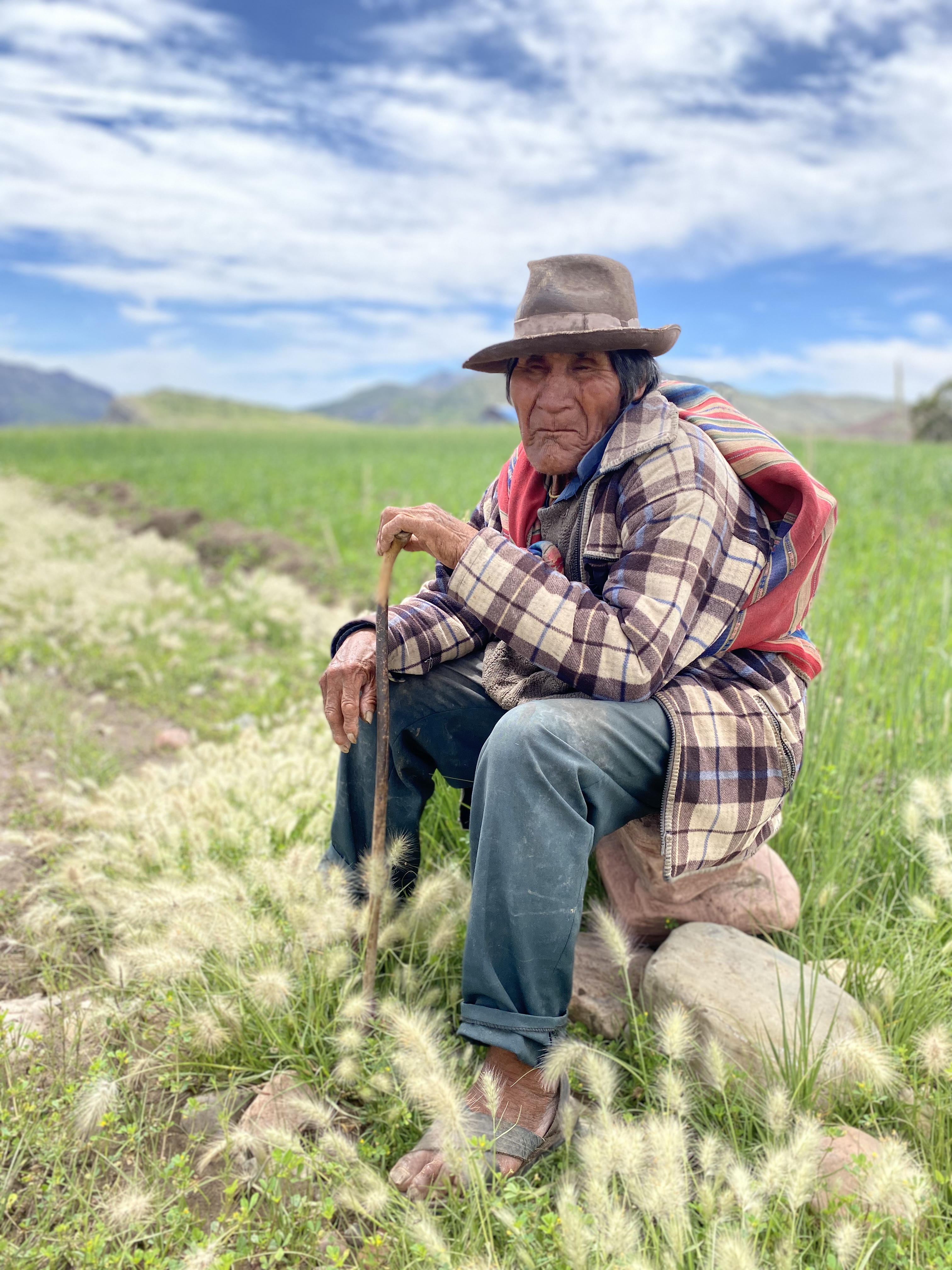
We skipped the last few kilometres into Potolo as a taxi passing by (our first car passing by all day) with two existing passengers agreed to take us back to Sucre for an eye-wateringly small amount of money. Even in the coca-scented cab, the views were a treat – especially tracing the edge of a ginormous gorge.
These two sun-baked cookies (we used plenty of sunscreen, I promise) are going to sleep well tonight.
VRPS
[Sucre]
 The Two Swords