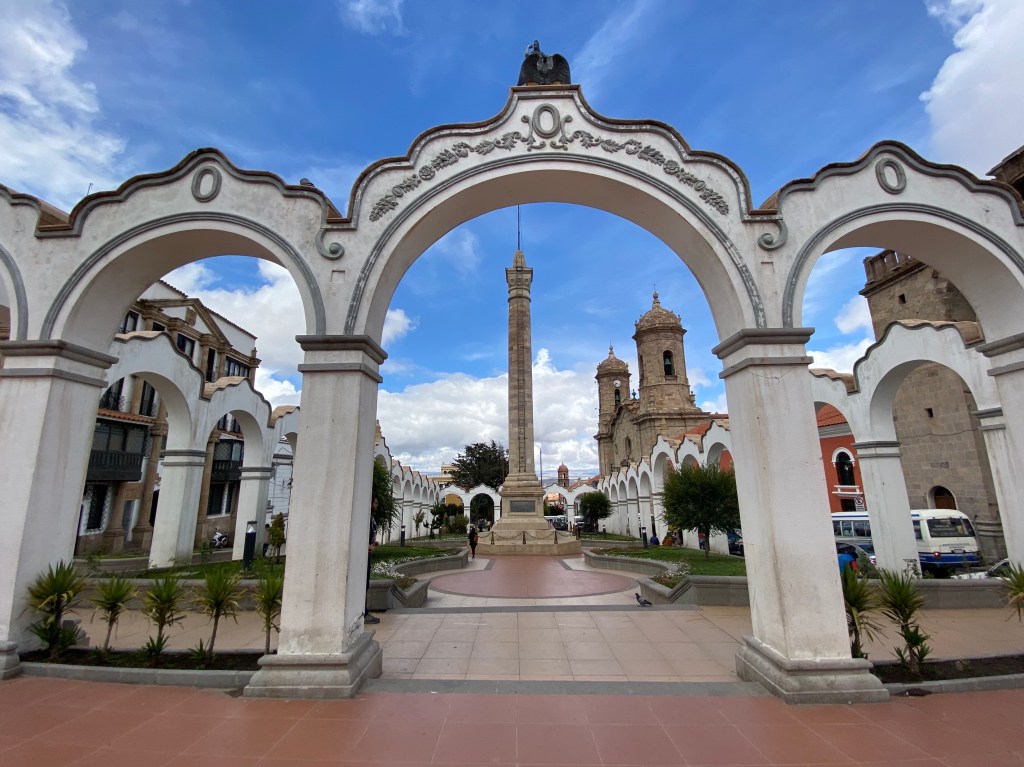
Dan and I have developed this high-altitude funeral-march gait so we can wander around Potosí without running out of breath (too often). As if the altitude wasn’t enough, this city is on a rackish hill so uphill needs to be taken gently. I’m so impressed by how they’ve pulled off their central squares despite the slope.
It feels noticeably different in Bolivia (at least Potosí) to Chile and Argentina. It’s poorer, with children and old women begging on the side of the street. It’s more vibrant in its indigenous culture, with Quechua spoken widely and many of the women dressed in traditional clothes of swooshy pleated skirts, long thick socks, often open-toed sandals and a bright hat, like a top hat.
And we are more noticeable, I feel. Where the Chileans and Argentinians didn’t know whether or not we were locals, the Bolivians appear to know that we’re not. It’s all in the looks that you’re given in the street.
However this particular outsider has just signed up to a week of Spanish classes in Sucre starting Monday and she’s excited like a five-year-old on their first day of school. What should I wear? (I shouldn’t be worrying. I really don’t have many options.) Should I study? (Of course, but the next few days won’t make much difference.)
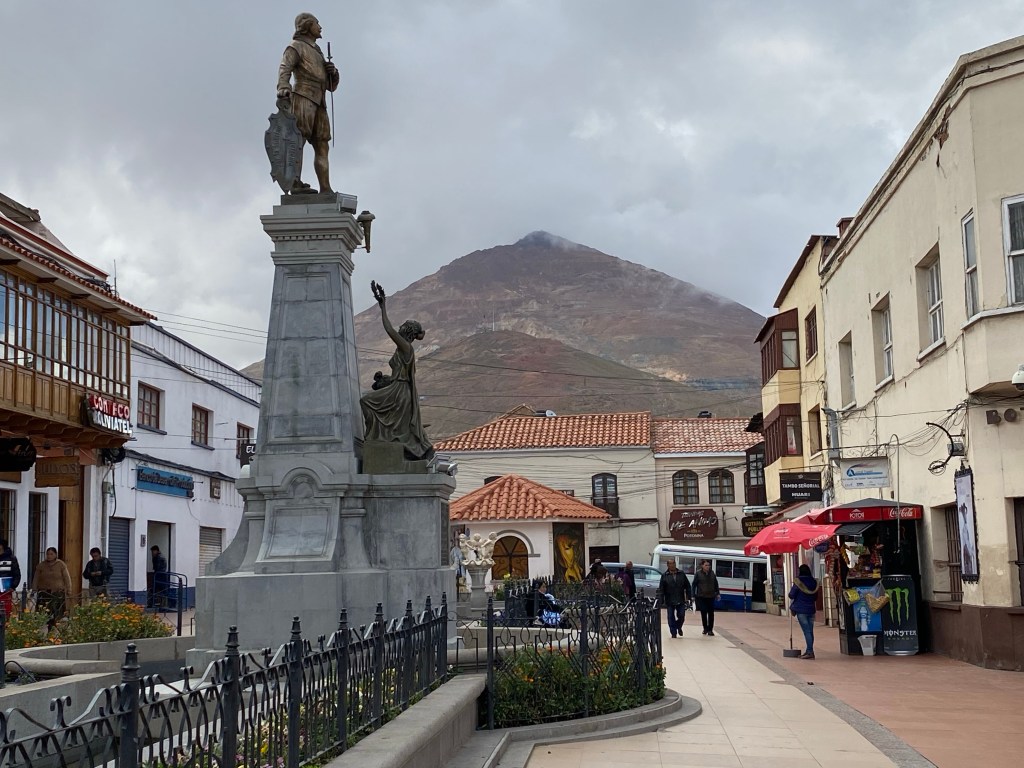
But back to the present in Potosí. This place, to me, has a strange vibe but I’m not sure how much of that feeling derives from my preoccupation with its sad history. As I read up on the bus ride in, Potosí was once a significant jewel in the Spanish empire’s crown due to the extraordinary amounts of silver mined from the mountain next to it. The mining process was – and to a large extent still is – deadly, and during the colonial period, the Spanish sent millions and millions of indigenous Bolivians and African slaves to their death.
The silver in the mountain has now largely been extracted and the city is one of the poorest in the country, and maybe the continent.
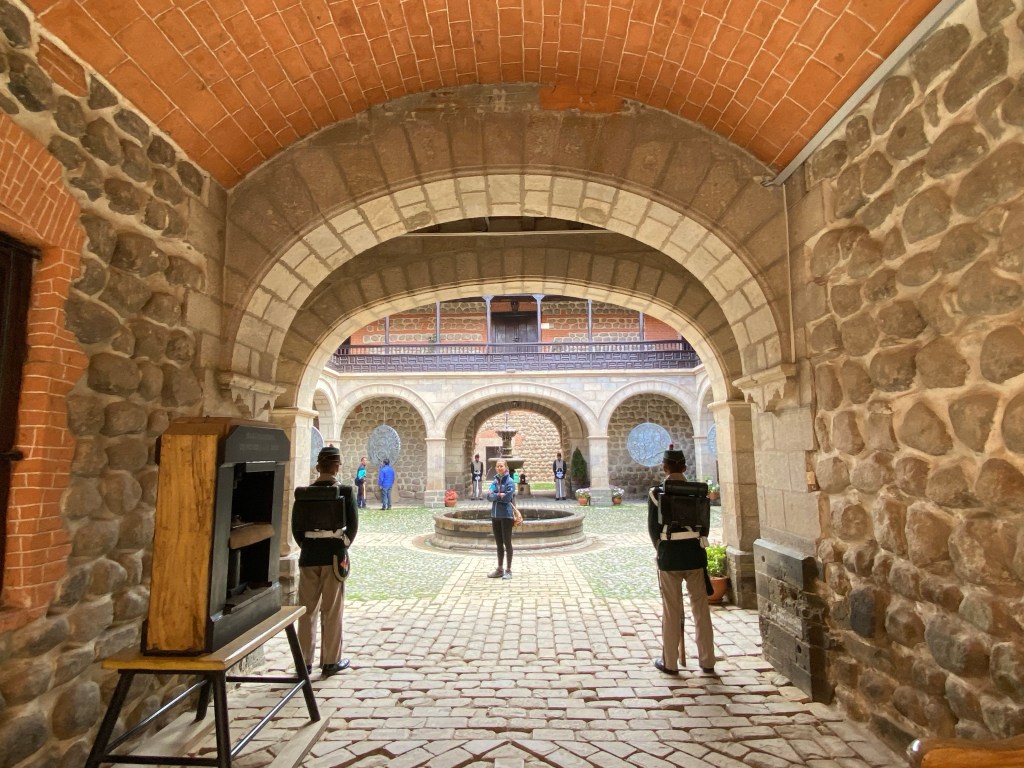
I’m pretty angry by this – but it appears that the local population are not (as much). We toured the Casa de la Moneda (the former mint) and the tone of the tour was more about celebrating the wealth in the mountain and the accomplishments during the colonial era like coin-making technologies.
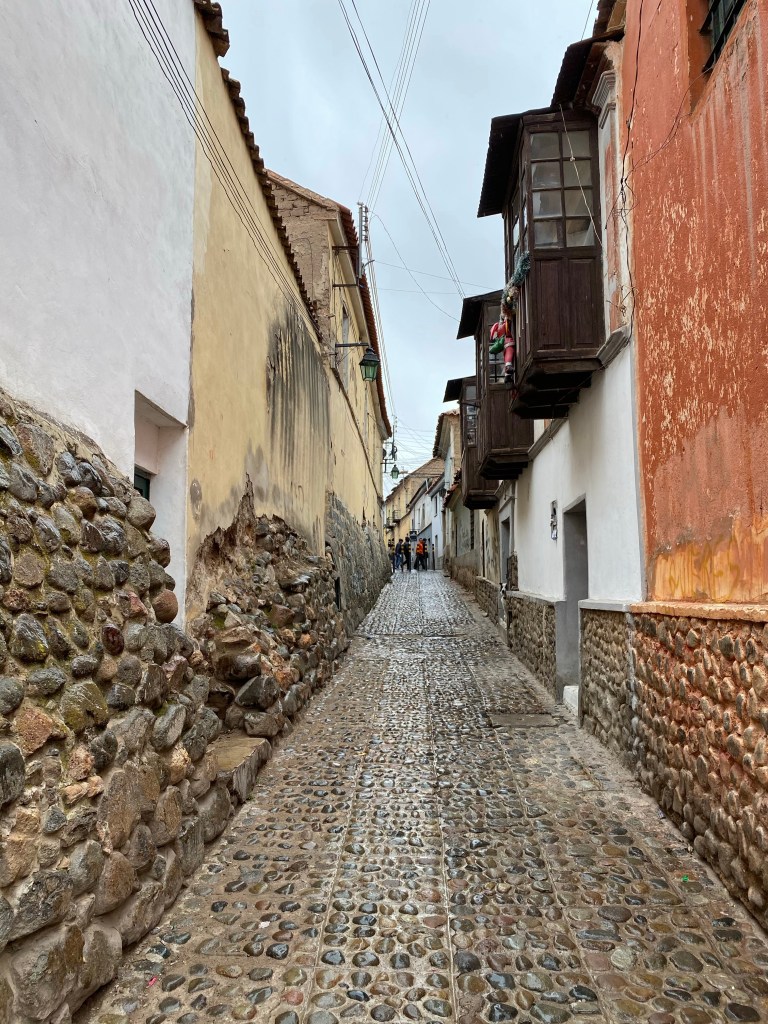
This city is full of such contrasting experiences. The menu del día set lunches are delicious and plentiful. The streets are narrow and often the footpath can’t accommodate two people across. Whenever a bus rumbled by, putrid smoke fills the air. Despite being 2,000km north of hot Santiago, Potosí had a top of 14 degrees so we have to rug up when we leave our deliciously heated hostel. We were treated to amazing live acoustic music by another hostel guest over a light dinner of tortillas. In parts of the Casa de la Moneda, we were left with a sharp smoky-acidic taste in our mouths.
It will be interesting to compare these initial impressions with the rest of our time in Bolivia.
VRPS
[Potosí]
 The Two Swords