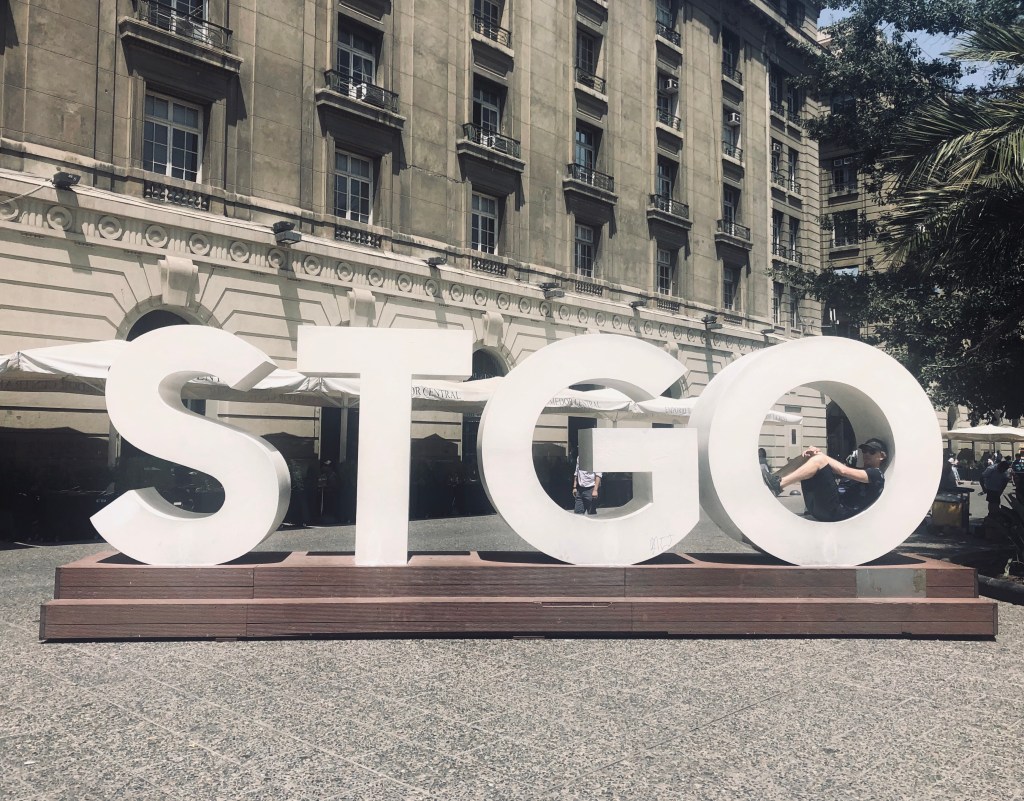
Yesterday (I’m writing this the morning after), we were but sponges, slowly soaking up all the different flavours and textures and experiences of Santiago. This is a beautiful and wild city, and we’re seeing it at a particularly significant time. We’re finding out more about the protests – what happened in October last year when they started, why people are protesting, what’s continuing – and while I don’t intend to write an essay on it, it’s starting to form a picture of a people angry at wealth disparity and the failure of government to provide effective public services, and a leader who by now should rightly be giving up their power and isn’t (and isn’t doing enough). Things are ‘simmering’ at the moment, while the uni students are distracted by holidays. Word is that come March, the protests will escalate.
I had the immense pleasure of hearing Dan’s verbal summary of the day when we were walking around in the evening. We recorded it, so I’ll now transcribe it here so you can have the immense pleasure of reading it. I’ll just make some minor edits to remove some of the nuances of verbal speech (the ‘ums’ and so forth – have you ever read an actual transcription of verbal speech? It’s so messy. I did a class on politeness linguistics and when we focussed on interruptions in conversation, I got to appreciate just how hard it is to read a real transcript). Here’s Dan:
“Today, we were orientating ourselves through Santiago, meandering through the streets in search of Santiago’s best coffee. We weren’t disappointed when we stumbled across 3841 Coffee Roasters, because the barista had spent two years working in a coffee shop in Brisbane.
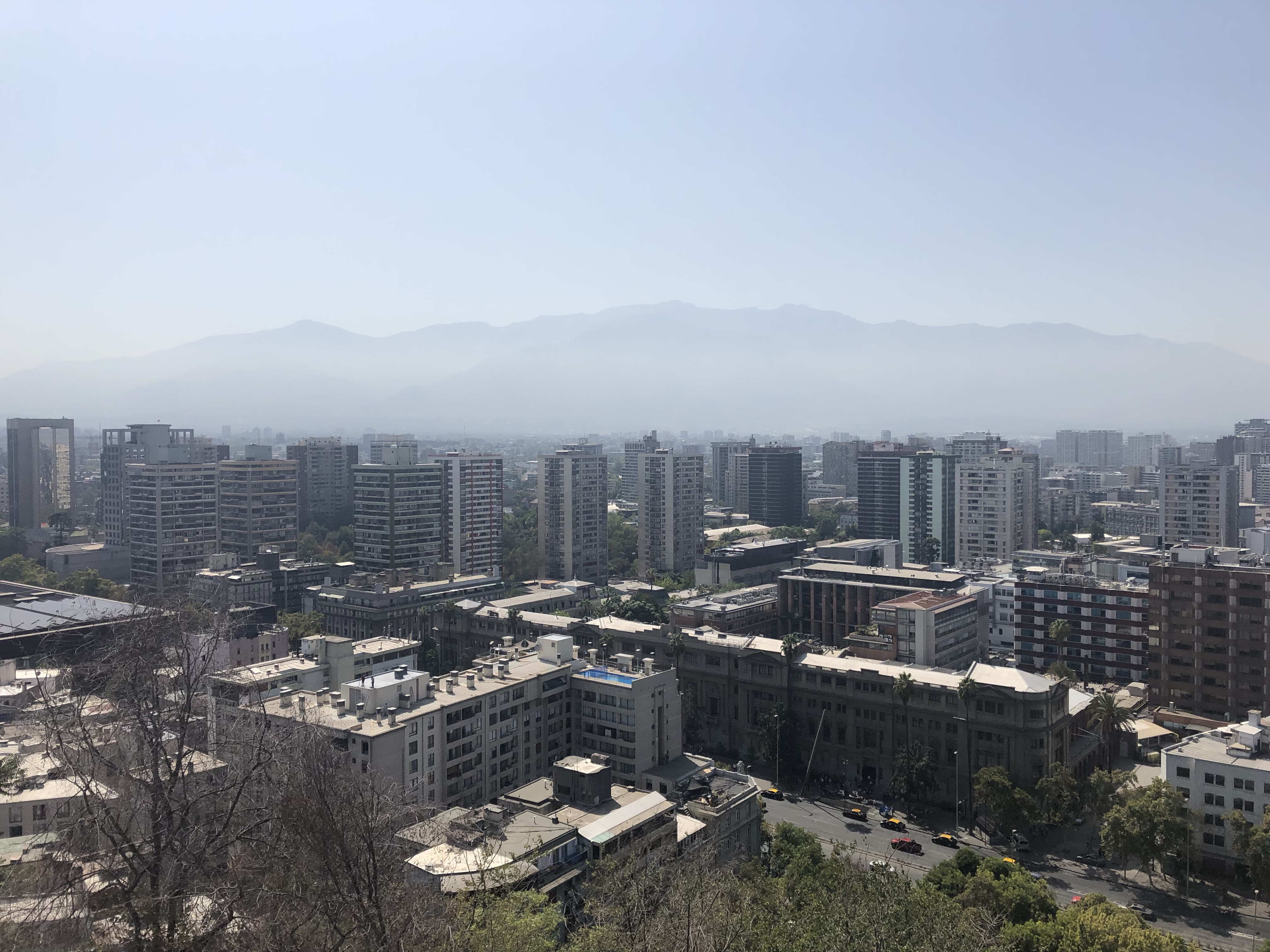
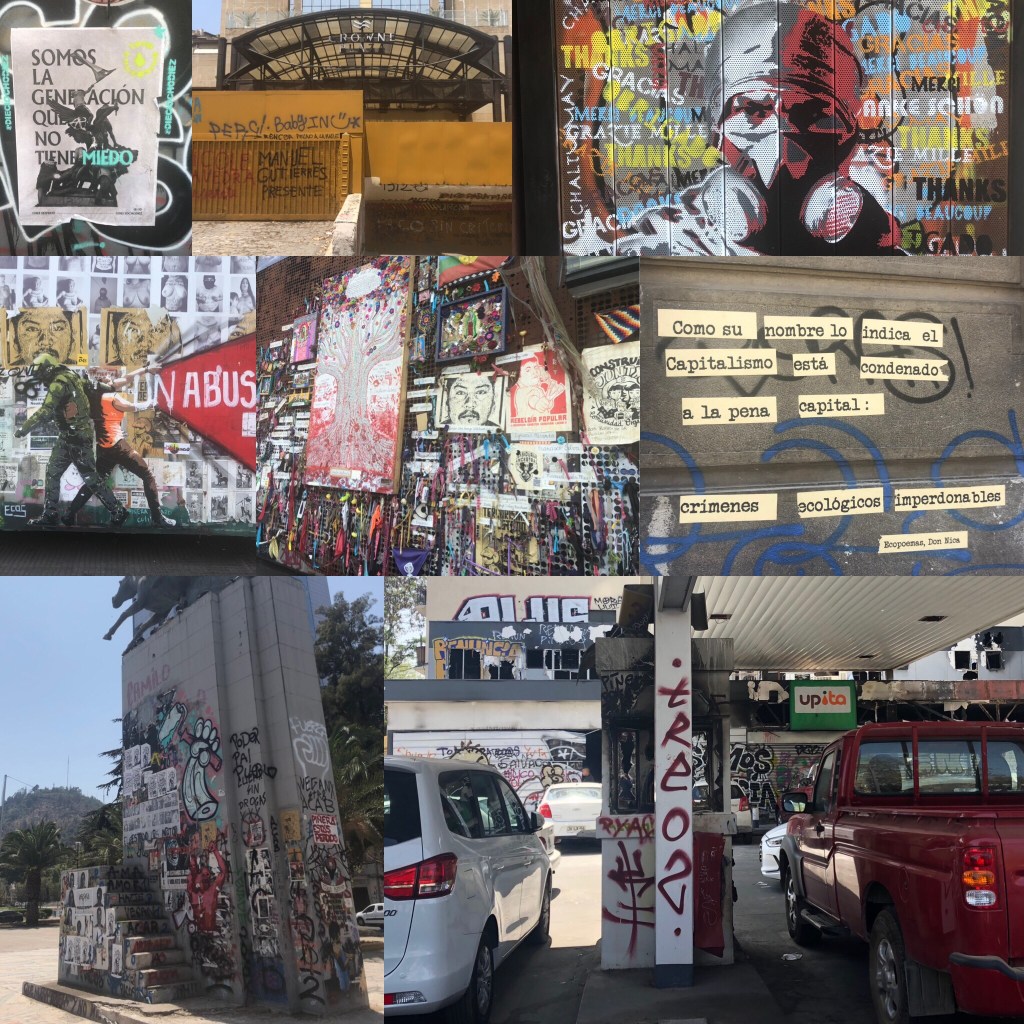
Walking around, we were continuously stimulated by the art and colour pasted on all of the walls – some sanctioned, some probably not. We walked up Cerro Santa Lucía, where we climbed up to see a view of the Andes (and the city) from the top of the fort. The views were quite obscured by what we were told was the smoke coming across from the Australian bush fires (that hasn’t been confirmed, but it’s what we were told).
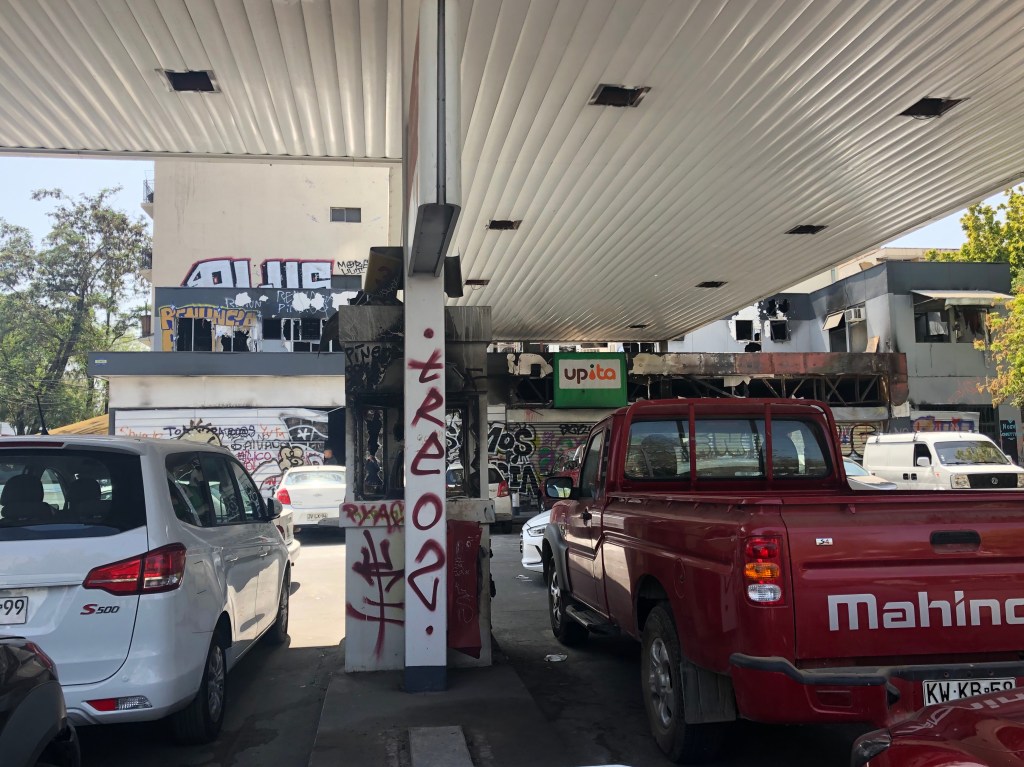
Another thing that struck us was that there were volunteers at the intersections where traffic lights used to be. These volunteers have taken up the job of directing traffic as the lights had been cut down (or otherwise destroyed) during the protests. The volunteers ask for tips, and the community seems to oblige by giving them small donations as they’re driving past.
The first time we saw this was on the corner where a Shell service station used to be. It had been burnt down and was now occupied by maybe homeless people (we’re not quite sure) and had been turned into a paid car park out the front.
We then had a delicious lunch, and decided to join the free walking tour – which we’ve done in BA and Montevideo on this trip. The tour was given by an enthusiastic semi-local guide, Gastón, who spoke to us about the history of Chile up to the modern day, which encompassed the transition from Salvador Allende to Pinochet, the dictatorship and everything that came along with that. He spoke on modern issues – the protests, and how they have arisen in part by the dictatorship in the 80s and the transition out in the 90s.
I then left to go and run some errands, and left Viva to continue on with the tour. (It was the longest break we’ve had apart for about three weeks.) I just strolled through the streets, continuing to admire a lot of the street art, and found myself in Barrio Bellavista.
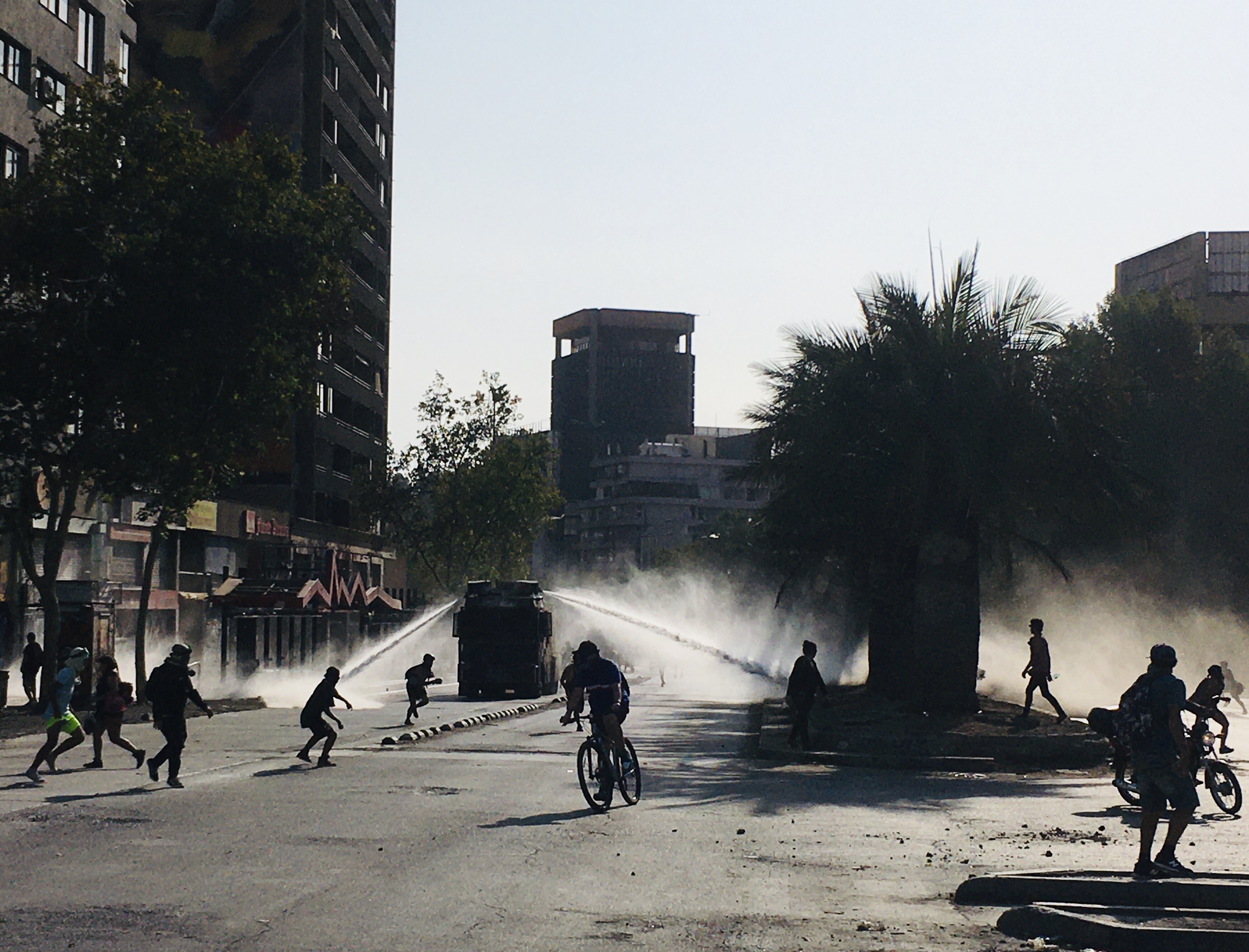
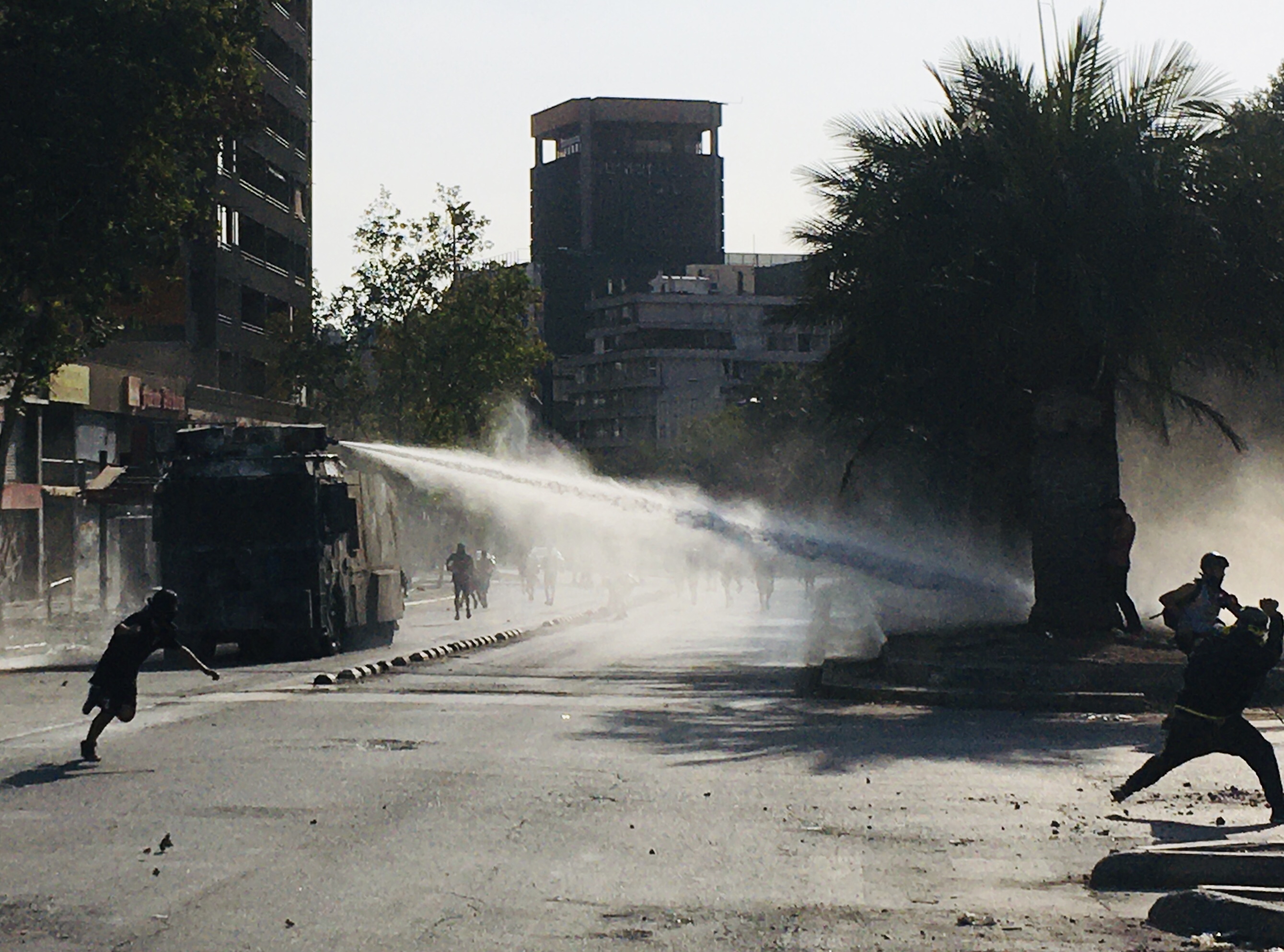
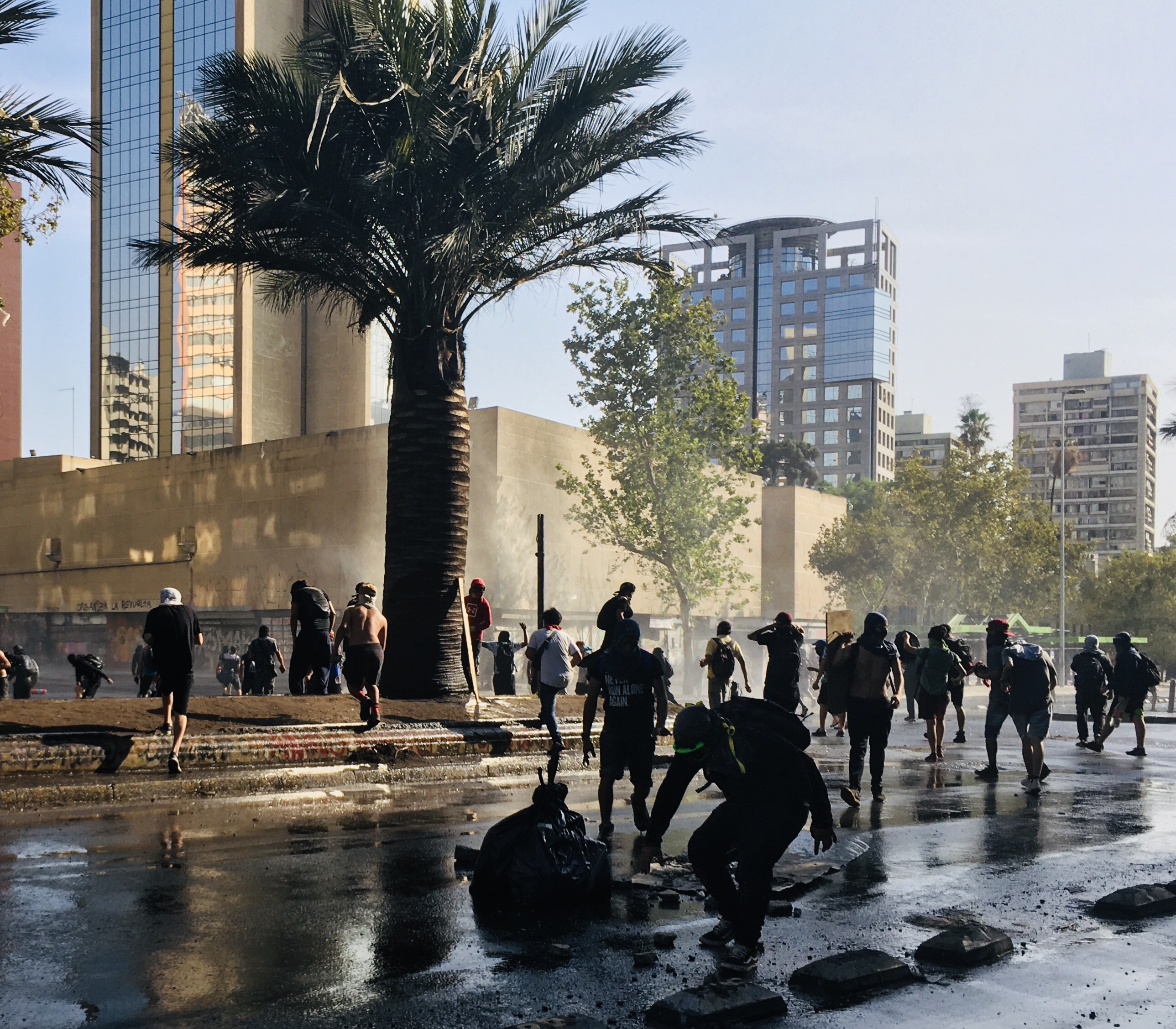
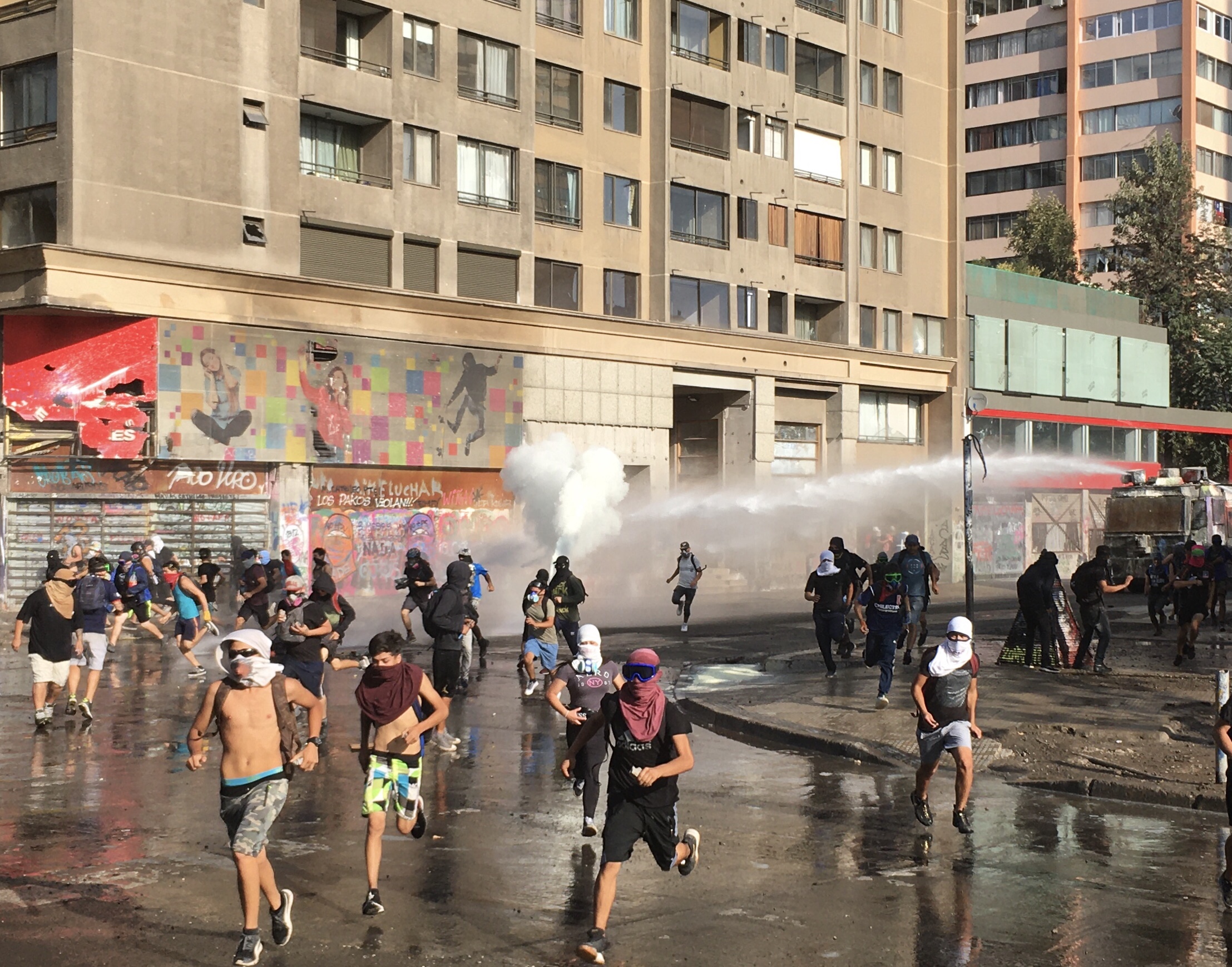
On my way home, I went (without knowing) into the epicentre of the protests here in Santiago, which was a surreal experience. What I first witnessed – which was quite shocking – was people with hammers bashing the pavement to create stones to (what I later found out) throw at the police who were there. (We had earlier in the day seen the pavements ripped up, but we didn’t at the time know how it had happened. Seeing the destruction put the pieces of the puzzle together.)
There was chanting, banging of pots, people with gas masks on, banners and shirts covering faces. All of a sudden, a massive tank came screaming up the street directly towards me with water cannons blasting out either side hitting many of the protesters on the way. It seemed that the force of the water – it would hit the dirt and throw pavement and the (formerly pavement) rocks and the amount of power from the water cannon actually sprayed them up and created a double weapon. (It’s not clear whether that was the purpose.) I knew I didn’t want to be too close.
I continued to follow these protesters down the street (at a distance). There was a crazy energy in the street. There was a hostile energy towards the police, but there was also this sense of community. An example was where there were civilians in cars or taxis or ambulances, and everyone would spread out and direct them to safe places and allowed them (and even wanted them) to pass. It was like the protesters were the guardians, the carers, of fellow citizens in absence of an effective state to fill that role.
I was full of adrenaline and could feel it pumping through my body. When I did take a moment to step back and consider what was taking place (I was on the pavement behind a big palm tree, sheltered from whatever would happen next, and it gave me a vantage point to consider what was taking place in front of my eyes), I felt uncomfortable. I don’t agree with what the protesters were doing. I think protests are good and it is good to be able to express an opinion. But the violence in this small group of protesters and the hostility towards everything was something I didn’t connect with.
The strange thing about this experience was that while it felt like a war zone, if you walked just a kilometre down the street, you were in the centre of what seemed to be a functioning city.”
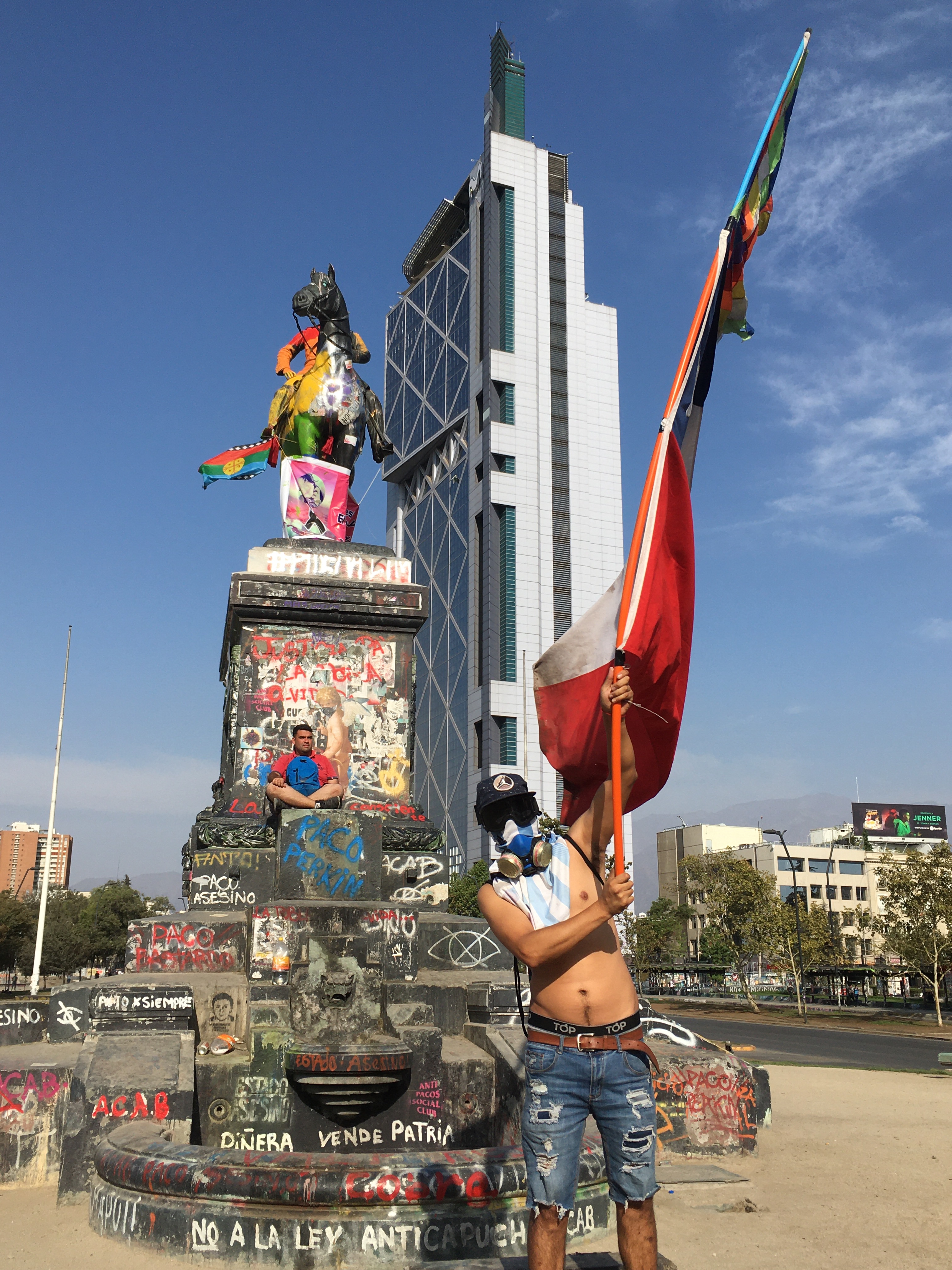
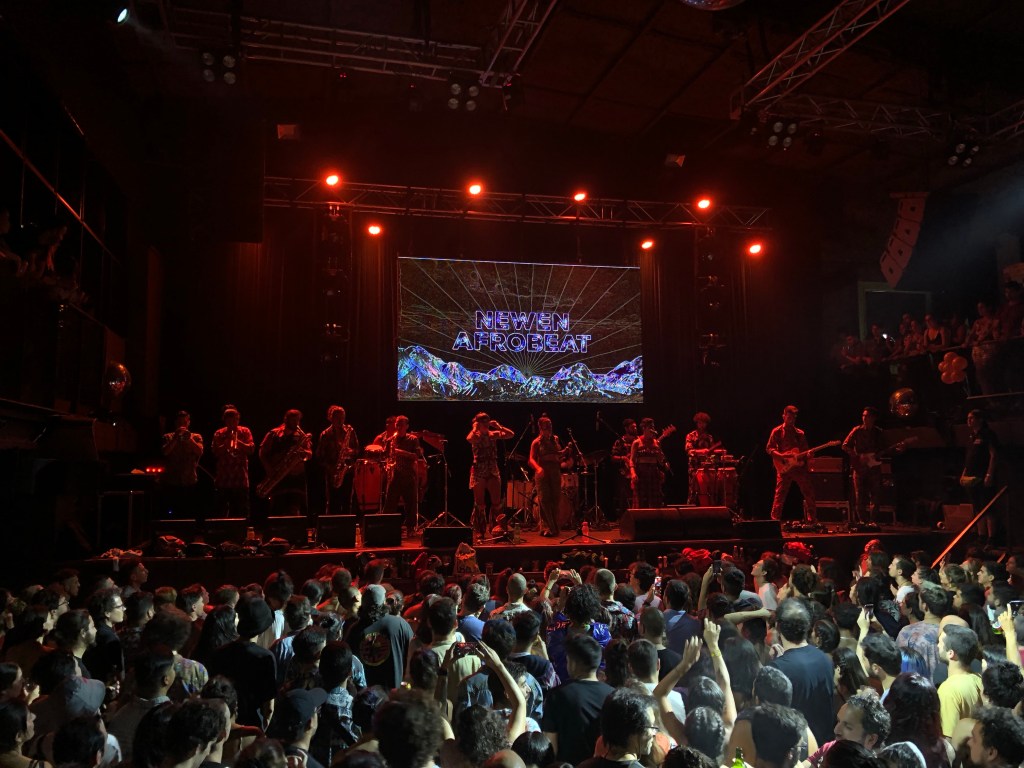
Viva again. By now, we were in the heart of Bellavista and the sounds of reggae stole our attention away from wrapping up Dan’s summary. We walked lazy figure of eights around the suburb, joined in at a karaoke bar, and sweet-talked our way in to an incredible gig (the sweet-talking was in Spanish so you can guess who led that) of La Brígida Orquesta and Newen Afrobeat – both bands featuring large horn sections.
We’re both loving our time in this city, as wild as it is. We’re staying safe.
DPS (as storyteller), VRPS (as transcriber)
[Santiago]
 The Two Swords